 John Adams
Quotes from the Book
Try to keep in mind that everyone you encounter along the way, no matter their background or station in life, knows something you don’t.
2
I’m convinced that history encourages, as nothing else does, a sense of proportion about life, gives us a sense of the relative scale of our own brief time on earth and how valuable that is.
1
The only thing new in the world, Harry Truman once remarked, was the history we don’t know.
1
History, I really believe, is best understood as an unfolding story. I think there’s more intellectual honesty in seeing it that way, from within what happened. The moment has gone, the characters are dead, but you can bring them back, re-create their ever-changing lives in such a way that the story does not sound monotonous, with an unrelieved tempo. Life does not come at us that way—why should history?
History is not the story of heroes entirely,” he said. “It is often the story of cruelty and injustice and shortsightedness. There are monsters, there is evil, there is betrayal. That’s why people should read Shakespeare and Dickens as well as history—they will find the best, the worst, the height of noble attainment and the depths of depravity.
Happiness—true happiness—is not to be found in vacations or the like. It’s to be found in the love of learning and doing what you really want to get up and get to each day.
We don’t teach children. We just give them who we are. And they catch that. Attitudes are caught not taught. If you love something in front of a child, the child will catch that.
To be indifferent to history isn't just to be ignorant, it's often to be rude, to show a form of ingratitude.
I have often thought and said that the digital watch is the perfect symbol of our time. It only tells you what time it is now as if there had been no time before and no time to come.
is not in mortals to command success, but we’ll do more, we’ll deserve it.
The Golden Gate Bridge was built when Franklin Roosevelt was in his first term. It was built in the era of Charlie Chaplin’s Modern Times. It was built at the time of the Berlin Olympics. Built at the time of the abdication of the King of England for “the woman I love.” Built during the Great Depression. And built during a period when two of the most important events of the twentieth century took place, foretelling everything that has so changed in our world. Two events that took place not much more than one hundred miles apart. One, in Copenhagen, where Niels Bohr and his colleagues at the Institute for Theoretical Physics determined that if the uranium atom were split, it would release a power beyond any previous understanding or example. And just across the way at a small German fishing village, the Nazi government had instituted the first rocket experimental station under the young, brilliant physicist Wernher von Braun.
Did you know?
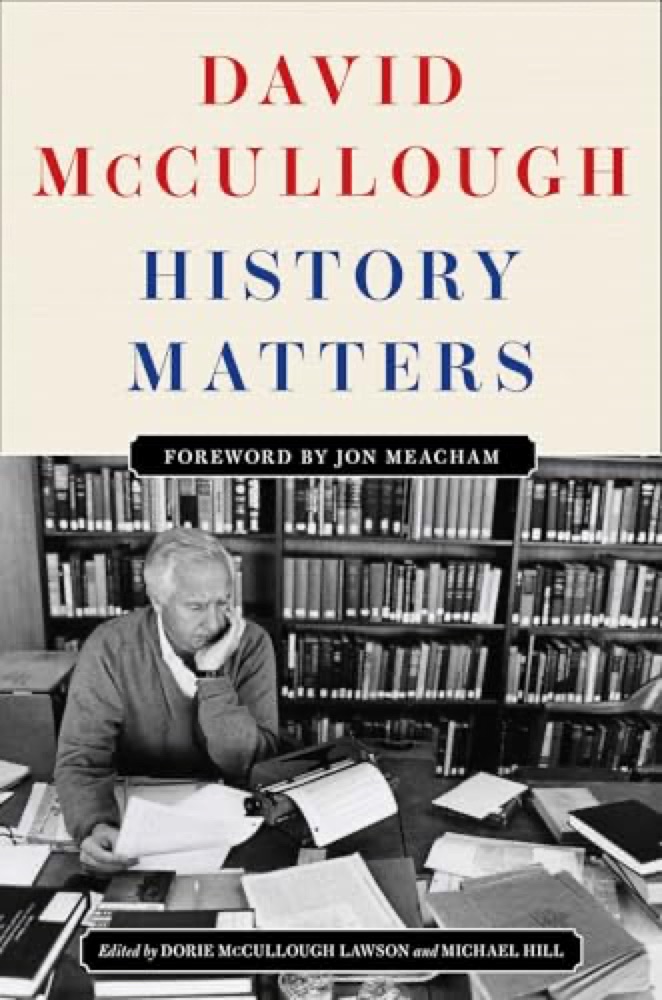
- The book was published posthumously, three years after McCullough's death in 2022.
- It was edited by McCullough's daughter Dorie McCullough Lawson together with his longtime researcher Michael Hill.
- Historian Jon Meacham contributed the foreword.
- Many of the essays in the collection had never been published before.
- The collection includes McCullough's reflections on his writing process, including his lifelong use of a Royal Standard typewriter.
- It was published by Simon & Schuster on September 16, 2025.
About David McCullough
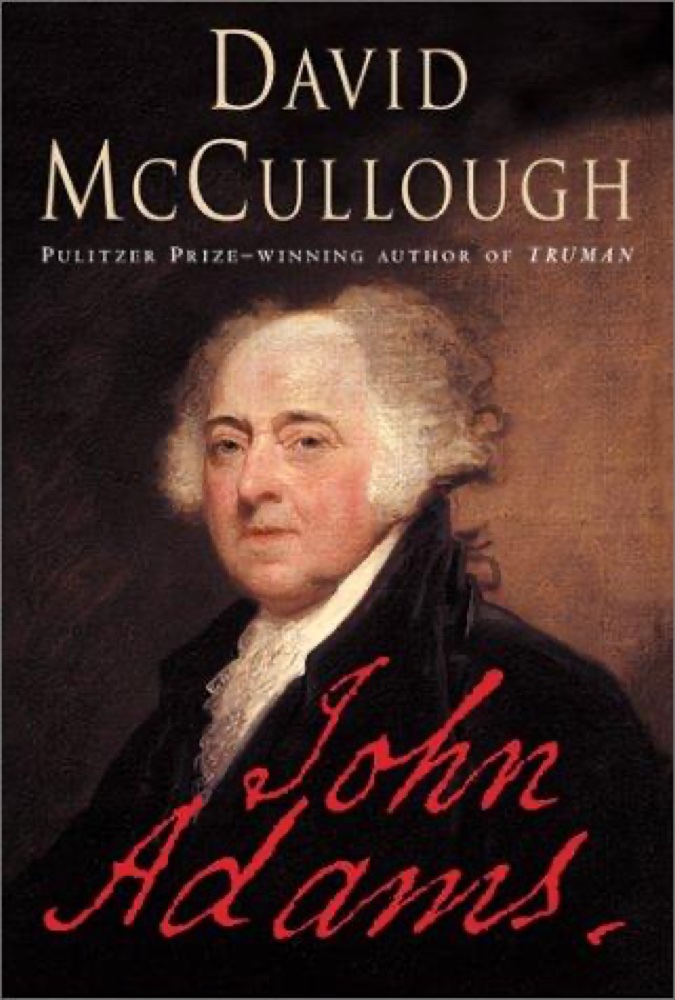
David McCullough (1933-2022) was an American historian and author celebrated for narrative histories and biographies including Truman and John Adams, each of which won the Pulitzer Prize. He also received the Presidential Medal of Freedom and two National Book Awards.
More about the author →
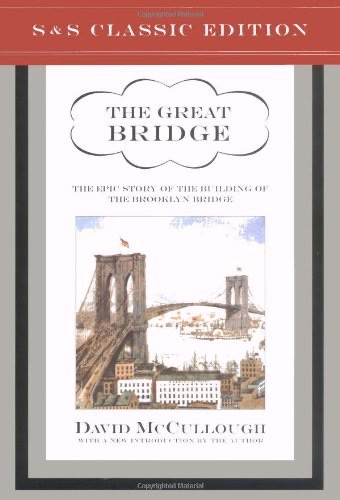
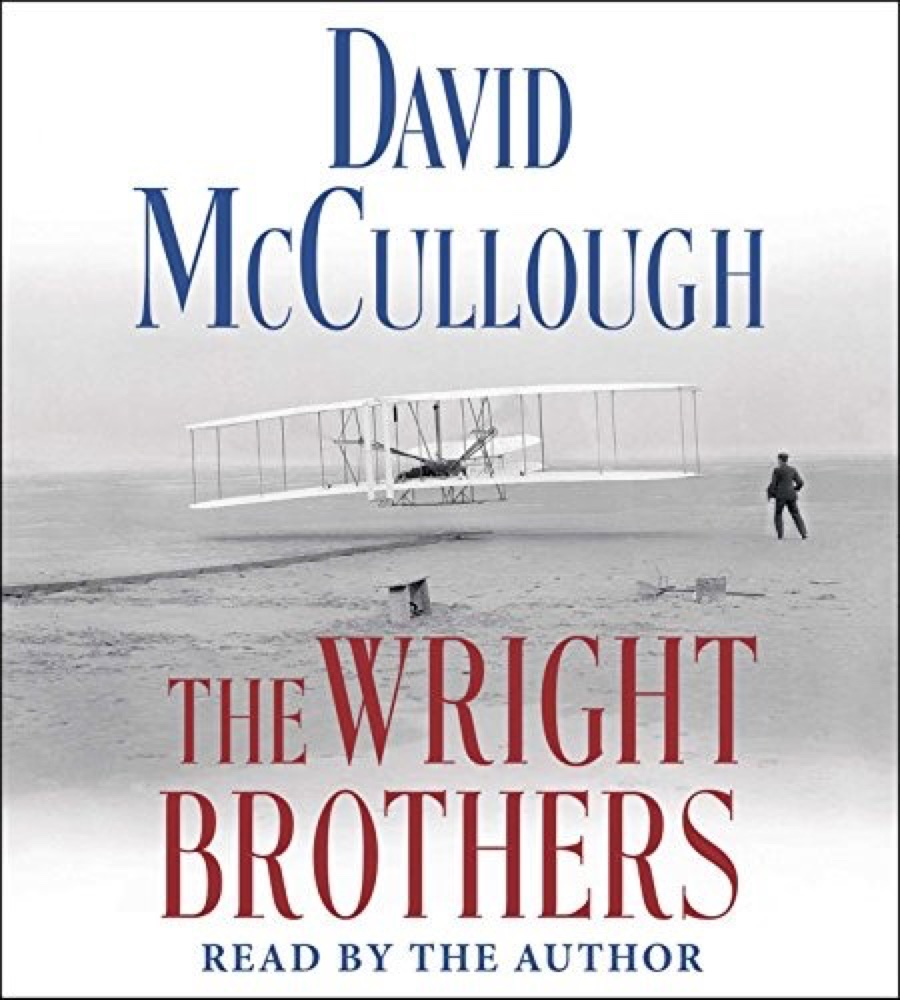
About the book
History Matters is a posthumous collection of essays, lectures, and interviews by the Pulitzer Prize-winning American historian David McCullough, gathered after his death in 2022. Edited by his daughter Dorie McCullough Lawson and his longtime researcher Michael Hill, and introduced with a foreword by Jon Meacham, the book assembles pieces written across McCullough's long career, many never previously published, all reflecting on why the study of the past is essential to understanding the present and the future.
The collection is organized into thematic parts. It opens with McCullough's argument for history itself, framed as an extension of life and grounded in storytelling, then moves into vignettes of American figures such as George Washington, Harry Truman, Harriet Beecher Stowe, and the painter Thomas Eakins. Further sections trace the mentors and writers who shaped him, including Paul Horgan and Herman Wouk, and offer reflections on his craft, from his preference for rewriting over outlining to his devotion to his Royal Standard typewriter.
Released in September 2025, the book was received as a fitting valedictory from one of America's most beloved popular historians. The Associated Press called it a reminder of why he was one of the greatest historians of his time, and Kirkus Reviews praised its eye for engrossing anecdotes and ebullient prose, describing it as a warmhearted hymn to the American spirit.
Book details
- First published
- 2025
- Length
- 192 pages
- Reading time
- 1 hour
- Author
- David McCullough
- Genre
- History
- Goodreads rating
- 4.25 (4k ratings)
Critical reception
- The Associated Press called it a reminder of why McCullough was one of the greatest historians of his time.
- Kirkus Reviews praised its eye for engrossing anecdotes and ebullient prose, calling it a warmhearted valedictory hymn to the American spirit.
- Reviewers framed the collection as valuable both for newcomers to McCullough and for longtime readers seeking insight into his methods and values.
Keep reading
 The American Spirit: Who We Are and What We Stand For
 Education of a Wandering Man: A Memoir
 Brave Companions: Portraits in History
 The History Boys
 Timeline
 The Discovery of India
 Asymmetry
 When Women Were Dragons
 The Small and the Mighty: Twelve Unsung Americans Who Changed the Course of History, from the Founding to the Civil Rights Movement
 The Meaning of It All: Thoughts of a Citizen-Scientist
 The View from the Cheap Seats: Selected Nonfiction
 You Can't Be Neutral on a Moving Train: A Personal History of Our Times
 The Autobiography of Eleanor Roosevelt
 Homo Deus: A History of Tomorrow
 Pastwatch: The Redemption of Christopher Columbus
 Arm of the Sphinx
 Across That Bridge: A Vision for Change and the Future of America
 Becoming
 Origin
 In the Light of What We Know
 What Is History?
 The Book That Broke the World
 You Learn by Living: Eleven Keys for a More Fulfilling Life
 Under the Same Stars
 The Sense of an Ending
 Madame Tussaud
 The Boy on the Bridge
 Arcadia
 These Precious Days: Essays
 21 Lessons for the 21st Century
 The Sea Keeper's Daughters
 City of Stairs
 But What If We're Wrong? Thinking About the Present As If It Were the Past
 These Truths: A History of the United States
 The Years of Rice and Salt
 The First Fifteen Lives of Harry August
 If This Isn't Nice, What Is?: Advice for the Young
 Genesis
 No Time To Spare: Thinking About What Matters
 Waterland
 The Lost Symbol
 The Librarian of Burned Books
 Sandworms of Dune
 The Just City
 West with the Night
 Notes of a Native Son
 Parable of the Talents
 Only Dull People Are Brilliant at Breakfast
 Elizabeth Finch
 The Quiet Game
 The Lessons of History
 Good Dirt
 How the Word Is Passed: A Reckoning with the History of Slavery Across America
 The Wall of Storms
 Small Wonder
 Secondhand Time: The Last of the Soviets
 Varina
 Flaubert's Parrot
 Small Great Things
 The Da Vinci Code