
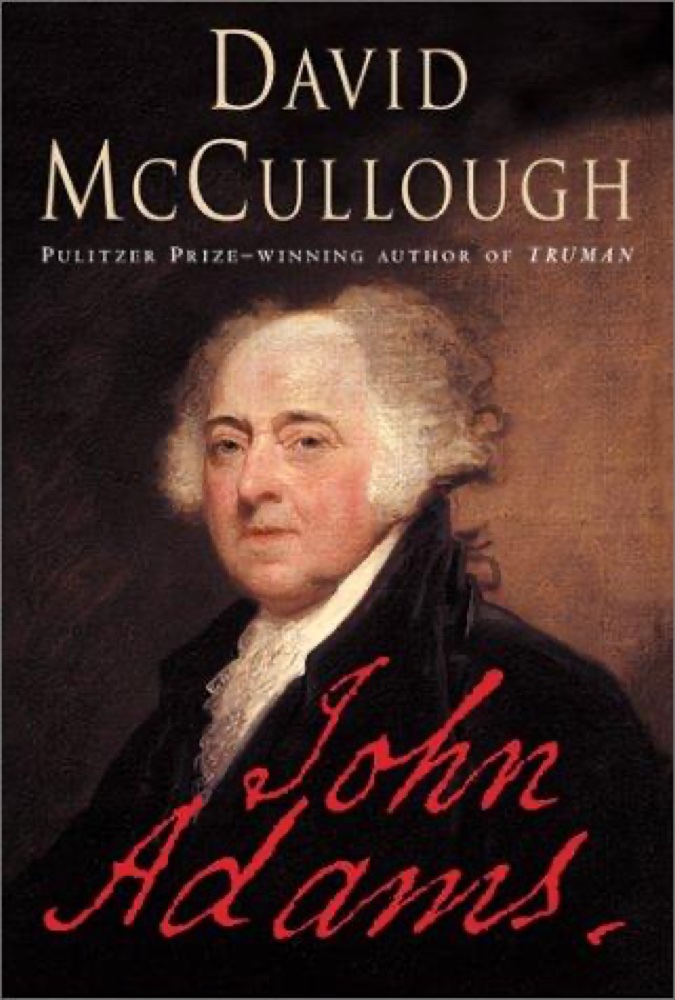
 John Adams
Quotes from the Book
How can we know who we are and where we are going if we don't know anything about where we have come from and what we have been through, the courage shown, the costs paid, to be where we are?
25
The evil of technology was not technology itself, Lindbergh came to see after the war, not in airplanes or the myriad contrivances of modern technical igenuity, but in the extent to which they can distance us from our better moral nature, or sense of personal accountability.
15
I feel so sorry for anyone who misses the experience of history, the horizons of history. We think little of those who, given the chance to travel, go nowhere. We deprecate provincialism. But it is possible to be as provincial in time as it is in space. Because you were born into this particular era doesn't mean it has to be the limit of your experience. Move about in time, go places. Why restrict your circle of acquaintances to only those who occupy the same stage we call the present?
10
The past after all is only another name for someone else's present.
8
Have the courage to say I do not know.
6
And it’s so easy because you become so self-conscious and so intellectual and so analytical about it in the long run that you lose that wonderful sort of ego that you have that says, ‘Oh, goddamn it, I don’t care; I love it anyway; I’m going to do it!
5
Harry Truman used to talk of Potomac Fever, an endemic disorder the symptoms of which were a swelled head and a general decline of common sense.
1
Mainly, writing means a good deal of hard thinking … yet sometimes the very struggle of getting the words down on paper does result in unexpected discoveries or clarifications.
1
…the little known events of a given time, and people who are not in the headlines can be what matters most in the long run – and the long run is the measure of history.
1
In writing history, to catch the feeling and well as the truth of other times, it is of utmost importance … to convey the sense that things need not have happened as they did…the past, after all, is only another name for someone else’s present
1
The problem, as Thornton Wilder said, lies in the effort to employ the past tense in such a way that it does not rob those events of their character of having occurred in freedom.
1
It is a shame that history is ever made dry and tedious, or offered as a chronicle almost exclusively of politics, war, and social issues when of course it is the full sweep of human experience. Politics, war, and social issues to be sure, but also music, science, religion, medicine, the way things are made, new ideas…history is a spacious realm, there should be no walls.
1
sometimes the very struggle of getting the words down on paper does result in unexpected discoveries or clarifications.
1
He worked fast, totally absorbed and whistling some tune over and over until it drove anyone else present to distraction.
the Paris flight, which was rushed into print
He believed, this brilliant, determined young man being eaten alive by mosquitoes, that there is a harmony of nature, that man is a part of that harmony, and that if he himself could observe things closely enough, collect enough—if he knew enough—then the forces that determine that harmony would become apparent.
In a letter to Oliver Wendell Holmes she wrote: “I make no mental effort of any sort; my brain is tired out. It was a woman’s brain and not a man’s, and finally from sheer fatigue and exhaustion in the march and strife of life it gave out before the end was reached. And now I rest me, like a moored boat, rising and falling on the water, with loosened cordage and flapping sail.
Just imagine this,” he says. “If those three men who went to the moon had started to befoul their aircraft, if they had begun to tear it apart and fill it with all manner of filth, we would say they had gone mad. But here we are on this planet, this huge spaceship, befouling it, ripping it asunder, and nobody seems to say very much about that. Nobody seems to care.
Watch on YouTube
About David McCullough
We have collected 259 quotes from 11 books by David McCullough on BookQuoters.
More about the author →
About the book
Alternate cover edition of ISBN 9780671792763
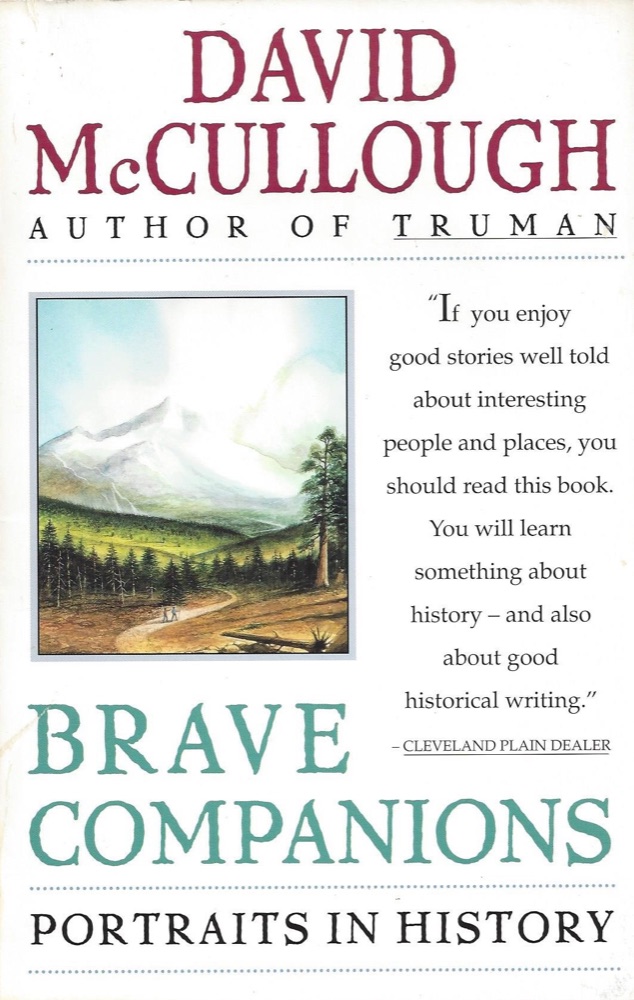
From Alexander von Humboldt to Charles and Anne Lindbergh, these are stories of people of great vision and daring whose achievements continue to inspire us today, brilliantly told by master historian David McCullough.The bestselling author of Truman and John Adams, David McCullough has written profiles of exceptional men and women past and present who have not only shaped the course of history or changed how we see the world but whose stories express much that is timeless about the human condition. Here are Alexander von Humboldt, whose epic explorations of South America surpassed the Lewis and Clark expedition; Harriet Beecher Stowe, “the little woman who made the big war”; Frederic Remington; the extraordinary Louis Agassiz of Harvard; Charles and Anne Lindbergh, and their fellow long-distance pilots Antoine de Saint-Exupéry and Beryl Ma
Book details
- First published
- 1991
- Author
- David McCullough
- Genre
- History
- Goodreads rating
- 4.06 (8k ratings)
Keep reading
 The Last Lion: Winston Spencer Churchill: Alone, 1932-40
 The Magic Mountain
 The Novel Habits of Happiness
 In the Light of What We Know
 History Matters
 Arm of the Sphinx
 The Fall of Babel
 The Daughter of Time
 The Map of Time
 The Secret History
 Asymmetry
 The Story of the Lost Child
 The Book That Broke the World
 The World of Yesterday
 TransAtlantic
 Elizabeth Finch
 The Mysterious Mr. Quin
 The Noise of Time
 The Discovery of India
 The Day of the Scorpion
 Point Omega
 Varina
 The Great Mistake
 The French Lieutenant's Woman
 When Women Were Dragons
 The Clockmaker's Daughter
 Essays of E.B. White
 Notes of a Native Son
 The Confessions of Frannie Langton
 The Quiet Game
 The Cat's Table
 The Wolf Gift
 Flights
 An Instance of the Fingerpost
 The Lacuna
 What the Dog Saw and Other Adventures
 Cultural Amnesia: Necessary Memories from History and the Arts
 A Bend in the River
 My Friends
 The Autobiography of Eleanor Roosevelt
 Humboldt's Gift
 The Librarian of Burned Books
 Old Babes in the Wood: Stories
 Blue Highways
 Little Monsters
 The Stone Diaries
 The American Spirit: Who We Are and What We Stand For
 Too Much Happiness: Stories
 The Sea Keeper's Daughters
 Figuring
 Shame
Shame
 The Recognitions
 Powers
 Special Topics in Calamity Physics
 Time Regained
 Flaubert's Parrot
 The Jewel in the Crown
 Two Years Eight Months and Twenty-Eight Nights
 Outline
 Too Like the Lightning