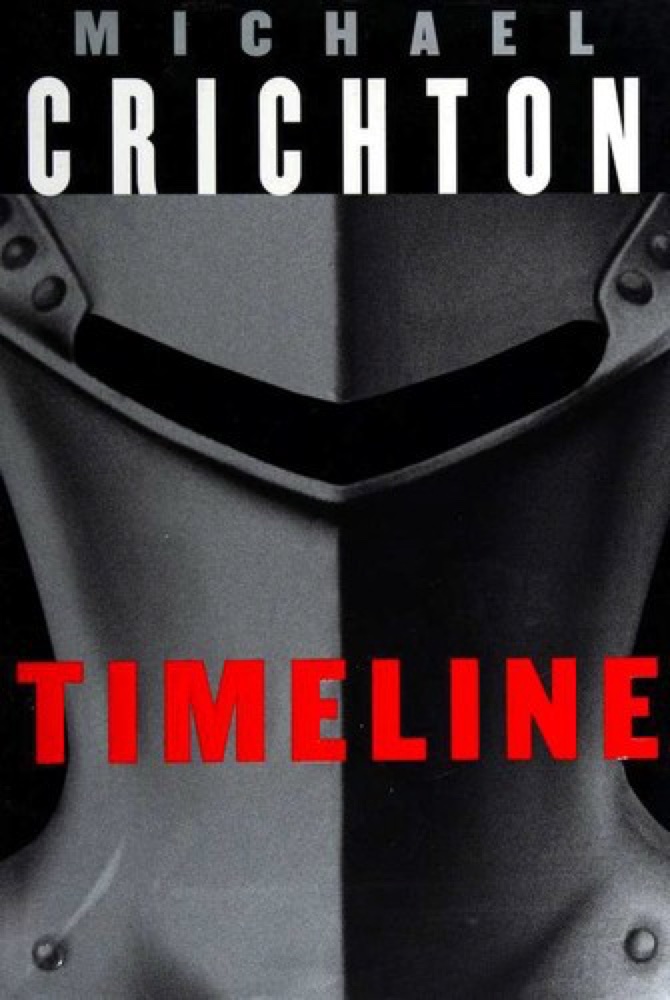

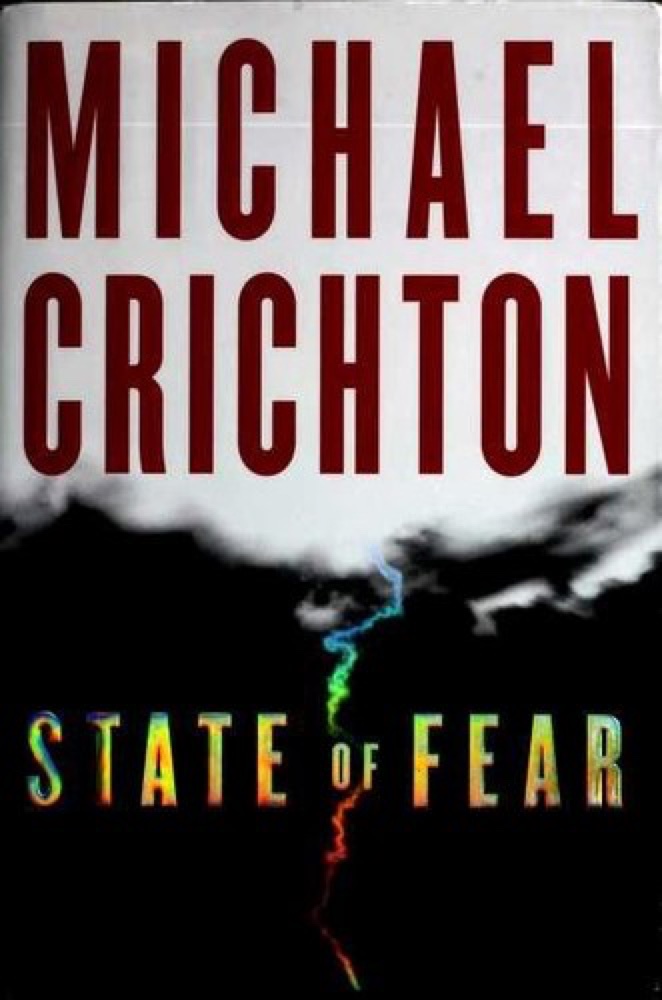
 State of Fear
Quotes from the Book
In other centuries, human beings wanted to be saved, or improved, or freed, or educated. But in our century, they want to be entertained. The great fear is not of disease or death, but of boredom. A sense of time on our hands, a sense of nothing to do. A sense that we are not amused.
Professor Johnston often said that if you didn't know history, you didn't know anything. You were a leaf that didn't know it was part of a tree.
The purpose of history is to explain the present - to say why the world around us is the way it is. History tells us what is important in our world, and how it came to be. It tells us what is to be ignored, or discarded. That is true power - profound power. The power to define a whole society.
It is especially difficult for modern people to conceive that our modern, scientific age might not be an improvement over the prescientific period.
But where will this mania for entertainment end? What will people do when they get tired of television? When they get tired of movies? We already know the answer—they go into participatory activities: sports, theme parks, amusement rides, roller coasters. Structured fun, planned thrills. And what will they do when they tire of theme parks and planned thrills? Sooner or later, the artifice becomes too noticeable. They begin to realize that an amusement park is really a kind of jail, in which you pay to be an inmate. ‘This artifice will drive them to seek authenticity. Authenticity will be the buzzword of the twenty-first century. And what is authentic? Anything that is not devised and structured to make a profit. Anything that is not controlled by corporations. Anything that exists for its own sake and assumes its own shape. But of course, nothing in the modern world is allowed to assume its own shape. The modern world is the corporate equivalent of a formal garden, where everything is planted and arranged for effect. Where nothing is untouched, where nothing is authentic.
Safety is the last refuge of the scoundrel!
In reality, time doesn't pass; we pass. Time itself is invariant. It just is. Therefore, past and future aren't separate locations, the way New York and Paris are separate locations. And since the past isn't a location, you can't travel to it.
If you [don't] know history, then [you don't] know anything. You [are] a leaf that [doesn't] know it [is] part of a tree.
Because in the late twentieth century, you couldn't seriously ask other people to think that you believed in honor and truth, and the purity of the body, the defense of women, the sanctity of true love, and all the rest of it. But apparently, Andre really had believed it.
These wafers had entered the mythology of the company, including their names: Tunguska, Vesuvius, Tokyo. The Vesuvius wafer put you on the Bay of Naples at 7:00 a.m. on August 24, A.D. 79, just before burning ash killed everyone. Tunguska left you in Siberia in 1908, just before the giant meteor struck, causing a shock wave that killed every living
Temporal provincials were convinced that the present was the only time that mattered, and that anything that had occurred earlier could be safely ignored.
And in that moment, their situation was clear to him. Their guides were both dead. One machine was gone. Their return marker was shattered. Which meant they were stuck in this place. Trapped here, without guides or assistance. And with no prospect of ever getting back. Not ever.
Today, everybody expects to be entertained, and they expect to be entertained all the time. Business meetings must be snappy, with bullet lists and animated graphics, so executives aren’t bored. Malls and stores must be engaging, so they amuse as well as sell us. Politicians must have pleasing video personalities and tell us only what we want to hear. Schools must be careful not to bore young minds that expect the speed and complexity of television. Students must be amused—everyone must be amused, or they will switch: switch brands, switch channels, switch parties, switch loyalties.
The very concept of time travel makes no sense, since time doesn’t flow. The fact that we think time passes is just an accident of our nervous systems—of the way things look to us. In reality, time doesn’t pass; we pass. Time itself is invariant. It just is. Therefore, past and future aren’t separate locations, the way New York and Paris are separate locations. And since the past isn’t a location, you can’t travel to it.
Did you know?
- The novel was published in November 1999 by Alfred A. Knopf.
- It was Michael Crichton's twelfth novel published under his own name.
- The story sends its characters back to the year 1357, during the Hundred Years' War in France.
- The time travel in the book is framed using quantum mechanics and multiverse theory rather than a traditional time machine.
- A 2003 film adaptation was directed by Richard Donner and released by Paramount Pictures.
- The book also inspired a 2000 video game published by Eidos Interactive.
About Michael Crichton
Michael Crichton (1942-2008) was an American author, screenwriter, and filmmaker best known for his science and techno-thrillers such as Jurassic Park, The Andromeda Strain, and Congo. Trained as a physician at Harvard Medical School, he became one of the best-selling authors of his era and also created the television series ER.
More about the author →More by Michael Crichton
All books by Michael Crichton →
About the book
Timeline is a science fiction novel by Michael Crichton, published in November 1999. It follows a group of graduate history students working on an archaeological dig in the Dordogne region of France, whose research is funded by a secretive technology company called ITC (International Technology Research). When their professor, Edward Johnston, disappears, the students learn that ITC has secretly developed quantum technology that can send people back in time, and that Johnston has traveled to the year 1357. To rescue him, the students must journey into the middle of the Hundred Years' War in 14th-century France.
Blending Crichton's signature techno-thriller pacing with historical adventure, the novel grounds its time travel in quantum mechanics and multiverse theory rather than conventional time-machine tropes. As the characters navigate a violent medieval world of knights, sieges, and warring lords, the book contrasts romanticized modern assumptions about the Middle Ages with a harsher, more complex reality, while its scholars discover that their academic expertise is tested under life-or-death conditions.
The novel reflects recurring Crichton themes: the unintended consequences of powerful new technology and the corporate ambition that races ahead of ethical caution, embodied in ITC president Robert Doniger. A commercial bestseller, Timeline was adapted into a 2003 feature film directed by Richard Donner and also inspired a video game, extending Crichton's reputation for turning cutting-edge scientific concepts into mass-market entertainment.
Key characters
- Edward JohnstonProfessor and archaeologist whose disappearance into the past sets the plot in motion
- Andre MarekAssistant professor skilled in Occitan language and medieval swordplay
- Chris HughesGraduate student who joins the rescue mission
- Kate EricksonGraduate student with expertise in architecture
- David SternTechnology specialist on the research team
- Robert DonigerPresident of ITC who exploits the quantum technology for corporate gain
- John GordonITC vice president who briefs the team and accompanies the mission
Book details
- First published
- 1999
- Length
- 464 pages
- Reading time
- 9 hours
- Author
- Michael Crichton
- Genre
- Fiction
- Goodreads rating
- 3.87 (220k ratings) →
Movie & TV adaptations
- IMDb
If you liked this, read…
- 1Jurassic ParkAnother Crichton techno-thriller built on a cutting-edge scientific premise gone wrong
- 2The Doomsday BookConnie Willis's novel also sends a historian back to plague-era medieval England via time travel
- 3OutlanderBlends time travel with immersive, dangerous historical adventure
Keep reading
 The Boy on the Bridge
 Arcadia
 The Dark Forest
 Time Shelter
 The Time Machine
 The Gap of Time
 Borderliners
 Point Omega
 The Last Continent
 Fall; or, Dodge in Hell
 The Noise of Time
 The Fifth Science
 Lost in Time
 Waterland
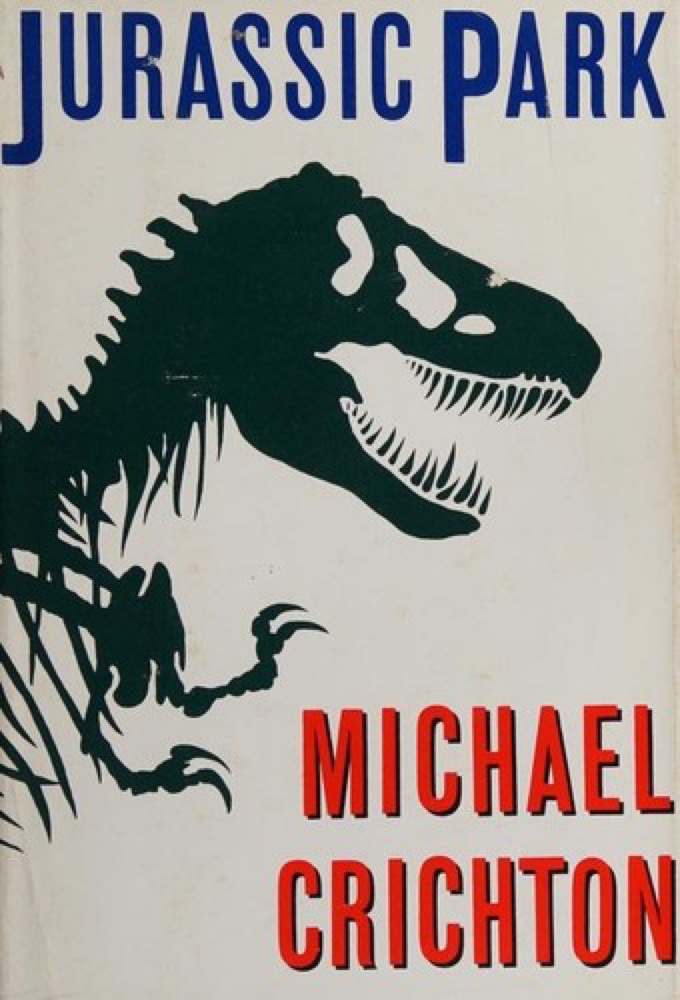 Jurassic Park
 Genesis
 The Book of Lost Hours
 Thief of Time
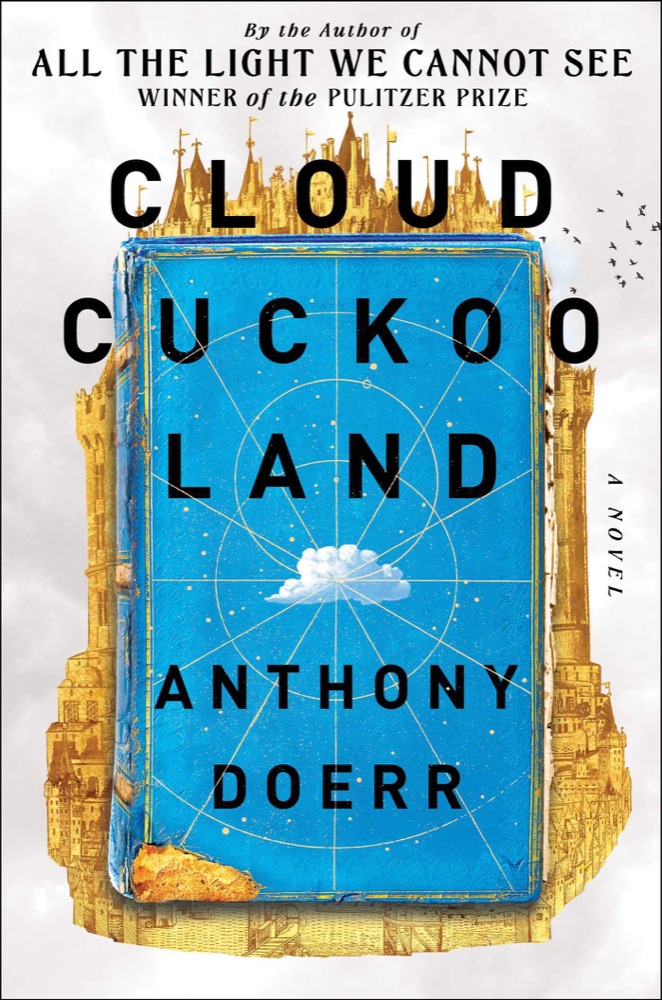 Cloud Cuckoo Land
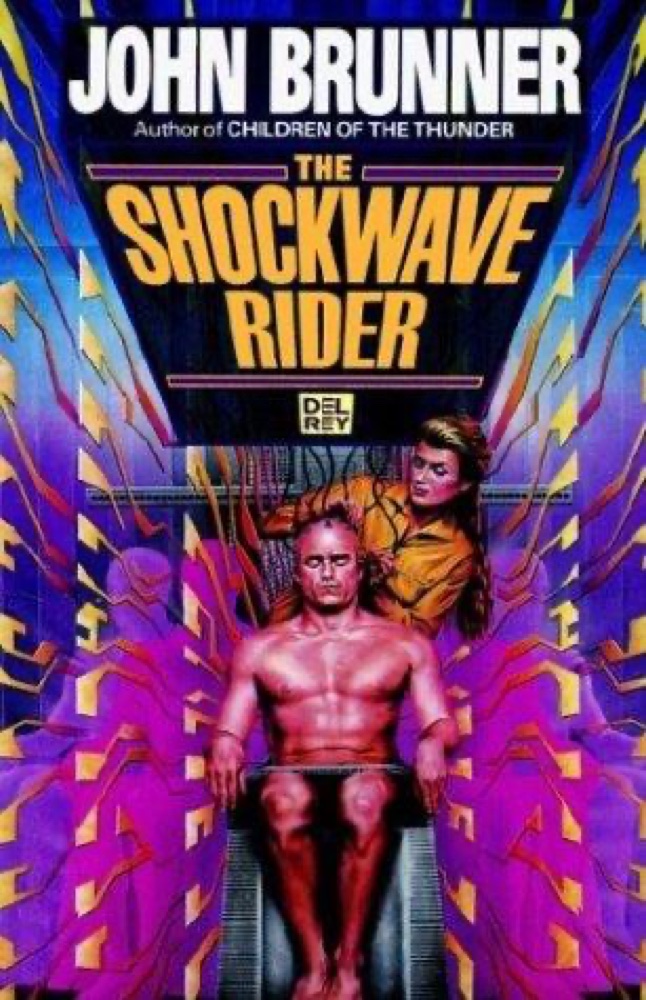 The Shockwave Rider
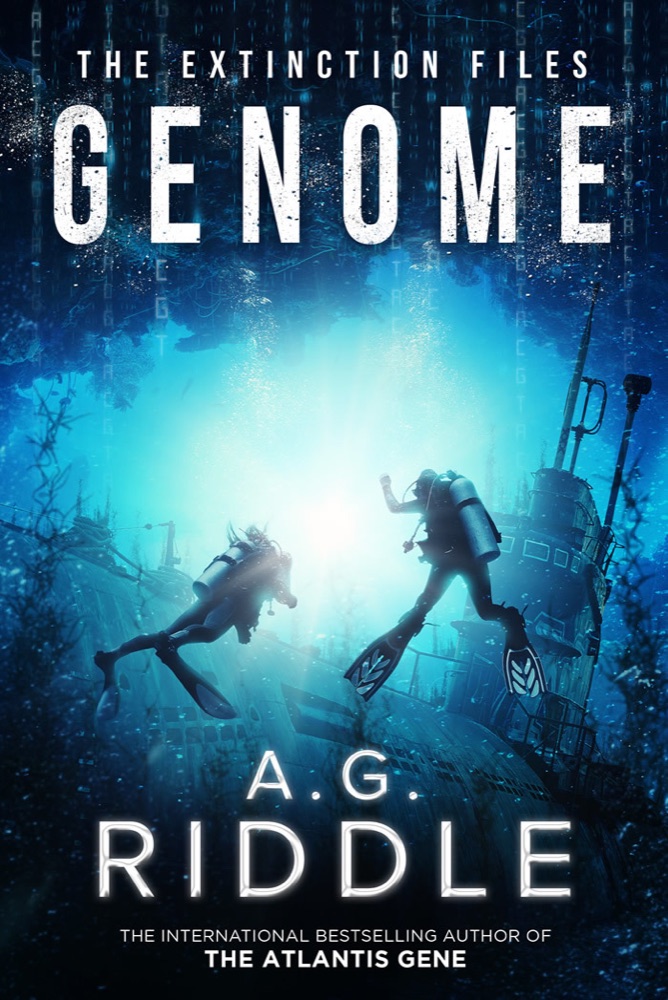 Genome
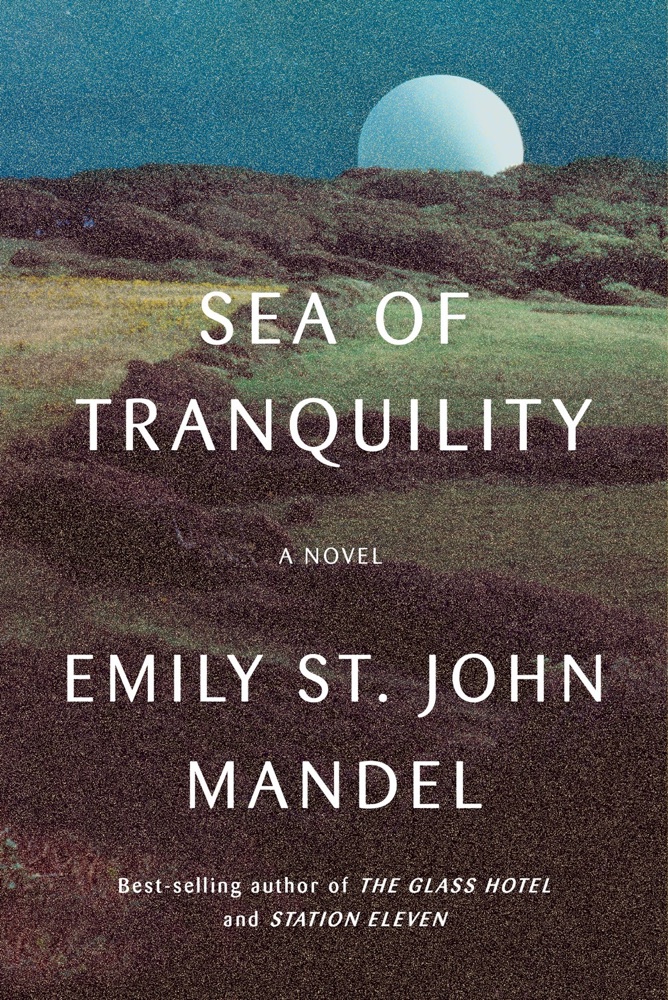 Sea of Tranquility
 History Matters
 Arm of the Sphinx
 Gnomon
 Ghosts of Harvard
 All the King's Men
 The Lost World
 Songs of Distant Earth
 Under the Same Stars
 White Noise
 But What If We're Wrong? Thinking About the Present As If It Were the Past
 Blue Remembered Earth
 Persepolis Rising
 How to Stop Time
 Childhood's End
 A Tale for the Time Being
 Dust
Dust
 The Book That Broke the World
 Einstein's Dreams
 Death's End
 The Aosawa Murders
 Too Like the Lightning
 The Gone-Away World
 Red Mars
 Familiaris
 Player One: What Is to Become of Us
 The History Boys
 City
City
 Green Mars
 The Bee Sting
 Seven Surrenders
 Endymion
 Blue Highways
 Mostly Void, Partially Stars
 The Water Knife
 The Quiet Game
 The Age of Miracles
 Libra
Libra
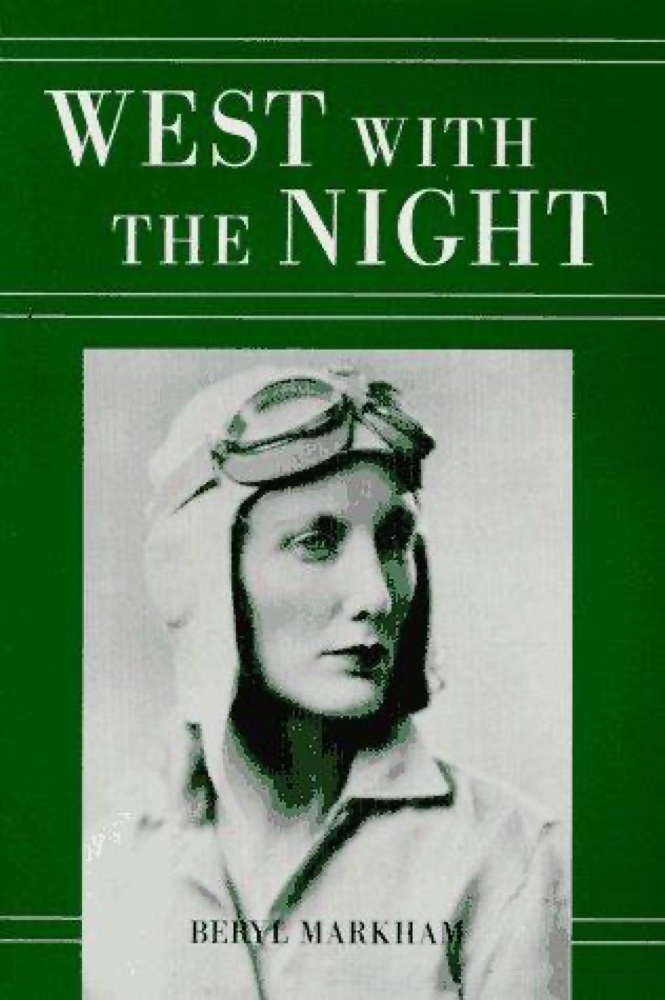 West with the Night