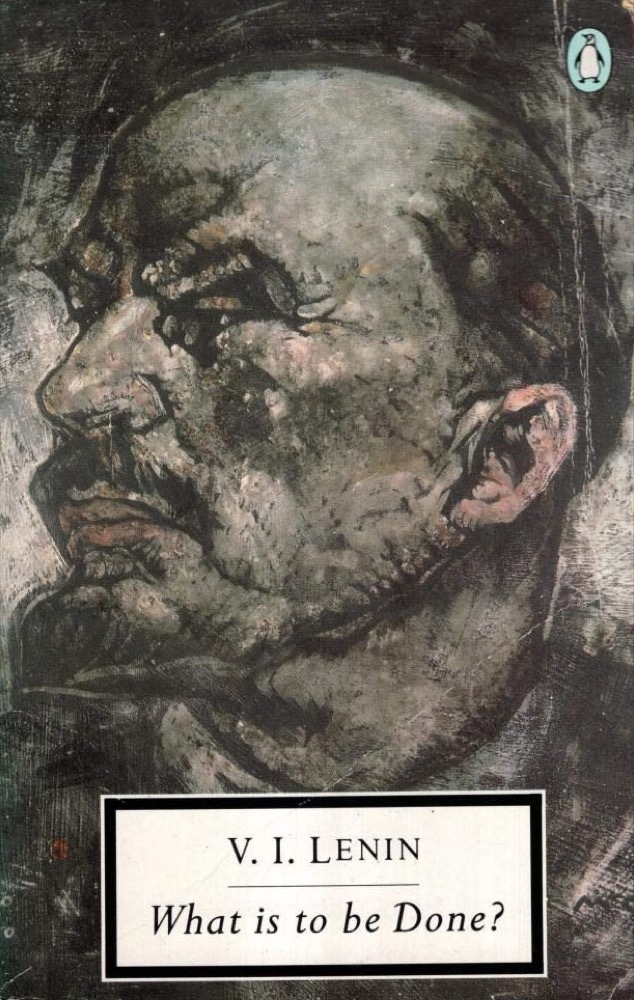
 What Is to Be Done?
Quotes from the Book
But suppose, for the sake of argument, free competition, without any sort of monopoly, would develop capitalism trade more rapidly. Is it not a fact that the more rapidly trade and capitalism develop, the greater is the concentration of production and capital which gives rise to monopoly?
27
Capitalism in its imperialist stage leads directly to the most comprehensive socialisation of production; it, so to speak, drags the capitalists, against their will and consciousness, into some sort of a new social order, a transitional one from complete free competition to complete socialisation. Production becomes social, but appropriation remains private. The social means of production remain the private property of a few. The general framework of formally recognised free competition remains, and the yoke of a few monopolists on the rest of the population becomes a hundred times heavier, more burdensome and intolerable.
19
Private property based on the labour of the small proprietor, free competition, democracy, i.e., all the catchwords with which the capitalists and their press deceive the workers and the peasants- are things of the past. Capitalism has grown into a world system of colonial oppression and of the financial strangulation of the overwhelming majority of the people of the world by a handful of "advanced" countries. And this "booty" is shared between two or three powerful world marauders armed to the teeth"..."who involve the whole world in their war over the sharing of their booty.
8
Official science tried, by a conspiracy of silence, to kill the works of Marx, who by a theoretical and historical analysis of capitalism had proved that free competition gives rise to the concentration of production, which, in turn, at a certain stage of development, leads to monopoly.
8
At the basis of these swindles and manipulations lies socialised production; but the immense progress of humanity, which achieved this socialisation, goes to benefit the speculators.
5
Translated into ordinary human language this means that the development of capitalism has arrived at a stage when, although commodity production still “reigns” and continues to be regarded as the basis of economic life, it has in reality been undermined and the bulk of the profits go to the “geniuses” of financial manipulation.
5
This transformation of competition into monopoly is one of the most important—if not the most important—phenomena of modern capitalist economy,
5
As long as capitalism remains what it is, surplus capital will never be utilised for the purpose of raising the standard of living of the masses in a given country, for this would mean a decline in profits for the capitalists; it will be used for the purpose of increasing those profits by exporting capital abroad to the backward countries.
4
Thus, the twentieth century marks the turning-point from the old capitalism to the new, from the domination of capital in general to the domination of finance capital.
3
Capitalism has grown into a world system of colonial oppression and of the financial strangulation of the overwhelming majority of the population of the world by a handful of “advanced” countries.
2
American ethics”, which the European professors and well-meaning bourgeois so hypocritically deplore, have, in the age of finance capital, become the ethics of literally every large city in any country.
2
The Treaty of Brest-Litovsk dictated by monarchist Germany, and the subsequent much more brutal and despicable Treaty of Versailles dictated by the “democratic” republics of America and France and also by “free” Britain, have rendered a most useful service to humanity by exposing both imperialism’s hired coolies of the pen and petty-bourgeois reactionaries who, although they call themselves pacifists and socialists, sang praises to “Wilsonism,” and insisted that peace and reforms were possible under imperialism.
1
The building of railways seems to be a simple, natural, democratic, cultural and civilising enterprise; that is what it is in the opinion of the bourgeois professors who are paid to depict capitalist slavery in bright colours, and in the opinion of petty-bourgeois philistines.
1
My cherished idea is a solution for the social problem, i.e., in order to save the 40,000,000 inhabitants of the United Kingdom from a bloody civil war, we colonial statesmen must acquire new lands to settle the surplus population, to provide new markets for the goods produced in the factories and mines. The Empire, as I have always said, is a bread and butter question. If you want to avoid civil war, you must become imperialists. [4] That was said in 1895 by Cecil Rhodes
1
It is not surprising that the author is driven to the conclusion that “the French Republic is a financial monarchy”; “it is the complete domination of the financial oligarchy; the latter dominates over the press and the government.”[9]
1
Mas então o capitalismo deixaria de ser capitalismo, pois o desenvolvimento desigual e a subalimentação das massas são as condições e as premissas básicas, inevitáveis, deste modo de produção. Enquanto o capitalismo for capitalismo, o excedente de capital não é consagrado à elevação do nível de vida das massas do país, pois significaria a diminuição dos lucros dos capitalistas, mas ao aumento desses lucros através da exportação de capitais para o estrangeiro, para os países atrasados.
The most dangerous people of all in this respect are those who do not wish to understand that the fight against imperialism is a sham and humbug unless it is inseparably bound up with the fight against opportunism.
Production becomes social, but appropriation remains private. The social means of production remain the private property of a few. The general framework of formally recognised free competition remains, but the yoke of a few monopolists on the rest of the population becomes a hundred times heavier, more burdensome and intolerable.
Thus, the principal stages in the history of monopolies are the following: 1) 1860-70, the highest stage, the apex of development of free competition; monopoly is in the barely discernible, embryonic stage. 2) After the crisis of 1873, a wide zone of development of cartels; but they are still the exception. They are not yet durable. They are still a transitory phenomenon. 3) The boom at the end of the nineteenth century and the crisis of 1900–03. Cartels become one of the foundations of the whole of economic life. Capitalism has been transformed into imperialism.
free competition gives rise to the concentration of production, which, in turn, at a certain stage of development, leads to monopoly.
let us not forget that the ‘geniuses’ of modern speculation know how to pocket big profits besides those they draw by way of dividends.
Less than one-hundredth of the total enterprises utilise more than three-fourths of the steam and electric power! Two million nine hundred and seventy thousand small enterprises (employing up to five workers), representing 91 per cent of the total, utilise only 7 per cent of the steam and electric power. Tens of thousands of large-scale enterprises are everything; millions of small ones are nothing.
Imperialism is the eve of the social revolution of the proletariat. This has been confirmed since 1917 on a world-wide scale. N. Lenin July 6, 1920
imperialist (that is, an annexationist, predatory, war of plunder)
Crises of every kind — economic crises more frequently, but not only these — in their turn increase very considerably the tendency towards concentration and monopoly.
After 1876 colonial possessions increased to enormous dimensions, by more than fifty per cent, from 40,000,000 to 65,000,000 square kilometres for the six biggest powers; the increase amounts to 25,000,000 square kilometres, fifty per cent more than the area of the metropolitan countries (16,500,000 square kilometres). In 1876 three powers had no colonies, and a fourth, France, had scarcely any. By 1914 these four powers had acquired colonies with an area of 14,100,000 square kilometres, i.e., about half as much again as the area of Europe, with a population of nearly 100,000,000.
Watch on YouTube
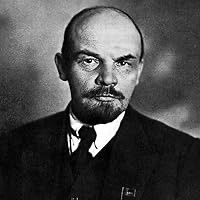
About Vladimir Lenin
We have collected 50 quotes from 3 books by Vladimir Lenin on BookQuoters.
More about the author →More by Vladimir Lenin
About the book
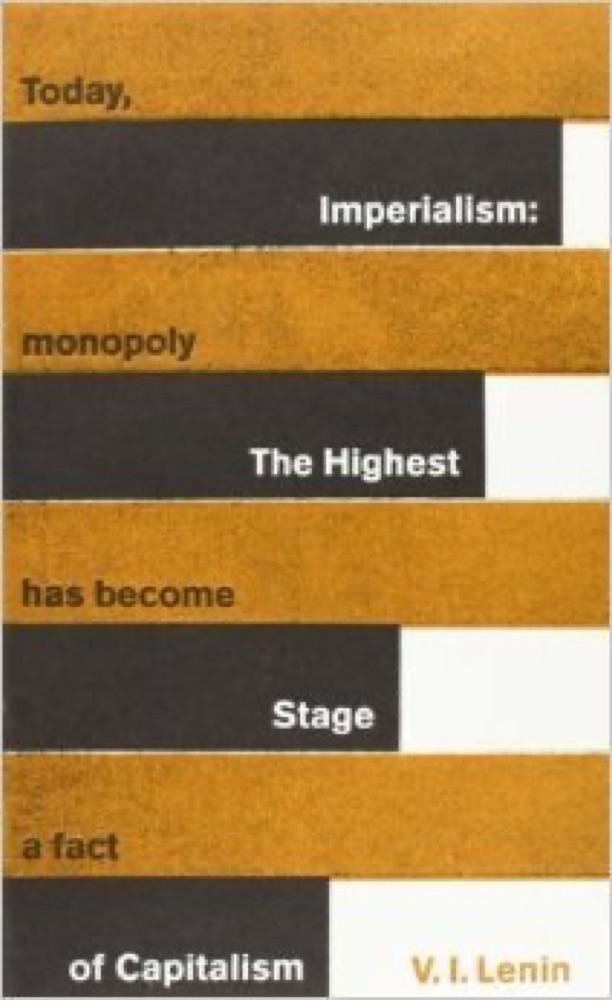
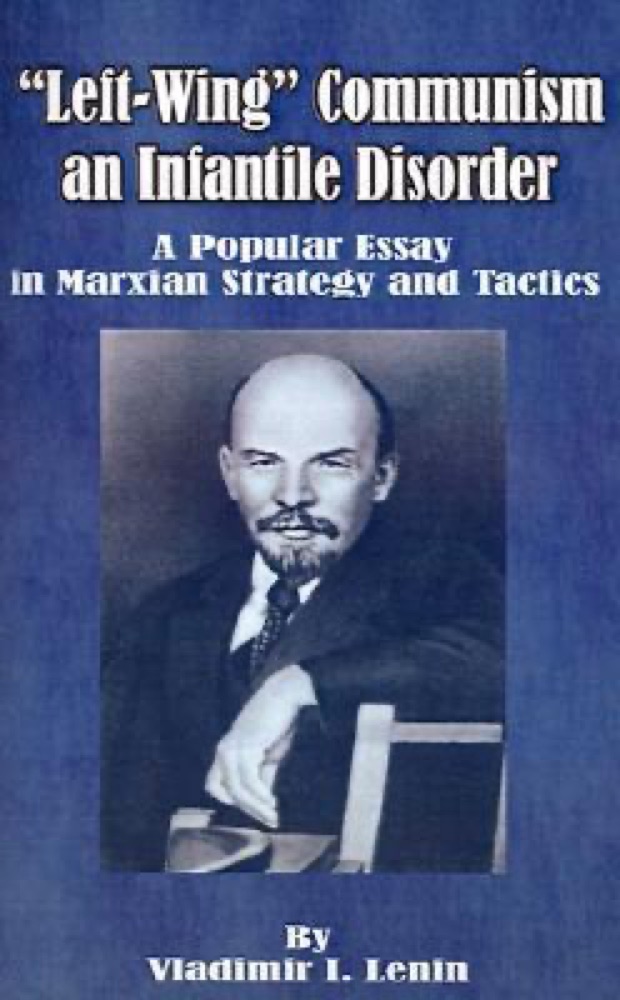
'Globalisation' is the buzzword of the 1990s. VI Lenin's Imperialism: The Highest Stage of Capitalism was one of the first attempts to account for the increasing importance of the world market in the twentieth century. Originally published in 1916, Imperialism explains how colonialism and the First World War were inherent features of the global development of the capitalist economy.
In a new introduction, Norman Lewis and James Malone contrast Lenin's approach with that adopted by contemporary theories of globalisation. They argue that, while much has changed since Lenin wrote, his theoretical framework remains the best method for understanding recent global developments.
Book details
- First published
- 1917
- Author
- Vladimir Lenin
- Genre
- Nonfiction
- Goodreads rating
- 4.28 (12k ratings)
Keep reading
 Capital
 Why Marx Was Right
 Vulture Capitalism: Corporate Crimes, Backdoor Bailouts, and the Death of Freedom
 Capitalism, Socialism and Democracy
 Socialism: Utopian and Scientific
 The Great Transformation: The Political and Economic Origins of Our Time
 The Communist Manifesto
 Wage-Labour and Capital & Value, Price and Profit
 Capital in the Twenty-First Century
 Marx: A Very Short Introduction
 Socialism: An Economic and Sociological Analysis
 An Inquiry into the Nature and Causes of the Wealth of Nations
 Capital and Ideology
 The Shock Doctrine: The Rise of Disaster Capitalism
 Capitalism: The Unknown Ideal
 First As Tragedy, Then As Farce
 The Age of Revolution, 1789–1848
 The Evolution of Everything: How New Ideas Emerge
 Principles for Dealing with the Changing World Order: Why Nations Succeed and Fail
 Blackshirts and Reds: Rational Fascism and the Overthrow of Communism
 23 Things They Don't Tell You About Capitalism
 The Revolution Betrayed
 Talking to My Daughter About the Economy: or, How Capitalism Works—and How It Fails
 The Creature from Jekyll Island: A Second Look at the Federal Reserve
 Occupy
 The End of History and the Last Man
 Four Futures: Life After Capitalism
 Capitalism and Freedom
 The Road to Serfdom
 Why Nations Fail: The Origins of Power, Prosperity, and Poverty
 Discourse on Colonialism
 Capitalism: A Ghost Story
 Political Order and Political Decay: From the Industrial Revolution to the Globalization of Democracy
 Modern Times: The World from the Twenties to the Nineties
 Capitalist Realism: Is There No Alternative?
 One-Dimensional Man: Studies in the Ideology of Advanced Industrial Society
 Socialism Is Dead! Long Live Socialism!: The Marx Code—Socialism with a Human Face: A New World Order
 The Wretched of the Earth
 The Rational Optimist: How Prosperity Evolves
 Power and Progress: Our Thousand-Year Struggle Over Technology and Prosperity
 India Unbound: The Social and Economic Revolution from Independence to the Global Information Age
 The Iron Heel
 Economics in One Lesson
 The Old Regime and the French Revolution
 Small Is Beautiful: Economics as if People Mattered
 Chomsky On Anarchism
 The Right to Be Lazy
 The Constitution of Liberty
 A Short History of Progress
 Human Action: A Treatise on Economics
 Death of the Liberal Class
 Conspirators' Hierarchy: The Story of the Committee of 300
 Ill Fares the Land
 The Fatal Conceit: The Errors of Socialism
 The Price of Tomorrow: Why Deflation is the Key to an Abundant Future
 The Prize: The Epic Quest for Oil, Money, and Power
 Liberalism: The Classical Tradition
 The Accursed Share: An Essay on General Economy, Volume I: Consumption
 America: The Farewell Tour
 Blue Mars