
 1Q84
1Q84
Quotes from the Book
I understood for the first time that I didn't understand what I thought I understood
18
As Duke Ellington once said, “There are simply two kinds of music, good music and the other kind.” In that sense, jazz and classical music are fundamentally the same. The pure joy one experiences listening to “good” music transcends questions of genre.
17
Creative people have to be fundamentally egoistic. This may sound pompous, but it happens to be the truth. People who live their lives watching what goes on around them, trying not to make waves, and looking for the easy compromise are not going to be able to do creative work, whatever their field. To build something where there was nothing requires deep individual concentration, and in most cases that kind of concentration occurs in a place unrelated to cooperation with others, a place we might even call dämonisch.
16
M.: Do you think Mahler thought he was doing something avant-garde? O.: I don’t think so. M.: Schoenberg and Alban Berg were certainly conscious of being avant-garde, though. O.: Oh, very much so. They had their “method”. Mahler had no such thing. M.: So he flirted with chaos, not as a methodology, but naturally and instinctively. Is that what you are saying? O.: Yes. Isn’t that exactly where his genius lies?
5
Despite being an amateur (or perhaps because of it), whenever I listen to music, I do so without preconceptions, simply opening my ears to the more wonderful passages and physically taking them in. When those wonderful passages are there, I feel joy, and when some parts are not so wonderful, I listen with a touch of regret. Beyond that, I might pause to think about what makes a certain passage wonderful or not so wonderful, but other musical elements are not that important to me. Basically, I believe that music exists to make people happy. In order to do so, those who make music use a wide range of techniques and methods which, in all their complexity, fascinate me in the simplest possible way.
5
In that sense, this is not a standard book of interviews. Nor is it what you might call a book of 'celebrity conversations.' What I was searching for - with increasing clarity as the sessions progressed - was something akin to the heart's natural resonance. What I did my best to hear, of course, was that resonance coming from Ozawa's heart. After all, in our conversations I was the interviewer and he was the interviewee. But what I often heard at the same time was the resonance of my own heart. At times that resonance was something I recognized as having long been a part of me, and at other times it came as a complete surprise. In other words, through a kind of sympathetic vibration that occurred during all of these conversations, I may have been simultaneously discovering Seiji Ozawa and, bit by bit, Haruki Murakami.
3
I have met many different people in the course of my life, some of whom I have come to know pretty well, but where these three traits are concerned, I had never encountered anyone before Seiji Ozawa with whom I found it so easy and natural to identify. In that sense, he is a precious person to me. It sets my mind at ease to know that there is someone like him in the world.
2
I simply wanted to bring out the ways that each of us (though on vastly different levels) is dedicated to music. That was my original motive, and I like to think that, to some extent, I have succeeded.
2
Like love, there can never be too much “good music.” The number of people who use it as a fuel to recharge their appetite for life is beyond counting.
1
The pure joy one experiences listening to “good” music transcends questions of genre.
1
If you're writing fiction, say, it's important to be able to write, of course, but before that you have to have a strong sense in mind of something you are determined to write about.
1
You can usually tell whether a new writer's work is going to last by whether or not the style has a sense of rhythm. From what I've seen, though, most literary critics ignore that element. They mainly talk about the subtlety of the style, the newness of the writer's vocabulary, the narrative momentum, the quality of the themes, the use of interesting techniques, and so forth. But I think that someone who writes without rhythm lacks the talent to be a writer.
1
Brahms uses the horns with great skill, as if calling the audience deep into a German forest. The sound carries with it an important part of Brahms' internal spiritual world. Behind the horns, the timpani pulsate softly but insistently, as if secretly waiting for something with real meaning. This is a part well worth the great care that has been lavished on its editing.
1
Arnold Schoenberg has said that "music is not a sound but an idea," but ordinary people can't listen to it that way.
1
What interests me when I'm listening to Gould is the way he deliberately brings contrapuntal elements into performances of Beethoven. He doesn't just try to harmonize with the orchestra but deliberately overlays their music with his, and, as a result, creates a natural tension between the two. This was a fresh interpretation of Beethoven.
1
Maybe three or four years after I stepped in, the sound changed — to the clear, concentrated German style I call "into the strings". The players put the bow in deep. It makes for a heavier sound. Until then the Boston sound was always light and beautiful. That's because they used to concentrate on French music, Munch and Pierre Monteux had a major influence.
1
First of all, both of us seem to take the same simple joy in our work. Whatever differences there might be between making music and writing fiction, both of us are happiest when absorbed in our work. And
1
Murakami: Had you been listening to Mahler before Bernstein got you started? Ozawa: No, not at all. […] It was a huge shock for me – until then I never even knew music like that existed. I mean, here at Tanglewood, playing Tchaikovsky and Debussy, and meanwhile there’s this guy putting all his energy into studying Mahler. I could feel the blood draining from my face. I had to order my own copies right then and there. After that, I started reading Mahler like crazy – the First, the Second, the Fifth. Murakami: Did you enjoy just reading the scores? Ozawa: Oh, tremendously. I mean, it was the first time in my life I had ever seen anything like them. To think there were scores like this! Murakami: Was it a completely different world from the music you had been playing until then? Ozawa: First of all, I was amazed that there was someone who knew how to use an orchestra so well. It was extreme – his marvelous ability to put every component of the orchestra to use. And from the orchestra’s point of view, the Mahler symphonies are the most challenging pieces ever.
1
Murakami: But he does it with so much humor, and the audience, while taken aback, is laughing quite a lot. Ozawa: Well, sure, Lenny was such a good talker.
1
As a conductor of orchestras, Ozawa is quite naturally in touch with a large number of people on a daily basis and has to act as the guiding member of a team. But no matter how talented he might be, people would not follow him if he were constantly moody and difficult. Interpersonal relations take on a great significance. A conductor needs like-minded musical colleagues, and he is often called upon to perform social and even entrepreneurial tasks. He has to give much thought to his audiences. And as a musician, he has to devote a good deal of energy to the guidance of the next generation. By contrast, as a novelist I am free to spend my life hardly seeing or talking to anyone for days at a time, and never appearing in the media. I rarely have to do anything that involves teamwork, and while it’s best to have some colleagues, I don’t especially need any. I just have to stay in the house and write—alone. The thought of guiding the next generation has never crossed my mind, I’m sorry to say (not that anyone has ever asked me to do such a thing).
1
1962 performance of the Brahms Piano Concerto no. 1 by Glenn Gould with Leonard Bernstein conducting the New York Philharmonic.
1
Klimt’s work is beautiful and painted with minute attention to detail; but looking at it, don’t you think there’s something kind of crazy about it, too? MURAKAMI: Yes, it’s certainly not what you’d call “normal.” OZAWA: There’s something about it, I don’t know, that tells you about the importance of madness, or that transcends things like morality. And in fact, at the time, morality really was breaking down, and there was a lot of sickness going around. MURAKAMI:
1
Mann said a lot about the breath. When people sing, they have to take a breath at some point. But “unfortunately,” he said, string instruments don’t have to breathe, so you have to keep the breath in mind as you play. That “unfortunately” was interesting. He also talked a lot about silence.
OZAWA: Hmm, how can I put it? If you sing a-a-a, it’s all vowel. But if you add consonants to each of the a’s, you get something like ta-ka-ka or ha-sa-sa. It’s a question of which consonants you add. It’s easy enough to make the first ta or ha, but the hard part is what follows. If it’s all consonant—ta-t-t—the melody falls apart. But the expression of the notes changes depending on whether you go ta-raa-raa or ta-waa-waa. To have a good musical ear means having control over the consonants and vowels.
OZAWA: Now, we’re completely in Glenn Gould’s world. He’s totally in charge now. In Japan we talk about ma in Asian music—the importance of those pauses or empty spaces—but it’s there in Western music, too. You get a musician like Glenn Gould, and he’s doing exactly the same thing. Not everybody can do it—certainly no ordinary musician. But somebody like him does it all the time.
OZAWA: Yes, I was there. As Lenny’s assistant conductor.
Watch on YouTube
About Haruki Murakami
We have collected 699 quotes from 26 books by Haruki Murakami on BookQuoters.
More about the author →More by Haruki Murakami
All books by Haruki Murakami →

About the book
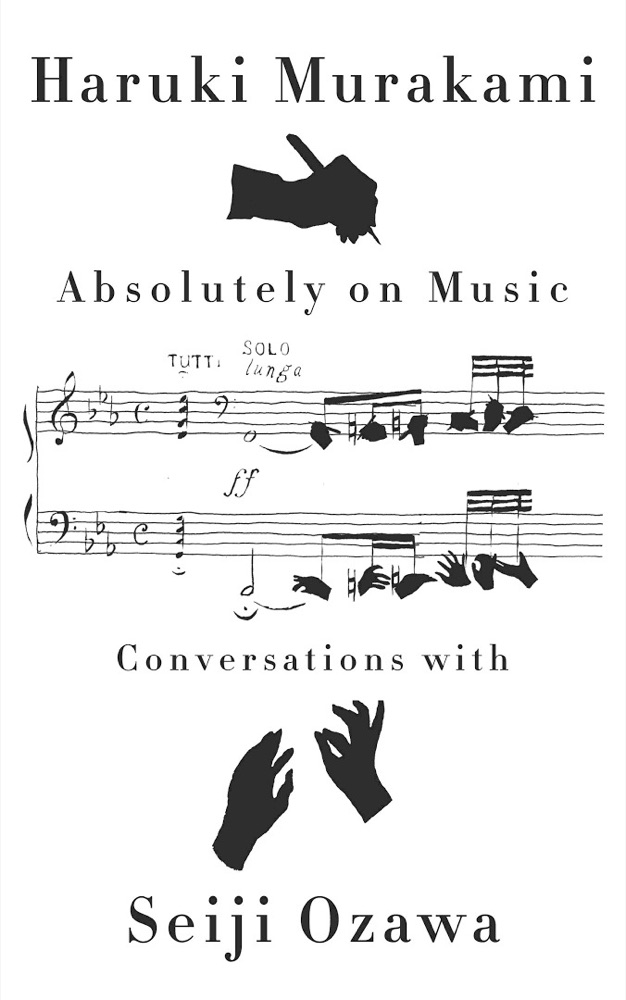
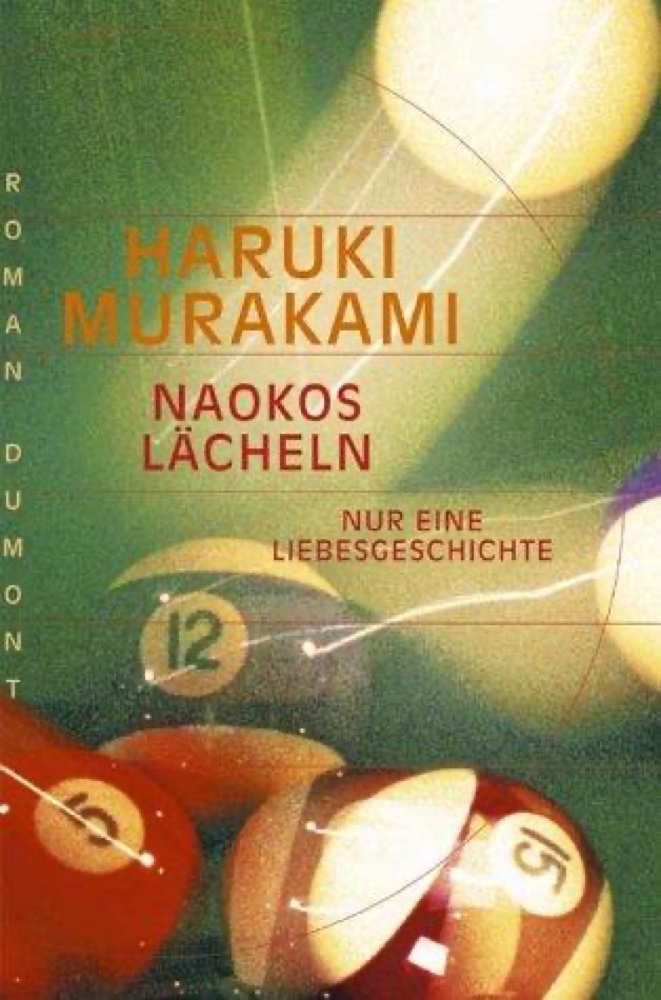
A deeply personal, intimate conversation about music and writing between the internationally acclaimed, best-selling author and his close friend, the former conductor of the Boston Symphony Orchestra.
Haruki Murakami's passion for music runs deep. Before turning his hand to writing, he ran a jazz club in Tokyo, and from The Beatles' Norwegian Wood to Franz Liszt's Years of Pilgrimage, the aesthetic and emotional power of music permeates every one of his much-loved books. Now, in Absolutely on Music, Murakami fulfills a personal dream, sitting down with his friend, acclaimed conductor Seiji Ozawa, to talk, over a period of two years, about their shared interest. Transcribed from lengthy conversations about the nature of music and writing, here they discuss everything from Brahms to Beethoven, from Leonard Bernstein to Glenn Gould, from record collecting to pop-up orchestras, and much m
Book details
- First published
- 2011
- Author
- Haruki Murakami
- Genre
- Nonfiction
- Goodreads rating
- 3.89 (7k ratings)
Keep reading
 Silence: Lectures and Writings
 How Music Works
 Every Good Boy Does Fine: A Love Story, in Music Lessons
 Orfeo
Orfeo
 Songbook
 Musicophilia: Tales of Music and the Brain
 Body and Soul
 Miles: The Autobiography
 The Music Lesson: A Spiritual Search for Growth Through Music
 Mo' Meta Blues: The World According to Questlove
 The Last Samurai
 The Violin Conspiracy
 This Is Your Brain on Music
 The Soloist: A Lost Dream, an Unlikely Friendship, and the Redemptive Power of Music
 How to Listen to Jazz
 Let's Go (So We Can Get Back): A Memoir of Recording and Discording with Wilco, Etc.
 Creativity: Flow and the Psychology of Discovery and Invention
 The Real Frank Zappa Book
 How to Write One Song: Loving the Things We Create and How They Love Us Back
 Both Flesh and Not: Essays
 Madness, Rack, and Honey: Collected Lectures
 Home: A Memoir of My Early Years
 The Secret Piano: From Mao's Labor Camps to Bach's Goldberg Variations
![Paul Simon: The Life [Deckle Edge]](/i/book/g/9b/paul-simon-the-life-deckle-edge.jpg) Paul Simon: The Life [Deckle Edge]
Paul Simon: The Life [Deckle Edge]
 Novelist as a Vocation
 Honeybees and Distant Thunder
 Main Lines, Blood Feasts, and Bad Taste: A Lester Bangs Reader
 Dæmon Voices
 Slumberland
 The Facts Behind the Helsinki Roccamatios
 Doctor Faustus
 The Little Country
 Mozart's Starling
 Life
Life
 Walk Through Walls: A Memoir
 Piece by Piece
 Utopia Avenue
 Silence: In the Age of Noise
 Girl with Curious Hair
 This Is What It Sounds Like: What the Music You Love Says About You
 The Forest of Wool and Steel
 If You Want to Write: A Book about Art, Independence and Spirit
 Lectures on Literature
 Born to Run
 Waging Heavy Peace: A Hippie Dream
 The Geography of Genius: A Search for the World's Most Creative Places from Ancient Athens to Silicon Valley
 The Anthologist
 Tibetan Peach Pie
 The Uncool
 The Wave in the Mind: Talks and Essays on the Writer, the Reader and the Imagination
 An Equal Music
 How to Read Literature
 The Magic Strings of Frankie Presto
 An Experiment in Criticism
 Min kamp 2
 Sculpting in Time
 Illuminations: Essays and Reflections
 Edinburgh
 Acid for the Children
 Bicycle Diaries