 Orfeo
Orfeo
Quotes from the Book
And what else is music but a space for us to live in, for a while.
4
Remember: music is not the notes. It is between the notes. [György Sebők]
2
Insert countless hours of practicing in a windowless room.
2
the importance of finding a place where the story falls apart, the importance of making you believe in your doubt.
2
my body split in two: a brain that was willing and hands like the postal service, subject to inexplicable delays in delivery.
2
One teacher’s comment, even one you’ve forgotten, may become the essence of you; it’s just hard to know which one.
2
If you forced me to sum it up, I’d tell you that is the point of this book: a love for the steps, the joys of growing and outgrowing and being outgrown. And—just as in the Mozart—how time seems to stop, or even go in reverse, when you are learning.
2
...the performer has two tasks: one is to do what's written in the score--incredibly important; and the other, even more important, is to find everything's that not.
1
While adding new lessons, you have to keep listening to the old ones—
1
I suppose you could pick Rachmaninoff, if you were feeling whorish (can’t wait for the hate mail on this one).
1
You spend your life passing on a tradition to a younger generation, and sometimes they can’t help themselves—they have to spit on it.
1
If you’re in a conservatory, I’d advise you not to get involved musically with people you have even the remotest sense you might be in love with, which can be filed under Advice No One Will Ever Take.
1
Most of all, he felt a continuous need to say what he thought, to declare what was good and what was bad. Many students feel that need, and teachers have to find a way not to kill them.
1
like those moments after the last dinner party guest has left and you survey your kitchen to see if any corner of the countertop seems like a reasonable place to start, or whether you should just sell your house instead
1
The French literary critic Roland Barthes explains that this is because storytelling is a transaction, that it extracts a price from both the teller and the listener, whether we know it or not, and sometimes the cost changes everything.
1
I read all the time and didn’t socialize. (To me this made perfect sense. Books were less likely to hit you than other kids; reading was a refuge and an activity that Mom and Dad wouldn’t complain about.)
1
A pair of vanishings: her father from a heart attack, her husband from a different failing of the heart. In music, the return of a theme is often a comfort or delight, but in real life not so much.
1
I feel Bach's voice in those three notes, like a message in a bottle, trying to cross the ocean of harmony he himself has created. What's the message? Those notes don't say we're in a place. How could they? We're still en route. But they remember being in a place. They remember having a home, while the chords, time, life keep shifting on.
Leland had been right to remind me that there was no end to the details one could strive for, but Sebok was also right – the desire for perfection could be a deadly weakness. Living comfortably in that paradox, without even knowing it, is part of being a musician. There’s a labyrinth of voices inside your head, a counterpoint of self-awareness and the remembered sayings of your guides and mentors, who don’t always agree. Sometimes you wish you could go back to ask your teachers again to guide you; but up there onstage, exactly where they always wanted you to be, you must simply find your way. They have given all the help they can; the only person who can solve the labyrinth of yourself is you.
But rhythms offer something to hold on to and lean against, a refuge against both change and monotony. Watching dancing friends in a club, I can see that the beat creates a protected space, a force field around them, that lets them let it all out: a structure that at once gives shelter and permits freedom. And what else is music but a space for us to live in, for a while.
responsibilities, my parents said, over and over. Excellence meant a few moments of praise, and countless more hours of work.
You passed. But have you considered the word "la"?
One of the reasons I never enjoy the music of Shostakovich, although I admire it and think it captures an essential part of the human condition. is that it's all impasse with no release. When there are solutions, they tend to be grudging, tragic, or ambivalent, like the famous ending of the Fifth Symphony that everyone argues about.
Evil moment, when you doubt the magician's magic, when you wonder if it was more image than insight.
With that I plunked out da-da-da-dum, the famous opening of the Fifth Symphony. A titter ran through the crowd—laughter of recognition. It’s just a rhythm. Once it was a half-formed idea, but now it’s almost a prerequisite of existence.
Therefore the most desired and beautiful note is also the briefest—a moral and a meaning, hiding in an “innocent” tune.
Watch on YouTube
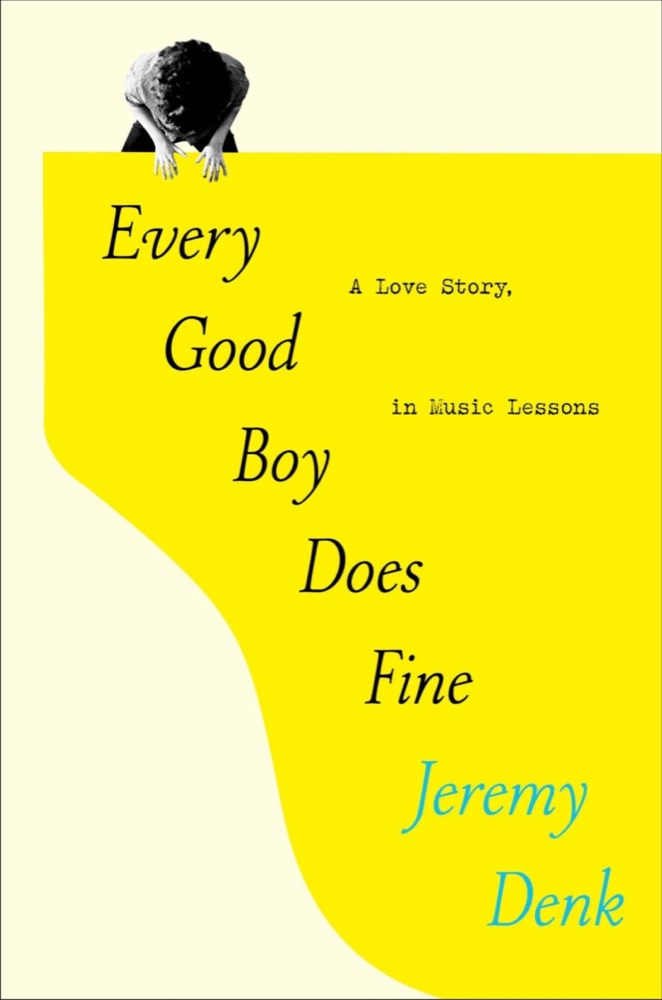
About Jeremy Denk
About the book
A beautifully written, witty memoir that is also an immersive exploration of classical music--its power, its meanings, and what it can teach us about ourselves--from the MacArthur Genius Grant-winning pianist
"Jeremy Denk has written a love letter to the music, and especially to the music teachers, in his life."--Conrad Tao, pianist and composer
In Every Good Boy Does Fine, renowned pianist Jeremy Denk traces an implausible journey. His life is already a little tough as a precocious, temperamental six-year-old piano prodigy in New Jersey, and then a family meltdown forces a move to New Mexico. There, Denk must please a new taskmaster, an embittered but devoted professor, while navigating junior high school. At sixteen he escapes to college in Ohio, only to encounter a bewildering new cast of music teachers, both kind and cruel. After many humiliations and a few triumphs, he ultimat
Book details
- First published
- 2022
- Author
- Jeremy Denk
- Genre
- Biography
- Goodreads rating
- 4.03 (2k ratings)
The buzz
- The New York TimesReview in The New York Timesprofessional review (via Book Marks)
- The Times Literary SupplementReview in The Times Literary Supplementprofessional review (via Book Marks)
- Kirkus ReviewsReview in Kirkus Reviewsprofessional review (via Book Marks)
- Publishers WeeklyReview in Publishers Weeklyprofessional review (via Book Marks)
- Star TribuneReview in Star Tribuneprofessional review (via Book Marks)
- NybooksReview in Nybooksprofessional review (via Book Marks)
Keep reading
Orfeo
 Silence: Lectures and Writings
 Mo' Meta Blues: The World According to Questlove
 Body and Soul
 The Magic Strings of Frankie Presto
 The Last Samurai
 The Violin Conspiracy
 The Secret Piano: From Mao's Labor Camps to Bach's Goldberg Variations
 The Recognitions
 How Music Works
 The Uncool
 The Noise of Time
 The Austere Academy
 The Music Lesson: A Spiritual Search for Growth Through Music
 Born to Run
 Utopia Avenue
 Europe Central
 The Tsar of Love and Techno
 The Book of Dreams
 A Bright Ray of Darkness
 The Chimes
 Old School
 The Swan Thieves
 Life Itself
 They're Going to Love You
 Broken Music
 Soul Music
 A Room with a View
 Table for Two
 The Song Is You
 The Book of Love
 The Soloist: A Lost Dream, an Unlikely Friendship, and the Redemptive Power of Music
 Hard-Boiled Wonderland and the End of the World
 The Anthologist
 Asymmetry
 Hourglass: Time, Memory, Marriage
 Min kamp 2
 Songbook
 This Is Happiness
 A Circle of Quiet
 A Fraction of the Whole
 My Name Is Barbra
 Life
Life
 Hearts in Atlantis
 White Tears
 No One Writes Back
 How to Write One Song: Loving the Things We Create and How They Love Us Back
 The Brooklyn Follies
 Bel Canto
 Piece by Piece
 Sixty Stories
 Absolutely on Music: Conversations with Seiji Ozawa
 Flights
 Winter Hours: Prose, Prose Poems, and Poems
 The Glass Bead Game
 Speedboat
 Sometimes a Great Notion
 The Illustrated Man
 The Great Mistake
 There but for the