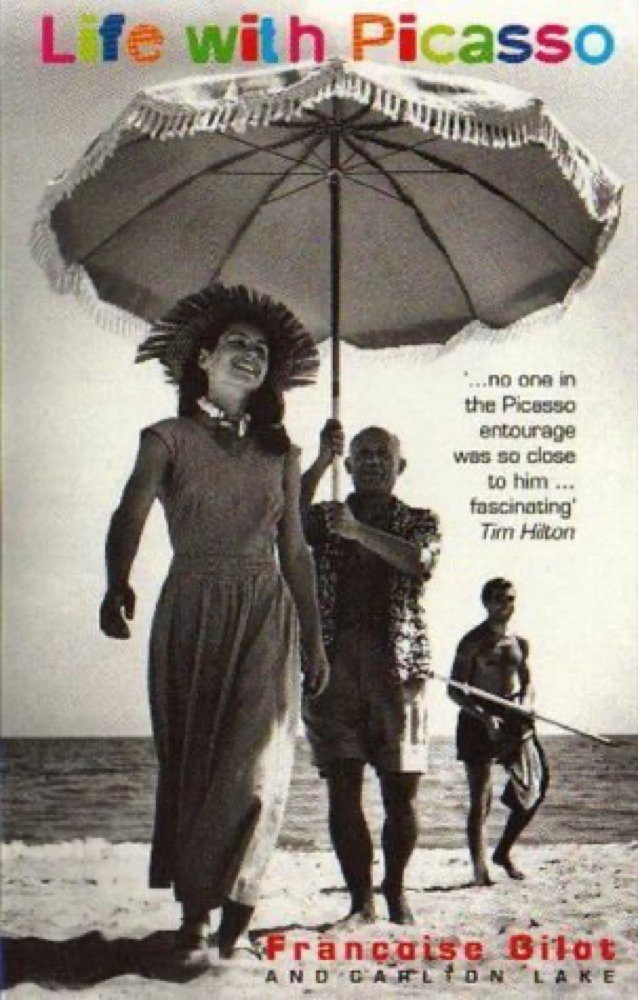
 Life with Picasso
Quotes from the Book
It is incredible how fear is built into you, by your parents and others surrounding you. You’re so innocent in the beginning; you don’t know.
59
For the first three months, I place each student at a table with a thousand pieces of white paper and a trash can underneath. Every day they have to sit at the table for several hours and write ideas. They put the ideas they like on the right side of the table; the ones they don’t like, they put in the trash. But we don’t throw out the trash. After three months, I only take the ideas from the trash can. I don’t even look at the ideas they liked. Because the trash can is a treasure trove of things they’re afraid to do.
47
What you’re doing is not important. What is really important is the state of mind from which you do it. Performance
41
If you experiment, you have to fail. By definition, experimenting means going to territory where you’ve never been, where failure is very possible. How can you know you’re going to succeed? Having the courage to face the unknown is so important. I
34
AN ARTIST’S RELATION TO SOLITUDE: An artist must make time for the long periods of solitude Solitude is extremely important Away from home, Away from the studio, Away from family, Away from friends An artist should stay for long periods of time at waterfalls An artist should stay for long periods of time at exploding volcanoes An artist should stay for long periods of time looking at fast-running rivers An artist should stay for long periods of time looking at the horizon where the ocean and sky meet An artist should stay for long periods of time looking at the stars in the night sky —An Artist’s Life Manifesto: Marina Abramović
22
When I was young it was impossible for me to talk to people. Now I can stand in front of three thousand people without any notes, any preconception of what I’m going to say, even without visual material, and I can look at everyone in the audience and talk for two hours easily. What happened? Art happened.
19
Some couples buy pots and pans when they move in together. Ulay and I began planning how to make art together.
18
It taught me that the process was more important than the result, just as the performance means more to me than the object. I saw the process of making it and then the process of its unmaking. There was no duration or stability to it. It was pure process. Later on I read—and loved—the Yves Klein quote: “My paintings are but the ashes of my art.
18
I always question artists who are successful in whatever they do—I think what that means is that they’re repeating themselves and not taking enough risks.
17
Two worms lived in shit, a father and son. The father said to his son, “Look at the wonderful life we have. We have plenty to eat and plenty to drink, and we are protected from outside enemies. We have nothing to worry about.” The son said to his father, “But father, I have a friend who lives in an apple. He also has plenty to eat, plenty to drink, is protected from outside enemies, and, he smells good. Can we live in an apple instead?” “No, we can’t,” replied the father. “Why?” said the son. “Because, my son, the shit is our country.
12
Then I woke up and the reality of the dream was stronger than the reality of the day.
11
Human beings are afraid of very simple things: we fear suffering, we fear mortality. What I was doing in Rhythm 0—as in all my other performances—was staging these fears for the audience: using their energy to push my body as far as possible. In the process, I liberated myself from my fears. And as this happened, I became a mirror for the audience—if I could do it, they could do it, too.
10
Much later on, I read a statement of Bruce Nauman's: “Art is a matter of life and death.” It sounds melodramatic, but it's so true. This was exactly how it was for me
9
I came to believe in the idea of parallel realities. I think that the reality we see now is a certain frequency, and that we're all on the same frequency, so we're visible to each other, but that it's possible to change frequencies. To enter a different reality. And I think that there are hundreds of these realities.
8
I realized that this is the theme I return to constantly - I'm always trying to prove to everyone that I can go it alone, that I can survive, that I don't need anybody.
7
Failures are very important - they mean a great deal to me. After a big failure, I go into a deep depression and a very dark part of my body, but soon afterward I come back to life again, alive to something else. I always question artists who are successful in whatever they do - I think what that means is that they're repeating themselves and not taking enough risks. If you experiment, you have to fail. By definition, experimenting means going to territory where you've never been, where failure is very possible. How can you know you're going to succeed? Having the courage to face the unknown is so important. I love to live in the spaces in between, the places where you leave the comforts of your home and your habits behind and make yourself completely open to chance.
5
<...> you can tell the most terrible truths if you first open the human heart with humor.
5
Travelling makes a person young because he doesn't get time to get old.
5
But I was also becoming aware of the changes in my own energy as I walked over different kinds of terrain. Sometimes there was clay under my feet, sometimes iron ore, sometimes quartz or copper. I wanted to try to understand the connections between human energy and the earth itself. In
5
I had come to believe that art must be disturbing, art must ask questions, art must predict the future. If art is just political, it becomes like newspaper. It can be used once, and the next day it's yesterday's news. Only layers of meaning can give long life to art - that way, society takes what it needs from the work over time.
3
We had no money, but I felt we were rich: the pleasure of having some pecorino cheese, a few garden-grown tomatoes, and a liter of olive oil; of making love in the car, with Alba just sleeping quietly in the corner, was beyond wealth. There is no price for that. It was so impossibly beautiful - all three of us breathing the same rhythm, the days going by...
3
Tehching Hsieh—for me, always a true master of performance art, and one who truly represents transformation. Tehching has made five performances in his life, each of them lasting for one year. He followed this with a thirteen-year plan, in which he made art without showing it. If you ask him what he’s doing now, he will say he is doing life. And this, for me, is the ultimate proof of his mastery.
3
Failures are very important—they mean a great deal to me. After a big failure, I go into a deep depression and a very dark part of my body, but soon afterward I come back to life again, alive to something else.
1
The whole point of Art Must Be Beautiful, Art Must Be Beautiful was to destroy that image of beauty. Because I had come to believe that art must be disturbing, art must ask questions, art must predict the future. If art is just political, it becomes like newspapers. It can be used once, and the next day it's yesterday's news. Only layers of meaning can give long life to art - that way, society takes what it needs from the work over time.
1
Je crois passionnément que, si on possède la fin de créer, on n'a pas le droit de se tuer parce qu'il est de votre devoir de partager ce son avec autrui.
1
La peur vient de vos parents et d'autres membres de votre entourage. Ce sont eux qui la construisent en vous. On est tellement innocent au début; on ne sait pas
1
Watch on YouTube
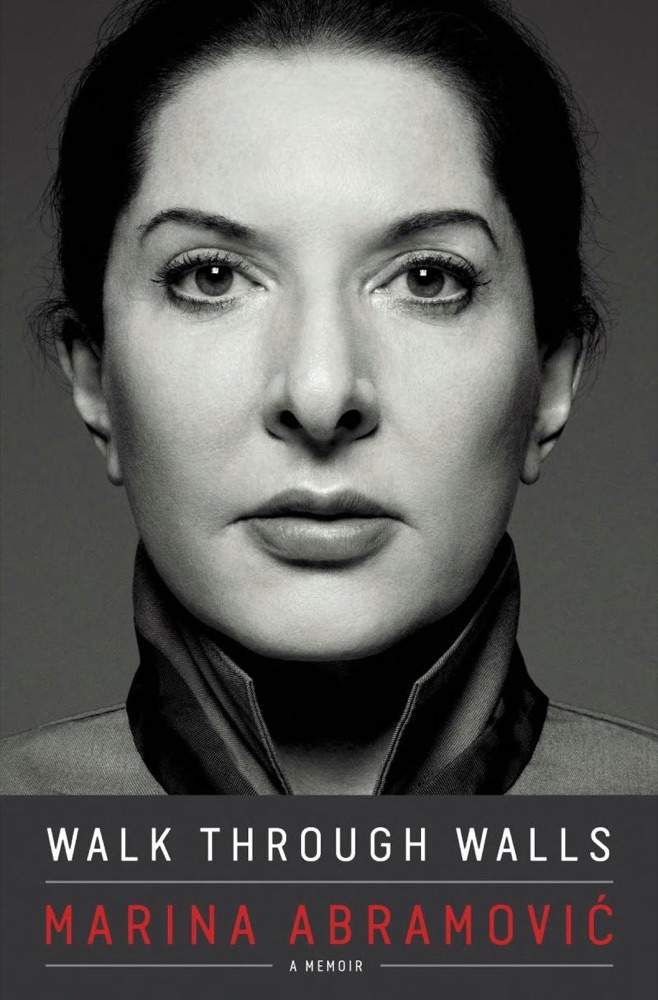
About Marina Abramović
We have collected 26 quotes from 1 book by Marina Abramović on BookQuoters.
More about the author →About the book
“I had experienced absolute freedom—I had felt that my body was without boundaries, limitless; that pain didn’t matter, that nothing mattered at all—and it intoxicated me.”
In 2010, more than 750,000 people stood in line at Marina Abramović’s MoMA retrospective for the chance to sit across from her and communicate with her nonverbally in an unprecedented durational performance that lasted more than 700 hours. This celebration of nearly fifty years of groundbreaking performance art demonstrated once again that Marina Abramović is truly a force of nature.
The child of Communist war-hero parents under Tito’s regime in postwar Yugoslavia, she was raised with a relentless work ethic. Even as she was beginning to build an international artistic career, Marina lived at home under her mother’s abusive control, strictly obeying a 10 p.m. curfew. But nothing could quell her insatiable curios
Book details
- First published
- 2016
- Author
- Marina Abramović
- Genre
- Nonfiction
- Goodreads rating
- 4.55 (22k ratings)
Keep reading
Life with Picasso
 The Museum of Modern Love
 Yumi and the Nightmare Painter
 They're Going to Love You
 Stories of Your Life and Others
 Flights
 What I Loved
 The Color of Everything: A Journey to Quiet the Chaos Within
 Min kamp 2
 The Muse
 Moon Palace
 Born to Run
 Mao II
 No One Writes Back
 The Painter
 Anthropology of an American Girl
 Creativity: Flow and the Psychology of Discovery and Invention
 The House of Hidden Meanings
 Bono: In Conversation with Michka Assayas
 Killing Commendatore
 Managing Expectations: A Memoir in Essays – A Poignant Collection of Personal Stories on Acting, Failure, and Motherhood's Joy
 A Room Called Earth
 Four Treasures of the Sky
 Knife: Meditations After an Attempted Murder
 The Philosophy of Andy Warhol
 The Diary of Anaïs Nin, Vol. 1: 1931-1934
 How to Write an Autobiographical Novel
 Breasts and Eggs
 Like Streams to the Ocean: Notes on Ego, Love, and the Things That Make Us Who We Are
 Kafka on the Shore
 Identity
 On Connection
 Journal of a Solitude
 Broken Horses
 To Shake the Sleeping Self: A Journey from Oregon to Patagonia, and a Quest for a Life with No Regret
 The Artist's Way
 The Likeness
 Lanark
 Asymmetry
 Agatha Christie: An Autobiography
 Buffering: Unshared Tales of a Life Fully Loaded
 The Blazing World
 Just Above My Head
 Dream Count
 The Notebooks of Malte Laurids Brigge
 The Museum of Intangible Things
 To Throw Away Unopened
 A Sudden Light
 The Stone Gods
 The Goldfinch
 The Humans
 In the Dream House
 All the Lovers in the Night
 The War of Art
 Art and Lies
 Running from Safety: An Adventure of the Spirit
 The Swan Thieves
 Blueberries: Essays Concerning Understanding
 Hard-Boiled Wonderland and the End of the World
 Ayoade on Top