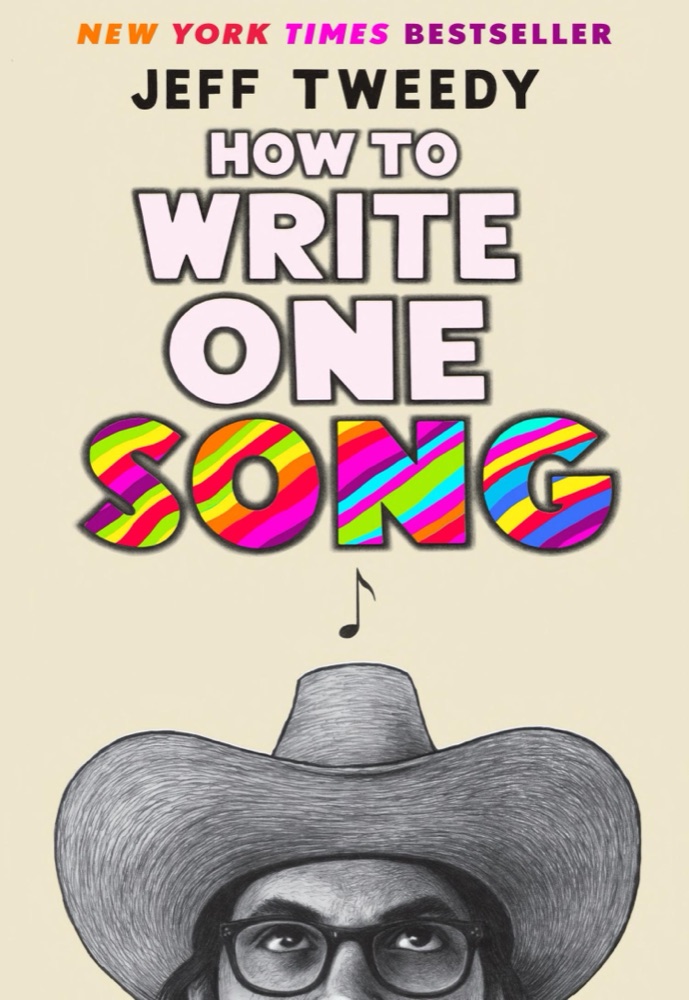
 How to Write One Song: Loving the Things We Create and How They Love Us Back
Quotes from the Book
I like to believe most people's natural state is to be creative. It definitely was when we were kids, when being spontaneously and joyfully creative was just our default setting. As we grow we learn to evaluate and judge, to navigate the world with some discretion, and then we turn on ourselves. Creating can't just be for the sake of creating anymore. It has to be good, or it has to mean something. We get scared out of our wits by the possibility of someone rejecting our creation.
13
I think that may be the highest purpose of any work of art, to inspire someone else to save themselves through art. Creating creates creators.
8
Learning how to play guitar is the one thing I always look back on with wonderment. I’m reminded of “What ifs?” every time I pick up a guitar. Where would I be? I have sort of a survivor’s guilt about it that makes me want it for everyone. Not the “guitar” exactly, but something like it for everybody. Something that would love them back the more they love it. Something that would remind them of how far they’ve come and provide clear evidence that the future is always unfolding toward some small treasure worth waiting for. At the very least, I wish everyone had a way to kill time without hurting anyone, including themselves. That’s what I wish. That’s what the guitar became for me that summer and is to me still.
8
If there’s one thing that’s 100 percent true about every intoxicated person in world history, it’s that you shouldn’t believe them when they say they love you. The only difference between you and that slice of cold pizza back at their apartment is that they haven’t met the pizza yet.
5
And I would guess there’s a lot more similarity in how we suffer than the way we experience joy. Rejection stays with you, but I don’t think people register it when they’re happy. They don’t say, “I need to remember what this feels like.” It just goes by, and it’s perfect and awesome, and you feel grateful that you get to experience even a fleeting moment of pure, unbridled, unsarcastic bliss. But when we experience pain or trauma, we’re acutely aware that something is wrong. You want answers. “What is this? How do I get rid of this? Why is this happening to me? I don’t want this.” That’s why so much art, and music, in particular, becomes a great commiserating balm for pain. Joy doesn’t need to be audited. We’re just grateful to have had it at all. But pain, goddammit, we demand to know Who’s responsible for this?
5
The Chicago historian Studs Terkel asked Bob Dylan in the sixties about how he went about writing a song and trying to outdo himself, or at least being as good as the last song he wrote, and his response was pretty damn perfect. “I’m content with the same old piece of wood,” he said. “I just want to find another place to pound a nail . . . Music, my writing, is something special, not sacred.” If the songs Bob Dylan wrote aren’t sacred, then nobody’s songs are sacred. Nobody’s. No one has ever laid on their deathbed thinking, “Thank god I didn’t make that song. Thank god I didn’t make that piece of art. Thank god I avoided the embarrassment of putting a bad poem into the world.” Nobody reaches the end of their life and regrets even a single moment of creating something, no matter how shitty or unappreciated that something might have been. I’m writing this just weeks after returning from Belleville, where I sat next to my dad’s bed in my childhood house and watched him die. I can guarantee you that in the final moments of his life, he wasn’t kicking himself for all those times when he dared to make a fool of himself by singing too loud.
4
Music is most magical when everyone can lose the burden of self and be put back together as a part of something bigger, or other. I think of it as egos blending, singer into musician into listener. Something like that feels right to me. Anyway, it’s something worth aiming for.
4
But when we experience pain or trauma, we’re acutely aware that something is wrong. You want answers. “What is this? How do I get rid of this? Why is this happening to me? I don’t want this.” That’s why so much art, and music, in particular, becomes a great commiserating balm for pain. Joy doesn’t need to be audited. We’re just grateful to have had it at all. But pain, goddammit, we demand to know Who’s responsible for this?
3
search for “Rich Kelly & Friendship” and “I’d Like to Teach the World to Sing.” Then watch it. In its entirety. But if you’re in a hurry, fast-forward to the 1:35 mark, when the bassist breaks into a happy foot solo.
3
There's an amazing opportunity that so few people ever have in their lives to fulfill a wish for somebody. It's so rare that such a simple act, like playing a song someone loves, can make someone so happy. If you have that opportunity—the power to do that for anyone—that's an incredible gift.
2
It seems to me that the only wrong thing I could do with whatever gifts I've been given as a musician or an artist would be to let curiosity die.
2
Melody is king. Songs are ruled by melody. I believe that melody, more than lyrics, is what does all the heavy lifting emotionally. When I write lyrics, or when I adapt a poem to a song, my goal is to interfere as little as possible with whatever spell is being cast by the melody. At the same time, I hope, at best, that the words enhance the song somehow, add meaning or clarify and underline what the melody is making me feel.
2
Allowing something you’ve created to be undermined to a point where you can no longer believe in it or stand behind it feels suicidal to me.
2
I became a songwriter not when I composed that perfect couplet, or experienced the right amount of pain. It’s when I realized that whatever I wrote, even if it meant gutting myself in front of strangers, letting all those raw emotions come flooding out, making a fool of myself with my own words, was exactly what I always wanted to do with my life.
2
I have sort of a survivor’s guilt about it that makes me want it for everyone. Not the “guitar” exactly, but something like it for everybody. Something that would love them back the more they love it. Something that would remind them of how far they’ve come and provide clear evidence that the future is always unfolding toward some small treasure worth waiting for. At the very least, I wish everyone had a way to kill time without hurting anyone, including themselves. That’s what I wish.
2
Now, isn’t that neat.” Midwestern sarcasm, when it’s done correctly, can be a thing of rare beauty. It’s like performance art. Everywhere else in the world, you can identify sarcasm if you’re paying attention. Even if the hostility isn’t overt, you can read the signs. There’ll be slightly elongated syllables or a pitch that’s just a little off. It’s like a trombone player with a plunger head. There’s that slight “wah-wah” tone-bending to let you know not to take this too seriously. Midwestern sarcasm plays it straight and makes you listen more closely. You have to treat every conversation like a safecracker. Unless your ears have been trained to recognize it, you’ll miss the hint of a minor key. Sometimes you don’t realize what’s happened until hours later, when it’s 3:00 a.m. and you’re half-asleep, and it suddenly hits you. “Aw, crap, they didn’t mean any of that, did they?” Midwestern sarcasm becomes even more deadly when it’s combined with small-town isolationism. These women had been cheerleaders at our high school, they weren’t indie rock aficionados, and Wilco isn’t exactly a household name. So on the one hand, it wasn’t surprising that they hadn’t followed every turn in my career. It’s shocking that they even remembered I played music at all.
2
Every time somebody asks me, “How ’bout the Cubs?” I want to respond with “Yeah, the Cubs, they’re going to die someday. Do you ever think about that? All of them. All of them. Rizzo. Bryant. The one with the goatee. The other ones. The entire team. Some of them probably soon, you don’t know. They could be dying right now while we’re sitting here making conversation about baseball. Death is lurking.” Susie always wants me to come with her to these type of gatherings and she almost always regrets it.
1
The way I feel about Susie, the way she’s loved me and changed me, it can’t be in my songs. It’s too big for songs. Maybe, occasionally, I can get a part of it to fit. Sometimes it gets deep in the track where I can feel it but it’s never put into words. If you’ve ever been in a relationship that you took for granted, even when it was the one thing holding you together, and you somehow didn’t lose it despite acting like an idiot, then you know how difficult it is to convey that amount of gratitude, much less set it to music. I wouldn’t know where to begin.
1
I think I’ve finally stopped worrying about getting back from somewhere less comfortable—some place where I’m sure I’m going to be miserable. I believe I’m starting to be “okay” wherever I am. I think I’m ready to just say, “Let’s go.
1
If you were me, which I am,
1
if we all learn anything from being alive on this planet, it’s that people will lie to you, especially about how much or little they care about you. And I would guess there’s a lot more similarity in how we suffer than the way we experience joy.
1
The people who seem the most like geniuses are not geniuses. They’re just more comfortable with failing.
I’m reminded of “What ifs?” every time I pick up a guitar. Where would I be? I have sort of a survivor’s guilt about it that makes me want it for everyone. Not the “guitar” exactly, but something like it for everybody. Something that would love them back the more they love it. Something that would remind them of how far they’ve come and provide clear evidence that the future is always unfolding toward some small treasure worth waiting for. At the very least, I wish everyone had a way to kill time without hurting anyone, including themselves. That’s what I wish. That’s what the guitar became for me that summer and is to me still.
I just pretend every child is a miniature “staunch conservative” who’s pretty sure that I’m an idiot. Let them talk, and keep asking questions, and they’ll talk themselves into a corner. “Well, what would you do if you were the parent and your kids acted this way?” You need to approach it with enough humility so it’s clear that you’re being sincere and not just asking loaded questions. “I wish I knew the right answer, maybe you can help me, I don’t know.” Trust me on this, it drives them crazy. I think they would have usually preferred a time-out.
I’ve heard people complain about my guitar when I play solo shows. “Why does he insist on playing that guitar? It sounds like it’s strung with rubber bands.” To which I say, Um . . . Shut the fuck up, get your own guitar and ring like a silver bell for all I care. I need a guitar with strings that don’t sound like a twenty-year-old who wakes up at five a.m. and has a venti iced Americano and is ready to seize the day! I need strings that sound like me, a doom-dabbling, fifty-year-old, borderline misanthrope, nap enthusiast.
I didn’t invent anything, of course, I just discovered it for myself, which is an incredibly empowering way to learn. Years later my wife and I spent a small fortune sending our kids to a Montessori grade school where they were taught how to learn, not what to learn, and I found myself envious. I would console myself with the notion that if I had been encouraged to embrace that style of learning when I was young, I might not have been driven into the arms of antisocial behavior and rockish redemption. Instead of teaching myself guitar, I might have learned a foreign language or become a scientist or a doctor and been able to really help people. Honestly, I feel guilty about it, like it was my fault. I guess I did somehow save myself, though, and that ain’t nothing.
way counselors would shut someone down when they started arguing that they didn’t have to listen, they were going to do it their own way. The counselors would point out that “Your best thinking is what put you here.
As we grow, we learn to evaluate and judge, to navigate the world with some discretion, and then we turn on ourselves – creating can't just be for the sake of creating anymore. It has to be good, or it has to mean something. We get scared out of our wits by the possibility of someone rejecting our creation. It bugs me that we get this way. It bugs me a lot. I think just making stuff is important. It doesn't have to be art. Making something out of your imagination, that wasn't there before you thought it up and plopped it out in your notebook or your tape recorder, puts you squarely on the side of creation. You're closer to god, or at least to the concept of a creator.
Addicts are compelled to do things by inner thoughts and feelings that are mostly invisible to them. The subconscious can steer the ship for a long time without your conscious mind ever noticing. It was a revelation when I started to be able to see that there were choices to make, and that it was a hell of a lot easier to do the right thing when you’re aware that you have a right thing and a wrong thing to choose between. I’m oversimplifying to some degree, but it really works to look at it this way when you have a history of finding yourself dialing the phone to a connection before you even thought about getting high.
Watch on YouTube
About Jeff Tweedy
More by Jeff Tweedy
How to Write One Song: Loving the Things We Create and How They Love Us Back
About the book
The singer, guitarist, and songwriter—best known for his work with Wilco—opens up about his past, his songs, the music, and the people who have inspired him.Few bands have encouraged as much devotion as the Chicago rock band Wilco, and it's thanks, in large part, to the band's singer, songwriter, and guiding light: Jeff Tweedy. But while his songs and music have been endlessly discussed and analyzed, Jeff has rarely talked so directly about himself, his life, or his artistic process.Until now. In his long-awaited memoir, Jeff will tell stories about his childhood in Belleville, Illinois; the St. Louis record store, rock clubs, and live-music circuit that sparked his songwriting and performing career; and the Chicago scene that brought it all together. He also talks in-depth about his collaborators in Uncle Tupelo, Wilco, and more; and writes lovingly about his parents; wife, Susie; and s
Book details
- First published
- 2018
- Author
- Jeff Tweedy
- Genre
- Nonfiction
- Goodreads rating
- 4.34 (10k ratings)
The buzz
- The GuardianReview in The Guardianprofessional review (via Book Marks)
- The AtlanticReview in The Atlanticprofessional review (via Book Marks)
- NPRReview in NPRprofessional review (via Book Marks)
- Kirkus ReviewsReview in Kirkus Reviewsprofessional review (via Book Marks)
- Publishers WeeklyReview in Publishers Weeklyprofessional review (via Book Marks)
- AuxReview in Auxprofessional review (via Book Marks)
Keep reading
 Mo' Meta Blues: The World According to Questlove
 See A Little Light: The Trail of Rage and Melody
How to Write One Song: Loving the Things We Create and How They Love Us Back
See A Little Light: The Trail of Rage and Melody
How to Write One Song: Loving the Things We Create and How They Love Us Back
 Born to Run
 How to Kill a Rock Star
 Life
Life
 Broken Horses
 Moonwalk
 Last Night I Sang to the Monster
 Bono: In Conversation with Michka Assayas
 Waging Heavy Peace: A Hippie Dream
 Attempting Normal
 More, Now, Again: A Memoir of Addiction
 High Fidelity
 The Gum Thief
 Acid for the Children
 Never Broken: Songs Are Only Half the Story
 Have You Seen Luis Velez?
 Marcelo in the Real World
 What If This Were Enough?: Essays
 What Comes Next and How to Like It
 The Real Frank Zappa Book
 Psychotic Reactions and Carburetor Dung
 The Only Pirate at the Party
 Open Book
 Clothes, Clothes, Clothes. Music, Music, Music. Boys, Boys, Boys
 Carry On, Warrior: Thoughts on Life Unarmed
 A Room Called Earth
 Surrender: 40 Songs, One Story
 The Uncool
 Congratulations, the Best is Over!
 To Shake the Sleeping Self: A Journey from Oregon to Patagonia, and a Quest for a Life with No Regret
 Hunger Makes Me a Modern Girl
 Tweak: Growing Up On Methamphetamines
 We Are the Luckiest: The Surprising Magic of a Sober Life
 Adorning the Dark: Thoughts on Community, Calling, and the Mystery of Making
 Everyone You Hate is Going to Die: And Other Comforting Thoughts on Family, Friends, Sex, Love, and More Things That Ruin Your Life
 Rat Girl
 The Bassoon King: My Life in Art, Faith, and Idiocy
 The Color of Everything: A Journey to Quiet the Chaos Within
 Buffering: Unshared Tales of a Life Fully Loaded
 These Precious Days: Essays
 Furiously Happy: A Funny Book About Horrible Things
 Stitches: A Handbook on Meaning, Hope, and Repair
 Journals
 Piece by Piece
 Bird by Bird
 On Being Human: A Memoir of Waking Up, Living Real, and Listening Hard
 Utopia Avenue
 I Miss You When I Blink: Essays
 Half Empty
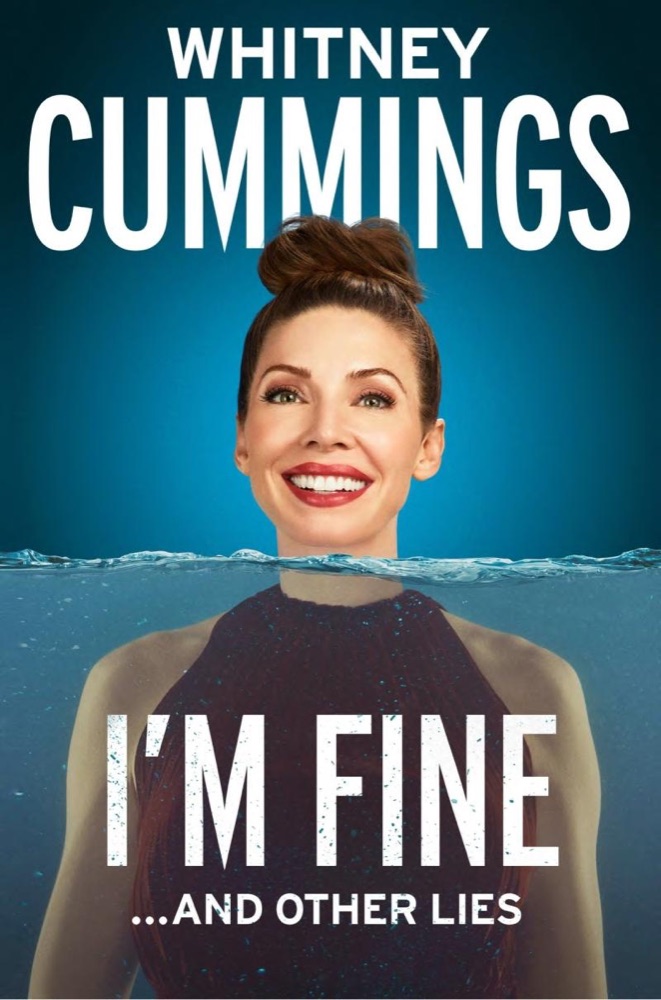 I'm Fine...And Other Lies
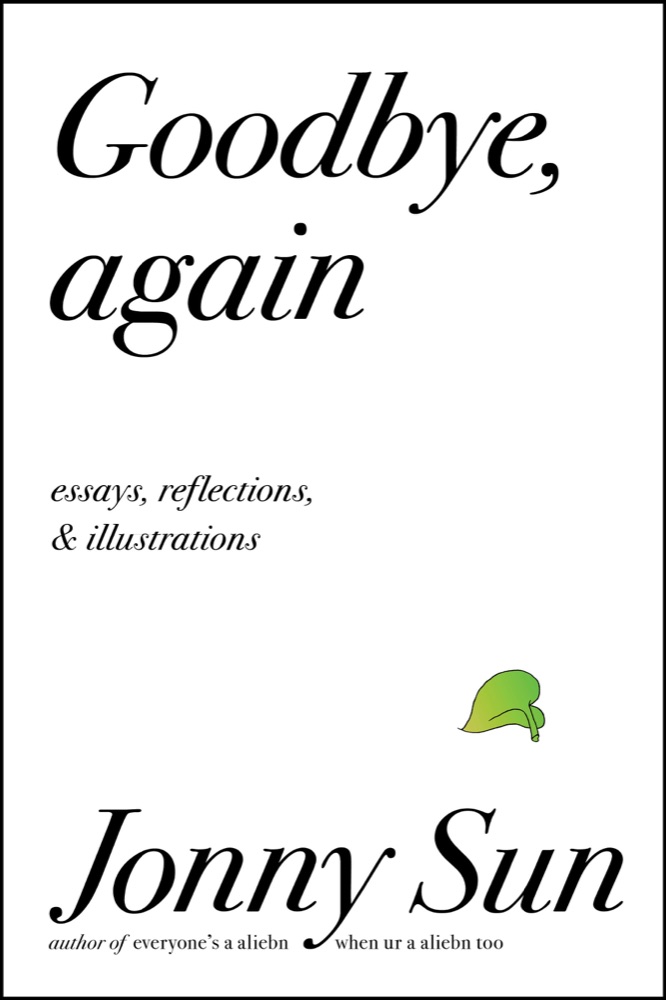 Goodbye, Again: Essays, Reflections, and Illustrations
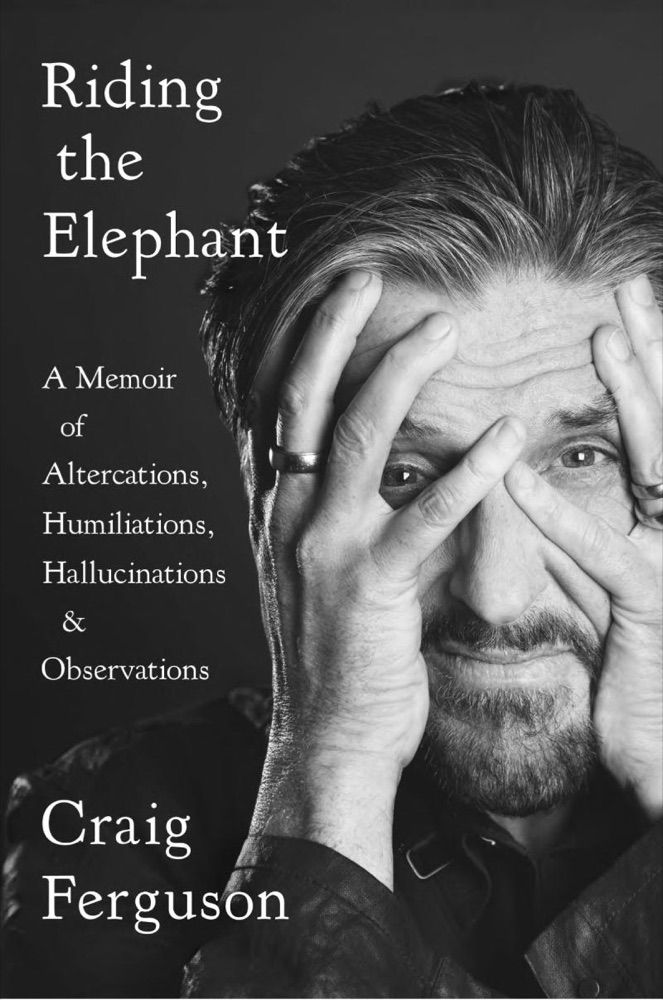 Riding the Elephant: A Memoir of Altercations, Humiliations, Hallucinations, and Observations
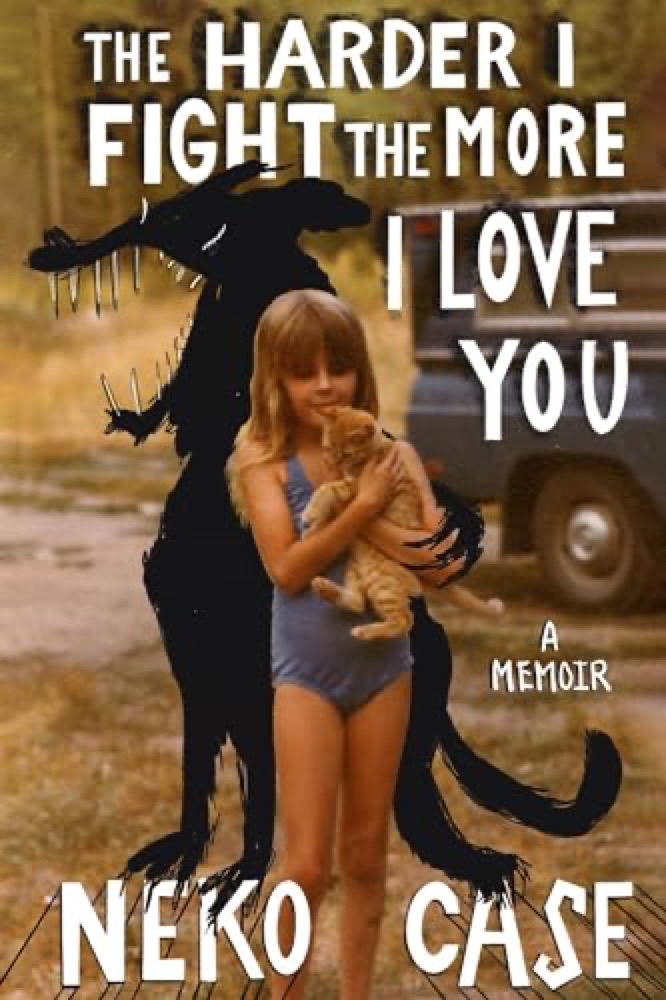 The Harder I Fight the More I Love You: A Memoir
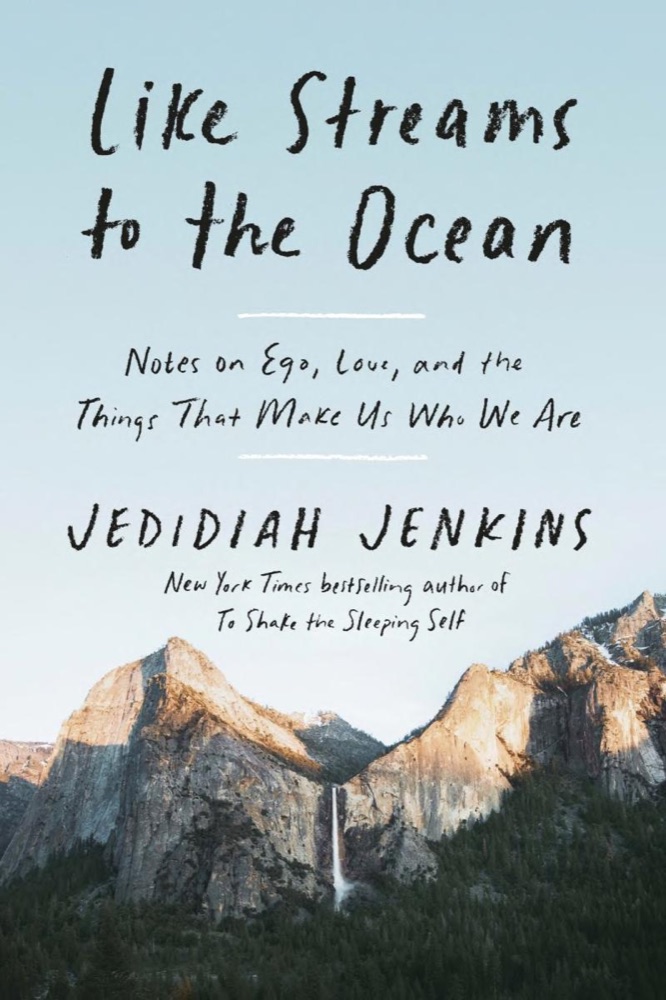 Like Streams to the Ocean: Notes on Ego, Love, and the Things That Make Us Who We Are
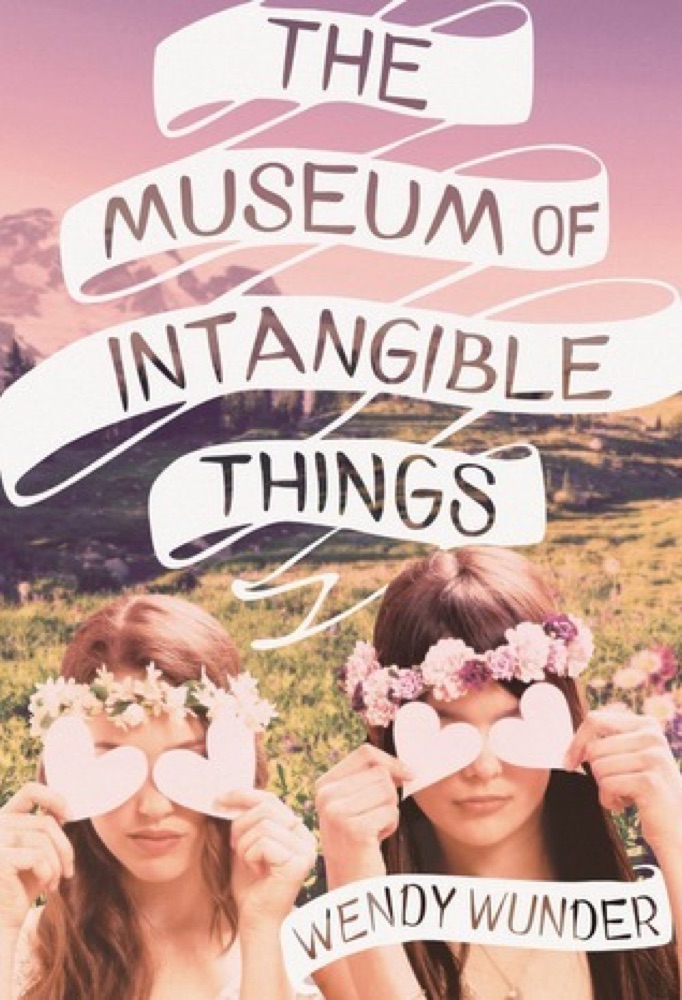 The Museum of Intangible Things
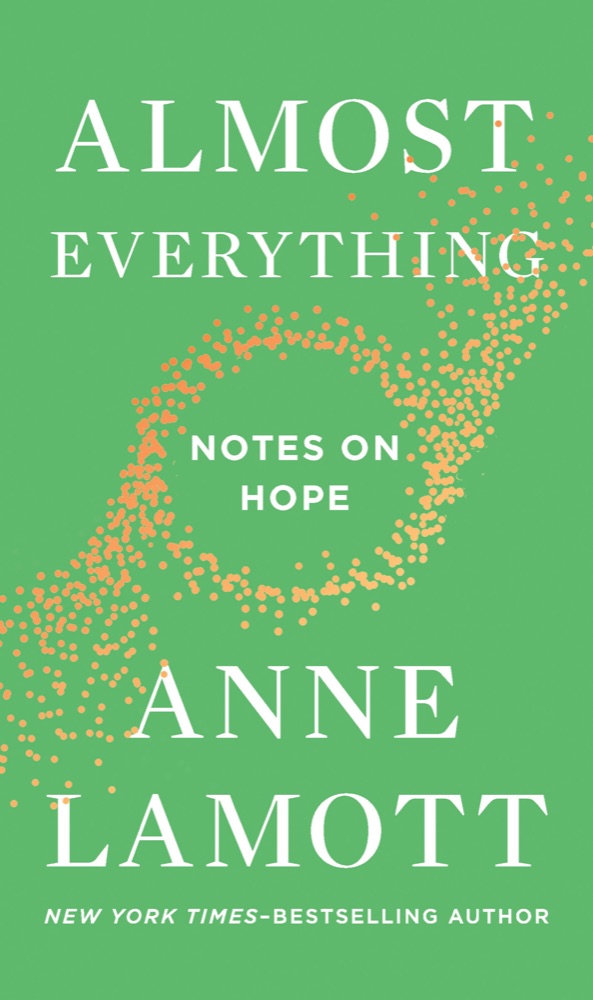 Almost Everything: Notes on Hope
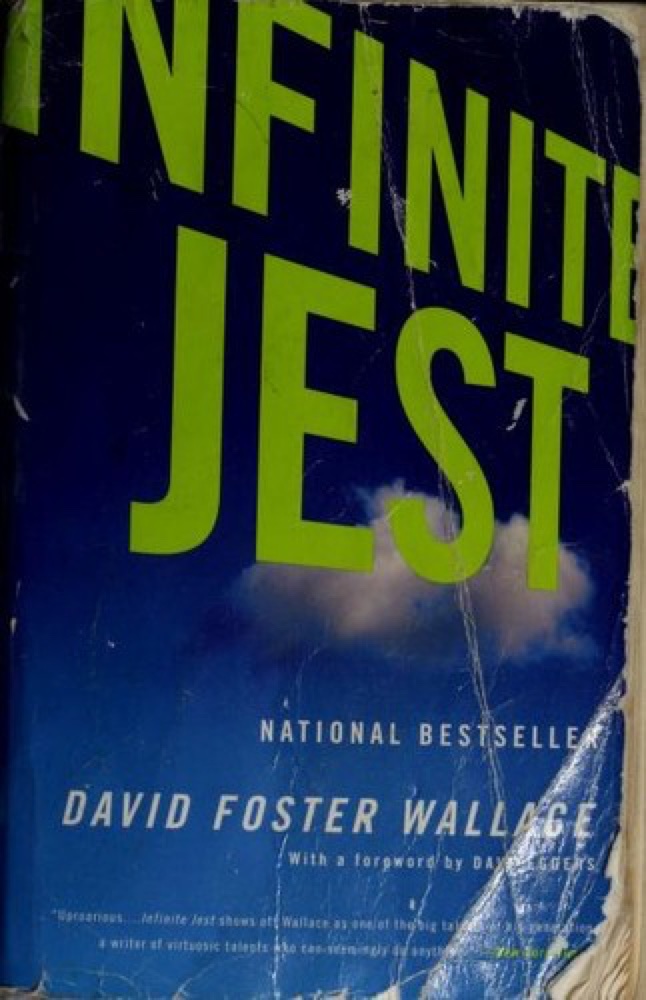 Infinite Jest