
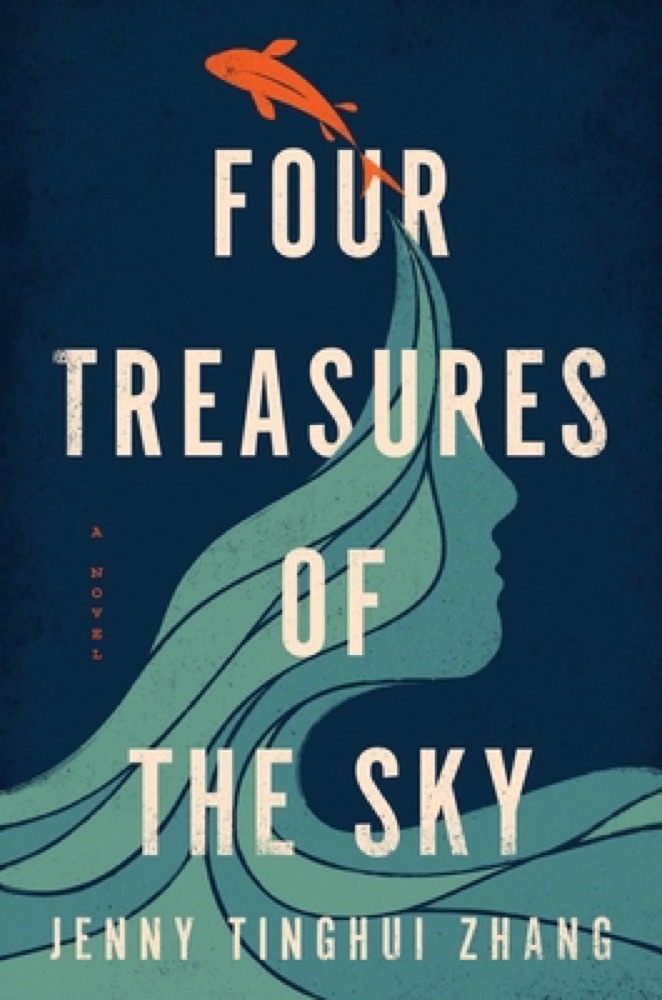
 Four Treasures of the Sky
Quotes from the Book
The search for a proper tempo is not confined to the world of music - one must seek it in life as well
4
Montesquieu wrote: "I have never known any distress that an hour of reading did not relieve." If one substituted the word music for reading, the exact same dictum applied to me.
4
Everything was burning. Today it was the bodies; tomorrow it would be the spirit.
2
Acknowledge diversity and you will achieve unity. (Rabindranath Tagore)
2
Therefore the stiff and unbending is the disciple of death. The gentle and yielding is the disciple of life.
2
The best man is like water. Water is good, it benefits all things and does not compete with them. It dwells in lowly places that all disdain. This is why it is so near to Tao.
1
time can bring about eventually supplants human justice. Chinese philosophers have an expression for this: bu de liao—knowing when to leave the past behind, instead of endlessly seeking revenge. On
1
The Chinese are well acquainted with this way of seeing things; they often use the image of water to illustrate it. To see down to the bottom of a lake, the water must be calm and still. The calmer the water, the farther down one can see. The exact same thing is true for the mind—the more tranquil and detached one is, the greater the depths one can plumb.
1
When you think you are descending, you are climbing, but you do not know it. When you think you are climbing, in reality you are descending. Keep working and one day, without expecting it, you will achieve your desire.
1
but I couldn’t wait. I wanted to leave immediately, to flee. Forever.
You can feel it, Zhu Xiao-Mei. The listener can hear it.
No. It comes from the breath, the place from which life and the spirit originate. Try to breathe correctly, and take care that your feet are placed solidly on the ground and that your diaphragm is steady. You’ll see that you are much less tense. If you are more flexible, in reality you will be stronger.
The point is not to take a middle path that is a type of compromise resulting from a refusal to choose extremes. Rather, it is about finding a point of equilibrium that allows one to bring out every dimension of the work.
As a young revolutionary, this was a painful lesson for me: if you wanted to survive in this country, you’d best not be honest.
I didn’t know how to read. Mother was my library. I read mother One day The world will be at peace Man will be able to fly Wheat will sprout in the snow Money will have no purpose (…) But in the meantime Mother says We have to work a lot. (Lu Yuan, Fairy Tales) A
I have witnessed many men Silently weeping In the night (Tang Qi, “The Solemn Hour”) There
You are cheating Beethoven,” he said to a student who had altered a difficult passage to make it easier to play. “But you are also cheating yourself—and God!
But what better proof of music’s universality that a Chinese woman was able to win over a South American man while performing a European composer?
The Cultural Revolution scarred me for life. Each morning when I get up, I wonder how I can go on living, how I can find peace after what I have experienced. The legacy of that period has left me with a severe psychological handicap. The sessions of
Watch on YouTube
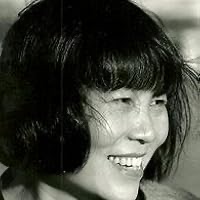
About Zhu Xiao-Mei
We have collected 19 quotes from 1 book by Zhu Xiao-Mei on BookQuoters.
More about the author →About the book
Zhu Xiao-Mei was born to middle-class parents in post-war China, and her musical proficiency became clear at an early age. Taught to play the piano by her mother, she developed quickly into a prodigy, immersing herself in the work of classical masters like Bach and Brahms. She was just eleven years old when she began a rigorous course of study at the Beijing Conservatory, laying the groundwork for what was sure to be an extraordinary career. But in 1966, when Xiao-Mei was seventeen, the Cultural Revolution began, and life as she knew it changed forever. One by one, her family members were scattered, sentenced to prison or labor camps. By 1969, the art schools had closed, and Xiao-Mei was on her way to a work camp in Inner Mongolia, where she would spend the next five years. Life in the camp was nearly unbearable due to horrific living conditions and intensive brainwashing campaigns. Yet
Book details
- First published
- 2007
- Author
- Zhu Xiao-Mei
- Genre
- Nonfiction
- Goodreads rating
- 4.01 (3k ratings)
Keep reading
Four Treasures of the Sky
 Sacred Journey of the Peaceful Warrior
 The Glass Bead Game
 The Emperor's Soul
 The Temple of the Golden Pavilion
 Life and Death in Shanghai
 Every Good Boy Does Fine: A Love Story, in Music Lessons
 365 Tao: A Study of Taoist Wisdom for Daily Life
 The Book of Chuang Tzu
 Shōgun
 The I Ching or Book of Changes
 Awareness: Conversations with the Masters
 The Book That Broke the World
 Humboldt's Gift
 Wild Swans: Three Daughters of China
 Everyone Burns
 The Witch of Portobello
 The Zahir
 Be Water, My Friend: The Teachings of Bruce Lee
 Stories of Your Life and Others
 Chuang Tzu: Basic Writings
 Twenty Fragments of a Ravenous Youth
 Asymmetry
 The Gift of Rain
 How to Practice: The Way to a Meaningful Life
 The Noise of Time
 Ragtime
 Varina
 The Spy
 The Gay Science
 Hard-Boiled Wonderland and the End of the World
 The Kite Runner
 The Woman in the White Kimono
 Q & A
Q & A
 Sexing the Cherry
 A Sudden Light
 Wings of Fire: An Autobiography
 Now Is the Time to Open Your Heart
 Mao II
 A Room with a View
 The Fall of Babel
 The Story of My Experiments With Truth
 Demian
 Knife: Meditations After an Attempted Murder
 Breakfast with Buddha
 Cutting for Stone
 Cuckold
 A Soldier of the Great War
 Oblomov
 Living Beautifully with Uncertainty and Change
 Be Here Now
 Embers
 You Can't Go Home Again
 Just Above My Head
 Plainwater: Essays and Poetry
 Piece by Piece
 Dust Tracks on a Road
 Walk Through Walls: A Memoir
 The Home and the World
 Snow Flower and the Secret Fan