
 Drop the Ball: Achieving More by Doing Less
Quotes from the Book
We expect women to work like they don’t have children and raise children as if they don’t work.
5
Self-help author Brianna Wiest suggests: “True self-care is not salt baths and chocolate cake; it is making the choice to build a life you don’t need to regularly escape from.
4
Having to remind your partner to do something doesn’t take that something off your list. It adds to it. And what’s more, reminding is often unfairly characterized as nagging. (Almost every man interviewed in connection with this project said nagging is what they hate most about being married, but they also admit that they wait for their wives to tell them what to do at home.) It’s not a partnership if only one of you is running the show, which means making the important distinction between delegating tasks and handing off ownership of a task. Ownership belongs to the person who first off remembers to plan, then plans, and then follows through on every aspect of executing the plan and completing the task without reminders. A survey conducted by Bright Horizons—an on-site corporate childcare provider—found that 86 percent of working mothers say they handle the majority of family and household responsibilities, “not just making appointments, but also driving to them and mentally calendaring who needs to be where, and when.” In order to save us from big-time burnout, we need our partners to be more than helpers who carry out instructions that we’ve taken time and energy to think through (and then who blame us when things fall through the cracks). We need our partners to take the lead by consistently picking up a task, or “card”—week after week—and completely taking it off our mental to-do list by doing every aspect of what the card requires. Otherwise we still worry about whether the task is being done as we would do it, or done fully, or done at all—which leaves us still shouldering the mental and emotional load for the “help” or the “favor” we had to ask for. But how do we get our partners to take that initiative and own every aspect of a household or childcare responsibility without being (nudge, nudge) told what to do? Or, to simply figure it out?
3
Seventy-eight percent of moms say they are so busy maintaining family stability by being constantly available, mentally and physically, to deal with every detail of home life that they aren’t taking care of themselves.
3
A reminder, in itself, takes tremendous mental effort by you. It requires knowing what needs to be done, remembering what needs to be done, and reminding someone to get it done, whereas the person being reminded gets off easy.
2
Would a reasonable person (in this case, your partner, spouse, babysitter, caregivers, parents, and in-laws) under similar circumstances do as I’ve done? What is the community standard, and do we want to adopt this standard within our own home? What’s the harm for doing, or not doing, it this way? What is our “why”?
2
Of course. She’s a great mom.” Some would also tack on sentiments like, “I couldn’t do it without her,” and “It’s amazing how she keeps the house running.” I thought it was interesting that when I used the word “proud,” men almost always pointed straight to their wives’ role as a mother and caretaker. So I reframed the question, and asked, “Beyond her role as a mother or a wife,” I clarify, “are you proud of her?” The men whose wives forfeited the focus of their personal passion in the context of becoming a wife and a mom—those women with no connection to their Unicorn Space—had a hard time saying yes. They’d often hedge, hem and haw, then finally land on something their life partners did in the past that caused them to feel proud. I call this The Case of the She Used To’s, and it’s strong evidence that a woman’s gone missing.
1
What if everything isn’t important? What if you let some of it . . . go? What if you choose with intention what you want to do in service of the home and your family based on what’s most valuable to you and your partner? Rather than doing more, or continuing to believe that you should do it all, save yourself from burnout and what the millennial generation has termed “errand paralysis” by engaging in a process that systematically lightens your load and allows you to live the life you truly want. In other words, give yourself permission to do less!
1
In fact, multitasking is bad for everyone because our brains are not built to deal with more than one complex thing at a time. Even when folks designed studies to prove that women are better at multitasking, nothing was really there.
1
Hey, I’ve been reading this book and it’s gotten me thinking about all the work it takes to run our home. I’d like to explore a new way to work together [key sentiment!] to dial down the crazy and create more balance and efficiency, and where ultimately we both have more time to pursue interests and activities outside our roles as parents. Are you into that?
If you can’t trust that the car will stop at the stop sign, you can’t feel safe crossing the road. Similarly, if you can’t trust your partner to care for the home by meeting your family’s minimum standards, then you’re not going to feel safe, heard, or met in the relationship.
Any action taken by a citizen should reflect the shared values and traditions of that specific community. Killing an ant is hygienic in the value system of one community and barbaric in another. Wearing shoes indoors is acceptable in one community and considered disrespectful in others. Addressing someone as “Mr.” is the rule in one community but considered overly formal in another. Depending on where you live, your community assigns a Minimum Standard of Care based on its shared societal standards.
It's not actually motherhood or kids that derail women's careers and personal ambitions - it's men who refuse to do their fair share, write author and columnist Jessica Valenti.
Whoever you are and whatever you do, you still need time and space to engage in something outside of the work you do for money to make you come alive. Unfortunately, many of us confuse financial success with personal value,
I recognized that the more valuable question to ask individuals is not “Are you proud of your partner?” but “Are you proud of yourself?” Are you making time for activities and interests that elevate your own sense of worth?
New research shows that women who spend time on themselves have a greater capacity to care for their children.
Both of you must reclaim your right to be interesting beyond your roles as wonderful parents and partners, and both must demand more time and space to explore this right.
Honestly, I believe I lost my permission to be interesting.” She explained that, at first, the role of wife and mother fulfilled her, and she’d lived vicariously through her husband’s professional success. But then, more than a decade and a half later, she recognized that she’d lost her earlier identity—the vibrant and passionate woman who she’d worked so hard to become (and who her husband had originally fallen in love with).
what she contributed to the relationship as a stay-at-home wife and mother was no longer “interesting to my husband, my community, or myself.
Admit it, even though we’re super-tired and overextended, we still like to brag about all that we do and how much better women are at getting it done. But here’s the thing: There is no consistent data proving that women are better at multitasking than men. It’s just something we say to our girlfriends over coffee to feel better about all that we’ve piled on our own plates.
Ownership belongs to the person who first off remembers to plan, then plans, and then follows through on every aspect of executing the plan and completing the task without reminders.
Don’t let your passion be the perfection of your children. Because when you solely define yourself in relation to another, it’s not enough.
Twitter @PhillyD: Best part of being a Dad is I can do almost anything and people are like OMG YOU’RE THE BEST DAD IN THE WORLD!!! I’m like . . . for making my son a PBJ? Meanwhile my wife who does 90% of the work can tweet how she needs an hour for herself to recoup and people will try to shame her.
From where we sat, this man appeared to be enjoying a luxury all of the women we know couldn't imagine: the freedom to focus on one task at a time.
If you’re not careful, domestic encroachment will trap you every time. The net result is that you spend less time on your career and social outlets, and likely deny yourself mental breathers and important self-care.
It’s really a dance where you lean in to take care of your baby, but you have to lean out to take care of yourself,” says reproductive psychiatrist Alexandra Sacks. “Because you’re still a human being, and you still have to care for your own body, your own emotions, your relationship with your partner, with your friends, your intellectual life, your spiritual life, your hobbies . . . all these other aspects of your identity and your basic needs. Even if you want to just give unconditionally to your child, you can’t, because we’re humans. We’re not robots.
Watch on YouTube
About Eve Rodsky
We have collected 26 quotes from 1 book by Eve Rodsky on BookQuoters.
More about the author →About the book
A revolutionary, real-world solution to the problem of unpaid, invisible work that women have shouldered for too long.It started with the Sh*t I Do List. Tired of being the "shefault" parent responsible for all aspects of her busy household, Eve Rodsky counted up all the unpaid, invisible work she was doing for her family -- and then sent that list to her husband, asking for things to change. His response was... underwhelming. Rodsky realized that simply identifying the issue of unequal labor on the home front wasn't enough: She needed a solution to this universal problem. Her sanity, identity, career, and marriage depended on it. The result is Fair Play: a time- and anxiety-saving system that offers couples a completely new way to divvy up domestic responsibilities. Rodsky interviewed more than five hundred men and women from all walks of life to figure out what the invisible work in a
Book details
- First published
- 2019
- Author
- Eve Rodsky
- Genre
- Nonfiction
- Goodreads rating
- 3.58 (27k ratings)
Keep reading
Drop the Ball: Achieving More by Doing Less
 Overwhelmed: Work, Love, and Play When No One Has the Time
 MILF: Motherhood, Identity, Love and F*ckery
 This Is Not a Book About Benedict Cumberbatch: The Joy of Loving Something--Anything--Like Your Life Depends On It
 How to Keep House While Drowning
 The Husbands
 I Can Barely Take Care of Myself: Tales From a Happy Life Without Kids
 Hold On, But Don't Hold Still
 Essential Labor: Mothering as Social Change
 To Have and to Hold: Motherhood, Marriage, and the Modern Dilemma
 The Truth Will Set You Free, But First It Will Piss You Off!: Thoughts on Life, Love, and Rebellion
 Lean In: Women, Work, and the Will to Lead
 Motherhood
 All the Rage: Mothers, Fathers, and the Myth of Equal Partnership
 Us: Getting Past You and Me to Build a More Loving Relationship
 Simplicity Parenting: Using the Extraordinary Power of Less to Raise Calmer, Happier, and More Secure Kids
 All Joy and No Fun: The Paradox of Modern Parenthood
 Ladyparts
 Make Trouble: Standing Up, Speaking Out, and Finding the Courage to Lead
 How to Raise an Adult: Break Free of the Overparenting Trap and Prepare Your Kid for Success
 Some Assembly Required: A Journal of My Son's First Son
 The Magic of Motherhood: The Good Stuff, the Hard Stuff, and Everything In Between
 More Than Enough: Claiming Space for Who You Are
 Mrs Funnybones
 Burnout: The Secret to Unlocking the Stress Cycle
 You'll Grow Out of It
 The Lazy Genius Way: Embrace What Matters, Ditch What Doesn't, and Get Stuff Done
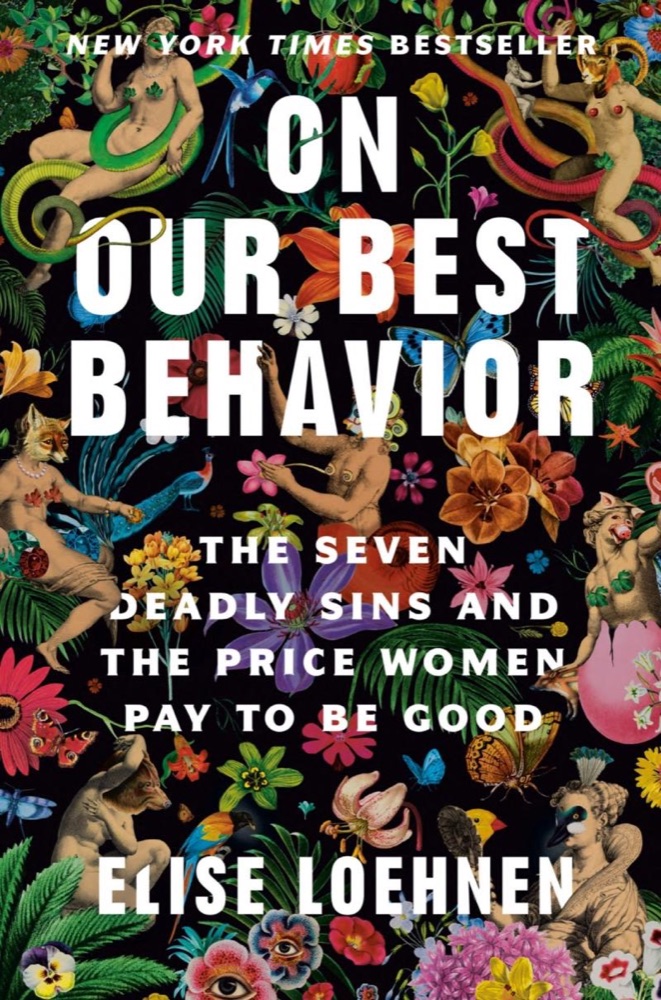 On Our Best Behavior: The Seven Deadly Sins and the Price Women Pay to Be Good
 Untamed
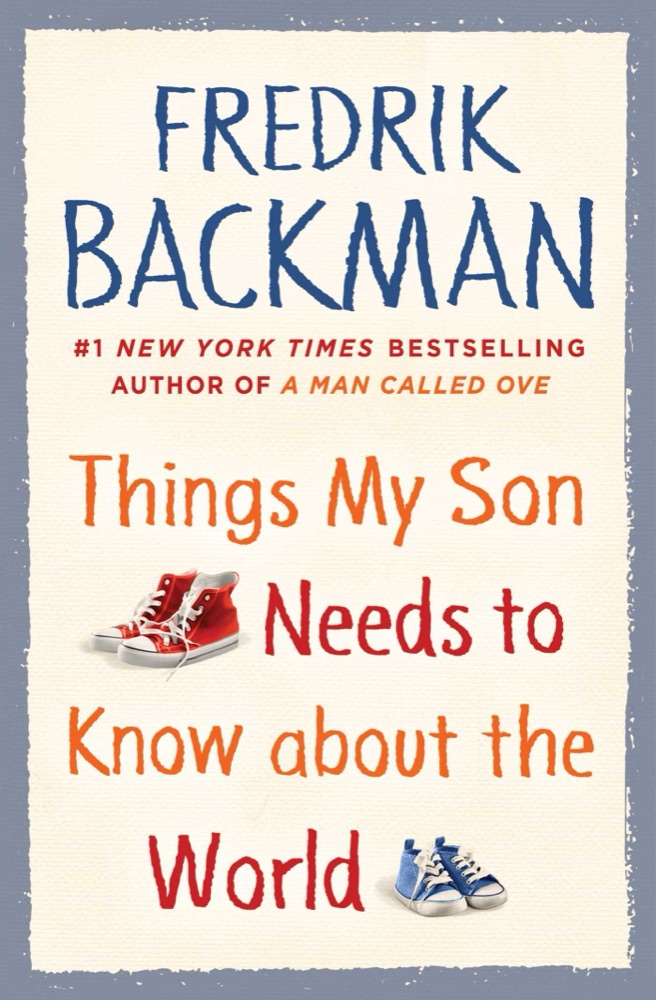 Things My Son Needs to Know About the World
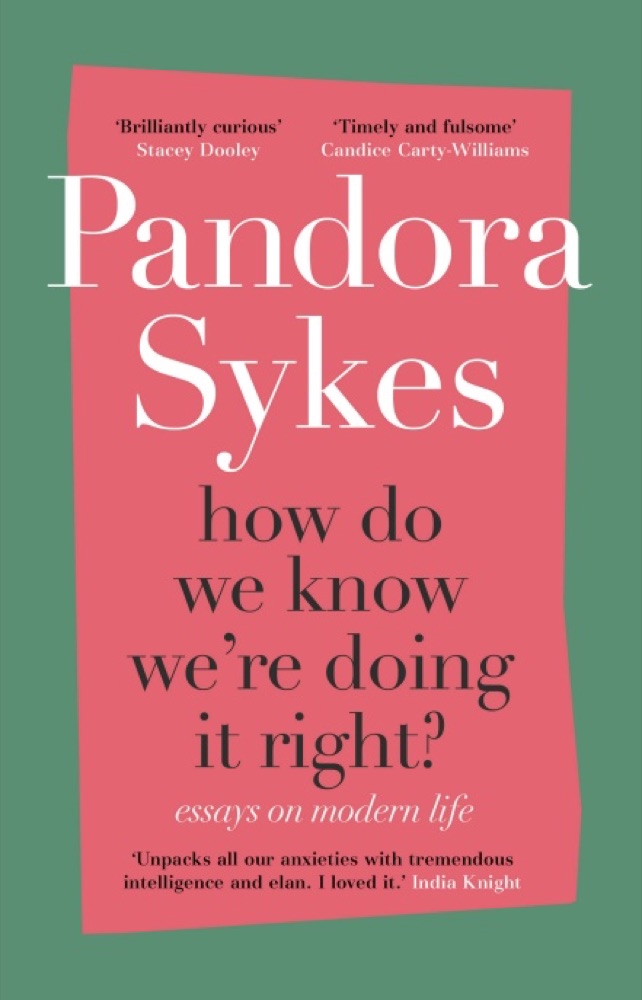 How Do We Know We're Doing It Right: & Other Essays on Modern Life
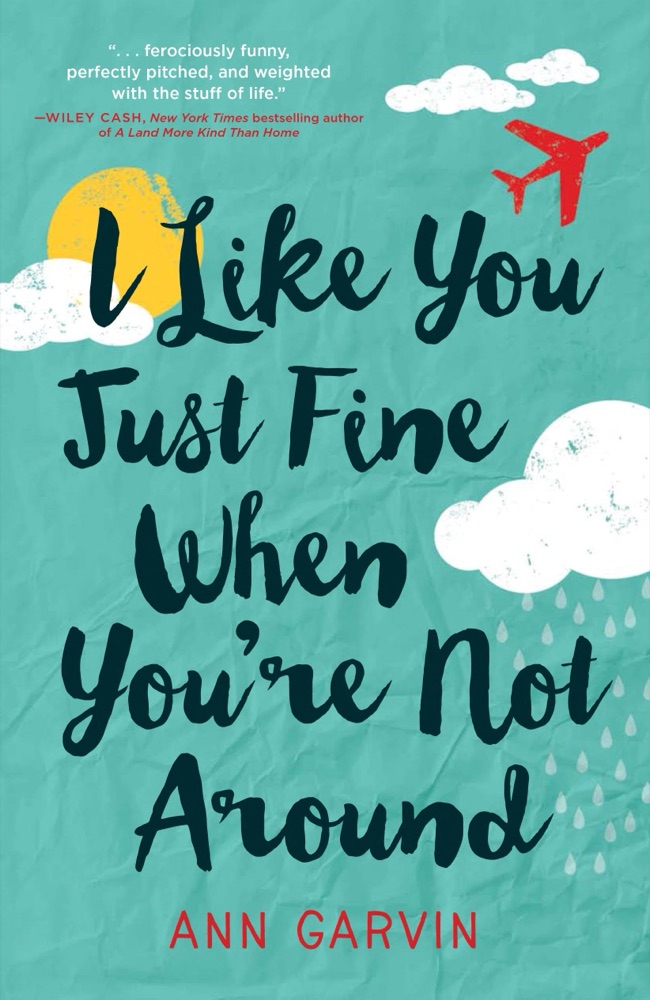 I Like You Just Fine When You're Not Around
 The Favorite Sister
 Joan Is Okay
 Good Morning, Destroyer of Men's Souls: A Memoir of Women, Addiction, and Love
 I'll Have What She's Having
 Buy Yourself the F*cking Lilies: And Other Rituals to Fix Your Life, from Someone Who's Been There
 Crazy Busy: A (Mercifully) Short Book about a (Really) Big Problem
 The Folded Clock: A Diary
 My Life on the Road
 Yesteryear
 Stay Sexy & Don't Get Murdered: The Definitive How-To Guide
 Dear Girls: Intimate Tales, Untold Secrets, & Advice for Living Your Best Life
 Spinster: Making a Life of One's Own
 Aftermath: On Marriage and Separation
 The Rosie Effect
 Passages: Predictable Crises of Adult Life
 #Girlboss
 Trick Mirror: Reflections on Self-Delusion
 This Is What Inequality Looks Like
 The Collapse of Parenting: How We Hurt Our Kids When We Treat Them Like Grown-Ups
 Financial Feminist: Overcome the Patriarchy's Bullsh*t to Master Your Money and Build a Life You Love
 EntreLeadership: 20 Years of Practical Business Wisdom from the Trenches
 Mom & Me & Mom
 Momma Cusses
 XOXO, Cody: An Opinionated Homosexual's Guide to Self-Love, Relationships, and Tactful Pettiness
 Essentialism: The Disciplined Pursuit of Less
 Just the Funny Parts: ... And a Few Hard Truths About Sneaking Into the Hollywood Boys' Club
 Girl, Stop Apologizing: A Shame-Free Plan for Embracing and Achieving Your Goals
 Drama Free: A Guide to Managing Unhealthy Family Relationships