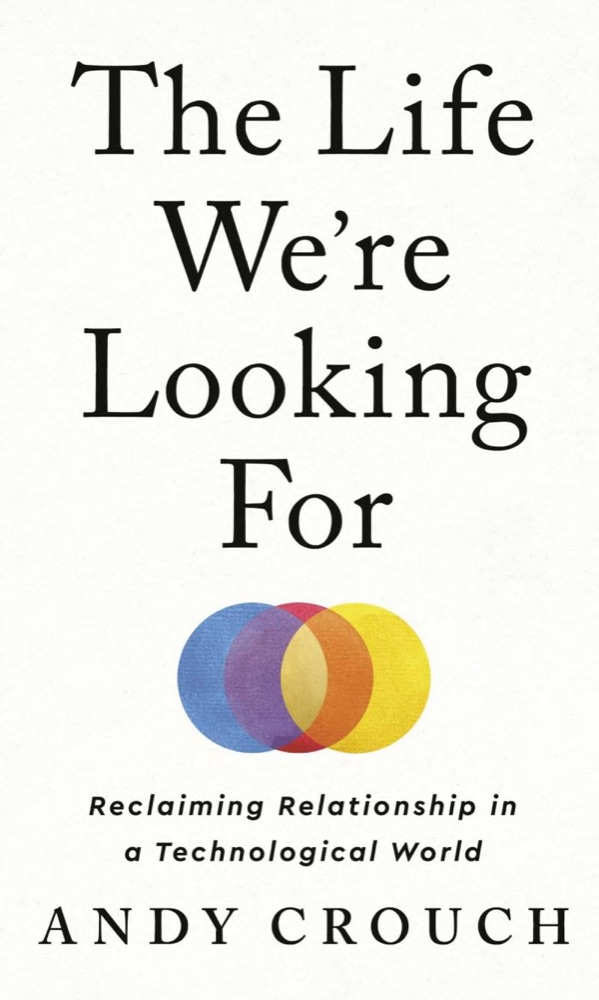

 Finding Meaning in the Second Half of Life: How to Finally, Really Grow Up
Quotes from the Book
How do you know if you’re part of a household? You are part of a household if there is someone who knows where you are today and who has at least some sense of how it feels to be where you are. You are part of a household if there is someone who moves more quietly when they know you are asleep. You are part of a household if someone would check on you if you did not awaken. You are part of a household if people know things about you that you do not know about yourself, including things that if you did know you would seek to hide. You are part of a household if others are close enough to see you and know you as well as, or better than, you know yourself. You are part of a household if you experience the conflict that is the inevitable companion of closeness—if someone else makes such demands on you that you sometimes fantasize about driving them out of your life. You are part of a household if you sometimes dream of running away, perhaps to a far country, so that you will not be so terribly well known. You are part of a household if your return from a long journey prompts a spontaneous celebration. You are part of a household if, when you avoid a party because of your anger, pride, guilt, or shame, someone notices and comes outside to plead with you to come in. This is the one thing we need more than any other: a community of recognition. While we must always insist that every human being is a person whether or not they are seen or treated as one by others, we also know that no human being can flourish as a person unless they are seen and treated as one. And for that, the household is the first and best place. We need a place where we cannot hide. We need a place where we cannot get lost. So much of the tragedy of the
1
Over time, the active verbs of the Shema-recite, walk, talk, lie down, rise, bind, fix, write, all in the service of love-become too much for us to imagine, let alone perform. Our search for superpowers has created many of the most pressing problems of our time. The defining mental activity of our time is scrolling Our capacities of attention, memory, and concentration are diminishing; to compensate, we toggle back and forth between infinite feeds of news, posts, images, episodes - taking shallow hits of trivia, humor, and outrage to make up for the depths of learning, joy, and genuine lament that now feel beyond our reach. The defining illness of our time is metabolic syndrome, the chronic combination of high weight, high cholesterol, high blood pressure, and high blood sugar that is the hallmark of an inactive life. Our strength is atrophying and our waistline expanding, and to compensate, we turn to the superpowers of the supermarket with the aisles of salt and fat convincing our bodies’ reward systems, one bite at a time, that we have never been better in our life. The defining emotional challenge of our time is anxiety, the fear of what might be instead of the courageous pursuit of what could be. Once, we lived with allness of heart, with a boldness of quest that was too in love with the good to call off the pursuit when we encountered risk. Now we live as voyeurs, pursuing shadowy vestiges of what we desire from behind the one-way mirror of a screen, invulnerable but alone. And, of course, the soul is the plane of human ex- istence that our technological age neglects most of all. Jesus asked whether it was worth gaining the whole world at the cost of losing one's soul. But in the era of superpowers, we have not only lost a great deal of our souls-we have lost much of the world as well. We are rarely overwhelmed by wind or rain or snow. We rarely see, let alone name, the stars. We have lost the sense that we are both at home and on a pilgrimage in the vast, mysterious cosmos, anchored in a rich reality beyond ourselves. We have lost our souls without even gaining the world. So it is no wonder that the defining condition of our time is a sense of loneliness and alienation. For if human flourishing requires us to love with all our hearts, souls, minds, and strength, what happens When nothing in our lives develops those capacities? With what, exactly, will we love?
1
In an economy that evaluates and compensates us in impersonal terms, the most consequential members, the ones who matter the most for all our flourishing, are the ones whom Mammon does not consider useful. It is the "useless" who matter the most. Because if they are persons - if they are seen, known, and welcomed, and given places of honor in our households - then all of us are set free from our usefulness. If those who cannot earn money, and perhaps are not even able to spend it, are of the greatest value, then we, too, can be free from serving it. If those whom the world has forgotten and written off are the ones we know and remember, then we can trust that we ourselves will be remembered long after our usefulness is gone. If we can recognize those who cannot even see us - if we can see them as persons - then we ourselves, so often unsure of whether someone truly sees and knows us, can know that from the beginning to the end of our days, we also will be seen. If we can build households and societies that love the charmless, the uncharmed and uncharming, then we will be free of our addiction to things that make our world seem charmed, the all-too-easy superpowers that leave us anxious and empty. There are persons for whom magic simply does not work - the uncharmable. For them, the only thing that matters is love. If we can stay with them in their limits, their profound anchoring in this place and time, we have some hope that we will not detach from the real world of heart, soul, mind, and strength, and that we will learn the love for which we were designed.... For the flourishing of persons, everything depends on the ones who are unuseful.
We either contemplate or we exploit.” Exploitation asks, What can this person (or for that matter, this thing) do for me? Contemplation asks, Who or what am I beholding, without regard for their usefulness to me?
In our deepest hearts we know that being charmed is unreal. All our lives, what we really have been looking for is blessing. We once lay on a mother’s breast, looking for a face. We were not looking for magic because we did not need it. All we needed was a person. One day we will come to the end of our lives. Whatever magic medicine managed to do will have come to an end. Our need at that moment will be just what it was the moment we were born.
The late Leanne Payne, a teacher of the spiritual life, once said, “We either contemplate or we exploit.
If you are looking for a single proximate cause of the loneliness that is epidemic in our world, it is the dearth of households.
But it is certainly true that in the long run that choice is up to us: what we ask our technology to do, what we ask its designers to optimize, what we believe is the good life that we are pursuing together.
Our individual loneliness, our anxiety, our depression, our broken and disappointed families, our fractured communities, are not what they are because of some choice we could easily unmake or remake.
All real change starts with the number of people who can sit around a table in a single household
Watch on YouTube
About Andy Crouch
We have collected 10 quotes from 1 book by Andy Crouch on BookQuoters.
More about the author →About the book
A deeply reflective primer on creating meaningful connections, rebuilding abundant communities, and living in a way that engages our full humanity in an age of unprecedented anxiety and loneliness--from the author of The Tech-Wise Family"Andy Crouch shows the path to reclaiming a life that restores the heart of what it means to thrive."--Arthur C. Brooks, #1 New York Times bestselling author of From Strength to Strength
Our greatest need is to be recognized--to be seen, loved, and embedded in rich relationships with those around us. But for the last century, we've displaced that need with the ease of technology. We've dreamed of mastery without relationship (what the premodern world called magic) and abundance without dependence (what Jesus called Mammon). Yet even before a pandemic disrupted that quest, we felt threatened and strangely out of place: lonely, anxious, bored amid endles
Book details
- First published
- 2022
- Author
- Andy Crouch
- Genre
- Nonfiction
- Goodreads rating
- 4.04 (2k ratings)
Keep reading
Finding Meaning in the Second Half of Life: How to Finally, Really Grow Up
 The Second Mountain
 Ethics for the New Millennium
 The Celestine Prophecy
 Passages: Predictable Crises of Adult Life
 The Deeply Formed Life: Five Transformative Values to Root Us in the Way of Jesus
 Becoming Wise: An Inquiry into the Mystery and Art of Living
 Belonging: Remembering Ourselves Home
 The Common Rule: Habits of Purpose for an Age of Distraction
 Minimalism: Live a Meaningful Life
 A Return to Love: Reflections on the Principles of "A Course in Miracles"
 Standing for Something: 10 Neglected Virtues That Will Heal Our Hearts and Homes
 Let Your Life Speak: Listening for the Voice of Vocation
 The Book: On the Taboo Against Knowing Who You Are
 Status Anxiety
 How to See Yourself As You Really Are
 The Book of Awakening: Having the Life You Want by Being Present to the Life You Have
 The School of Life: An Emotional Education
 Kitchen Table Wisdom: Stories that Heal
 The 7 Habits of Highly Effective People: Personal Workbook
 The Source of Self-Regard: Selected Essays, Speeches, and Meditations
 Sacred Economics: Money, Gift, and Society in the Age of Transition
 To Hell with the Hustle
 A Hidden Wholeness: The Journey Toward an Undivided Life : Welcoming the soul and weaving community in a wounded world
 Letting Go of the Person You Used to Be: Lessons on Change, Loss, and Spiritual Transformation
 Like Streams to the Ocean: Notes on Ego, Love, and the Things That Make Us Who We Are
 Zen and the Art of Saving the Planet
 Waking Up: A Guide to Spirituality Without Religion
 The Life You've Always Wanted: Spiritual Disciplines for Ordinary People
 Let Us Dream: The Path to a Better Future
 Thrive: The Third Metric to Redefining Success and Creating a Life of Well-Being, Wisdom, and Wonder
 The Tenth Insight: Holding the Vision
 Loving What Is: Four Questions That Can Change Your Life
 Together: Why Social Connection Holds the Key to Better Health, Higher Performance, and Greater Happiness
 The Gifts of Imperfection
 The Social Animal: The Hidden Sources of Love, Character, and Achievement
 Finding Flow: The Psychology of Engagement with Everyday Life
 Revolution
 What It Takes to Heal: How Transforming Ourselves Can Change the World
 Changes That Heal: How to Understand the Past to Ensure a Healthier Future
 The God Who Weeps: How Mormonism Makes Sense of Life
 Peace Is Every Step: The Path of Mindfulness in Everyday Life
 If You Meet the Buddha on the Road, Kill Him! The Pilgrimage of Psychotherapy Patients
 Almost Everything: Notes on Hope
 The World According to Mister Rogers: Important Things to Remember
 Everyday Zen: Love & Work
 The Art of the Commonplace: The Agrarian Essays
 Notes on a Nervous Planet
 Present Over Perfect: Leaving Behind Frantic for a Simpler, More Soulful Way of Living
 The Art of Being
 Untamed
 The Vanishing American Adult: Our Coming-of-Age Crisis—and How to Rebuild a Culture of Self-Reliance
 True Refuge: Finding Peace and Freedom in Your Own Awakened Heart
 Rediscover Catholicism
 The Things You Can See Only When You Slow Down: How to Be Calm in a Busy World
 The Soul's Code: In Search of Character and Calling
 Social: Why Our Brains Are Wired to Connect
 The Wisdom of Insecurity: A Message for an Age of Anxiety
 A Joseph Campbell Companion: Reflections on the Art of Living