
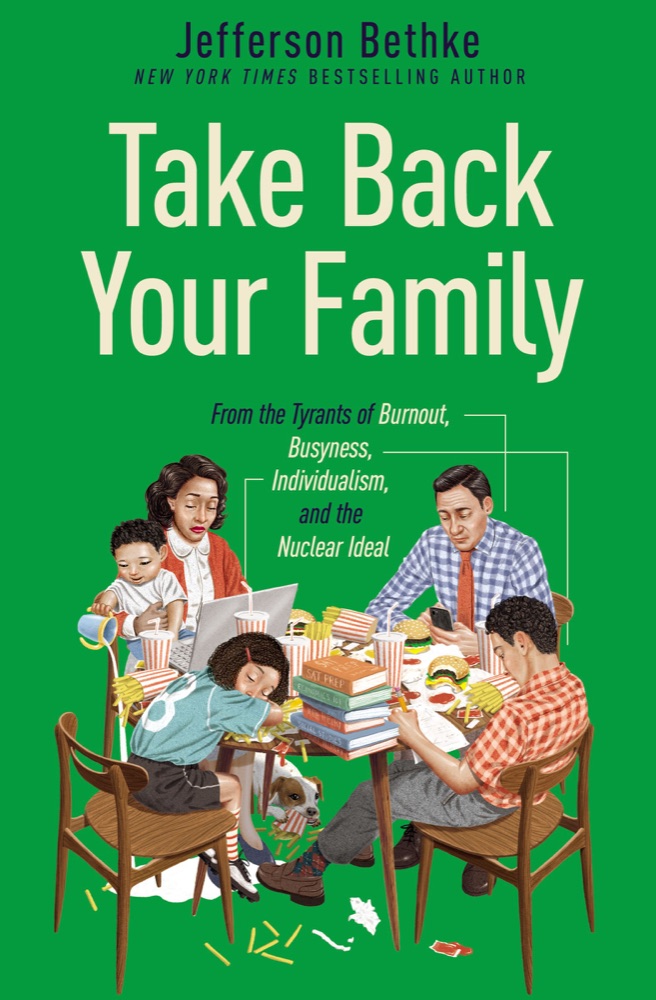
 Take Back Your Family: From the Tyrants of Burnout, Busyness, Individualism, and the Nuclear Ideal
Quotes from the Book
Don't buy the lie that a full schedule means productivity or holiness or achievement.
7
Only when we truly know rest and celebration can we know how to work and enjoy it. We work from rest, not to get rest.
5
What if we can't be anything we want to be? What if the goal isn't to hustle but to be faithful? What if the magic of life is found in the mundane, and it comes when we're faithful?
4
The goal of following Jesus isn’t to do a bunch of things. It’s to become a type of person.
3
What if God doesn't want me to be big things for Him? Like, at all? What if He just wants me to talk to Him and know Him and live an ordinary live where I love Him and my neighbours well?
3
Solitude is not a private therapeutic place. Rather, it is the place of conversion, the place where the old self dies and the new self is born.
2
The bottom line is, we can’t research or think ourselves to a better version of ourselves
2
While we might not all be able to take a year off work, the question that haunts me is, do I trust God enough to do it? Do I think he’d actually take care of me if I did it? Isn’t that what most of our activity and busyness is about anyway? Trying to hedge our bets, saying we are Christians with our lips, but living as spiritual orphans who need to claw and grasp for every last crumb of provision. Do we actually believe God will provide? That he can be trusted?
2
To follow Jesus we need to not just follow his teaching, but also follow his way. His process. His cadence. His demeanor. His spirit. His very essence.
2
I’ll even say it a little more plainly for those in the back: we as humans are the summation of our repeated practices and rituals. Humans aren’t made. We are formed.
2
The big difference between chaos and shalom is rhythm. Chaos is unpredictable and unrhythmic. It has no set cadence. But shalom is more like a dance that depends on the rhythm in music.
2
Work jumped from being a means of “material production” to being much more about “identity production.”3 In other words, work used to be about making things. Then all of a sudden, work was about making us.
2
Hurry is violence on the soul.
2
Silence and solitude are like a graveyard for all the worst in you and your false self.
2
What if we can’t be anything we want to be? What if the goal isn’t to hustle but to be faithful? What if the magic of life is found in the mundane, and it comes when we’re faithful?
1
What if we are attempting to exchange wisdom for shortcuts? One requires years of life experiences, while the other simply requires a Google search. Today, we face a huge gap between who we are and who we want to be simply because we can actually see that gap better than ever before. By just opening Instagram or reading Facebook posts, we see a different, perhaps ideal, self we wish we were.
1
If you put a frog in water that is already boiling, it will jump right out from the sheer pain and collision of senses. But if you put a frog in water at room temperature, then steadily raise the heat one degree at a time until it is boiling, the frog will slowly but eventually die. Our culture–us–we’re that frog right now, thinking, This is nice and cozy, but the heat has been climbing. This book is me saying, Wait a minute. It’s starting to get a little warm in here. The values and pace of our culture, the speed at which it is moving, the demands and pressure we all collectively feel, the ethos of hustle injected into us all at birth–it’s boiling us alive. But we don’t notice it because it has happened steadily over the last century or so.
1
Not unlike Jesus in Luke: “Jesus often withdrew to lonely places and prayed” (Luke 5:16). Jesus voluntarily withdrew to the lonely places. On purpose.
1
spiritually thin and malnourished. Henri Nouwen, one of my favorite spiritual thinkers, said about his experience with silence and solitude: “Solitude is not a private therapeutic place. Rather, it is the place of conversion, the place where the old self dies and the new self is born.”8 It’s not a therapeutic place. It’s where you go to die.
1
What if God doesn't want me to do big things for Him? Like, at all? What if He just wants me to talk to Him and know Him and live an ordinary live where I love Him and my neighbours well?
1
I'd thought that when I started to follow Jesus, things were supposed to get better. If that was true, why was it getting worse? Why did it hurt more instead of less? Maybe it's because when we're dead, we can't feel anything. But once we're alive, that means our senses are too. Can a dead person feel chaos?
1
And frankly the people who seem to best understand that we are creatures of love and desire, not thoughts, are the current giant tech companies of the world. Think about how Apple exists with a temple-like space (tell me their retail stores don't feel so "set apart" from the ordinary retail design that it doesn't immediately conjure up sacred feelings) where you go to sacrifice (enormously large portions of your money) to obtain that which you are looking for - connection, meaning and depth. People stand in line all night, some even camping out on the sidewalk, for the latest device that offers those implicitly understood benefits. This phone can, and will, be more than a phone. I think it's even fair to say that Apple is a religion with Steve Jobs as a priest (who has become a venerated secular saint after his death), mediating between man and God to give us what we want. Connection. Power. God-like knowledge of good and evil. And we take the phone, and we crouch and bend over. Usually with heads bowed. Laser focused on something. Blocking out all around us. We are silent and solemn. Tending not to speak. And then we perform a certain behaviour over and over and over again. Sound familiar? Swipe.
1
Our current hustle culture is no different; it’s all about exceeding limits. It’s about striving for that false freedom to do this. Eat that. Work this way. Just. Work. Harder. Network more. Just buy my masterclass and you, too, can be a millionaire by age nineteen.
1
There is an ancient call in us that taps the spigot of our desires until the ritual becomes worshipful and mundane
1
We’ve created an assembly-line Christianity. Instead of investing in relationships and one-on-one interactions with other people, we just bring our friends to church and place them on the conveyor belt of the “Sunday service,” where in ninety minutes they can get a good spiritual feeling, sing some songs, hear an encouraging message, get a coffee, and then hear the pastor tell them that if they want to follow Jesus to “pray this prayer.” It’d take too much time to connect each one of those people with another person in the church and maybe have a family or person “adopt” this person spiritually to walk with them, ask them hard questions, eat meals together . . . so let’s just have everyone repeat after me. Now, do I think Jesus is still active and alive and present and moving here? Of course. But I think that’s despite us, not because of us.
Economist John Keynes said in 1915, “For the first time since his creation man will be faced with his real, his permanent problem,” and that is “how to occupy the leisure.”2 Am I the only one who will say that my main problem in life is not “how to occupy the leisure”? In fact, I say, What leisure? Keynes was vastly wrong. That’s not what happened. In an article highlighting these developments, Derek Thompson noted one large change no one saw coming: how work itself and our view of it evolved. Work jumped from being a means of “material production” to being much more about “identity production.”3 In other words, work used to be about making things. Then all of a sudden, work was about making us.
Here’s the peculiar truth—what forms our identities are the million, tiny, micro-sized actions we all do every day without realizing it or thinking twice about it.
The truth is, we are informationally obese. Gorging ourselves on information until we are sick and unhealthy. Just one more podcast, one more YouTube video, one more hack to achieve a more optimized life. But we keep wondering, Why isn’t anything changing? Why do we achieve a goal or a dream yet still feel as unfilled and anxious as ever?
Today, we face a huge gap between who we are and who we want to be simply because we can actually see that gap better than ever before. By just opening Instagram or reading Facebook posts, we see a different, perhaps ideal, self we wish we were.
Rhythm is living life with music and cadence. It’s coming back to something big or small, again and again, as a way of remembering and reminding.
Watch on YouTube
About Jefferson Bethke
We have collected 81 quotes from 4 books by Jefferson Bethke on BookQuoters.
More about the author →More by Jefferson Bethke
Take Back Your Family: From the Tyrants of Burnout, Busyness, Individualism, and the Nuclear Ideal
 Jesus > Religion: Why He Is So Much Better Than Trying Harder, Doing More, and Being Good Enough
 It's Not What You Think: Why Christianity is About So Much More Than Going to Heaven When You Die
About the book
This is your wake-up call to resist the Hustle culture and embrace the slowness of Jesus.
Our culture makes constant demands of us: Do more. Accomplish more. Buy more. Post more. Be more.
In following these demands, we have indeed become more: More anxious. More tired. More hurt. More depressed. More frantic.
What we are doing isn't working!
In a society where hustle is the expectation, busyness is the norm and information is king, we have forgotten the fundamentals that make us human, anchor our lives, and provide meaning.
Jefferson Bethke, New York Times bestselling author and popular YouTuber, has lived the hustle and knows we need to stop doing and start becoming.
After reading this book, you will discover:
How to proactively set boundaries in your life How to get comfortable with obscurity The best way to push back against the demands of contemporary life
Book details
- First published
- 2019
- Author
- Jefferson Bethke
- Genre
- Nonfiction
- Goodreads rating
- 3.96 (7k ratings)
Keep reading
 The Life You've Always Wanted: Spiritual Disciplines for Ordinary People
 The Common Rule: Habits of Purpose for an Age of Distraction
 The Deeply Formed Life: Five Transformative Values to Root Us in the Way of Jesus
 Present Over Perfect: Leaving Behind Frantic for a Simpler, More Soulful Way of Living
 Like Streams to the Ocean: Notes on Ego, Love, and the Things That Make Us Who We Are
 Practicing the Way: Be with Jesus, Become Like Him, Do As He Did
 Of Mess and Moxie: Wrangling Delight Out of This Wild and Glorious Life
 Plan B: Further Thoughts on Faith
 Crazy Busy: A (Mercifully) Short Book about a (Really) Big Problem
 7: An Experimental Mutiny Against Excess
 Wild Goose Chase: Reclaim the Adventure of Pursuing God
 Simply Tuesday: Small-Moment Living in a Fast-Moving World
 How to Be Here: A Guide to Creating a Life Worth Living
 Stillness Is the Key
 Liturgy of the Ordinary: Sacred Practices in Everyday Life
 The Shift: Taking Your Life from Ambition to Meaning
 Blue Like Jazz: Nonreligious Thoughts on Christian Spirituality
 Carry On, Warrior: Thoughts on Life Unarmed
 The Things You Can See Only When You Slow Down: How to Be Calm in a Busy World
 A Return to Love: Reflections on the Principles of "A Course in Miracles"
 Celebration of Discipline: The Path to Spiritual Growth
 Freedom of Simplicity: Finding Harmony in a Complex World
 Let Your Life Speak: Listening for the Voice of Vocation
 101 Essays That Will Change The Way You Think
 Rediscover Catholicism
 Who Are You Following?: Pursuing Jesus in a Social-Media Obsessed World
 Have a Little Faith: a True Story
 Dusk, Night, Dawn: On Revival and Courage
 Jesus Over Everything: Uncomplicating the Daily Struggle to Put Jesus First
 The Fire Starter Sessions: A Soulful + Practical Guide to Creating Success on Your Own Terms
 The Purpose Driven Life: What on Earth Am I Here for?
 For the Love: Fighting for Grace in a World of Impossible Standards
 How to Stop Worrying and Start Living
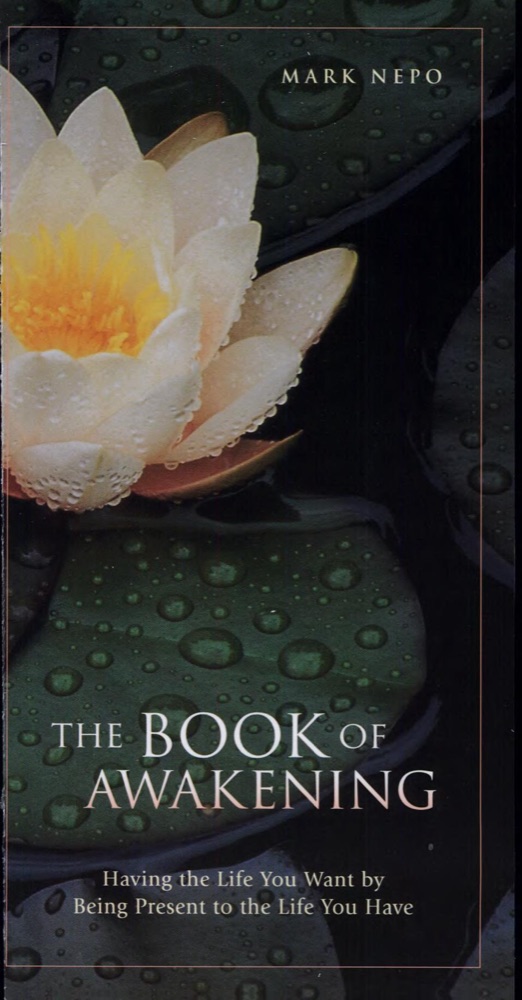 The Book of Awakening: Having the Life You Want by Being Present to the Life You Have
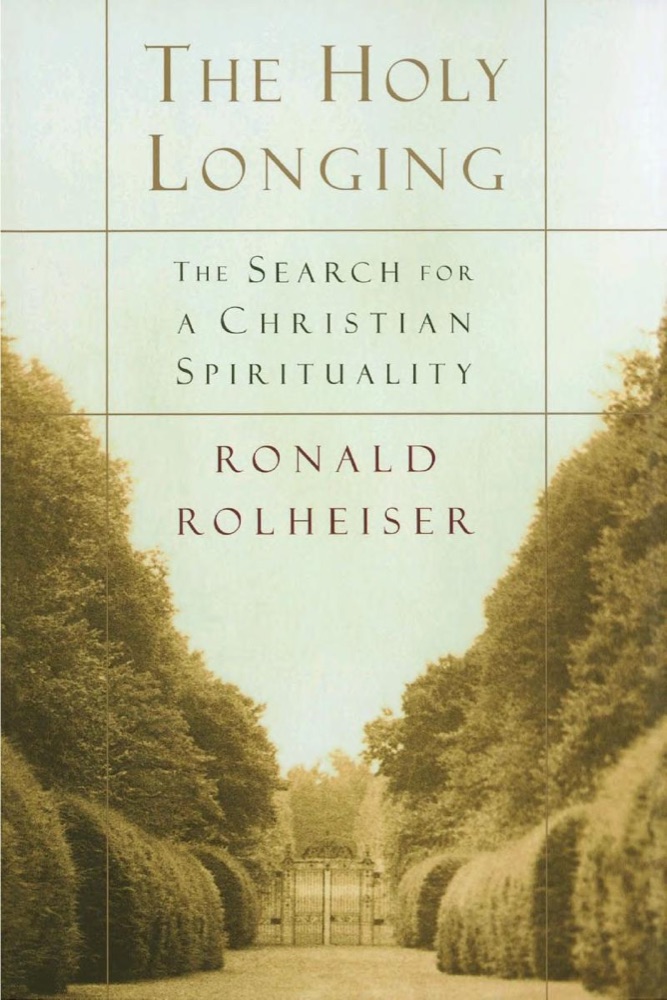 The Holy Longing: The Search for a Christian Spirituality
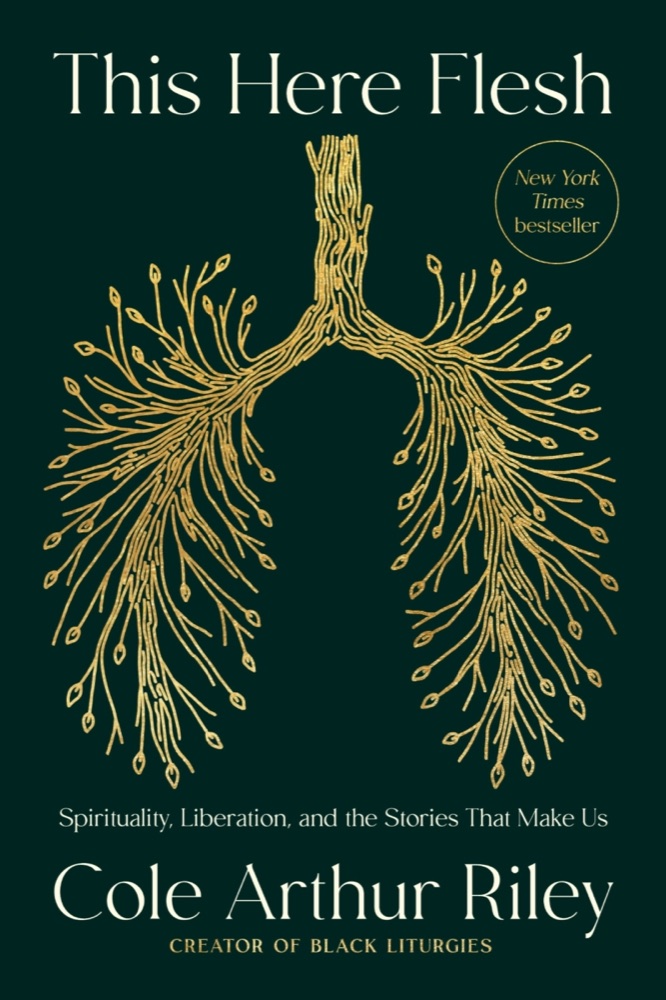 This Here Flesh: Spirituality, Liberation, and the Stories That Make Us
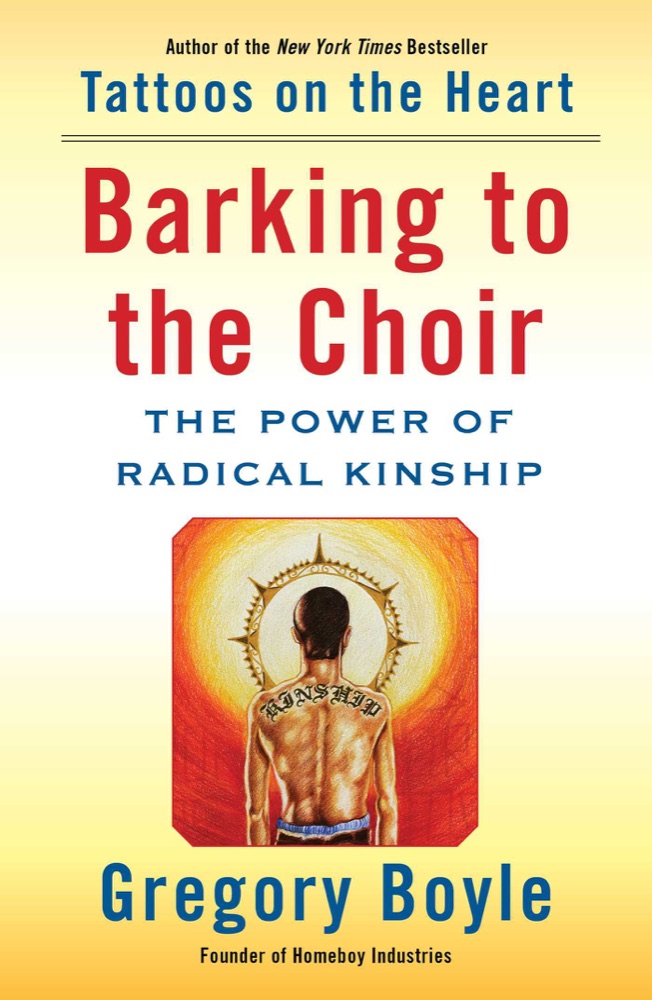 Barking to the Choir: The Power of Radical Kinship
 The Cloister Walk
 I Guess I Haven't Learned That Yet: Discovering New Ways of Living When the Old Ways Stop Working
 Emotionally Healthy Spirituality: Unleash A Revolution In Your Life in Christ
Jesus > Religion: Why He Is So Much Better Than Trying Harder, Doing More, and Being Good Enough
Emotionally Healthy Spirituality: Unleash A Revolution In Your Life in Christ
Jesus > Religion: Why He Is So Much Better Than Trying Harder, Doing More, and Being Good Enough
 Choose Yourself: Be Happy, Make Millions, Live the Dream
 Christ Plays in Ten Thousand Places: A Conversation in Spiritual Theology
 Thrive: The Third Metric to Redefining Success and Creating a Life of Well-Being, Wisdom, and Wonder
 The Irresistible Revolution: Living as an Ordinary Radical
 The Bassoon King: My Life in Art, Faith, and Idiocy
 Buddhist Boot Camp
 Grace for the Good Girl: Letting Go of the Try-Hard Life
 What If This Were Enough?: Essays
 12 Rules for Life: An Antidote to Chaos
 Renovation of the Heart: Putting On the Character of Christ
 Kitchen Table Wisdom: Stories that Heal
 The Buddha Walks into a Bar . . .: A Guide to Life for a New Generation
 Surrender: 40 Songs, One Story
 You're Not Enough (and That's Ok): Escaping the Toxic Culture of Self-Love
 Everything Belongs: The Gift of Contemplative Prayer
 Stitches: A Handbook on Meaning, Hope, and Repair
 Waking the Dead: The Glory of a Heart Fully Alive