 Saint Thomas Aquinas
Quotes from the Book
Friendliness took the place of charity, contentment the place of hope, and knowledge the place of faith.
12
In the ages of faith a very inadequate grasp of religion would pass muster; in these searching days none but the humble and the pure could stand the test for long, unless indeed they were protected by a miracle of ignorance. The alliance of Psychology and Materialism did indeed seem, looked at from one angle, to account for everything; it needed a robust supernatural perception to understand their practical inadequacy.
5
Men do recognise at last that a supernatural Religion involves an absolute authority, and that Private Judgment in matters of faith is nothing else than the beginning of disintegration.
4
Christianity is absurd and impossible. Now, you know, it cannot be that! It may be untrue--I am not speaking of that now, even though I am perfectly certain that it is absolutely true--but it cannot be absurd so long as educated and virtuous people continue to hold it. To say that it is absurd is simple pride; it is to dismiss all who believe in it as not merely mistaken, but unintelligent as well---
4
It was incredible, she told herself, that this ravening monster, dripping blood from claws and teeth, that had arisen roaring in the night, could be the Humanity that had become her God. She had thought revenge and cruelty and slaughter to be the brood of Christian superstition, dead and buried under the new-born angel of light, and now it seemed that the monsters yet stirred and lived.
4
the Catholic Faith, more certain to him than the existence of himself: it was true and alive. He might be damned, but God reigned.
2
The Catholic Religion, He knew well enough, gave the only adequate explanation of the universe; it did not unlock all mysteries, but it unlocked more than any other key known to man; He knew, too, perfectly well, that it was the only system of thought that satisfied man as a whole, and accounted for him in his essential nature. Further, He saw well enough that the failure of Christianity to unite all men one to another rested not upon its feebleness but its strength; its lines met in eternity, not in time.
2
It will be time, then, to suffer by and bye, when the Prince of this world cometh upon the Prince of Heaven.
2
Yet Percy, even in the glimpses he had had in the streets, as he drove from the volor station outside the People's Gate, of the old peasant dresses, the blue and red-fringed wine carts, the cabbage-strewn gutters, the wet clothes flapping on strings, the mules and horses -- strange though these were, he had found them a refreshment. It had seemed to remind him that man was human, and not divine as the rest of the world proclaimed -- human, and therefore careless and individualistic; human, and therefore occupied with interests other than those of speed, cleanliness, and precision.
2
there were three processes through which God led the soul: the first was that of external faith, which assents to all things presented by the accustomed authority, practises religion, and is neither interested nor doubtful; the second follows the quickening of the emotional and perceptive powers of the soul, and is set about with consolations, desires, mystical visions and perils; it is in this plane that resolutions are taken and vocations found and shipwrecks experienced; and the third, mysterious and inexpressible, consists in the re-enactment in the purely spiritual sphere of all that has preceded (as a play follows a rehearsal), in which God is grasped but not experienced, grace is absorbed unconsciously and even distastefully, and little by little the inner spirit is conformed in the depths of its being, far within the spheres of emotion and intellectual perception, to the image and mind of Christ.
1
It was Positivism of a kind, Catholicism without Christianity, Humanity worship without its inadequacy. It was not man that was worshipped but the Idea of man, deprived of his supernatural principle. Sacrifice, too, was recognised—the instinct of oblation without the demand made by transcendent Holiness upon the blood-guiltiness of man…. In fact,—in fact, said Percy, it was exactly as clever as the devil, and as old as Cain.
1
dedicating once more by a formal and deliberate act our souls and bodies to the heavenly Will and service of Him Who alone can rightly claim such offering,
1
it is the moral state, rather than the intellectual, to which the Spirit of God speaks with the greater certitude.
1
It was Christianity alone that made life tolerable.
1
sin is the rebellion of man's will against God's.
1
From this duty We Ourself must not be deterred by the knowledge of Our own weakness and ignorance, but to trust rather that He Who has placed Us on this throne will deign to speak through Our mouth and use Our words to His glory.
1
Surely then, if the blood of men and the tears of women could not avail to move the Judge and Observer of all from His silence, surely at least here the bloodless Death of His only Son, that once on Calvary had darkened heaven and rent the earth, pleaded now with such sorrowful splendour upon this island of faith amid a sea of laughter and hatred—this at least must avail! How could it not?
1
So movement by movement the gorgeous drama was enacted; the murmuring of the crowds died to a stillness that was but one wordless prayer as the tiny White Disc rose between the white hands, and the thin angelic music pealed in the dome. For here was the one hope of these thousands, as mighty and as little as once within the Manger. There was none other that fought for them but only God.
1
a humble act of adoration was transcendently greater than the most noble natural act,
1
You say Christianity is absurd and impossible. Now, you know, it cannot be that! It may be untrue—I am not speaking of that now, even though I am perfectly certain that it is absolutely true—but it cannot be absurd so long as educated and virtuous people continue to hold it. To say that it is absurd is simple pride; it is to dismiss all who believe in it as not merely mistaken, but unintelligent as well
1
How difficult it was to hold the eyes focussed on that far horizon when this world lay in the foreground so compelling in its splendour and its strength!
1
He stood a moment or two at the door after his wife had gone, drinking in reassurance from that glorious vision of solid sense that spread itself before his eyes: the endless house-roofs; the high glass vaults of the public baths and gymnasiums; the pinnacled schools where Citizenship was taught each morning; the spider-like cranes and scaffoldings that rose here and there; and even the few pricking spires did not disconcert him. There it stretched away into the grey haze of London, really beautiful, this vast hive of men and women who had learned at least the primary lesson of the gospel that there was no God but man, no priest but the politician, no prophet but the schoolmaster. Then he went back once more to
1
Yes," he said, "in one sense, of course it is--utterly unreasonable.
1
Then this world passed, and the glory of it.
transfigured in one vibrating atmosphere of an immense human emotion. There was no one, anywhere, but Julian Felsenburgh. Peace and light burned like a glory about Him.
Until our Lord comes back,” he thought to himself; and for an instant the old misery stabbed at his heart. How difficult it was to hold the eyes focussed on that far horizon when this world lay in the foreground so compelling in its splendour and its strength!
Yes; Felsenburgh," said Father Blackmore once more. "I cannot get that man out of my head. And yet
you must remember that Humanitarianism
It is perfectly true that Protestantism is dead. Men do recognise at last that a supernatural Religion involves an absolute authority, and that Private Judgment in matters of faith is nothing else than the beginning of disintegration. And it is also true that since the Catholic Church is the only institution that even claims supernatural authority, with all its merciless logic, she has again the allegiance of practically all Christians who have any supernatural belief left.
there should be established the peace of man with God, and after that the unity of man with man will follow.
Watch on YouTube
About Robert Hugh Benson
We have collected 30 quotes from 1 book by Robert Hugh Benson on BookQuoters.
More about the author →About the book
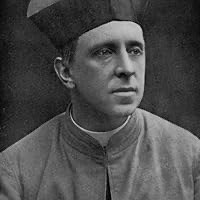
Robert Hugh Benson (1871-1914) was the youngest son of Edward White Benson, Archbishop of Canterbury, and younger brother of Edward Frederic Benson. In 1895, he was ordained a priest in the Church of England by his father who was then Archbishop of Canterbury. After many years of questioning and soul-searching he was received into the Roman Catholic Church in 1903. He was ordained a Catholic priest in 1904 and named a Monsignor in 1911.
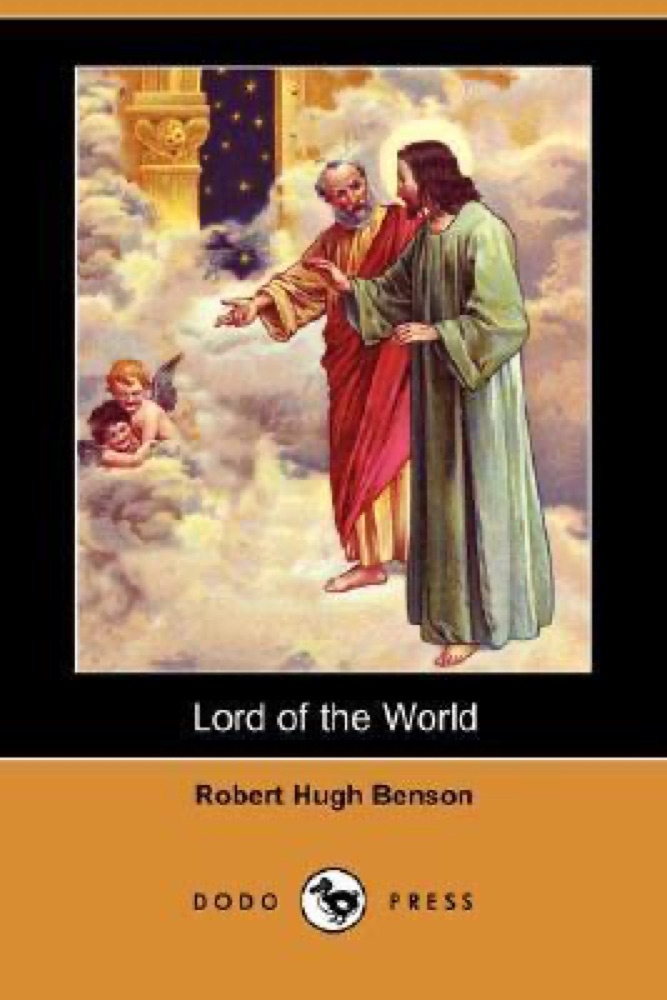
This book, written in 1907, is Benson's dystopic vision of a near future world in which religion has, by and large, been rejected or simply fallen by the wayside. The Catholic Church has retreated to Italy and Ireland, while the majority of the rest of the world is either Humanistic or Pantheistic. There is a 'one world' government, and euthanasia is widely available. The plot follows the tale of a priest, Percy Franklin, who becomes Pope Silvester III
Book details
- First published
- 1907
- Author
- Robert Hugh Benson
- Genre
- Fiction
- Goodreads rating
- 4.09 (4k ratings)
Keep reading
Saint Thomas Aquinas
 The Knowledge of the Holy
 The Devil's Advocate
 Ben-Hur: A Tale of the Christ
 City of God
 The Imitation of Christ
 The Kingdom of God Is Within You
 On the Incarnation
 Institutes of the Christian Religion, 2 Vols
 Life of Christ
 The Power and the Glory
 Death Comes for the Archbishop
 Shadow of the Almighty: The Life and Testament of Jim Elliot
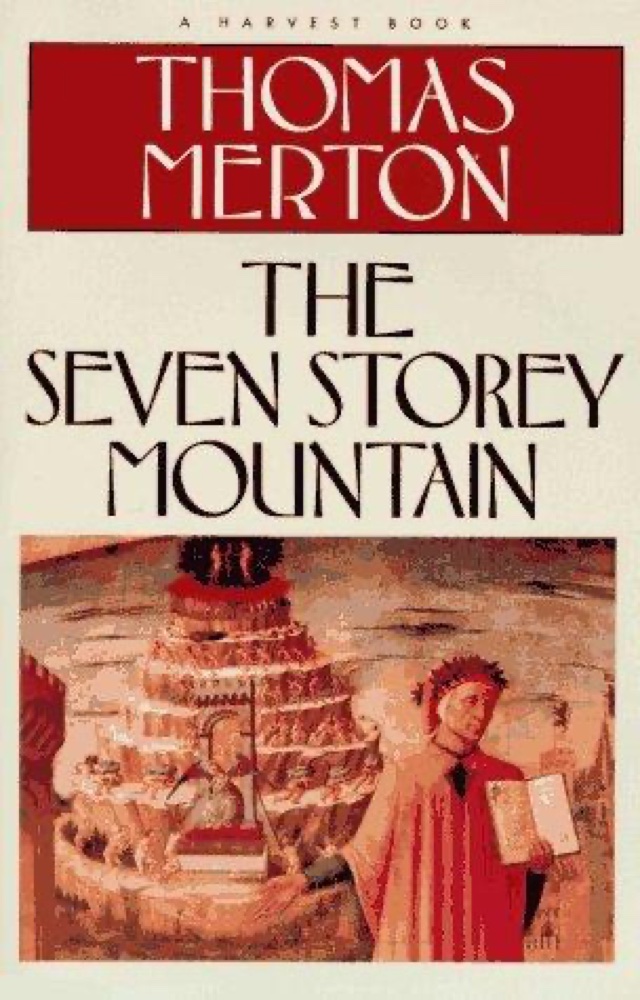 The Seven Storey Mountain
 A History of God: The 4,000-Year Quest of Judaism, Christianity, and Islam
 A Severe Mercy: A Story of Faith, Tragedy and Triumph
 The Everlasting Man
 The Age of Reason
 The Hope of Glory: Reflections on the Last Words of Jesus from the Cross
 The Jesus I Never Knew
 A Pilgrimage to Eternity: From Canterbury to Rome in Search of a Faith
 Bonhoeffer: Pastor, Martyr, Prophet, Spy
 Jesus of Nazareth: The Infancy Narratives
 The Complete Father Brown
 Letters and Papers from Prison
 Children of God
 The Cross of Christ
 Perelandra
 The Bible Jesus Read
 Saint Francis
 A Canticle for Leibowitz
 The Reed of God
 Studies in the Sermon on the Mount
 The Crucible of Doubt: Reflections On the Quest for Faith
 The Long Loneliness: The Autobiography of the Legendary Catholic Social Activist ― A Memoir about the Worker Movement and Spiritual Conversion
 The Pursuit of God: The Human Thirst for the Divine
 God's Smuggler
 The Sovereignty of God
 The Weight of Glory
 Sir Gibbie
 Leaving Church: A Memoir of Faith
 In the Beauty of the Lilies
 The Great Divorce
 Jesus and the Disinherited
 Catechism of the Catholic Church
 The Fall of Hyperion
 We Who Wrestle with God: Perceptions of the Divine
 War in Heaven
 Under the Banner of Heaven: A Story of Violent Faith
 Matthew Henry's Commentary on the Whole Bible
 That All Shall Be Saved: Heaven, Hell, and Universal Salvation
 The Pilgrim's Progress
 God in Search of Man: A Philosophy of Judaism
 The Divine Conspiracy: Rediscovering Our Hidden Life in God
 The Last Temptation of Christ
 The Exorcist
 Jayber Crow
 The Infinite Atonement
 Julian Comstock: A Story of 22nd-Century America