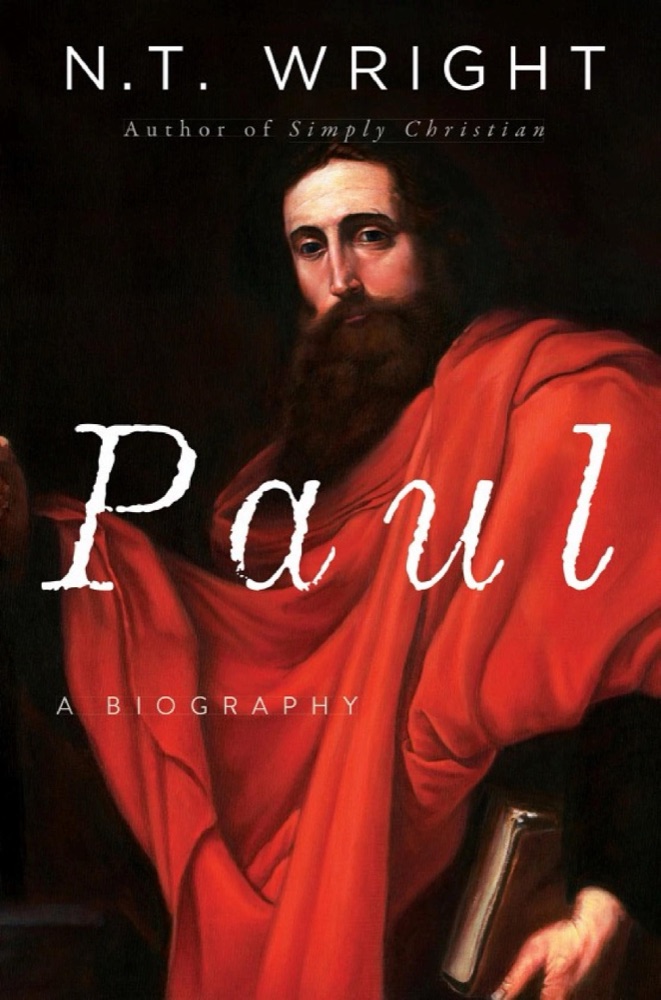
 Paul: A Biography
Quotes from the Book
Disgust at idols strengthened his love for idolaters, and the man who once held Gentile neighbors at a distance now listened to their problems, fears, and temptations.
2
A colleague like Barnabas could comfort him (Paul) in illness and keep him from overstrain when fit.
1
His joy was a release of Paul's conversion, not the heavy backslapping practical-joking humor of the Victorians, nor the cynical satire or the flippancy of the twenty first century mass media, just the gift of not taking himself or his adversaries too seriously.
1
The foolishness of God was wiser than men, the weakness of God was stronger. By the time Paul had unfolded a long argument, he had made plain that no man could discover God by force of intellect. Had Paul known what marvels of knowledge would emerge in the next two thousand years, that the human mind and anatomy were infinitely complex, the universe so vast that the earth spun as a mere grain in space, he would have said the same. He would have considered it ironic that, the more men discovered the insignificance of their planet, the more highly they would rate themselves, all the more sure that they could explain everything without reference to God.
Luke, as he matured in Paul’s companionship, grew to be a man of charm and compassion; quiet, unexcitable, watching the foibles of mankind with a shrewd, twinkling eye. His writings have delicious touches of humor. He cared especially about the downtrodden and despised. He was a friendly person, who used nicknames or diminutives when Paul retained formal names. Where Paul was the brilliant, original thinker, Luke was the careful scholar, investigating incidents and background with a physician’s strict regard for accuracy. Paul’s prose pours out like talk, in the language of the people. Luke’s has literary grace and style, concise without being terse.
Put on, as God’s chosen ones, compassion, kindness, lowliness, meekness, and patience.
His character had not been soured or hardened by troubles. To judge by what he thought important, he was kind, tenderhearted, forgiving, just as Christ had forgiven him. He walked in love, the element that bound his qualities together. He was still the great encourager, welcoming any who were weak in faith and refusing to argue about secondary matters.
we rejoice in our sufferings, knowing that suffering produces endurance, and endurance produces character, and character produces hope, and hope does not disappoint us, because God’s love has been poured into our hearts through the Holy Spirit which has been given to us.
No temptation has overtaken you that is not common to all people. God is faithful, and He will not let you be tempted beyond your strength, but with the temptation will also provide the way of escape, that you may be able to endure it.
He had the strongest awareness, as his actions showed, that the entire operation was in the hands of the Lord Jesus, who was no passive spectator but the invisible commander, ready to seize opportunities, recover from reverses, and deploy His forces as they gathered under His banner.
He would have considered it ironic that, the more men discovered the insignificance of their planet, the more highly they would rate themselves, all the more sure that they could explain everything without reference to God. They
A biographer has to decide between slowing to a halt in a bog of conflicting possibilities or striding boldly across by a causeway of conjecture. I choose the second course and, without stepping aside to discuss all the alternatives, tell the story as I see it. Paul’s next eighteen months unfolded somewhat as follows, though the tone of assurance in my narrative must not disguise that some of its conclusions are tentative and disputable. The
In Paul’s view a church should not merely survive in its unfriendly pagan environment, but advance. Christians should have nothing to do with a sad acceptance of harsh surroundings, bearing heavy crosses with uncomplaining gloom, cultivating an oppressive sense of sin. They were to be positive, doing good to one another and to unbelieving Jews and pagans regardless of abuse or injury. “Rejoice evermore, pray without ceasing, in everything give thanks.” No matter how adverse the circumstances, their way of life should be a rebuke to foulness and a spur to their neighbors to seek for themselves this new, extraordinary existence; Christians must outlove, outjoy, outthink, and always welcome those who opposed them.
Turning consciously from evil to faith did not always bring immediate awareness of how to please God
providing the element of slight distraction to keep the mind from wandering. Each
I can do all things in Him who strengthens me” (or, “I am ready for anything through the strength of the One who lives within me”).
At length he told the Lord he would leave it in His hands. Peace flowed back. No voice or light disclosed the next move,
There is a world of difference between inference and conjecture, and imagination must not roam at the cost of authenticity. Paul
The morality taught by Paul and demonstrated by his converts was in stark contrast to the old, permissive morality of the ancient world. It was unconventional: It showed a love of man irrespective of his race, showed forgiveness instead of resentment for wrong, joy instead of grim endurance of adversity or oppression.
If the Spirit of Christ had come to a man, the “fruit of the Spirit” would appear: “love, joy, peace, patience, kindness, goodness, faithfulness, gentleness, self-control”;
For a slave to be taught that he should no longer lie and cheat with revolutionary; more astonishing still was the slave's discovery that he did not want to lie or cheat and that he now loved the owner whom he had once resented and feared.
Faith in Christ leaped from person to person like some divine epidemic, not of disease but of spiritual health.
New converts displayed a most un-Roman concern for the sick man.
His ally was the age-old, unending human search for truth and security. In the first century as the twenty first, some were devout, some superstitious, others were frankly materialistic, even though in that age they paid lip service to the gods. Others, contemptuous of religion, believed only in mankind. But at heart, when disguises were torn away and defenses broken, lay the same anxieties and hopes.
In his late forties, an age when men settle to comforts and seek a firm base, Paul began his roughest travels.
In youth his mind had been closed, for every prejudice of upbringing was a disinfectant against pagan ideas. He now had an even more satisfying answer to the puzzles of human strivings and destiny. Paganism at its philosophical best would appear a gluttering candle to a man who had followed the Light of the World, and more usually it was idolatry, mixed with license.
His (Paul's) entire personality within mutation. He was being turned inside out as he led Jesus light the recesses of his soul.
Though blue sky and the road’s yellow dust and the green of the nearing oasis were all snuffed out, he (newly converted Saul) did not miss them. Light suffused his blinded eyes, his mind.
Watch on YouTube
About John Charles Pollock
About the book
Pollock brings Paul and his amazing story freshly alive, making it possible for you to know Paul much as Luke or Timothy did as they traveled with him.
Book details
- First published
- 1969
- Author
- John Charles Pollock
- Genre
- Biography
- Goodreads rating
- 4.27 (2k ratings)
Keep reading
Paul: A Biography
 Shadow of the Almighty: The Life and Testament of Jim Elliot
 The Jesus I Never Knew
 To Live Is Christ: Joining Paul's Journey of Faith
 The Bible Jesus Read
 The Pilgrim's Progress
 Studies in the Sermon on the Mount
 Beautiful Outlaw: Experiencing the Playful, Disruptive, Extravagant Personality of Jesus
 God's Smuggler
 Life of Christ
 The Imitation of Christ
 The Normal Christian Life
 The Bruised Reed
 He Chose the Nails: What God Did to Win Your Heart
 Leaving Church: A Memoir of Faith
 Encounters with Jesus: Unexpected Answers to Life's Biggest Questions
 The Wounded Healer
 The MacArthur Daily Bible: Read through the Bible in one year, with notes from John MacArthur
 Lord of the World
 The Mystery of Providence
 Seeking Allah, Finding Jesus: A Devout Muslim Encounters Christianity
 Matthew Henry's Commentary on the Whole Bible
 The Templar Legacy
 On the Incarnation
 The Good Man Jesus and the Scoundrel Christ
 Ben-Hur: A Tale of the Christ
 Knowing God
 The Secret Thoughts of an Unlikely Convert: An English Professor's Journey Into Christian Faith
 The Prodigal God: Recovering the Heart of the Christian Faith
 The Masterpiece
 The Heavenly Man: The Remarkable True Story of Chinese Christian Brother Yun
 Children of God
 Bonhoeffer: Pastor, Martyr, Prophet, Spy
 Lectures to My Students
 A Little Book on the Christian Life
 Through Gates of Splendor
 What's So Amazing About Grace?
 Jesus of Nazareth: The Infancy Narratives
 Saint Thomas Aquinas
 Grace for the Moment: Inspirational Thoughts for Each Day of the Year, Volume 1
 The Autobiography of George Müller
 The History of the Church: From Christ to Constantine
 The Ragamuffin Gospel
 Grace Abounding to the Chief of Sinners
 In His Steps
 The Furious Longing of God
 Searching for God Knows What
 Hope for the Troubled Heart: Finding God in the Midst of Pain
 The Case for Faith: A Journalist Investigates the Toughest Objections to Christianity
 The Message Remix
 Institutes of the Christian Religion, 2 Vols
 Morning and Evening, Based on the English Standard Version
 Stepping Heavenward
 City of God
 Sir Gibbie
 HCSB: Holman Christian Standard Bible
 The Sermon on the Mount: The Key to Success in Life
 Reflections on the Psalms
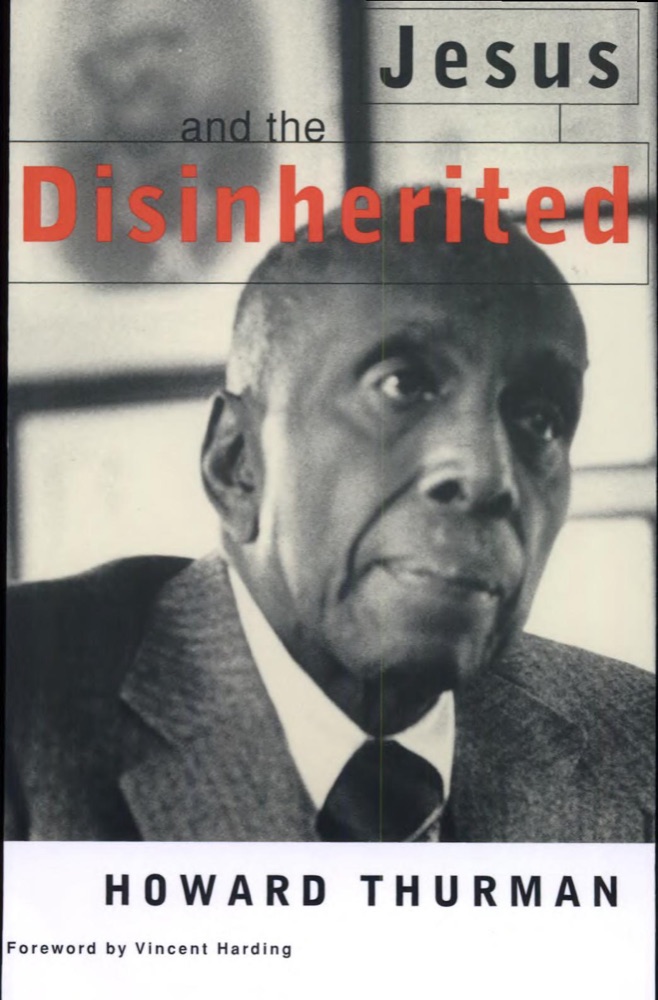 Jesus and the Disinherited