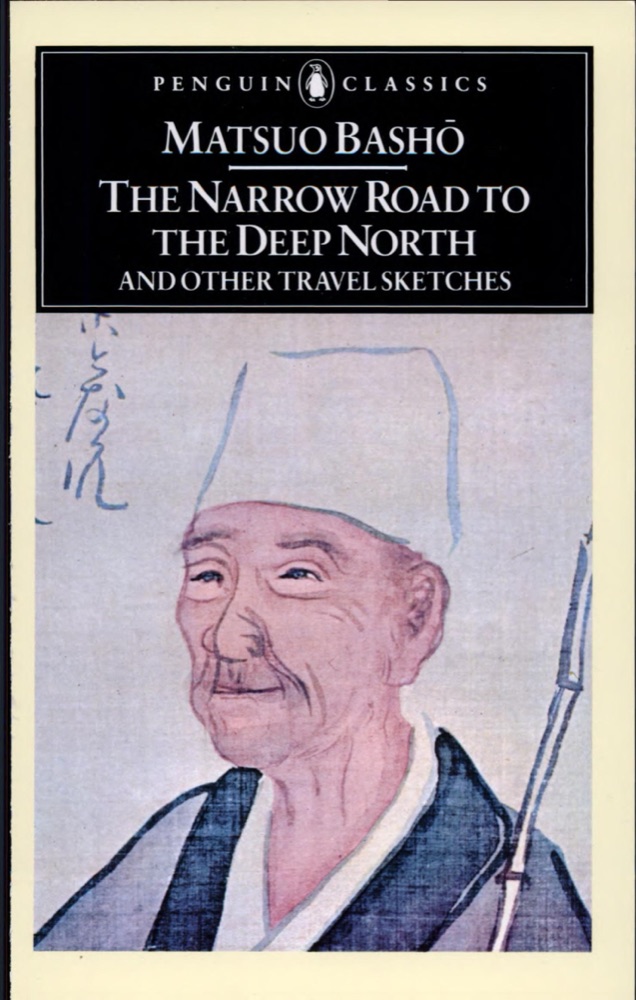
 The Narrow Road to the Deep North and Other Travel Sketches
Quotes from the Book
In friendship, bond not with a shallow man.
24
The moon glows on the river, wind rustles the pines. Long night clear evening--what are they for?
17
Without a constant livelihood, there will be no constant heart.
11
Shape I may take, converse I may, but neither god nor Buddha am I, rather an insensate being whose heart thus differs from that of man.
11
...wealth without pride is the way of the great sage.
5
He who fails to control his mind becomes a demon; he who governs his mind attains to buddhahood.
1
He continued his writing and scholarship as he moved here and there in Kyoto, depending on friends for support, until his death in 1809 on the twenty-seventh day of the Sixth Month (August 8, in the Western calendar), in his seventy-sixth year. His grave is at the Buddhist temple Saifukuji, near the Nanzenji monastery.
1
Pilgrims to the Mausoleum recite the chant Namu Daishi Henjō Kongō: “I put my faith in the great teacher who brings light to all the people, Universal Adamantine Illuminator.“2
Miidera, also known as Onjōji, an important Buddhist temple established in the seventh century on a hill overlooking Lake Biwa, in what is now the city of Ōtsu, just east of Kyoto, is the setting of “The Carp of My Dreams.
possibly at the Kaitokudō, one of the most prominent of the new schools chartered by the government to provide “an appropriately practical Confucian education” to the children of the merchant and artisan classes.8 The curriculum would have included the Confucian canon—the Four Books (Lun yü [Analects] of Confucius, Da xue [The Great Learning], Zhong yong [The Doctrine of the Mean], and Mengzi [Mencius]) and the Five Classics (I jing [The Book of Changes], Shu jing [The Book of Documents], Shi jing [The Book of Songs], Li ji [The Book of Rites], and Chun qiu [Spring and Autumn Annals])—and Japanese classics, especially waka (thirty-one-syllable court poems), Ise monogatari (Tales of Ise, ca. 947), and The Tale of Genji.
The first blossoming of early modern literature came toward the end of the seventeenth century, particularly with the work of three major figures: the fiction writer Ihara Saikaku (1642–1693), the poet Matsuo Bashō (1644–1694), and the dramatist Chikamatsu Monzaemon (1653–1724).
Many novelists—including Izumi Kyōka (1873–1939), Tanizaki Jun’ichirō (1886–1965), Akutagawa Ryūnosuke (1892–1927), Ishikawa Jun (1899–1987), Enchi Fumiko (1905–1986), and Mishima Yukio (1925–1970)—were avid readers of the collection. Two of the tales inspired Mizoguchi Kenji’s cinematic masterpiece Ugetsu monogatari (1953; known to Western viewers as Ugetsu), which is widely regarded as “one of the greatest of all films.
Haljas, haljas on kevadine paju, aga oma aeda ära teda istuta. Ja seltsiliseks ära vali endale pealiskaudseid inimesi. Paju läheb küll kiiresti lopsakasse lehte, aga kas suudab ta vastu panna, kui esimene sügistuul puhub? Pealiskaudse inimesega on samuti kerge kiiresti sõbraks saada. Aga mitu korda ka jõeääre paju igal kevadel uuesti roheliseks ei läheks, kui pealiskaudne inimene kord silmapiirilt kaob, ei tule ta kunagi tagasi.
Watch on YouTube
About Ueda Akinari
We have collected 13 quotes from 1 book by Ueda Akinari on BookQuoters.
More about the author →About the book
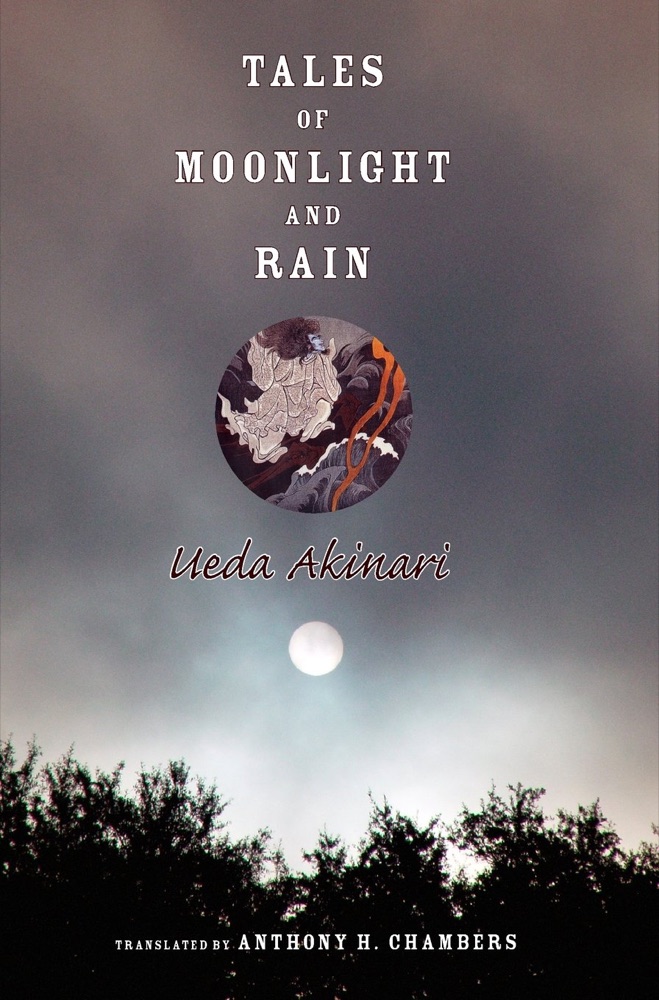
First published in 1776, the nine gothic tales in this collection are Japan's finest and most celebrated examples of the literature of the occult. They subtly merge the world of reason with the realm of the uncanny and exemplify the period's fascination with the strange and the grotesque. They were also the inspiration for Mizoguchi Kenji's brilliant 1953 film Ugetsu.
The title Ugetsu monogatari (literally "rain-moon tales") alludes to the belief that mysterious beings appear on cloudy, rainy nights and in mornings with a lingering moon. In "Shiramine," the vengeful ghost of the former emperor Sutoku reassumes the role of king; in "The Chrysanthemum Vow," a faithful revenant fulfills a promise; "The Kibitsu Cauldron" tells a tale of spirit possession; and in "The Carp of My Dreams," a man straddles the boundaries between human and animal and between the waking world and the world of d
Book details
- First published
- 1776
- Author
- Ueda Akinari
- Genre
- Fiction
- Goodreads rating
- 3.78 (3k ratings)
Keep reading
The Narrow Road to the Deep North and Other Travel Sketches
 Kwaidan: Stories and Studies of Strange Things
 The Lady and the Monk: Four Seasons in Kyoto
 Runaway Horses
 Shibumi
 Independent People
 And Then
 The Tale of Genji
 Spring Snow
 Zen Flesh, Zen Bones: A Collection of Zen and Pre-Zen Writings
 Shōgun
 The Enchantress of Florence
 Cloud of Sparrows
 The Secret Piano: From Mao's Labor Camps to Bach's Goldberg Variations
 Taiko: An Epic Novel of War and Glory in Feudal Japan
 The Thousand Autumns of Jacob de Zoet
 The Rise of Kyoshi
 Mahabharata
 Oblomov
 Wind, Sand and Stars
 Rashomon and Other Stories
 The Killing Moon
 Selected Stories of Anton Chekhov
 Tell Them of Battles, Kings, and Elephants
 Sacred Journey of the Peaceful Warrior
 Selected Stories
 Lord of Light
 Fragments
 The Temple of the Golden Pavilion
 The Fairy Tales of Hermann Hesse
 The Collected Poems
 Complete Works of Oscar Wilde
 The Celtic Twilight: Faerie and Folklore
 A Woman of Pleasure
 Life... Love... Kumbh...
 The I Ching or Book of Changes
 Primeval and Other Times
 Hagakure: The Book of the Samurai
 River of Smoke
 Complete Works of Swami Vivekananda, 9 Vols.
 The Glass Bead Game
 The Essays of Ralph Waldo Emerson
 The Architect's Apprentice
 The Immortals of Meluha
 The Book of Tea
 The Treasured Writings of Kahlil Gibran
 Ulysses
 The Dean's Watch
 The Volcano Lover: A Romance
 The Dhammapada
 The Wall of Storms
 The Night Watchman
 The Ramayana: A Shortened Modern Prose Version of the Indian Epic
 Walden
 Yayati: A Classic Tale of Lust
 Chrysanthemum and the Sword: Patterns of Japanese Culture
 The Book of Chuang Tzu
 The Swerve: How the World Became Modern
 Speaking Bones