

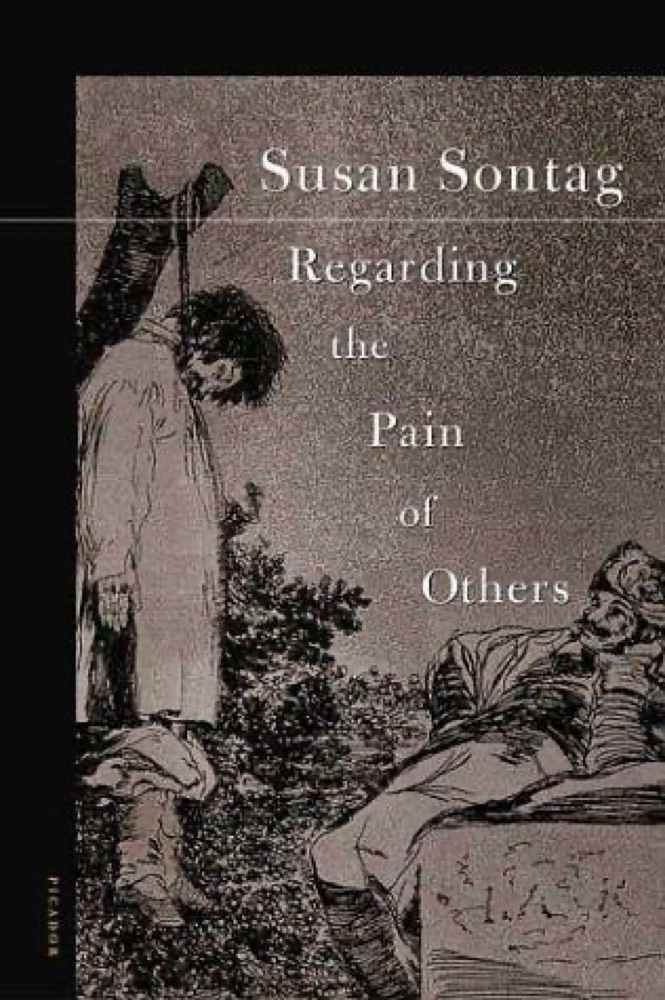
 Regarding the Pain of Others
Quotes from the Book
Every culture has its southerners -- people who work as little as they can, preferring to dance, drink, sing brawl, kill their unfaithful spouses; who have livelier gestures, more lustrous eyes, more colorful garments, more fancifully decorated vehicles, a wonderful sense of rhythm, and charm, charm, charm; unambitious, no, lazy, ignorant, superstitious, uninhibited people, never on time, conspicuously poorer (how could it be otherwise, say the northerners); who for all their poverty and squalor lead enviable lives -- envied, that is, by work-driven, sensually inhibted, less corruptly governed northerners. We are superior to them, say the northerners, clearly superior. We do not shirk our duties or tell lies as a matter of course, we work hard, we are punctual, we keep reliable accounts. But they have more fun than we do ... They caution[ed] themselves as people do who know they are part of a superior culture: we mustn't let ourselves go, mustn't descend to the level of the ... jungle, street, bush, bog, hills, outback (take your pick). For if you start dancing on tables, fanning yourself, feeling sleepy when you pick up a book, developing a sense of rhythm, making love whenever you feel like it -- then you know. The south has got you.
How much self-love comes in the guise of selfless devotion!
With genius, as with beauty -- all, well almost all, is forgiven.
We like to stress the commonness of heroes. Essences seem undemocratic. We feel oppressed by the call to greatness. We regard an interest in glory or perfection as a sign of mental unhealthiness, and have decided that high achievers, who are called overachievers, owe their surplus ambition to a defect in mothering (either too little or too much). We want to admire but think we have a right not to be intimidated. We dislike feeling inferior to an ideal. So away with ideals, with essences. The only ideals allowed are healthy ones -- those everyone may aspire to, or comfortably imagine oneself possessing.
Maybe it is not the destructiveness of the volcano that pleases most, though everyone loves a conflagration, but its defiance of the law of gravity to which every inorganic mass is subject. What pleases first at the sight of the plant world is its vertical upward direction. That is why we love trees. Perhaps we attend to a volcano for its elevation, like ballet. How high the molten rocks soar, how far above the mushrooming cloud. The thrill is that the mountain blows itself up, even if it must then like the dancer return to earth; even if it does not simply descend—it falls, falls on us. But first it goes up, it flies. Whereas everything pulls, drags down. Down.
[T]o read was precisely to enter another world, which was not the reader's own, and come back refreshed, ready to bear with equanimity the injustices and frustrations of this one. Reading was balm, amusement -- not incitement.
Collecting expresses a free-floating desire that attaches and re-attaches itself—it is a succession of desires. The true collector is in the grip not of what is collected but of collecting.
He looked into the hole, and like any hole it said, Jump.
When the right person does the wrong thing, it’s the right thing.
The Cavaliere has retired to his study and reads, trying not to think about what is going on around him -- one of the principal uses of a book.
A great private collection is a material concentrate that continually stimulates, that overexcites. Not only because it can always be added to, but because it is already too much. The collector’s need is precisely for excess, for surfeit, for profusion. It’s too much—and it’s just enough for me. … A collection is always more than is necessary.
It has happened. It is over. They fled. They mourned. Until grief had turned stony, too, and they came back. Awed by the completeness of the erasure, they gazed upon the fattened ground below which their world lay entombed. The ash under their feet, still warm, no longer seared their shoes. It cooled further. Hesitations vaporized. ...most of those who had survived set about rebuilding, reliving; there. Their mountain now had an ugly hole at the top. The forests had been incinerated. But they, too, would grow again.
Walking onto his terrace those first months to see in the distance the well-behaved mountain sitting under the sun might provoke a reverie about the calm that follows catastrophe.
Like a wind, like a storm, like a fire, like an earthquake, like a mud slide, like a deluge, like a tree falling, a torrent roaring, an ice floe breaking, like a tidal wave, like a shipwreak, like an explosion, like a lid blown off, like a consuming fire, like spreading blight, like a sky darkening, a bridge collapsing, a hole opening. Like a volcano erupting. Surely more than just the actions of people: choosing, yielding, braving, lying, understanding, being right, being deceived, being consistent, being visionary, being reckless, being cruel, being mistaken, being original, being afraid . . .
(The Queen had real power, and a woman in power, feared as virile, is often accused of being a slut.
Temporarily then, for a short time only, they were to live in Palermo: the south of south. Every culture has its southerners—people who work as little as they can, preferring to dance, drink, sing, brawl, kill their unfaithful spouses; who have livelier gestures, more lustrous eyes, more colorful garments, more fancifully decorated vehicles, a wonderful sense of rhythm, and charm, charm, charm; unambitious, no, lazy, ignorant, superstitious, uninhibited people, never on time, conspicuously poorer (how could it be otherwise, say the northerners); who for all their poverty and squalor lead enviable lives—envied, that is, by work-driven, sensually inhibited, less corruptly governed northerners. We are superior to them, say the northerners, clearly superior. We do not shirk our duties or tell lies as a matter of course, we work hard, we are punctual, we keep reliable accounts. But they have more fun than we do. Every country, including southern countries, has its south: below the equator, it lies north. Hanoi has Saigon, Sao Paulo has Rio, Delhi has Calcutta, Rome has Naples, and Naples, which to those at the top of this peninsula
For if you start dancing on tables, fanning yourself, feeling sleepy when you pick up a book, developing a sense of rhythm, making love whenever you feel like it—then you know. The south has got you. *
and they realize it is just the two of them now, when the father has gone and the children are left alone in the funhouse, they stand in silence, the fat lady and the short man with one arm, and try to look only at the mirrors, but a gust of happiness that seems to have no borders, bliss without an edge, envelops them, and exhausted by the stress of desire, hilarious with happiness, they turn toward each other and kiss (and kiss and kiss), and their turn, their kiss, was shattered, multiplied in the mirrors above.
To learn that his treasures had been lost months ago, and so far away, was no different from learning of the death, similarly distant in time and geography, of a beloved person. Such a death bears a peculiar imprint of doubt. To be told one day that someone has gone off to the other side of the world, and with whom you expect momentarily to be reunited, has actually been dead for many months, during which you have been going on with your life, unaware of this subtraction that has taken place, makes a mockery of the finality of death. Death is reduced to news. And news is always a little unreal—which is why we bear to take in so much of it.
The joke is this impersonal possession. It doesn’t have anyone’s signature. It was given to me—but you didn’t make it up; it was in my custody, and I chose to pass it on, keep it going. It isn’t about any of us. It doesn’t describe you or me. It has a life of its own. It goes off—like a pop, like a laugh, a sneeze; like an orgasm; like a little explosion, an overflow. Its telling says, I am here.
Two weeks after the flight of the government from Naples, the French moved an army of six thousand soldiers into the city, and by late January a cabal of enlightened aristocrats and professors had engendered a monstrosity that called itself the Parthenopean or Vesuvian Republic. Most
You are a passenger. We are all, often, passengers. The boat, history, is going somewhere. You are not the captain. But you have excellent accommodations. Of course, down there in the hold are famished immigrants or enslaved Africans or press-ganged tars. You can’t help them—you do feel sorry for them—and you can’t control the captain, either. Cosseted though you may be, you are actually quite powerless. A gesture on your part might relieve your bad conscience, if you have a bad conscience, but would not materially improve their situation. How would it help them to give up your own spacious cabin, with the room you require for your copious belongings, since, although those below have very few belongings, there are so many of them? The food you are eating would never be enough to feed all of them; indeed, if prepared with them in mind as well, it would no longer be as refined; and of course the view would be spoiled (crowds spoil a view, crowds litter, etc.). So you have no choice but to enjoy the excellent food and the view. Nevertheless, assuming you are not indifferent, you think a lot about what is going on. Even if it is not your responsibility, how can it be your responsibility, you are still a participant and a witness. (First- or second-class passengers, these are the points of view from which most accounts of history are written.) And if those being persecuted are those who might have had accommodations as agreeable as your own, people of your own rank or who have your interests, you are far less likely to be indifferent to their present distress. Of course, you cannot prevent them from being punished if they are in fact guilty. But, assuming you are not indifferent, that you are a decent person, you will try to intervene when you can. Counsel leniency. Or at least prudence. The
There's no changing the way people are. No one changes, everyone knows that.
Time evaporate, money is always needed, comforts found where they were not expected and excitement dug up in barren ground.
The Cavaliere is no democrat. But his chilly heart is not insensitive to a certain idea of justice. Not for him the behavior of his grandfather, of whom it is told that he brained a serving boy while drunk in a tavern near London, and retired without realizing what he had done. The distraught taverner followed him to his room and said, “My lord, do you know that you killed that boy?” Stammered the Cavaliere’s ancestor: “Put him on the bill.” *
(The new model of rule, which revoked whatever legitimate claim women had to governance, was the assembly—composed only of men, since it derived its legitimacy from a hypothetical contract among equals. Women, defined as neither fully rational nor free, could not be a party to this contract.) They were a family—a family that had gone wrong, in which the influence of a woman had become predominant. Part of the scandal of their misdeeds was that a woman played so visible a role in them. It became another household drama of the old regime, featuring a powerful woman—that is, a woman exercising inappropriate power—who, having ventured out of the sphere appropriate to women (children, domestic duties, some talented dabbling in the arts), had become power-hungry, depraved, and through her sexual wiles had enslaved a weak male and corrupted a righteous one. *
Watch on YouTube
About Susan Sontag
We have collected 122 quotes from 5 books by Susan Sontag on BookQuoters.
More about the author →More by Susan Sontag
Regarding the Pain of Others
 Against Interpretation and Other Essays
 Illness as Metaphor and AIDS and Its Metaphors
 Notes on ‘Camp’
Book details
- Author
- Susan Sontag
- Genre
- Literature
- Goodreads rating
- 3.65 (3k ratings) →
Keep reading
 The Fall of Babel
 The Enchantress of Florence
 The Jewel in the Crown
 The Ground Beneath Her Feet
 The Post-Birthday World
 The Memoirs of Cleopatra
 Sixty Stories
 Underworld
 A Room with a View
 Winter's Tale
 The Magic Mountain
 Allan Quatermain
 Arm of the Sphinx
 A Tale of Love and Darkness
 Out of Oz
 The Rebel Angels
 Nicholas Nickleby
 Skinny Legs and All
 The Great Mistake
 Cocaine
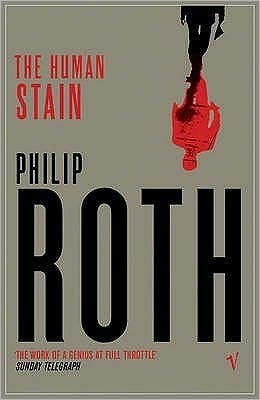 The Human Stain
 Villa Incognito
 Sexus
Sexus
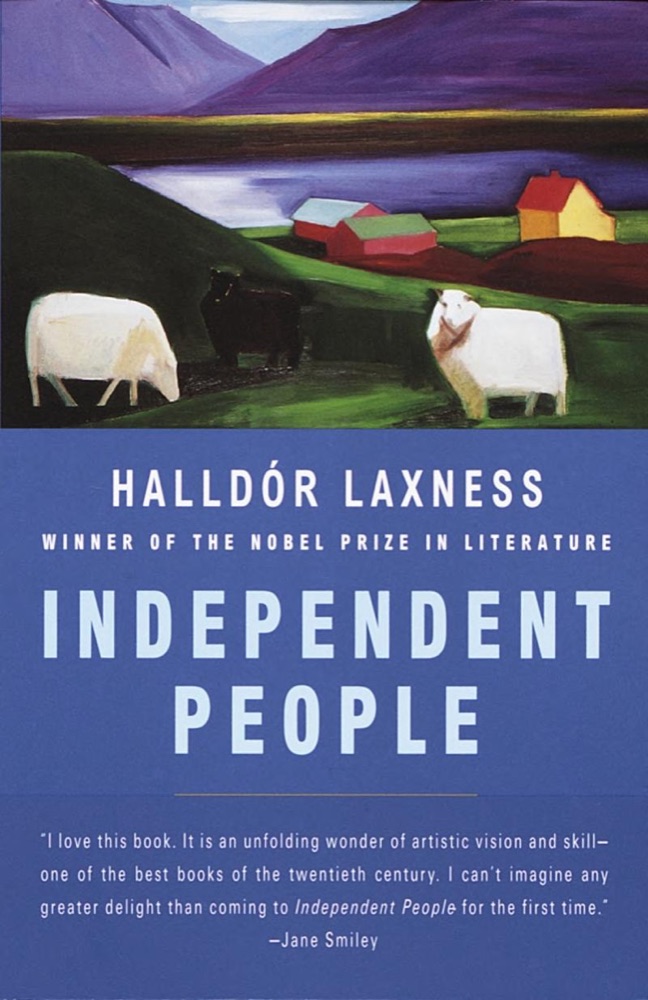 Independent People
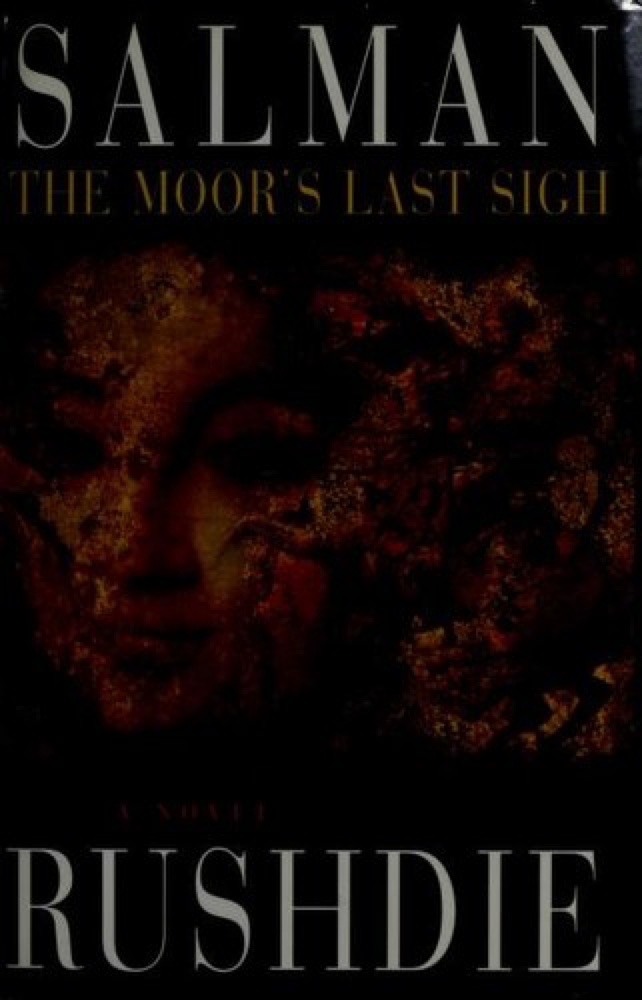 The Moor's Last Sigh
 Don Juan
 Love
Love
 The Leopard
 Selected Stories
 The Professor
 The Gone-Away World
 The Arabian Nights
 The Joke
 A Wild Swan: And Other Tales
 The Death of the Heart
 Miss Lonelyhearts
 Senlin Ascends
 Still Life with Woodpecker
 Père Goriot
 The Home and the World
 Victory
 The Sea, the Sea
 Of Human Bondage
 Spring Snow
 Enchantment
 The Story of the Lost Child
 Varina
 Sword & Citadel
 The Mime Order
 Cuckold
 Embers
 Ragtime
 The Complete Works of Charles Dickens
 Angle of Repose
 Under the Volcano
 Howards End
 The Brutal Telling
 Freedom
 The Kite Runner
 Just Above My Head