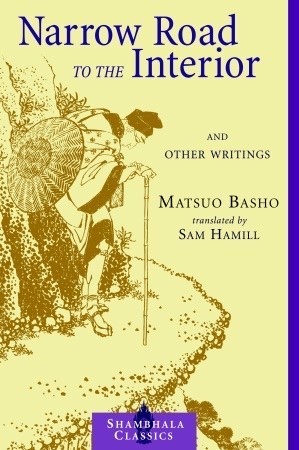
 Narrow Road to the Interior: And Other Writings
Quotes from the Book
When a country is defeated, there remain only mountains and rivers, and on a ruined castle in spring only grasses thrive. I sat down on my hat and wept bitterly till I almost forgot time. A thicket of summer grass Is all that remains Of the dreams and ambitions Of ancient warriors.
31
Days and months are travellers of eternity. So are the years that pass by. Those who steer a boat across the sea, or drive a horse over the earth till they succumb to the weight of years, spend every minute of their lives travelling. There are a great number of ancients, too, who died on the road. I myself have been tempted for a long time by the cloud-moving wind - filled with a strong desire to wander.
20
In this mortal frame of mine which is made of a hundred bones and nine orifices there is something, and this something is called a wind-swept spirit for lack of a better name, for it is much like a thin drapery that is torn and swept away at the slightest stir of the wind. This something in me took to writing poetry years ago, merely to amuse itself at first, but finally making it its lifelong business. It must be admitted, however, that there were times when it sank into such dejection that it was almost ready to drop its pursuit, or again times when it was so puffed up with pride that it exulted in vain victories over the others. Indeed, ever since it began to write poetry, it has never found peace with itself, always wavering between doubts of one kind and another. At one time it wanted to gain security by entering the service of a court, and at another it wished to measure the depth of its ignorance by trying to be a scholar, but it was prevented from either because of its unquenchable love of poetry. The fact is, it knows no other art than the art of writing poetry, and therefore, it hangs on to it more or less blindly.
11
It is only a barbarous mind that sees other than the flower, merely an animal mind that dreams of other than the moon.
6
Searching for the scent of the early plum, I found it by the eaves Of a proud storehouse.
6
From long ago, many place names have been preserved in poetry and passed down to us; but hillsides slide into rivers and are swept away; roads are rebuilt, and stones vanish, buried beneath earth; old trees wither, replaced by saplings; times change, generations diverge, and traces of the past are lost in uncertainty. Here, however, at a stone memorial undoubtedly a thousand years old, the ancients stood before my eyes, and I peered into their hearts. This is one of the rewards of a pilgrimage, one of the joys of being alive; forgetting the drudgery of the road, I simply wept.
5
The River Mogami has drowned Far and deep Beneath its surging waves The flaming sun of summer
5
Had I crossed the pass Supported by a stick, I would have spared myself The fall from the horse.
5
Here is a greedy man who keeps to himself The beautiful pears ripe in his garden.
5
Coming home at last At the end of the year I wept to find My old umbilical cord.
4
There are also times when we feel like taking to the road ourselves, seizing the raincoat lying nearby, or times when we feel like sitting down till our legs take root, enjoying the scene we picture before our eyes. (Written by Soryu as a postscript)
4
Many things of the past Are brought to my mind, As I stand in the garden Staring at a cherry tree.
4
To talk casually About an iris flower Is one of the pleasures Of the wandering journey.
3
Indeed, one of the greatest pleasures of travelling was to find a genius hidden among weeds and bushes, a treasure lost in broken tiles, a mass of gold buried in clay, and when I did find such a person, I always kept a record with the hope that I might be able to show it to my friends.
3
A bush-warbler, Coming to the verandah-edge, Left its droppings On the rice-cakes.
3
I felt deeply in my heart both the sorrow of one that goes and the grief of one that remains, just as a solitary bird separated from his flock in dark clouds, and wrote in answer: From this day forth, alas, The dew-drops shall wash away The letters on my hat Saying 'A party of two'.
2
Just as a stag's antlers Are split into tines, So I must go willy-nilly Separated from my friend.
2
literature, the result alone can justify or disqualify it. Let me, however, state here at least three reasons for my choice. First, the language of haiku, as I have already pointed out, is based on colloquialism, and in my opinion, the closest approximation of natural conversational rhythm can be achieved in English by a four-line stanza rather than a constrained three-line stanza. Second, even in the lifetime of Bashō, hokku (the starting piece of a linked verse) was given a special place in the series and treated half-independently, and in my opinion, a three-line stanza does not carry adequate dignity and weight to compare with hokku. Finally, I had before me the task of translating a great number of poems mixed with prose, and I found it impossible to use the three-line form consistently. In any case, this translation is primarily intended for lovers of poetry, and only secondarily for scholars whose minds should be broad enough to recognize the use in a translation like this. The present translation is
1
One final comment on the technique of translation. I have used a four-line stanza in translating haiku just as I did in my former translation (The Year of My Life, a translation of Issa’s Oraga Haru, University of California Press). I shall not, of course, try to defend my stanza, for it is an experiment, and just as any other experiment
1
Seized with a disease Halfway on the road, My dreams keep revolving Round the withered moor. Later I was summoned by our master, who told me that he had in mind another poem which ended like this: Round, as yet round, My dreams keep revolving. And he asked me which one I preferred. I wanted to know what preceded these lines, of course, but thinking that my question would merely give him discomfort, I said I preferred the first one. Now it is a matter of deep regret that I did not put the question to him, for there is no way of knowing what a beautiful poem the second was.
1
While Bashō was lingering in Ōsaka and its vicinity, he fell victim to what seems to have been an attack of dysentery. Here is a vivid description of his condition four days before his death by one of his disciples.
1
In the spring of 1694, Bashō left on the last of his major journeys. This time he was determined to travel, if possible, to the southern end of Japan. He was already fifty, however, and his health was failing. The poems he wrote on this journey suggest something almost like a shadow of death. For example:
1
Two anthologies of importance were the product of these two and a half years in Edo. They are Fukagawa Shū (Fukagawa Anthology) and Sumidawara (A Charcoal Sack), the latter being the sixth of the Major Anthologies. In the poems Bashō wrote during this period, however, there was a strange sense of detachment from life, which sometimes produced a slightly comical effect – what Bashō called karumi (lightness), but at other times a somewhat sombre effect. For example:
1
someone comes to see me, I have to waste my words in vain. If I leave my house to visit others, I waste their time in vain. Following the examples of Sonkei and Togorō, therefore, I have decided to live in complete isolation with a firmly closed door. My solitude shall be my company, and my poverty my wealth. Already a man of fifty, I should be able to maintain this self-imposed discipline.
1
Bashō returned to Edo from his third major journey after two and a half years of wandering, in the winter of 1691, and in the spring of the following year a new house was built for him. Bashō spent the next two and a half years in this house. For a number of reasons, however, Bashō’s life of this period was not a happy one. An unusual degree of ennui is expressed in the essay he wrote in 1693 to announce his determination to live in complete isolation.
1
Even through this brief explanation, I think it is clear that the special features of Bashō’s linking technique exist in its imaginative quality. Instead of lashing the poems together forcibly by wit or ingenuity, Bashō moors them, so to speak, with a fine thread of imaginative harmony, giving each poem fair play. It is indeed by virtue of this imaginative linking technique (nioi-zuke) that Bashō was able to achieve an unprecedented degree of perfection in his linked verse. Let me quote here the first few poems of a linked verse collected in Saru Mino as an example of his superb effect:
1
It is necessary, I believe, for us to turn at this point to the special features of Bashō’s linking technique. I have already pointed out that Teitoku’s linking technique was based on verbal association (mono-zuke) and Sōin’s on clever interpretation and ingenious transfer (kokoro-zuke). Bashō says that in his case the link is provided by what he
1
In other words, sabi is the subjective element, deeply buried in the objective element of the poem, but giving it a profound wealth of symbolic meaning. It is indeed by these qualities of sabi, shiori, and hosomi that Bashō’s mature style is distinguished from the styles of his predecessors or his own immature style.
1
Sabi is something like that. It is in the poem regardless of the scene it describes – whether it is lonely or gay. In the following poem, for example, I find a great deal of sabi. Under the cherry Flower guards have assembled To chatter –
1
Watch on YouTube
About Matsuo Bashō
We have collected 33 quotes from 2 books by Matsuo Bashō on BookQuoters.
More about the author →More by Matsuo Bashō
Narrow Road to the Interior: And Other Writings
About the book
In his perfectly crafted haiku poems, Basho described the natural world with great simplicity and delicacy of feeling. When he composed "The Narrow Road to the Deep North" he was a serious student of Zen Buddhism, setting off on a series of travels designed to strip away the trappings of the material world and bring spiritual enlightenment. He wrote of the seasons changing, of the smell of the rain, the brightness of the moon and the beauty of the waterfall, through which he sensed the mysteries of the universe. These travel writings not only chronicle Basho's perilous journeys through Japan, but they also capture his vision of eternity in the transient world around him.
In his lucid translation Nobuyuki Yuasa captures the lyrical qualities of Basho's poetry and prose by using the natural rhythms and language of contemporary speech. In his introduction, he examines the development of
Book details
- First published
- 1694
- Author
- Matsuo Bashō
- Genre
- Literature
- Goodreads rating
- 4.01 (7k ratings)
Keep reading
 Spring Snow
 The Tale of Genji
 The Three-Cornered World
 Runaway Horses
 Plainwater: Essays and Poetry
 The Lady and the Monk: Four Seasons in Kyoto
 The Collected Poems
 In Search of Lost Time
 Wandering
 Kwaidan: Stories and Studies of Strange Things
 The Adventures of China Iron
 Swann's Way
 Independent People
 In the Heart of the Heart of the Country and Other Stories
 Wind, Sand and Stars
 Confessions of a Mask
 The Complete Stories and Poems
 The Complete Poems
 The Collected Poems of W.B. Yeats
 Narcissus and Goldmund
 Poems, 1962-2012
 Speak, Memory
 Winter Hours: Prose, Prose Poems, and Poems
 The Complete Poems and Plays, 1909-1950
 Selected Stories
 Phantastes
 The Poetry of Robert Frost
 Selected Stories of Anton Chekhov
 Brideshead Revisited: The Sacred and Profane Memories of Captain Charles Ryder
 Oblomov
 The Castle of Crossed Destinies
 Sexing the Cherry
 The Collected Poems of Emily Dickinson
 Tales of Moonlight and Rain
 The Complete Poems of Emily Dickinson
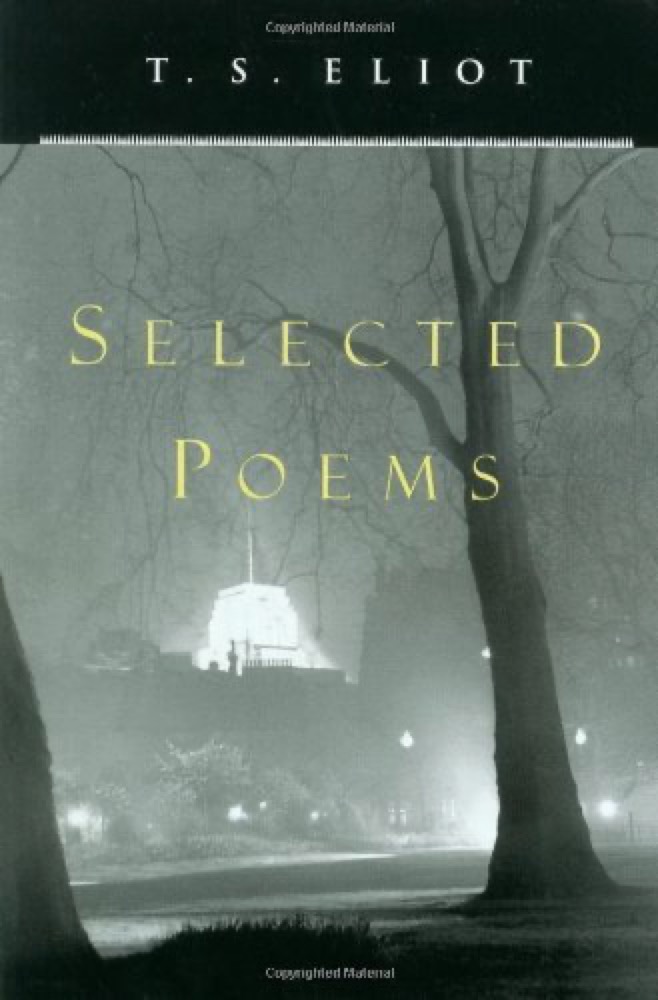 Selected Poems
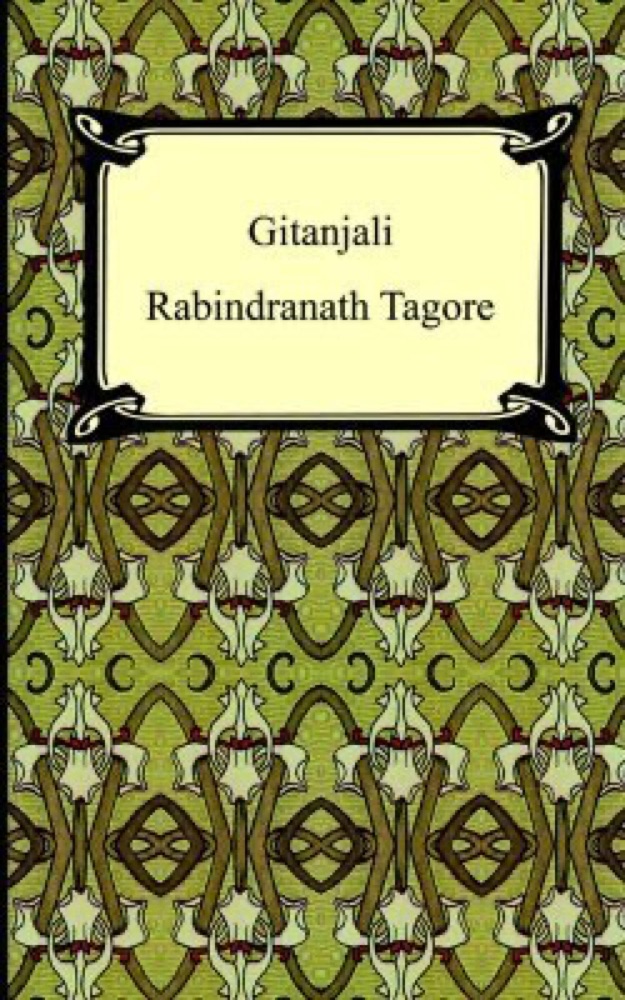 Gitanjali
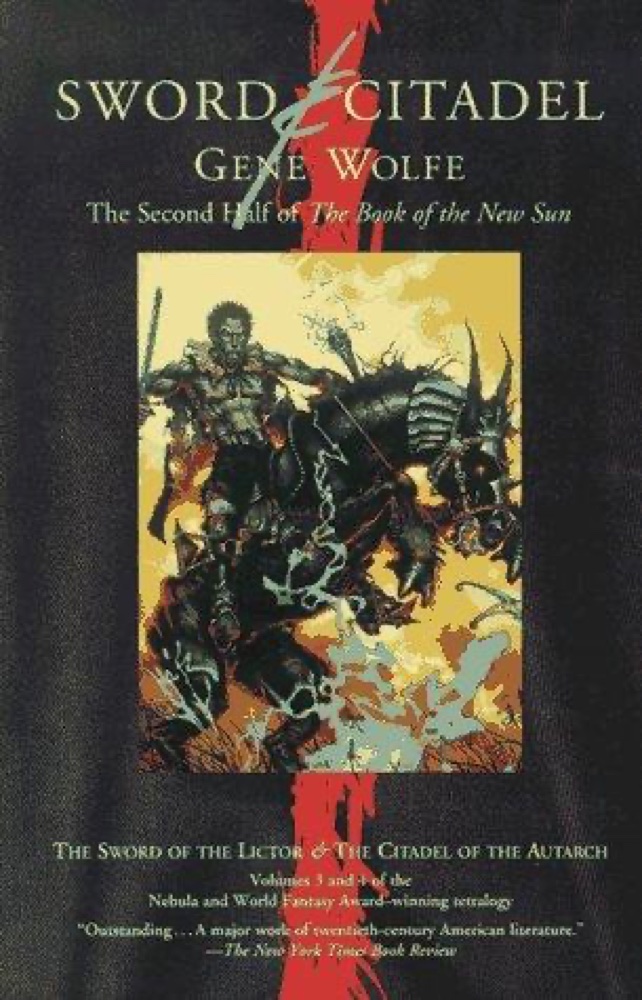 Sword & Citadel
 The Snow Leopard
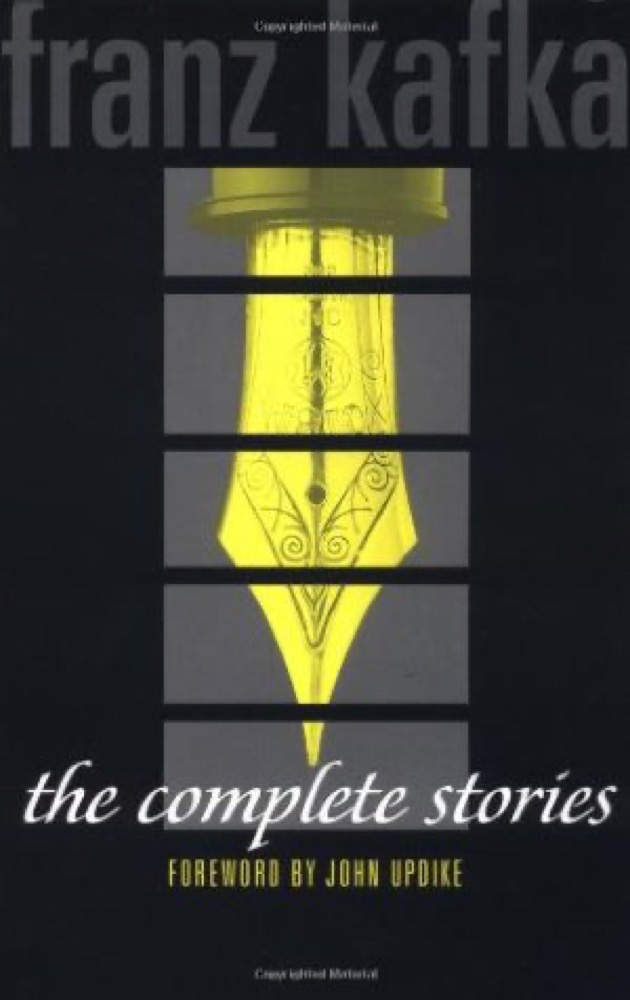 The Complete Short Stories
 Johnny Panic and the Bible of Dreams: Short Stories, Prose and Diary Excerpts
 Tell Them of Battles, Kings, and Elephants
 Upstream: Selected Essays
 Collected Poems
 The Guest Cat
 The Stories of Vladimir Nabokov
 Spoon River Anthology
 Selected Stories
 And Then
 Primeval and Other Times
 We Do Not Part
 Opened Ground
 C.P. Cavafy: Collected Poems
 The Notebooks of Malte Laurids Brigge
 The Hungry Tide
 A Shropshire Lad
 New and Selected Poems, Vol. 2
 A Book of Simple Living
 The Divine Comedy
 Lincoln in the Bardo