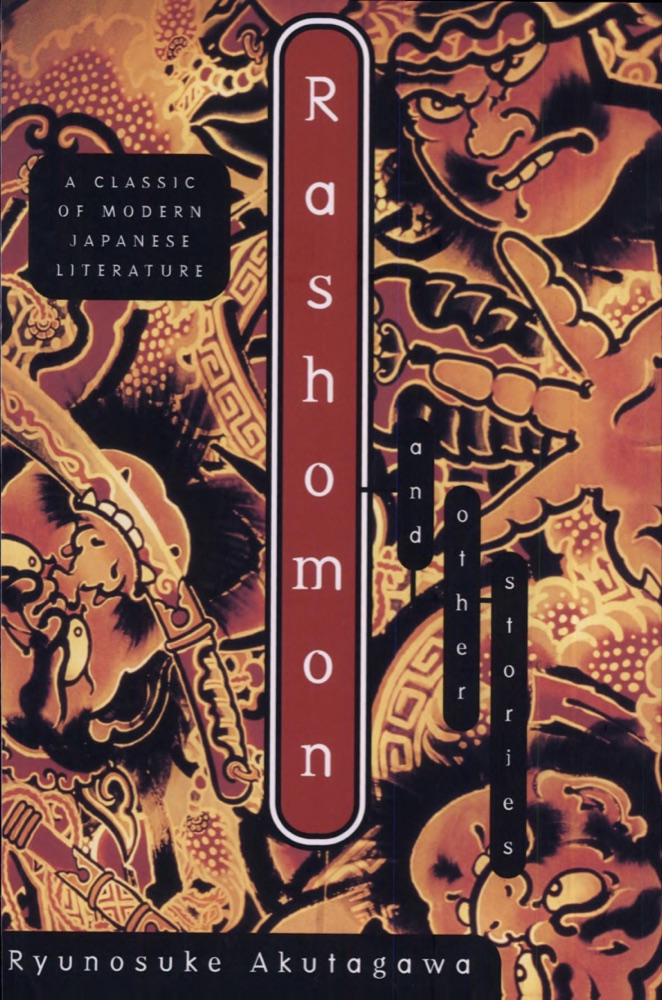
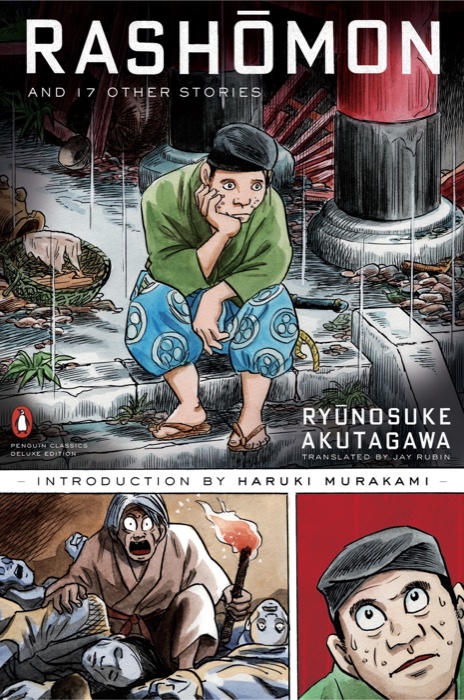
 Rashōmon and Seventeen Other Stories
Quotes from the Book
A man sometimes devotes his life to a desire which he is not sure will ever be fulfilled. Those who laugh at this folly are, after all, no more than mere spectators of life.
1k
Truly human life is as evanescent as the morning dew or a flash of lightning.
7
The Heian Period (794–1185) was Japan’s classical era, a time of peace and opulence, when the imperial court in Heian-kyō (“Capital of Peace and Tranquility”: later Kyoto) was the fountainhead of culture, and the arts flourished. Toward the end, however, political power slipped from the aristocracy to the warrior class, the decline of the imperial court led to the decay of the capital, and peace gave way to unrest. This was the part of the Heian Period that interested Akutagawa, who identified it with fin-de-siècle Europe, and he symbolized the decay with the image of the crumbling Rashōmon gate that dominates his story. Director Kurosawa Akira borrowed Akutagawa’s gate and went him one better, picturing it as a truly disintegrating structure, entirely bereft of its Heian lacquer finish, and suggestive of the moral decay against which his characters struggle. His film Rashōmon (1950) was based on two of Akutagawa’s stories, “Rashōmon” and “In a Bamboo Grove.” Both—themselves based on tales from the twelfth century—reach far more skeptical conclusions than the film regarding the dependability of human nature and its potential for good. (Jay Rubin)
3
Pero le aclaro, señor, que yo mato con katana, y no como ustedes, que matan con el poder, con el dinero, hasta con el pretexto de hacer un favor. Es cierto que no derraman sangre y sus víctimas siguen viviendo; pero así y todo son muertos, sombras de vivos. Si medimos los alcances del delito, es muy difícil fijar quién es más criminal, yo o ustedes.
2
A servant of a samurai stood under the Rasho¯mon
Now, this writer whose name the word comes from—Masoch, you said?—are his novels any good?’ ‘No, they’re all terrible.’ ‘He must have been an interesting person, at least.’ ‘Masoch? Masoch was an idiot. He tried to convince his government to take money out of defense and put it into keeping whores.’ ...The business about whore support was far from certain, of course; Masoch probably believed in national defense as well.
Watch on YouTube
About Ryūnosuke Akutagawa
We have collected 49 quotes from 3 books by Ryūnosuke Akutagawa on BookQuoters.
More about the author →More by Ryūnosuke Akutagawa
Rashōmon and Seventeen Other Stories
 The Life of a Stupid Man
About the book
Ryunosuke Akutagawa (1892-1927) fue un escritor japones perteneciente a la generacion denominada "neo-realista" que surgio a finales de la Primera Guerra Mundial; sus obras, en su mayoria cuentos, reflejan su interes por la vida del Japon feudal. Es uno de los autores mas problematicos, inquietantes, versatiles y discutidos de nuestro siglo, no solo bien conocido en Japon, sino tambien en Occidente, en donde hace ya bastante tiempo que muchas de sus obras han sido traducidas y presentadas al publico.
Book details
- First published
- 1915
- Author
- Ryūnosuke Akutagawa
- Genre
- Fiction
- Goodreads rating
- 4.00 (13k ratings)
Keep reading
 Runaway Horses
 And Then
 Shibumi
 Shōgun
 The Man Who Laughs
 Thirst for Love
 The Fencing Master
 The Enchantress of Florence
 Spring Snow
 If This Is a Man / The Truce
 The Wild Ass's Skin
 Zorro
Zorro
 Taiko: An Epic Novel of War and Glory in Feudal Japan
 The Cossacks
 Auto-da-Fé
 The House of the Dead
 The Charioteer
 Selected Stories
 Don Quixote
 Under Western Eyes
 Selected Stories of Anton Chekhov
 The Volcano Lover: A Romance
 The Captive Mind
 The People of the Abyss
 The Professor
 The Mask of Dimitrios
 The Dwarf
 Nostromo
 The Man in the Iron Mask
 Musashi
 Dead Souls
 The Baron in the Trees
 Phaedo
Rashōmon and Seventeen Other Stories
Phaedo
Rashōmon and Seventeen Other Stories
 The Warrior Prophet
 Lord of Light
 Independent People
 Pachinko
 Hagakure: The Book of the Samurai
 Maldoror and the Complete Works
 The Mystery of Edwin Drood
 Stormdancer
 The 47 Ronin Story
 Blood of Elves
 The Narrow Road Between Desires
 Under the Volcano
 Resurrection
 Doctor Faustus
 The Memoirs of Cleopatra
 Mademoiselle de Maupin
 Complete Works of Oscar Wilde
 Soul Mountain
 The Kindly Ones
 Blue Bamboo: Japanese Tales of Fantasy
 The Aleph and Other Stories
 The Arabian Nights
 Ficciones
 Stories
 Tales of Moonlight and Rain
 The Castle of Crossed Destinies