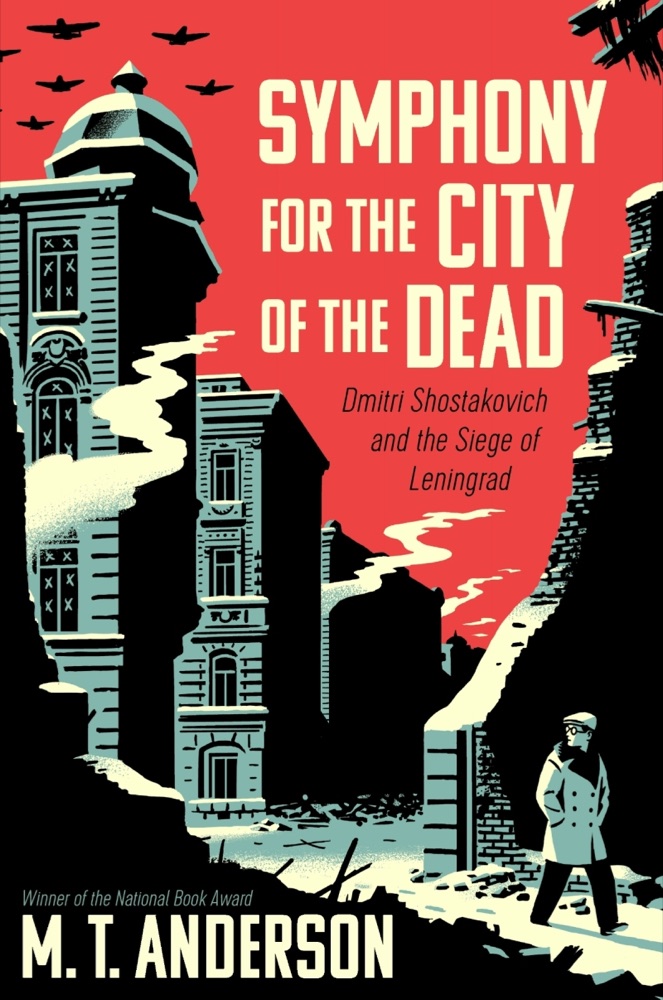

 Feed
Feed
Quotes from the Book
Some love is so powerful after all, that it must always include sadness, because encrypted within it is the knowledge that someday it will come to an end.
8
When we read tales of atrocity, we all want to be the ones who stood firm, who would not bend, who shouted the truth in the face of the dictator ... It is easy for us all to imagine we are heroes when we are sitting in our kitchens, dreaming of distant suffering.
7
Strangely enough, doctors and nurses noted that activity actually prolonged life, when it should have shortened it. Those who lay down and tried to conserve energy often were the ones who trailed off and died first.
7
Gradually, like the emigration of an insidious, phantom population, Leningrad belonged more to the dead than to the living. The dead watched over streets and sat in snow-swamped buses. Whole apartment buildings were tenanted by them, where in broken rooms, dead families sat waiting at tables. Their dominion spread room by room, like lights going out in evening.
6
its heart, it is a story about the power of music and its meanings — a story of secret messages and doublespeak, and of how music itself is a code; how music coaxes people to endure unthinkable tragedy; how it allows us to whisper between the prison bars when we cannot speak aloud; how it can still comfort the suffering, saying, “Whatever has befallen you — you are not alone.
4
On the artillery shells produced in Leningrad, workers stenciled messages to the Germans: “For the blood of our workers,” “For our children’s anguish,” and “For our murdered friends.
4
What was the human animal in the midst of the siege? An herbivore that crawled on all fours, browsing on dirty grasses. A predator that hunted alone or in packs. A social animal that spoke of noble art and wound violin strings from the guts of dead sheep and pigs. A creature with canine teeth for tearing, but with a tongue for speaking. A mouth that could devour or sing.
3
Most symphonies, however, are wordless. They are built only of tones, nonlinguistic sounds vibrating in the air, and somehow, we take them to heart and feel that they speak to us more deeply than words ever could. Cultures make up certain rules for music that we learn without even recognizing them; for example, in the West, we have decided that music in minor keys tends to sound sad or anxious, while music in major keys conveys confidence, triumph. Other cultures have made other decisions.
3
History is not simply the great tumults and tragedies but the accumulation of tiny moments and gestures.
3
Even the basic facts of Dmitri Shostakovich’s life are often contested, as a glance through the end notes of this book attests. How do we reconstruct the story of someone who lived in a period in which everyone had an excuse to lie, evade, accuse, or keep silent?
3
Stalin was not merely trying to remove political enemies. He was not merely trying to terrorize the country into submission. He was trying to break down all social structure that did not emanate from him, and to create a new people, no longer Homo sapiens, but Homo sovieticus, the New Man of Communism.
3
As Stalin closed his fist around Leningrad and the arrests and disappearances began, Shostakovich was in the middle of it. His Fifth Symphony, composed in a time of mute fear, was an answer to the authorities — but, at the same time, it spoke other truths, out of the side of its mouth, to all who had suffered loss and could not speak, could not cry. He gave a voice to the silenced. He showed them that they were not alone.
2
The Leningrad premiere of Shostakovich’s Seventh Symphony took place on August 9, 1942. The day was chosen as a deliberate gesture of defiance: it was the date Hitler had boasted that he would be celebrating with a feast in the Hotel Astoria’s ballroom.
2
The composer at sixty was not the same as the composer at thirty. Would he tell the truth about himself? Or would he revise his own past?
2
As one Shostakovich biographer put it, “Testimony is a realistic picture of Dmitri Shostakovich. It just isn’t a genuine one.
2
As musicologist Richard Taruskin has said, “What made Shostakovich’s music the secret diary of a nation was not only what he put into it, but what it allowed listeners to draw out.
2
The same day that the Bedayev warehouses were destroyed, Hitler’s high command called in a nutritionist, Ernst Ziegelmeyer, to discuss the food situation in Leningrad. Ziegelmeyer made a studied assessment of the rationing that would probably go into effect in the city. He calculated that the population would starve to death quite soon. His recommendation to the Führer, therefore, was that the German army should not invade the city at all but simply wait in a choking noose around it. “It is not worth risking the lives of our troops. The Leningraders will die anyway. It is essential not to let a single person through our front line. The more of them that stay there, the sooner they will die, and then we will enter the city without trouble, without losing a single German soldier.
2
Jazz was, for all intents and purposes, banned in the Soviet Union from 1929 to 1932. “Even playing jazz records could lead to a fine” (Fairclough, Credo, 2). There was an attempt to make the playing of the saxophone illegal (Mikkonen, 68).
1
After all, Stalin had just purged the military in the wake of the Tukhachevsky trial. As a result, 70 percent of the higher-ranking officers in the armed forces had been in command for less than two years.
1
A whole society was traumatized and brutalized, trained up against compassion.
1
Tchaikovsky’s “1812 Overture,” the composer depicts the French invasion of Russia under Napoleon and the final defeat of the French by pitting the French national anthem (“La Marseillaise”) against a Russian Orthodox hymn and the Russian national anthem (“God Save the Tsar”) in a sort of battle royale, complete with cannon shots.
1
Stalin’s Five-Year Plan were concealed. The government’s newspaper, Pravda (“Truth”), was full of lies. Propaganda songs smugly celebrated the triumphs of the Five-Year Plan: “The March of the Happy-Go-Lucky Guys” gloated, “We are taming space and time! We are the young masters of the earth!” Another mass song gushed dreamily, “We were born to make fairy tales come true.
1
This is a tale of microfilm canisters and secret police, of Communists and capitalists, of battles lost and wars won. It is the tale of a utopian dream that turned into a dystopian nightmare. It is the tale of Dmitri Shostakovich and of his beloved city, Leningrad. But at its heart, it is a story about the power of music and its meanings — a story of secret messages and doublespeak, and of how music itself is a code; how music coaxes people to endure unthinkable tragedy; how it allows us to whisper between the prison bars when we cannot speak aloud; how it can still comfort the suffering, saying, "Whatever has befallen you — you are not alone.
1
Horror stories like this — and the issue of Leningrad cannibalism as a whole — could not be talked about openly during the Soviet period. Such an admission of the breakdown of society was considered demoralizing. Only in 2002 were NKVD files opened so academics could discover the gruesome statistical realities of person-eating.
1
The criminal profile of corpse-eaters was surprising. Only 2 percent had a previous criminal record. They were primarily women, uneducated females with no employment and no local Leningrad address. They were, in other words, often refugees who had fled to the city and who therefore did not have ration books at all. They had to make a choice between eating those already dead or dying themselves.
1
At dinners, he boasted about his future conquests over the Russian “subhumans.” He spoke warmly of the way the United States government had exterminated so many of the Native Americans in the nineteenth century, seizing and settling their land.
1
Though the Russians technically won, the world watched as the Red Army suffered losses in the snowy woods at the hands of a few proud Finns on skis, their artillery pulled by reindeer.
1
In Russia there is no elective government, and she is governed not merely by the rich and the high-born, but by the worst of these. She is governed by the most skillful intriguers at the tsar’s Court, by the most artful tricksters, by those who carry lies and slanders to the tsar, and flatter and toady to him. They govern in secret. . . . These officials tower above the voiceless people like a dark forest — a mere worker can never make his way through this forest, can never obtain justice.
1
In the light of recent scholarship, Shostakovich’s anti-Stalinism no longer seems surprising or controversial, and was not unusual for the intelligentsia of Moscow and (in particular) Leningrad.
1
Watch on YouTube
About M.T. Anderson
We have collected 105 quotes from 4 books by M.T. Anderson on BookQuoters.
More about the author →More by M.T. Anderson
About the book
In September 1941, Adolf Hitler's Wehrmacht surrounded Leningrad in what was to become one of the longest and most destructive sieges in Western history—almost three years of bombardment and starvation. Trapped between the Nazi invading force and the Soviet government itself was composer Dmitri Shostakovich, writing a symphony to rouse, rally, eulogize, and commemorate his fellow citizens: the Leningrad Symphony. This is the true story of a city under siege, the triumph of bravery and defiance in the face of terrifying odds. It is also a look at the power—and layered meaning—of music in beleaguered lives. Symphony for the City of the Dead is a masterwork thrillingly told and impeccably researched by National Book Award–winning author M. T. Anderson.
Book details
- First published
- 2015
- Author
- M.T. Anderson
- Genre
- Nonfiction
- Goodreads rating
- 4.35 (7k ratings)
Keep reading
 Koba the Dread: Laughter and the Twenty Million
 Everything Flows
 The Gulag Archipelago 1918-1956
 Europe Central
 A Russian Journal
 History of the Russian Revolution
 Kolyma Tales
 Ten Days that Shook the World
 Modern Times: The World from the Twenties to the Nineties
 Bloodlands: Europe Between Hitler and Stalin
 The Noise of Time
 Imperium
 The Light of Days: The Untold Story of Women Resistance Fighters in Hitler's Ghettos
 The Eighth Life
 Stalin: The Court of the Red Tsar
 Secondhand Time: The Last of the Soviets
 Defying Hitler
 Moscow Rules
 The Rise and Fall of the Third Reich: A History of Nazi Germany
 The Third Reich at War
 Night Soldiers
 Stasiland: Stories from Behind the Berlin Wall
 Berlin Diary: The Journal of a Foreign Correspondent 1934-1941
 Border: A Journey to the Edge of Europe
 Postwar: A History of Europe Since 1945
 The Twelve Chairs
 Gorky Park
 The Postcard
 Closing the Ring
 The Winds of War
 Our Country Friends
 Nicholas and Alexandra
 Auschwitz: A Doctor's Eyewitness Account
 The Betrayal of Anne Frank: A Cold Case Investigation
 Darkness at Noon
 The Second World War
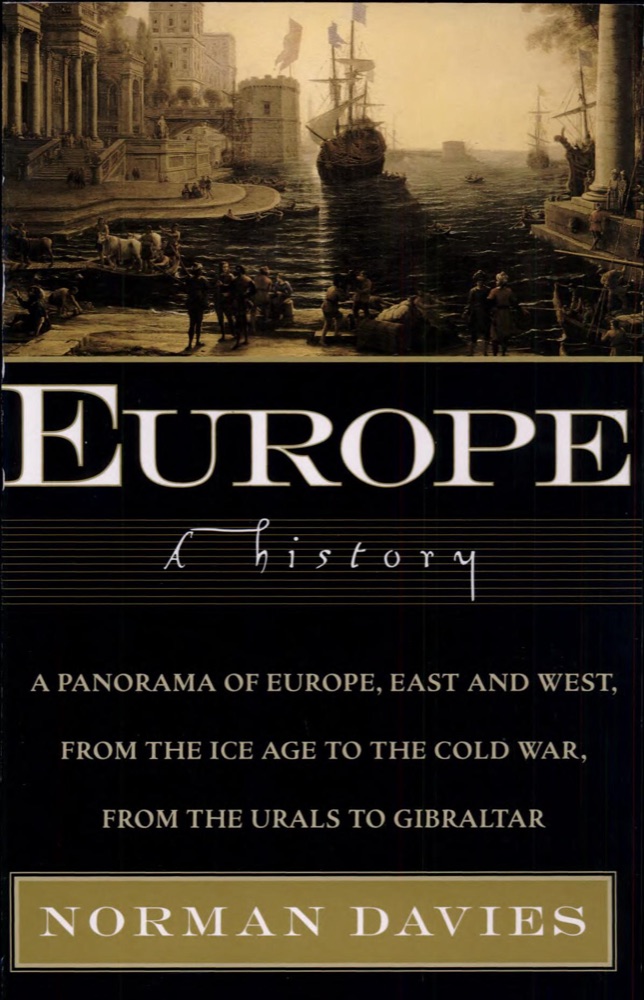 Europe: A History
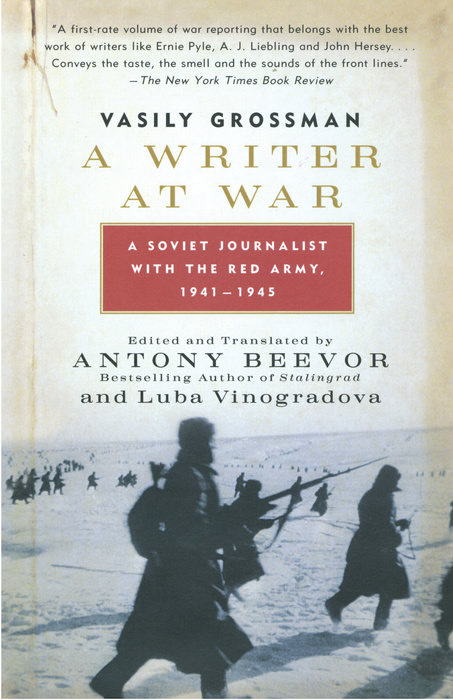 A Writer at War: Vasily Grossman with the Red Army
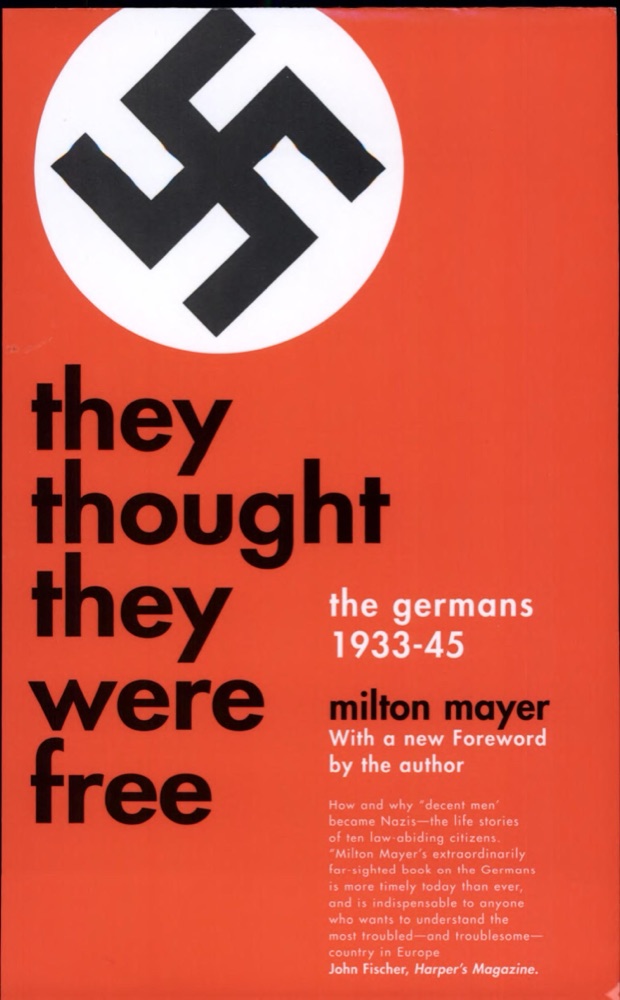 They Thought They Were Free: The Germans 1933-45
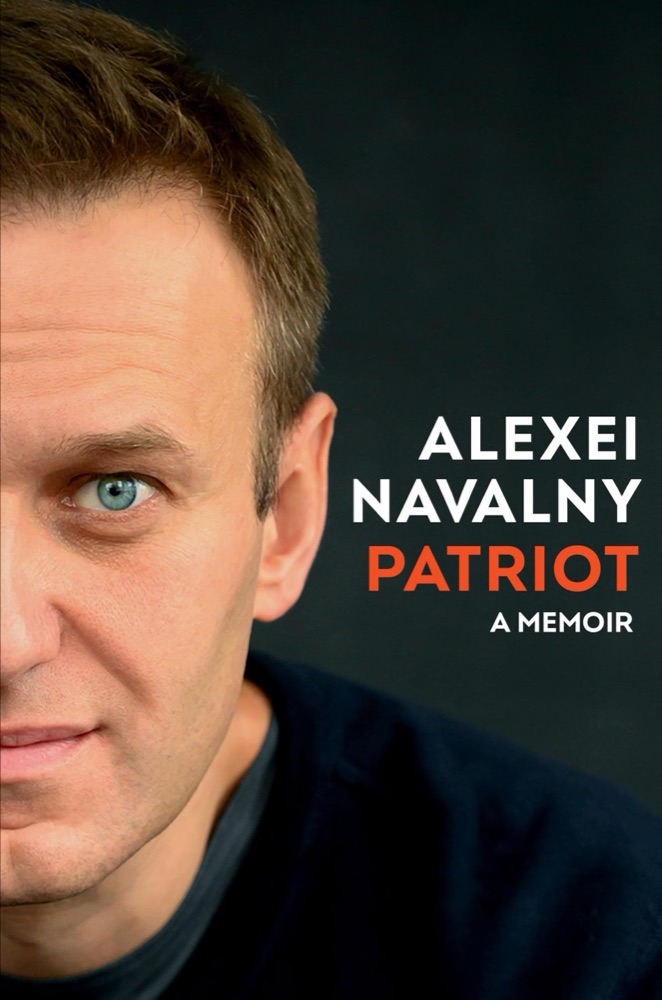 Patriot: A Memoir
 The Kitchen Boy: A Novel of the Last Tsar
 Book and Dagger: How Scholars and Librarians Became the Unlikely Spies of World War II
 The Captive Mind
 The Origins of Totalitarianism
 Radio Free Albemuth
 Victory City
 Homage to Catalonia
 The Aquariums of Pyongyang: Ten Years in the North Korean Gulag
 Still Alive: A Holocaust Girlhood Remembered
 Red Notice: A True Story of High Finance, Murder, and One Man's Fight for Justice
 Under the Same Stars
 Ninety-Three
 Epitaph for a Spy
 Agent Zigzag: A True Story of Nazi Espionage, Love, and Betrayal
 Resistance, Rebellion and Death: Essays
 The Man Without a Face: The Unlikely Rise of Vladimir Putin
 In the Garden of Beasts: Love, Terror, and an American Family in Hitler's Berlin
 Young Stalin
 Joseph Anton: A Memoir
 History