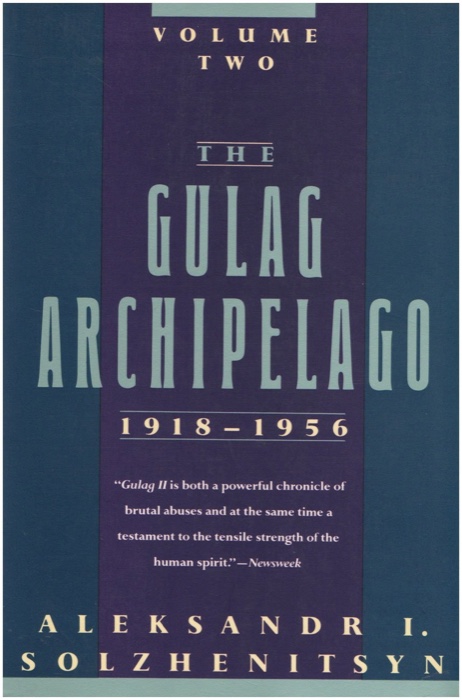
 The Gulag Archipelago 1918-1956
Quotes from the Book
Tragedy is not deep and sharp if it can be shared with friend.
32
There is a much that a man should not see, should not know, and if he should see it, it is better for him to die.
24
Life repeats Shakespearian themes more often than we think. Did Lady Macbeth, Richard III, and King Claudius exist only in the Middle Ages? Shylock wanted to cut a pound of flesh from the body of the merchant of Venice. Is that a fairy tale?
15
We realized that life, even the worst of life, consists of an alternation of joys and sorrow, successes and failure more than the successes.
13
I remember the old northern legend of how God created the taiga while he was still a child. There were few colors, but they were childishly fresh and vivid, and their subjects were simple. Later, when God grew up and became an adult, he learned to cut out complicated patters from his pages and created many bright birds. God grew bored with his former child's world and he threw snow on his forest creation and went south forever.
11
If bones could freeze, then the brain could also be dulled and the soul could freeze over. And the soul shuddered and froze- perhaps to remain frozen forever.
10
We realized that life, even the worst life, consists of an alternation of joys and sorrows, successes and failures, and there was no need to fear the failures more than the successes.
9
Cold, hunger, and sleeplessness rendered any friendship impossible, and Dugaev – despite his youth – understood the falseness of the belief that friendship could be tempered by misery and tragedy. For friendship to be friendship, its foundation had to be laid before living conditions reached that last border beyond which no human emotion was left to a man – only mistrust, rage, and lies. Dugaev remembered well the northern proverb that listed the three commandments of prison life: ‘Don’t believe, don’t fear, don’t ask.
9
I believed a person could consider himself a human being as long as he felt totally prepared to kill himself, to interfere in his own biography. It was this awareness that gave me the will to live. I checked myself — frequently — and felt I had the strength to die, and thus remained alive.
8
Friendship is not born in conditions of need or trouble. Literary fairy tales tell of ‘difficult’ conditions which are an essential element in forming any friendship, but such conditions are simply not difficult enough. If tragedy and need brought people together and gave birth to their friendship, then the need was not extreme and the tragedy not great. Tragedy is not deep and sharp if it can be shared with friends.
5
Trees in the north die lying down – like people.
5
We learned one other amazing thing: in the eyes of the state and its representatives a physically strong person was better – yes, better – more moral, more valuable than a weak person who couldn’t shovel twenty cubic meters of dirt out of a trench in a day. The former was more moral than the latter. He fulfilled his ‘quota’, that is, carried out his chief duty to the state and society and was therefore respected by all. His advice was asked and his desires were taken into consideration, he was invited to meetings whose topics were far removed from shovelling heavy slippery dirt from wet and slimy ditches.
5
An intellectual, once imprisoned, is crushed by the camp. Everything that used to be dear to him is trampled into the dust, and he sheds his civilization and culture in the shortest imaginable time, a matter of weeks. In any discussion the main argument is a fist or a stick. The means of compulsion is a rifle butt or a punch in the mouth. An intellectual turns into a coward, and his own brain suggests a justification for his actions. He can persuade himself of anything, he can take any side in an argument. The criminal world calls intellectuals "life teachers," fighters "for the people's rights." A "slapping," a punch, is enough to turn an intellectual into the obedient servant of some thieving Senia or Kostia. Physical influence becomes moral influence. The intellectual becomes a permanently scared creature. His spirit is broken. Even when he gets back to life in freedom, he will still have this intimidated and broken spirit.
4
Kolyma is Auschwitz without the ovens.
4
A horse can't endure even a month of the local winter life in a cold stall if it's worked hard hours in subzero weather. . . . But man lives on. Perhaps he lives by virtue of his hopes? But he doesn't have any hope . . . . . He is saved by a drive for self-preservation, a tenacious clinging to life, a physical tenacity to which his entire consciousness is subordinated. He lives on the same things as a bird or a dog, but he clings more strongly to life than they do. He has a greater endurance than that of any animal.
3
That same sense of direction that animals possess perfectly also awakens in man under the right conditions.
3
Only a simple black pencil will do for making a notation of a benchmark. Ink will run, be dissolved by the tree sap, be washed away by rain, dew, fog, and snow. Nothing as artificial as ink will do for recording eternity and immortality. Graphite is carbon that has been subjected to enormous pressure for millions of years and that might have become coal or diamonds. Instead, however, it has been transformed into something more precious than a diamond; it has become a pencil that can record all that it has seen… A pencil is a greater miracle than a diamond, although the chemical make-up of graphite and diamond is identical.
2
I'm dressed appropriate for the season mama, I'm dressed appropriately for the season.
2
Every minute of camp life is poisoned. There is a lot in the camps that a man must not know or see, and if he does see it, he is better off dead. Prisoners in the camps learn to hate labor. That is all they can learn there. They are taught flattery, lying, vileness, petty and serious, and they become egotists. When they are released, they see that not only have they failed to grow while in the camps but that their interests have narrowed and become wretched and coarse. Moral barriers have been pushed aside. You find out that you can do something vile and still live. You can lie and still live. You can make promises and fail to keep them and still live. You can spend a friend's money on drink. You can beg for charity and still live! You can live as a beggar. It turns out that a man who has done something vile doesn't then die. He learns to live a life of idleness, deceit, and resentment against everyone and everything. He overvalues his own sufferings and forgets that everyone has their own grief; he just can't understand it and doesn't want to. Skepticism is all very well, and that is the best you can take away from the camp. The prisoner learns to hate people. He is afraid that he is a coward. He is afraid that he will suffer the same fate again. He is afraid of denunciations, of his neighbors, of everything a human being should not be afraid of. He is morally crushed. His ideas of morality have changed and he hasn't noticed.
1
But there was the American machine grease! Ah yes, the machine grease! The barrel was immediately attacked by a crowd of starving men who knocked out the bottom right on the spot with a stone. In their hunger, they claimed the machine grease was butter sent by Lend-Lease and there remained less than half a barrel by the time a sentry was sent to guard it and the camp administration drove off the crowd of starving, exhausted men with rifle-shots. The fortunate ones gulped down this Lend-Lease butter, not believing it was simply machine grease. After all, the healing American bread was also tasteless and also had that same metallic flavor. And everyone who had been lucky enough to touch the grease licked his fingers hours later, gulping down the minutest amounts of the foreign joy that tasted like young stone.
1
When it got warmer, in the spring, the white nights began, and they started playing a terrible game in the camp cafeteria called ‘bait-fishing’. A ration of bread would be put on the table, and everyone would hide around the corner to wait for the hungry victim to approach, be enticed by the bread, touch it, and take it. Then everyone would rush out from around the corner, from the darkness, from ambush, and there would commence the beating to death of the thief, who was usually a living skeleton. I never ran into this form of amusement anywhere except at Jelhala. The chief organizer was Dr Krivitsky, an old revolutionary and former deputy commissar of defense industries. His accomplice in the setting out of these terrible baits was a correspondent from the newspaper Izvestia – Zaslavsky.
1
It was difficult for me to write, and not just because my hands were rough and my fingers so permanently bent around the handle of a pick and axe that unbending them was unbelievably difficult. I managed to wrap a thick rag around pen and pencil to give them the thickness of a pick or shovel handle.
1
Literary fairy tales tell of ‘difficult’ conditions which are an essential element in forming any friendship, but such conditions are simply not difficult enough.
1
Eu não conhecia as pessoas que dormiam ao meu lado. Nunca lhes perguntei nada, e não porque seguisse o provérbio árabe: não pergunte e não mentirão para você. Pouco me importava se iam mentir pra mim ou não; eu estava do lado de fora da verdade, do lado de fora da mentira. Sobre isso, os bandidos têm um ditado duro, expressivo, grosseiro, repleto de um profundo desprezo em relação àquele que pergunta: se você não acredita, finja que é um conto de fadas
Watch on YouTube
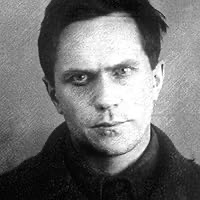
About Varlam Shalamov
We have collected 24 quotes from 1 book by Varlam Shalamov on BookQuoters.
More about the author →About the book
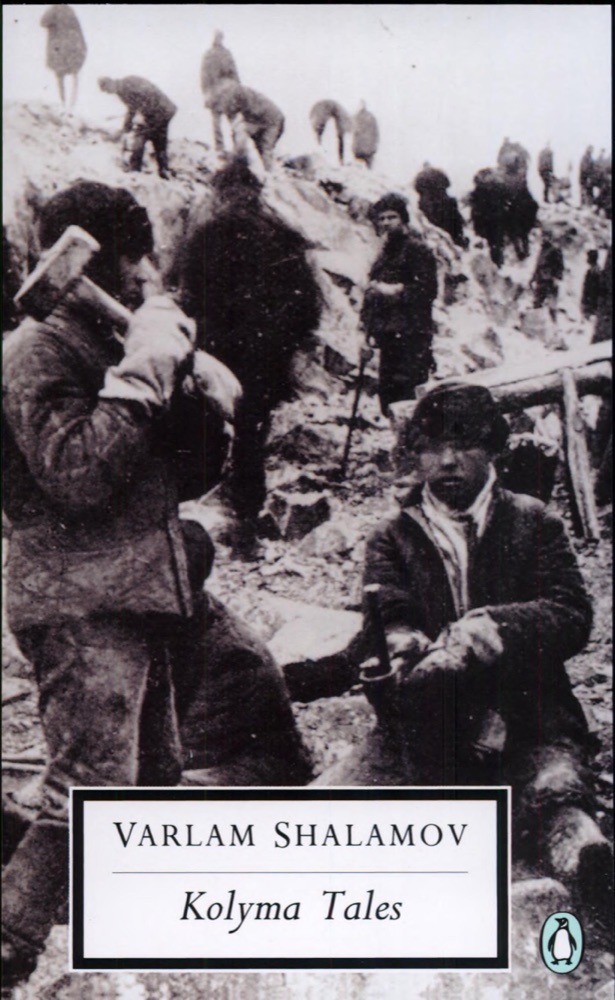
It is estimated that some three million people died in the Soviet forced-labour camps of Kolyma, in the northeastern area of Siberia. Shalamov himself spent seventeen years there, and in these stories he vividly captures the lives of ordinary people caught up in terrible circumstances, whose hopes and plans extended to further than a few hours.
This new enlarged edition combines two collections previously published in the United States as Kolyma Tales and Graphite.
Book details
- First published
- 1966
- Author
- Varlam Shalamov
- Genre
- History
- Goodreads rating
- 4.36 (9k ratings)
Keep reading
The Gulag Archipelago 1918-1956
 Survival in Auschwitz
 Everything Flows
 Life and Fate
 The Empusium
 The Snowman
 Cage of Souls
 Independent People
 Selected Stories
 A Rule Against Murder
 Dead Souls
 The Fall of Babel
 One Day in the Life of Ivan Denisovich
 Selected Stories of Anton Chekhov
 The House of the Dead
 The Hangman's Replacement: Sprout of Disruption
 The First Circle
 Drive Your Plow Over the Bones of the Dead
 Arm of the Sphinx
 Shadows of the Workhouse
 The Eighth Life
 Too Like the Lightning
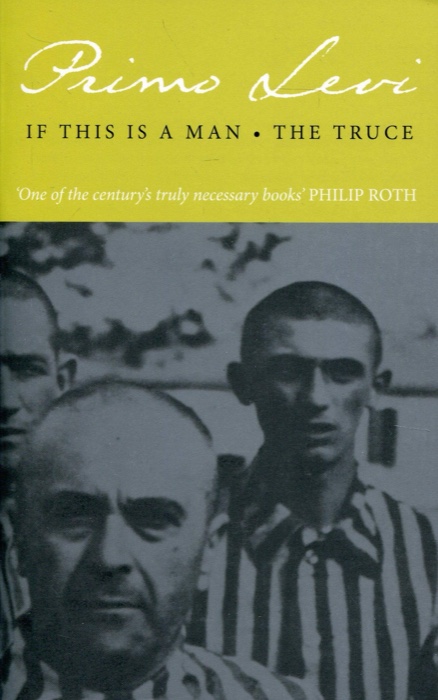 If This Is a Man / The Truce
 The Story of the Lost Child
 The Naked and the Dead
 Primeval and Other Times
 The Ministry of Fear
 Day
Day
 You Can't Go Home Again
 Resurrection
 Sometimes a Great Notion
 The Complete Short Novels
 Embers
 The Magic Mountain
 Humboldt's Gift
 Black Lamb and Grey Falcon
 Plainwater: Essays and Poetry
 Creation Lake
 The Devil's Star
 Toll the Hounds
 My Childhood
 Pnin
Pnin
 Another Roadside Attraction
 The Log from the Sea of Cortez
 Winter's Tale
 Lanark
 The Captive Mind
 The Fall
 The Elementary Particles
 The Burning Soul
 Tree of Smoke
 That Hideous Strength
 The Night Watchman
 Shadow & Claw
 Resistance, Rebellion and Death: Essays
 The Complete Stories
 Point Counter Point
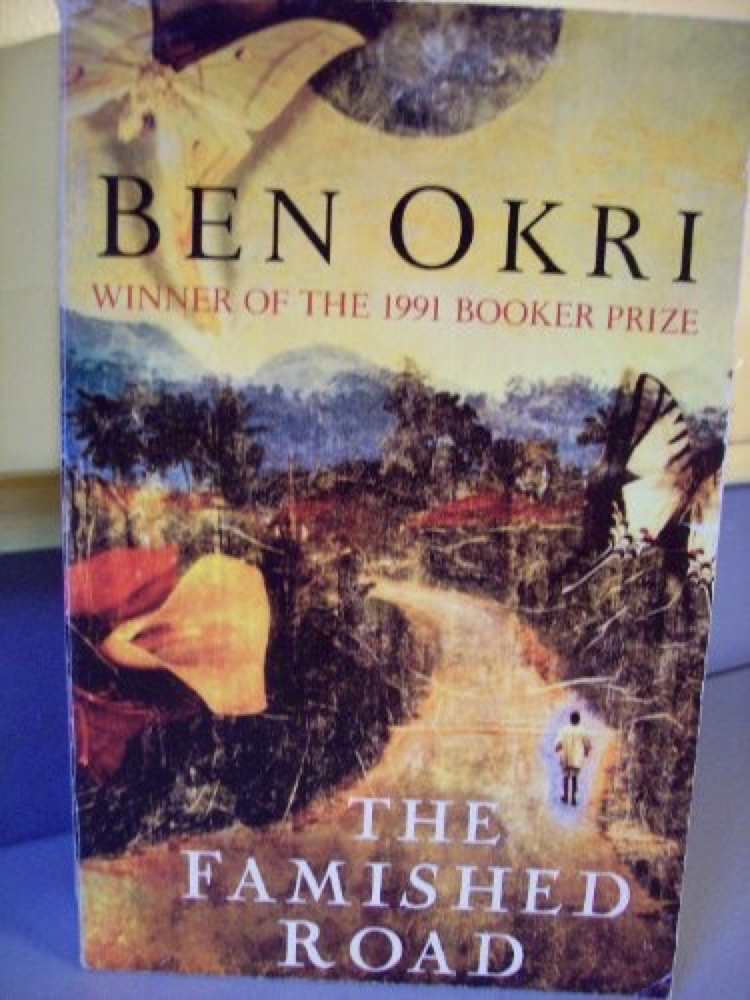 The Famished Road
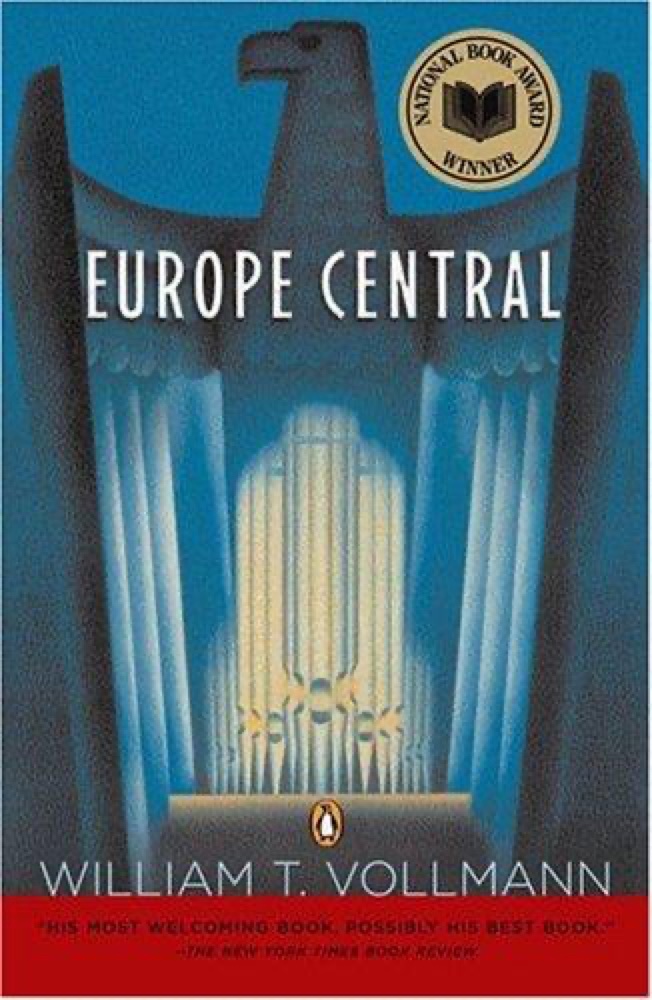 Europe Central
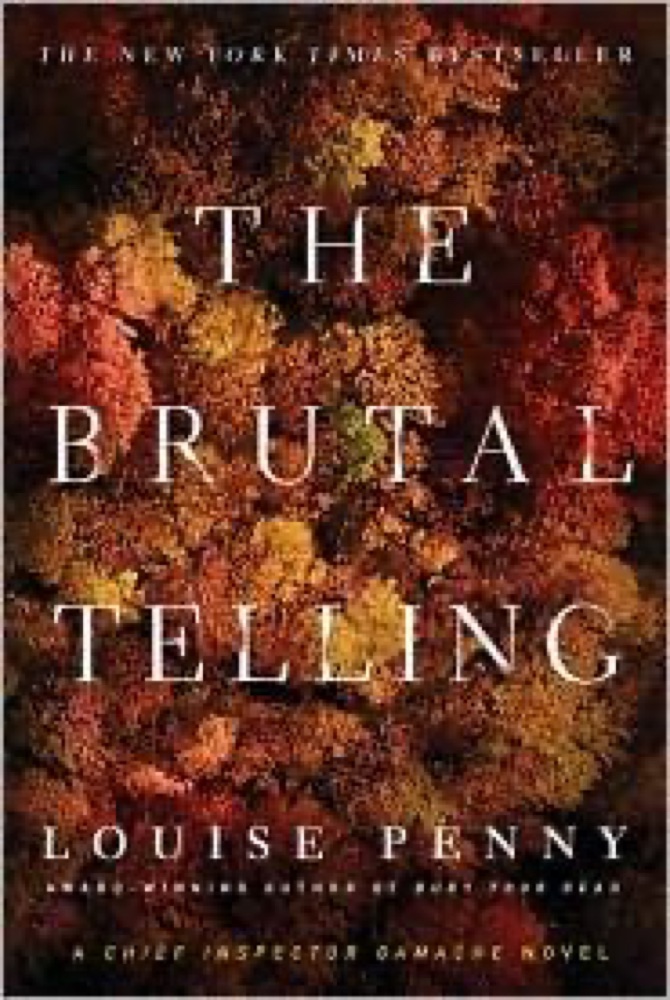 The Brutal Telling