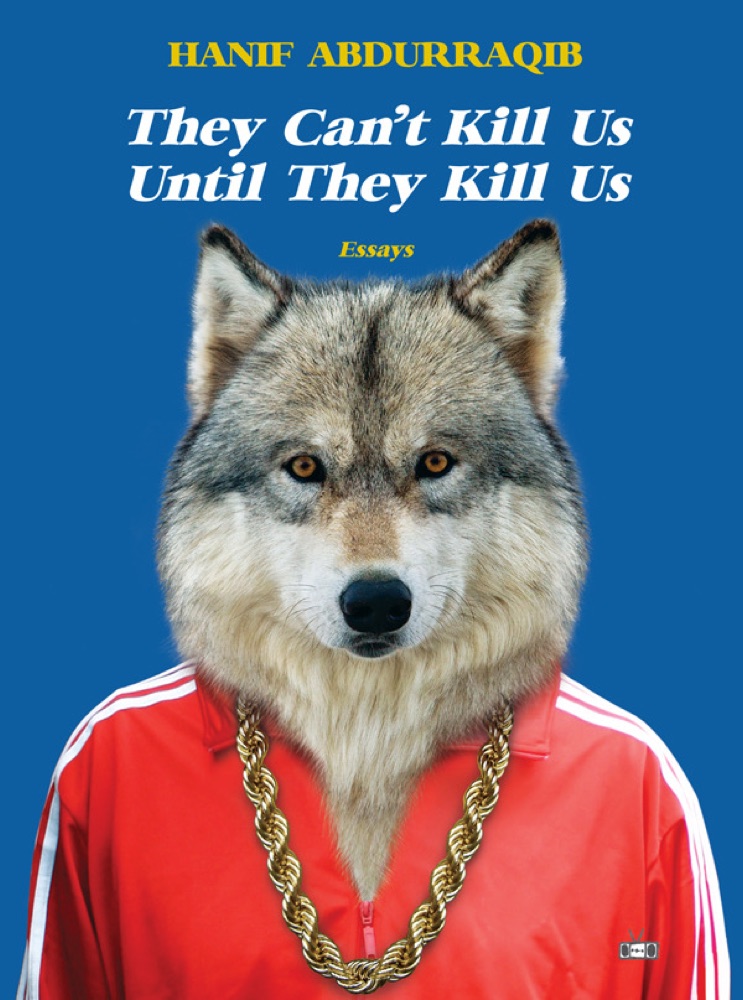
 They Can't Kill Us Until They Kill Us: Essays
Quotes from the Book
If I am going to be afraid, I might as well do it honest. Arm in arm with everyone I love, adorned in blood and bruises, singing jokes on our way to the grave.
23
History, both the arm holding down the drowning body and the voice claiming the water is holy.
23
I’ve run out of language to explain the avalanche of anguish I feel when faced with this world, and so if I can’t make sense of this planet, I’m better off imagining another.
19
I have fallen so in love with the leaves, who do the duty of making their death beautiful, bursting from otherwise unremarkable branches before the cold browns them and grinds them to dust.
15
And I think this is how I would most like to imagine romance, friends, or should I say lovers. In praise of all my body can and cannot do, I wish to figure out how it can best sing with all of yours for a moment in a room where the walls sweat. I wish to lock eyes across a dance floor from you while something our mothers sang in the kitchen plays over the speakers. I want us to find each other among the forest of writhing and make a deal. Okay, lover. It is just us now. The only way out is through.
12
I have grown weary of talking about life as if it is deserved, or earned, or gifted, or wasted. I'm going to be honest about my scoreboard and just say that the math on me being here and the people who have kept me here doesn't add up when weighed against the person I've been and the person I can still be sometimes. But isn't that the entire point of gratitude? To have a relentless understanding of all the ways you could have vanished, but haven't? The possibilities for my exits have been endless, and so the gratitude for my staying must be equally endless. I am sorry that this one is not about movement, or history, or dance. But instead about stillness. About all of the frozen moments that I have been pulled back from, in service of attempting another day.
10
When someone loves loudly, with everything they have in them, the withholding of that loud love, even briefly, feels impossible to endure.
10
It occurs to me now that this was the real joy of dancing: to enter a world unlike the one you find yourself burdened with, and move your body toward nothing but a prayer that time might slow down.
9
One way trauma can impact us is by the way it makes us consider a polite proximity to violence and oppression as comfort.
6
And I realized then that this was yet another funeral. I was reminded, once again, that our grief decides when it is done with us.
6
I have wanted to die enough times in my life to understand the idea that wanting to die is not a foolish thing... I don't mean to prop up the idea of wanting an exit, but for me, not to imagine it as a foolish means that I am, by default, tasked with taking it seriously. I can't life as I once did, telling people that I was doing fine and desperately wanting them to wade through the language and see that I was in pain.
6
I am in love with the idea of partnering as a means of survival, or a brief thrill, or a chance to conquer a moment. Even if you and the person you are partnered with part ways walking into the sunlight after exiting a sweaty dance hall, or spinning off-camera after dancing your way down a line of your clapping peers.
4
I think about how often me and the boys I knew and know were taught to love each other through expressions of violence. How, if that is our baseline for love, it might be impossible for us to love anyone well, including ourselves.
4
There is not enough distance between tragedies for my sadness to mature into anything else but another new monument obscuring the last new monument.
3
I define loneliness by the way the water between my brother and I grows, and becomes more treacherous.
3
want to be clear in saying that the aesthetics of revolution tied to the violent, capitalistic machine of football and carried out by one of the wealthiest musicians in the world is a far cry from any actual revolutionary work happening in marginalized and neglected communities by the people on the ground there. But
2
At the end of the night, I hug my boys and tell them I love them. The words come out easy and the hugs linger with the knowledge of not knowing when the next hug will be given. We punch each other's chests after hugs, lightly, before getting into our separate cabs or cars and speeding off toward a few hours of sleep before our separate airport trips. From the back of my car, underneath waves of glowing neon lights flooding into the windows, I think about how often me and the boys I knew and know were taught to love each other through expressions of violence. How, if that is our baseline for love, it might be impossible for us to love anyone well, including ourselves.
2
My boys and I find a corner booth and I play 'Can It Be All So Simple' because I'm feeling nostalgic for a very particular brand of Wu-Tang Clan, and this is it. One of those Wu songs that really isn't about anything other than the fact that none of us can be as we were when we were young. That a great deal of us have seen too much or heard too much or lived through too much to wrestle our innocence back from whatever cynicism or heartbreak has grown in its place.
2
We found some dive in some district of one of those cities that began to give gentrified areas pretty names to distract from the upheaval of the people who were there before.
2
One of the many problems with beef -- as it has been constructed throughout history -- is that bystanders are used as a currency within the ecosystem of the disagreement. When the beef is between two men, those bystanders are often women. Women who have full lives, careers, and ambitions but are reduced to weapons for the sake of two men carrying out a petty feud. This is the downside to it all. Beef is sometimes about who has and who doesn't have, and with that in mind, even people can become property.
2
Of the many things America loves to pat itself on the back about, one of the things is an obsession with exploration, or the desire to seek places beyond the places you are from or the places you have been. It is one of the many parts in the overwhelming collage of American Freedom that Americans are told was fought for and won. The Green Book is fascinating as a not-so-distant relic because it pushes back against that particular American notion. For whom is exploration treacherous? When is it a good idea to maybe not venture out into the vast unknown, and who is the return on the investment of curiosity?
2
Friends, I come to you very plainly afraid that I am losing faith in the idea that grief can become anything but grief. The way old neighborhoods are torn to the ground and new ones sprout from that same ground, it feels, most days, like my grief is simply being rebuilt and restructured along my own interior landscape. There is not enough distance between tragedies for my sadness to mature into anything else but another new monument obscuring the last new monument.
1
The fundamental flaw, of course, is in this: proving to the public that someone did not deserve to die, or did not deserve the violence that chased them down. It is the worst instinct, and one that I fight against often, when I want to clear the name of someone dead who lived a life that was undoubtedly sometimes good and sometimes bad but always a life nonetheless. At
1
The recognition Black actors receive from the public after these performances goes a long way in validating not only the actors themselves, but also the film. Even if the performances are singular, to push those performances to the forefront prioritizes a cycle that gives value to the roles Black people play when they are a part of work that reframes and recasts racism in service of white comfort. The awards, the notoriety, it all aims to soften the landing. History, both the arm holding the drowning body and the voice claiming the water is holy.
1
But I inherited a desire to make myself too fast to be touched. All pain inflicted upon this body must be earned.
is safest to say that there was no girlfriend for me that summer or the summer after & the cable at my house got cut off the year my mother died.
there is no church like the church of unchained arms being thrown in every direction in the silence of a sleeping home
A city’s flaws can be endless, and reflect the endless flaws of the people who populate it. To attach identity to love for a place you didn’t ask to be in, and a place that was not ever and will never be “yours,” is a fool’s errand, but it is one I have taken to. Because oh, how I adore knowing the corners of a place. Oh, how I love knowing a story of a building or a park or a church parking lot. A story that only a handful of people know. How I love hearing those stories from other people, from other pockets of this exhausting and dismantling city.
Watch on YouTube
About Hanif Abdurraqib
We have collected 77 quotes from 3 books by Hanif Abdurraqib on BookQuoters.
More about the author →More by Hanif Abdurraqib
They Can't Kill Us Until They Kill Us: Essays
 Go Ahead in the Rain: Notes to A Tribe Called Quest
About the book
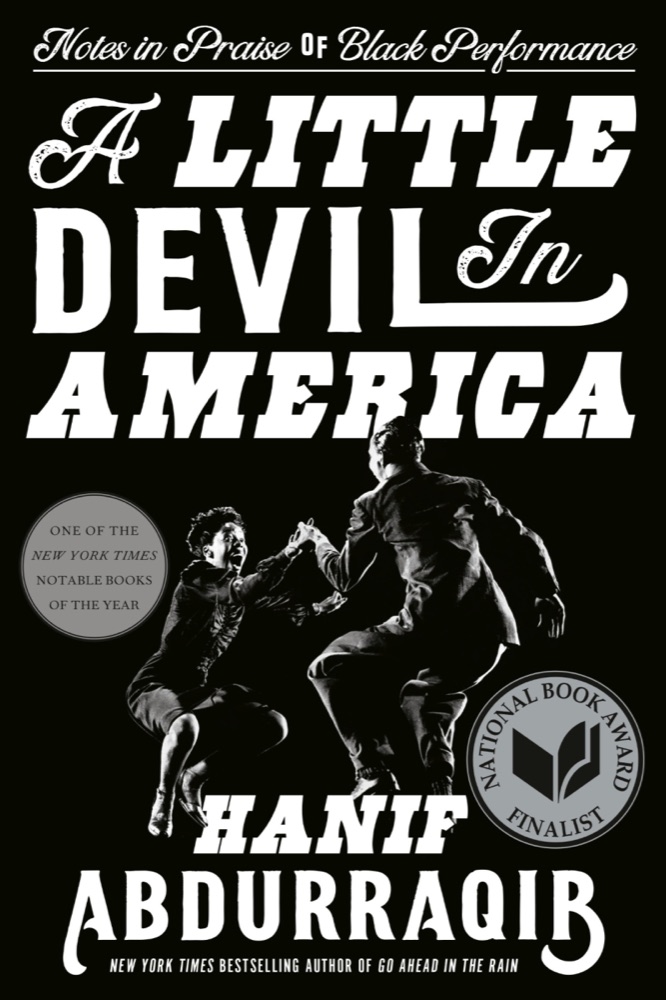
A stirring meditation on Black performance in America from the New York Times bestselling author of Go Ahead in the Rain
At the March on Washington in 1963, Josephine Baker was fifty-seven years old, well beyond her most prolific days. But in her speech she was in a mood to consider her life, her legacy, her departure from the country she was now triumphantly returning to. “I was a devil in other countries, and I was a little devil in America, too,” she told the crowd. Inspired by these few words, Hanif Abdurraqib has written a profound and lasting reflection on how Black performance is inextricably woven into the fabric of American culture. Each moment in every performance he examines—whether it’s the twenty-seven seconds in “Gimme Shelter” in which Merry Clayton wails the words “rape, murder,” a schoolyard fistfight, a dance marathon, or the instant in a game of spades right after t
Book details
- First published
- 2021
- Author
- Hanif Abdurraqib
- Genre
- Nonfiction
- Goodreads rating
- 4.58 (10k ratings)
The buzz
- The New York TimesReview in The New York Timesprofessional review (via Book Marks)
- The GuardianReview in The Guardianprofessional review (via Book Marks)
- Kirkus ReviewsReview in Kirkus Reviewsprofessional review (via Book Marks)
- Publishers WeeklyReview in Publishers Weeklyprofessional review (via Book Marks)
- Star TribuneReview in Star Tribuneprofessional review (via Book Marks)
- BooklistReview in Booklistprofessional review (via Book Marks)
Keep reading
They Can't Kill Us Until They Kill Us: Essays
 Close to the Knives: A Memoir of Disintegration
 The Red Parts
 Traveling Mercies: Some Thoughts on Faith
 Just Above My Head
 Dear Senthuran: A Black Spirit Memoir
 Time Is a Mother
 Aftershocks
 A History of My Brief Body
 The Sweet Hereafter
 The Harder I Fight the More I Love You: A Memoir
 The Likeness
 Dream Count
 Liberation Day
 The Hurting Kind: Poems
 Imagine Me Gone
 Legendborn
 My Friends
 As I Lay Dying
 Take Me With You
 The House of Hidden Meanings
 Swimming in the Dark
 Dust Tracks on a Road
 You Better Be Lightning
 The World and Other Places: Stories
 Super Sad True Love Story
 They're Going to Love You
 Open City
 The Girl Who Smiled Beads: A Story of War and What Comes After
 Smilla's Sense of Snow
 Brideshead Revisited: The Sacred and Profane Memories of Captain Charles Ryder
 Autobiography
 The Goldfinch
 All This Could Be Different
 Chances Are...
 Underworld
 A Burst of Light
 A Fraction of the Whole
 The Setting Sun
 Tropic of Cancer
 The First Time She Drowned
 Born to Run
 All God's Children Need Traveling Shoes
 The Carrying
 Love from A to Z
 In the Heart of the Heart of the Country and Other Stories
 The Secret History
 Slouching Towards Bethlehem
 Goodbye Days
 The Painted Drum
 The Tradition
 What Is the What
 I Keep My Exoskeletons to Myself
 Like Streams to the Ocean: Notes on Ego, Love, and the Things That Make Us Who We Are
 Anthropology of an American Girl
 Middlesex
 What Matters Most is How Well You Walk Through the Fire
 All Over But the Shoutin'
 The Chronology of Water
 American Sonnets for My Past and Future Assassin