 Life 3.0: Being Human in the Age of Artificial Intelligence
Quotes from the Book
Imagine a system with clearly defined goals, sensors and effectors for reading and interacting with the world, the ability to recognize pleasure and pain as attractors and things to avoid, the resources to carry out its will, the legal and social standing to see that its needs are catered for, even respected. That's a description on an AI - it's also a description of a modern corporation.
4
What I think I’ve come to understand, more deeply than ever before, is that the enemy is not technology itself, but rather inequality and centralization of power and knowledge, and that the answer to these threats are education, diversity and justice. You don’t need artificial intelligence to work that out. You need actual intelligence. But more importantly, you need all the actual intelligences – every person, animal, plant and bug; every critter, every stone and every natural and unnatural system. You need a crab computer the size of the world. The problem is never technology itself; after all, remember, the computer is like the world. I remain as excited as ever about the power and possibilities of computers and networks as I have ever been; I just abhor the structures of power, injustice, extractive industry and computational thinking in which they are currently embedded. But I hope I’ve shown, to some degree, that it doesn’t need to be this way. There are always other ways of doing technology, just as there are other ways of doing intelligence and politics. Technology, after all, is what we can learn to do.
3
What would it mean to build artificial intelligences and other machines that were more like octopuses, more like fungi, or more like forests?
1
Where we start to move forward is when we learn to ask questions which are less concerned with ‘Are you like us?’, and more interested in ‘What is it like to be you?
1
within it subordinate their goals to that of the collective, which pursues the three corporate objectives of growth, profitability, and pain avoidance,’ Stross writes. ‘We are now living in a global state that has been structured for the benefit of non-human entities with non-human goals.’13
1
The logical conclusion of the development of wildlife corridors and protected areas -- even mobile ones -- is that there are places which must be left to non-humans, even in a more-than-human world. This is not a new suggestion. It goes back at least to the beginning of the twentieth century in Western culture, to the founding of National Parks in Europe and America, and it is intrinsic to non-Western conceptions of our place among the species of the planet. But there is growing awareness that it is now more urgent and must be much more extensive than a few scattered parks and sanctuaries. Indeed, there is a strong scientific and moral case that it should comprise at least half the entire Earth.
1
The telegraph allowed for the rapid transmission of ideas and information - but was quickly suborned by financiers, media moguls and the military, to leverage inequalities of information into inequalities of power and profits.
1
Intra-action is not interaction
We can’t read water in the same way as we can’t read data…Working with it makes us more aware of the distance between ourselves and the matter under consideration: it reminds us that we share this world rather than own it. Knowledge produced through the medium of the shifting surface of a bucket of water is made in cooperation with the world, rather than by conquering it.
Watch on YouTube
About James Bridle
About the book
Artist, technologist, and philosopher James Bridle's Ways of Being is a brilliant, searching exploration of different kinds of intelligence--plant, animal, human, artificial--and how they transform our understanding of humans' place in the cosmos.
What does it mean to be intelligent? Is it something unique to humans, or shared with other beings--beings of flesh, wood, stone, and silicon? The last few years have seen rapid advances in "artificial" intelligence. But as it approaches, it also gets weirder: rather than a friend or helpmate, AI increasingly appears as something stranger than we ever imagined, an alien invention that threatens to decenter and supplant us.
At the same time, we're only just becoming aware of the other intelligences which have been with us all along, even if we've failed to recognize or acknowledge them. These others--the animals, plants, and natural system
Book details
- First published
- 2022
- Author
- James Bridle
- Genre
- Nonfiction
- Goodreads rating
- 4.16 (2k ratings)
The buzz
- The New York TimesReview in The New York Timesprofessional review (via Book Marks)
- The Washington PostReview in The Washington Postprofessional review (via Book Marks)
- The Wall Street JournalReview in The Wall Street Journalprofessional review (via Book Marks)
- EconomistReview in Economistprofessional review (via Book Marks)
- Kirkus ReviewsReview in Kirkus Reviewsprofessional review (via Book Marks)
- Publishers WeeklyReview in Publishers Weeklyprofessional review (via Book Marks)
Keep reading
Life 3.0: Being Human in the Age of Artificial Intelligence
 The Mountain in the Sea
 The Singularity is Near: When Humans Transcend Biology
 Understanding Media: The Extensions of Man
 What Technology Wants
 Dragons of Eden: Speculations on the Evolution of Human Intelligence
 You Are Not a Gadget
 Superintelligence: Paths, Dangers, Strategies
 How the Mind Works
 From Bacteria to Bach and Back: The Evolution of Minds
 The Medium is the Massage
 The Technological Republic: Hard Power, Soft Belief, and the Future of the West
 Homo Deus: A History of Tomorrow
 Endgame, Vol. 1: The Problem of Civilization
 Co-Intelligence: Living and Working with AI
 The Blind Watchmaker: Why the Evidence of Evolution Reveals a Universe Without Design
 The Mushroom at the End of the World: On the Possibility of Life in Capitalist Ruins
 The Futurological Congress: From the Memoirs of Ijon Tichy
 21 Lessons for the 21st Century
 The Information: A History, a Theory, a Flood
 Emergent Strategy: Shaping Change, Changing Worlds
 The Lost World
 Sea of Rust
 Echopraxia
 Thinking In Systems: A Primer
 The Social Conquest of Earth
 The Wizard and the Prophet: Two Remarkable Scientists and Their Dueling Visions to Shape Tomorrow's World
 A Hunter-Gatherer's Guide to the 21st Century: Evolution and the Challenges of Modern Life
 The Most Human Human: What Talking with Computers Teaches Us About What It Means to Be Alive
 The Naked Sun
 A Whole New Mind: Why Right-Brainers Will Rule the Future
 A Language Older Than Words
 Machinehood
 Four Futures: Life After Capitalism
 Artificial Intelligence: A Guide for Thinking Humans
 The Big Picture: On the Origins of Life, Meaning, and the Universe Itself
 Distrust That Particular Flavor
 The Tell-Tale Brain: A Neuroscientist's Quest for What Makes Us Human
 Small Is Beautiful: Economics as if People Mattered
 The Culture of Make Believe
 On Trails: An Exploration
 On the Steel Breeze
 Service Model
 Burning Questions: Essays and Occasional Pieces, 2004 to 2021
 The Fifth Science
 Sapiens: A Brief History of Humankind
 Shadows of Forgotten Ancestors
 The Light Eaters: How the Unseen World of Plant Intelligence Offers a New Understanding of Life on Earth
 The Case Against Reality: Why Evolution Hid the Truth from Our Eyes
 The Master and His Emissary: The Divided Brain and the Making of the Western World
 Shop Class as Soulcraft: An Inquiry Into the Value of Work
 What's Our Problem?: A Self-Help Book for Societies
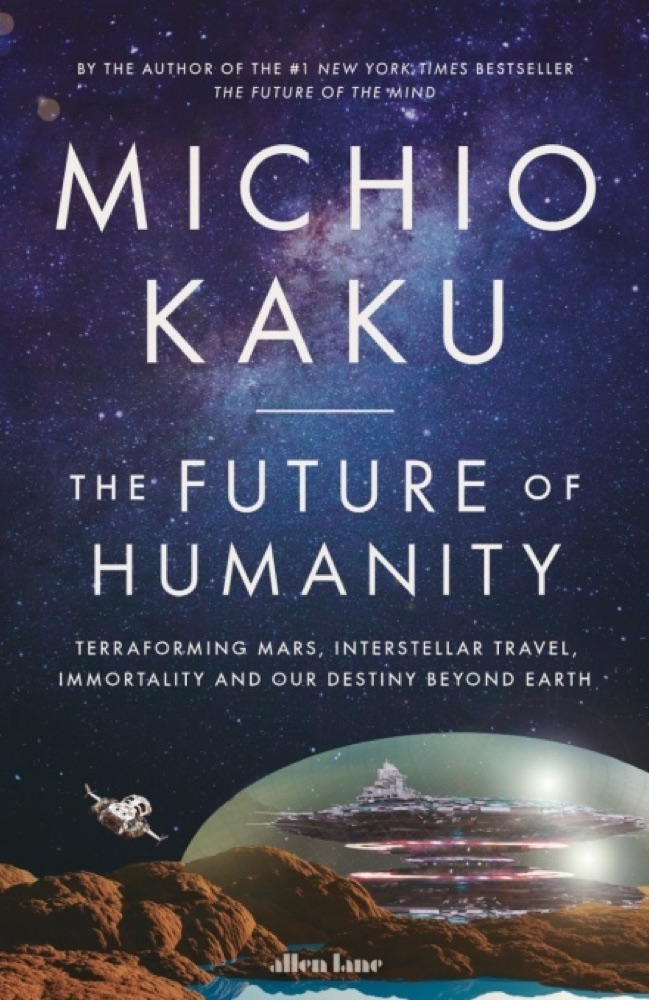 The Future of Humanity: Terraforming Mars, Interstellar Travel, Immortality and Our Destiny Beyond Earth
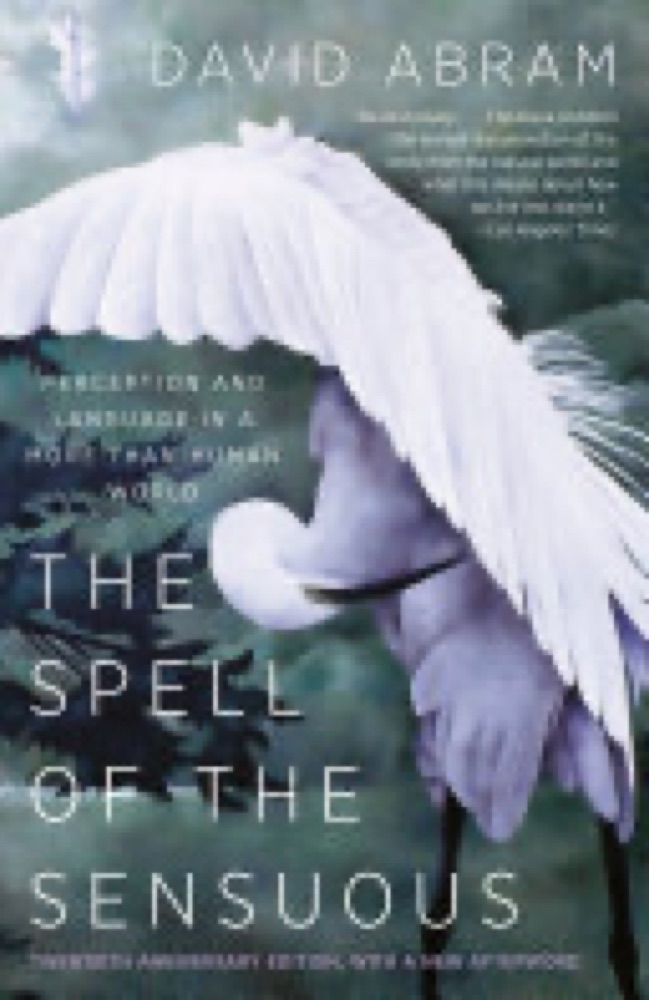 The Spell of the Sensuous: Perception and Language in a More-Than-Human World
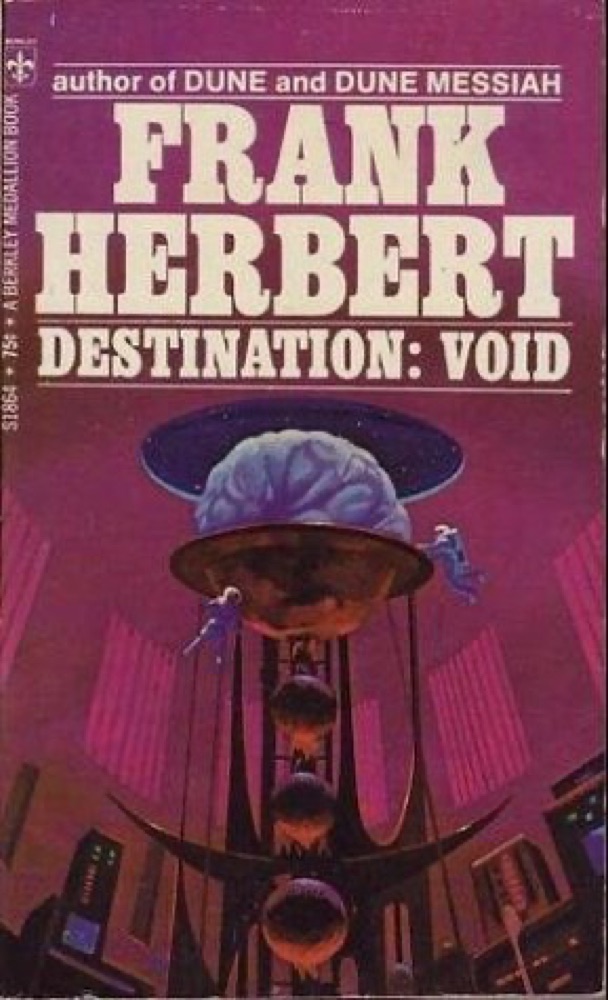 Destination: Void
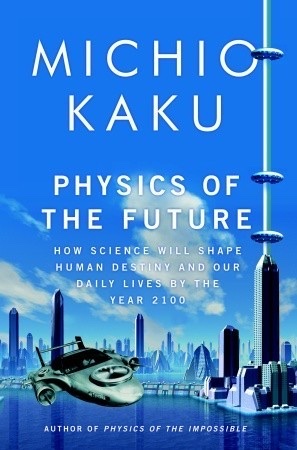 Physics of the Future: How Science Will Shape Human Destiny and Our Daily Lives by the Year 2100
 2312
2312
 Saving Time: Discovering a Life Beyond the Clock
 The Wayfinders: Why Ancient Wisdom Matters in the Modern World
 Gödel, Escher, Bach: An Eternal Golden Braid