

 The Other End of the Leash: Why We Do What We Do Around Dogs
Quotes from the Book
Few celebrate a dog who jumps at people as they approach--but start with the premise that it is we who keep ourselves (and our faces) unbearably far away, and we can come to a mutual understanding.
13
By standard intelligence texts, the dogs have failed at the puzzle. I believe, by contrast that they have succeeded magnificently. They have applied a novel tool to the task. We are that tool. Dogs have learned this--and they see us as fine general-purpose tools, too: useful for protection, acquiring food, providing companionship. We solve the puzzles of closed doors and empty water dishes. In the folk psychology of dogs, we humans are brilliant enough to extract hopelessly tangled leashes from around trees; we can conjure up an endless bounty of foodstuffs and things to chew. How savvy we are in dogs' eyes! It's a clever strategy to turn to us after all. The question of the cognitive abilities of dogs is thereby transformed; dogs are terrific at using humans to solve problems, but not as good at solving problems when we're not around.
9
When it comes to describing our potential physical and cognitive capacities, we are individuals first, and members of the human race second.
5
Many people’s expectations, at least in this country, are fairly similar: be friendly, loyal, pettable; find me charming and lovable—but know that I am in charge; do not pee in the house; do not jump on guests; do not chew my dress shoes; do not get into the trash. Somehow, word hasn’t gotten to the dogs.
3
in training a dog you must reward only those behaviors you desire the dog to repeat endlessly.
3
For any anthropomorphism we use to describe our dogs, we can ask two questions: One, is there a natural behavior this action might have evolved from? And two, what would that anthropomorphic claim amount to if we deconstructed it?
2
If we want to understand the life of any animal, we need to know what things are meaningful to it. The first way to discover this is to determine what the animal can perceive: what it can see, hear, smell, or otherwise sense. Only objects that are perceived can have meaning to the animal; the rest are not even noticed, or all look the same. The
2
I am I because my little dog knows me. —GERTRUDE STEIN
2
To be nudged by a dog’s nose is a pleasure unmatched.
1
Pump changed my own umwelt. Walking through the world with her, watching her reactions, I began to imagine her experience. My enjoyment of a narrow winding path in a shady forest, lined with low bushes and grasses, comes in part from seeing how Pump enjoyed it: the cool of the shade, of course, but also the pathiness, allowing her to zoom along unchecked, stopping only for rousing scents along the sides. I now see city blocks, and their sidewalks and buildings, with their investigatory sniffing possibilities in mind: a sidewalk along an uninterrupted wall without fences, trees, or variation, is a block I'd never want to walk down. Where I'll choose to sit in the park--which bench, what rock--is based on where a dog at my side would have the best panoramic olfactory view. Pump loved large open lawns--to plop down in, to roll repeatedly in, to sniff endlessly--and high grass or brush--to lope regally through. I came to love large open laws and high grass and brush in anticipation of her enjoyment. (The interest in rolling in unseen smells remains elusive...) I smell the world more. I love to sit outside on a breezy day. My day is tilted toward morning. The importance of mornings has always been that if I awoke early enough, we could have a long, off-leash walk together in a relatively unpeopled park or beach. I still have trouble sleeping in. It is a very small bit comforting to realise how deeply she is in me, even over a year from the day when she was also aside me, willing to submit to a tickle of the dense curls under her chin as she rested it on the ground for the last time.
1
Even the objects in a room are not, in some sense, the same objects to another animal. A dog looking around a room does not think he is surrounded by human things; he sees dog things. What we think an object is for, or what it makes us think of, may or may not match the dog’s idea of the object’s function or meaning. Objects are defined by how you can act upon them: what von Uexküll calls their functional tones—as though an object’s use rings bell-like when you set eyes on it. A
1
The complement of remembering so thoroughly can be the strange inability to forget anything at all.
1
Every dog that you name and bring home will also die.
1
how we act defines who we are.
1
peeks at them in a shelter cage, what the person expects of them.
Paul Grice, a twentieth-century philosopher, famously described various “conversational maxims,” known to us implicitly, that regulate language use. Their use marks you as a cooperative speaker; even their express violation is often meaningful. They include the charming maxim of relation (be relevant), the maxim of manner (be brief and clear), and maxims of quality (tell the truth) and quantity (say only as much as you need to).
Yet dog-walks are often not done with the dog’s sake in mind, but strangely playing out a very human definition of a walk. We want to make good time; to keep a brisk pace; to get to the post office and back. People yank their dogs along, tugging at leashes to get noses out of smells, pulling past tempting dogs, to get on with the walk.
Discerning the salient elements in an animal’s
Parece que los lametones alrededor de la boca son lo que da pie a la madre a vomitar voluntariamente carne a medio digerir. Cuán decepcionada ha debido de sentirse Pump al no haberle regurgitado carne de conejo a medio comer ni una sola vez.
Thus, these two components—perception and action—largely define and circumscribe the world for every living thing. All animals have their own umwelten—their own subjective realities, what von Uexküll thought of as “soap bubbles” with them forever caught in the middle. We
A life untrammeled by knowledge of its end is an enviable life. There
Our mortal knowledge may not be visible in all of our moves, but it shines through in some: we shrink back from the balcony’s edge, from the animal with unknown intent; we buckle up for safety; we look both ways before crossing; we don’t jump in the tiger cage; we refrain from the third serving of fried ice cream; we even entertain not swimming after eating. If dogs know about death, it might show in how they act. I
12What is considered aggressive is culturally and generationally relative. German shepherds were on the top of the list after World War II; in the 1990s Rottweilers and Dobermans were scorned; the American Staffordshire terrier (also known as the pit bull) is the current bête noire. Their classification has more to do with recent events and public perception than with their intrinsic nature. Recent research found that of all breeds, dachshunds were the most aggressive to both their own owners and to strangers. Perhaps this is underreported because a snarling dachshund can be picked up and stashed away in a tote bag. 13
Los perros y los lobos simplemente lamen el hocico para dar la bienvenida a otro perro que regresa a casa e informarse a través del olor sobre dónde ha estado o qué ha hecho quien acaba de llegar. Las
For instance, it is high time we revamp the false notion that our dogs view us as their “pack.” The “pack” language—with its talk of the “alpha” dog, dominance, and submission—is one of the most pervasive metaphors for the family of humans and dogs.
Domestication is a variation of the process of evolution, where the selector has been not just natural forces but human ones, eventually intent on bringing dogs inside their homes.
Dogs also have a higher flicker-fusion rate than humans do: seventy or even eighty cycles per second. This provides an indication why dogs have not taken up a particular foible of persons: our constant gawking at the television screen. Like film, the image on your (non-digital) TV is really a sequence of still shots sent quickly enough to fool our eyes into seeing a continuous stream. But it’s not fast enough for dog vision. They see the individual frames and the dark space between them too, as though stroboscopically.
Those canids such as foxes, who do not live in a social group, appear to have a much more limited range of things to say. Even the kinds of sounds foxes make are indicative of their more solitary nature: they make sounds that travel well over long distances.
Watch on YouTube
About Alexandra Horowitz
We have collected 28 quotes from 1 book by Alexandra Horowitz on BookQuoters.
More about the author →About the book
The bestselling book that asks what dogs know and how they think. The answers will surprise and delight you as Alexandra Horowitz, a cognitive scientist, explains how dogs perceive their daily worlds, each other, and that other quirky animal, the human.
Temple Grandin meets Stephen Pinker in this engaging and informative look at what goes on inside the minds of dogs—from a cognitive scientist with a background at The New Yorker .
With more than 52 million pet dogs in America today, it’s clear we are a nation of unabashed dog-lovers. Yet the relationship between dogs and humans remains a fascinating mystery, as no one really knows what goes on in the canine mind. Now, in Inside of a Dog , Alexandra Horowitz fuses her perspectives as both scientist and dog-owner to deliver a fresh look at the world of dogs—as seen from the animal’s point of view. Inspired by her years of living with her
Book details
- First published
- 2009
- Author
- Alexandra Horowitz
- Genre
- Nonfiction
- Goodreads rating
- 3.63 (19k ratings)
Keep reading
The Other End of the Leash: Why We Do What We Do Around Dogs
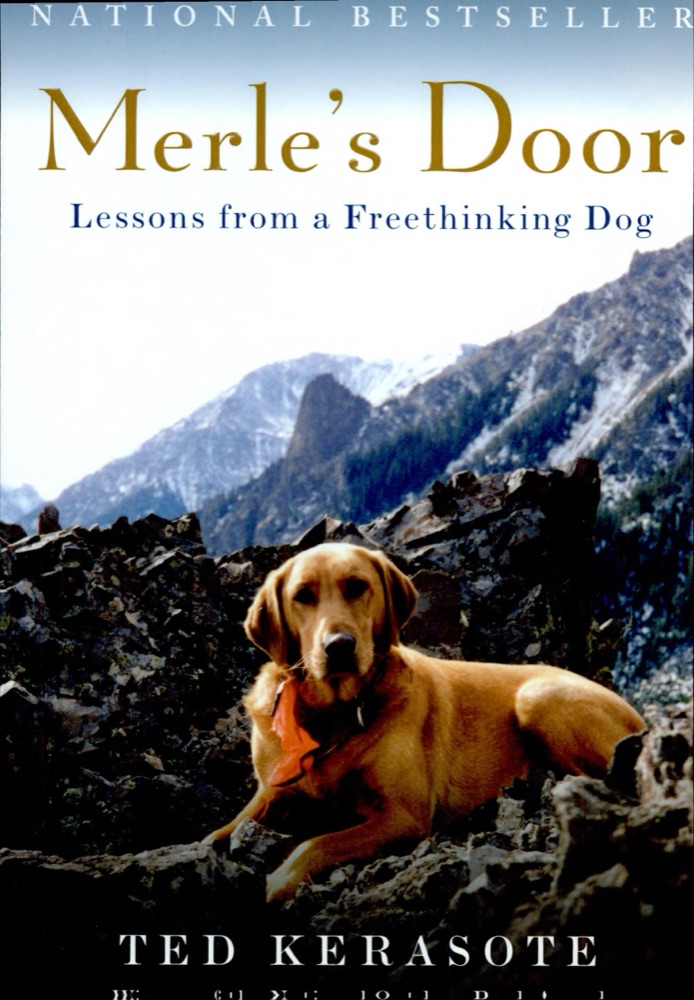 Merle's Door: Lessons from a Freethinking Dog
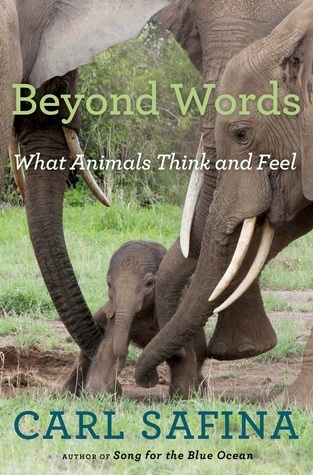 Beyond Words: What Animals Think and Feel
 Are We Smart Enough to Know How Smart Animals Are?
 Be the Pack Leader: Use Cesar's Way to Transform Your Dog . . . and Your Life
 For the Love of a Dog: Understanding Emotion in You and Your Best Friend
 A Big Little Life: A Memoir of a Joyful Dog
 Animals Make Us Human: Creating the Best Life for Animals
 A Dog's Journey
 Dog Songs: Poems
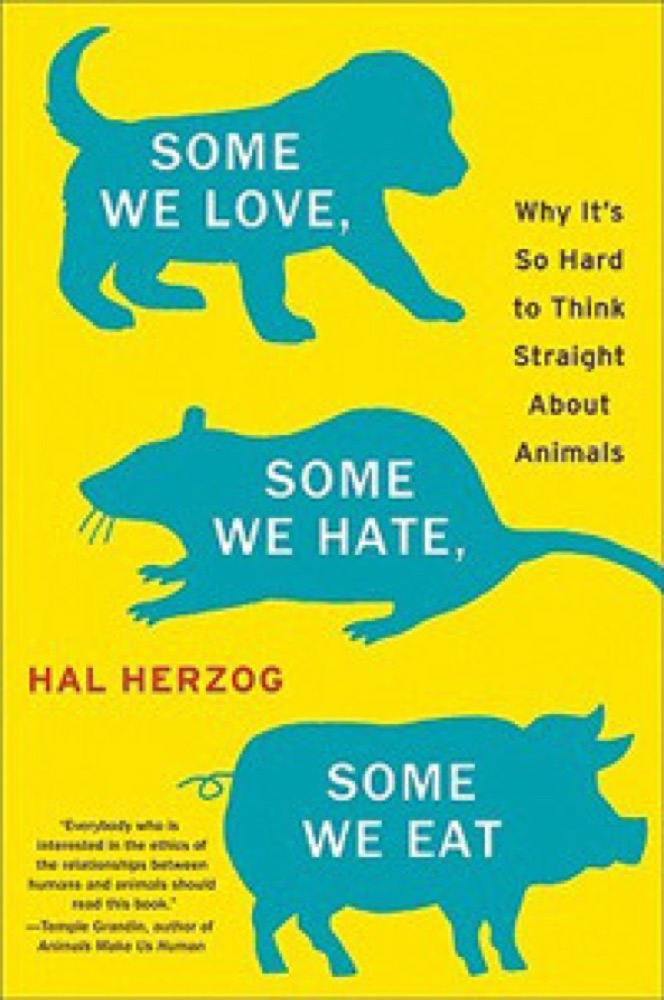 Some We Love, Some We Hate, Some We Eat: Why It's So Hard to Think Straight About Animals
 A Dog Year: Twelve Months, Four Dogs, and Me
 Marley and Me: Life and Love With the World's Worst Dog
 An Immense World: How Animal Senses Reveal the Hidden Realms Around Us
 Cesar's Way: The Natural, Everyday Guide to Understanding and Correcting Common Dog Problems
 Fifteen Dogs
 When Elephants Weep: The Emotional Lives of Animals
 Dog Sense: How the New Science of Dog Behavior Can Make You a Better Friend to Your Pet
 A Hunter-Gatherer's Guide to the 21st Century: Evolution and the Challenges of Modern Life
 The Philosopher and the Wolf
 The Friend
 Martin Marten
 Watchers
 Shadows of Forgotten Ancestors
 How the Mind Works
 Mama's Last Hug: Animal Emotions and What They Tell Us about Ourselves
 Lad: A Dog
 The Mountain in the Sea
 The Zookeeper's Wife
 Wesley the Owl: The Remarkable Love Story of an Owl and His Girl
 Drive Your Plow Over the Bones of the Dead
 The Soul of an Octopus: A Surprising Exploration into the Wonder of Consciousness
 Holy Cow
 How to Be a Good Creature: A Memoir in Thirteen Animals
 Suspect
 Blindsight
 The Search
 Why We Run: A Natural History
 Dragons of Eden: Speculations on the Evolution of Human Intelligence
 What the Dog Saw and Other Adventures
 The Genius of Birds
 Vesper Flights
 The Female of the Species
 Psych: The Story of the Human Mind
 The Moral Animal: Why We Are the Way We Are - The New Science of Evolutionary Psychology
 The Social Animal: The Hidden Sources of Love, Character, and Achievement
 The Lives of a Cell: Notes of a Biology Watcher
 Behave: The Biology of Humans at Our Best and Worst
 Vanishing Treasures: A Bestiary of Extraordinary Endangered Creatures
 The Inner Life of Animals: Love, Grief, and Compassion: Surprising Observations of a Hidden World
 The One and Only Ivan
 Other Minds
 Echopraxia
 Pet
Pet
 Beautyland
 The Tell-Tale Brain: A Neuroscientist's Quest for What Makes Us Human
 The Fifth Science
 Heart of a Dog
 Sphere
 Of Wolves and Men