 The Great Crash 1929
Quotes from the Book
Almost all of history is an unbroken trail of one conspiracy after another. Conspiracies are the norm, not the exception.
14
Knowledge by itself is not power, but it holds the potential for power if we use it a s a guide for action. Truth will always be defeated by tyranny unless the people are willing to step forward and put their lives into the battle. The future belongs, not to ideas, but to people who act on those ideas.
13
It is not enough to know what we are against. We must also know what we are for.
8
The accepted version of history is that the Federal Reserve was created to stabilize our economy. One of the most widely-used textbooks on this subject says: "It sprang from the panic of 1907, with its alarming epidemic of bank failures: the country was fed up once and for all with the anarchy of unstable private banking."23 Even the most naive student must sense a grave contradiction between this cherished view and the System's actual performance. Since its inception, it has presided over the crashes of 1921 and 1929; the Great Depression of '29 to '39; recessions in '53, '57, '69, '75, and '81; a stock market "Black Monday" in '87; and a 1000% inflation which has destroyed 90% of the dollar's purchasing power.
7
The new business model for America is clearly recognizable. Its dominant feature is the merger of government, real estate, and commerce into a single structure, tightly controlled at the top. It is the same model used in Soviet Russia, Nazi Germany, Fascist Italy, and Communist China.
5
The true nature of the inflation effect has never been more accurately perceived or more vividly described than it was by Thomas Jefferson: It will be asked how will the two masses of Continental and of State money have cost the people of the United States seventy-two millions of dollars, when they are to be redeemed now with about six million? I answer that the difference, being sixty-six millions, has been lost on the paper bills separately by the successive holders of them. Every one, through whose hands a bill passed, lost on that bill what it lost in value during the time it was in his hands. This was a real tax on him; and in this way the people of the United States actually contributed those sixty-six millions of dollars during the war, and by a mode of taxation the most oppressive of all because the most unequal of all.
4
This, of course, is a classic example of the failure of liberal economics. When evaluating a policy, it focuses only on one beneficial consequence for one group of people and ignores the multitude of harmful effects which befall all other groups.
3
And so, as the passengers drifted off to sleep to the rhythmic clicking of steel wheels against rail, little did they dream that, riding in the car at the end of their train, were six men who represented an estimated one-fourth of the total wealth of the entire world. This was the roster of the Aldrich car that night: Nelson W. Aldrich, Republican "whip" in the Senate, Chairman of the National Monetary Commission, business associate of J.P. Morgan, father-in-law to John D. Rockefeller, Jr.; Abraham Piatt Andrew, Assistant Secretary of the U.S. Treasury; Frank A. Vanderlip, president of the National City Bank of New York, the most powerful of the banks at that time, representing William Rockefeller and the international investment banking house of Kuhn, Loeb & Company; Henry P. Davison, senior partner of the J.P. Morgan Company; Benjamin Strong, head of J.P. Morgan's Bankers Trust Company;1 6. Paul M. Warburg, a partner in Kuhn, Loeb & Company, a representative of the Rothschild banking dynasty in England and France, and brother to Max Warburg who was head of the Warburg banking consortium in Germany and the Netherlands.
3
So they demonstrate in the streets in protest, they riot in the commercial sections of town so they can steal goods from stores, and they throng to the banner of politicians who promise to restore or increase their benefits.
2
The circular which was distributed to attract subscribers to the Bank's initial stock offering explained: "The Bank hath benefit of interest on all the moneys which it, the Bank, creates out of nothing.
2
In the February 9, 1935, issue of the Saturday Evening Post, an article appeared written by Frank Vanderlip. In it he said: Despite my views about the value to society of greater publicity for the affairs of corporations, there was an occasion, near the close of 1910, when I was as secretive—indeed, as furtive—as any conspirator.... I do not feel it is any exaggeration to speak of our secret expedition to Jekyll Island as the occasion of the actual conception of what eventually became the Federal Reserve System.... We were told to leave our last names behind us. We were told, further, that we should avoid dining together on the night of our departure. We were instructed to come one at a time and as unobtrusively as possible to the railroad terminal on the New Jersey littoral of the Hudson, where Senator Aldrich's private car would be in readiness, attached to the rear end of a train for the South.... Once aboard the private car we began to observe the taboo that had been fixed on last names. We addressed one another as "Ben," "Paul," "Nelson," "Abe"—it is Abraham Piatt Andrew. Davison and I adopted even deeper disguises, abandoning our first names. On the theory that we were always right, he became Wilbur and I became Orville, after those two aviation pioneers, the Wright brothers.... The servants and train crew may have known the identities of one or two of us, but they did not know all, and it was the names of all printed together that would have made our mysterious journey significant in Washington, in Wall Street, even in London. Discovery, we knew, simply must not happen, or else all our time and effort would be wasted. If it were to be exposed publicly that our particular group had got together and written a banking bill, that bill would have no chance whatever of passage by Congress.
2
The reality of government disruption of the free market cannot be overemphasized, for it is at the heart of our present and future crisis. We have savings institutions that are controlled by government at every step of the way. Federal agencies provide protection against losses and lay down rigid guidelines for capitalization levels, number of branches, territories covered, management policies, services rendered, and interest rates charged. The additional cost to S&Ls of compliance with this regulation has been estimated by the American Bankers Association at about $11 billion per year, which represents a whopping 60% of all their profits.
2
The necessity arising from a want of specie is represented as greater than it really is. I contend that it is by the substance, not the shadow of a thing, we are to be benefited. The wisdom of man, in my humble opinion, cannot at this time devise a plan by which the credit of paper money would be long supported; consequently, depreciation keeps pace with the quantity of the emission, and articles for which it is exchanged rise in a greater ratio than the sinking value of the money. Wherein, then, is the farmer, the planter, the artisan benefited? An evil equally great is the door it immediately opens for speculation, by which the least designing and perhaps most valuable part of the community are preyed upon by the more knowing and crafty speculators.
2
Competition also was coming from a new trend in industry to finance future growth out of profits rather than from borrowed capital. This was the outgrowth of froc-market interest rates which set a realistic balance between debt and thrift. Rates were low enough to attract serious borrowers who were confident of the success of their business ventures and of their ability to repay, but they were high enough to discourage loans for frivolous ventures or those for which there were alternative sources of funding —for example, one's own capital. That balance between debt and thrift was the result of a limited money supply. Banks could create loans in excess of their actual deposits, as we shall see, but there was a limit to that process. And that limit was ultimately determined by the supply of gold they held. Consequently, between 1900 und 1910, seventy per ant of the funding for American corporate growth was genurated internally, making industry increasingly independent of the banks. Even the federal government was hecorning thrifty. It had a growing stockpile of gold, was systematically redeeming the Greenbacks which had been Issued during the Civil War-and was rapidly reducing the national debt.
1
Slavery was an issue, but the primary force for war was a clash between the economic interests of the North and the South. Even the issue of slavery itself was based on economics. It may have been a moral issue in the North where prosperity was derived from the machines of heavy industry, but in the agrarian South, where fields had to be tended by vast work forces of human labor, the issue was primarily a matter of economics.
1
When the fund was exhausted, the solvent banks were punished by being forced to pay for the deficits of the insolvent ones.
1
Thus, open taxes at some level serve to perpetuate public ignorance which is essential to the success of the scheme. The second reason is that taxes, particularly progressive taxes, are weapons by which elitist social planners can wage war on the middle class.
1
Led by Communist organizers, mobs roamed the streets shouting "We're hungry. Steal what you will!" The nation was hopelessly in debt with no way to repay.
1
Zimbabwe (formerly Rhodesia) is a classic case. After its independence, the leftist government nationalized (confiscated) many of the farms previously owned by white settlers. The most desirable of these lands became occupied by the government's senior ruling-party officials, and the rest were turned into state-run collectives. They were such miserable failures that the workers on these farmlands were, themselves, soon begging for food. Not daunted by these failures, the socialist politicians announced in 1991 that they were going to nationalize half of the remaining farms as well. And they barred the courts from inquiring into how much compensation would be paid to their owners.
1
They add up to one thing: the building of world socialism.
1
But it cannot happen unless private industry is allowed to flourish in a system of free-enterprise. The problem with this option
1
Since the S&Ls were required to have $1 in capital for every $33 held in deposits, an appraisal that exceeded market value by $1 million could be used to pyramid $33 million in deposits from Wall Street brokerage houses. And the anticipated profits from those funds was one of the ways in which the S&Ls were supposed to recoup their losses without the government having to cough up the money—which it didn't have. In effect the government was saying: "We can't make good on our protection scheme, so go get the money yourself by putting the investors at risk. Not only will we back you up if you fail, we'll show you exactly how to do it.
1
Behind the troubled banks and the increasingly troubled insurance agencies stands "the full faith and credit" of the Government—in effect, a promise, sure to be honored by Congress, that all citizens will chip in through taxes or through inflation to make all depositors whole.
1
Deals began to go sour, and 1979 was the first year since the Great Depression of the 1930s that the total net worth of federally insured S&Ls became negative. And that was despite expansion almost everywhere else in the economy. The public began to worry.
1
The weakest S&L's paid the highest interest rates to attract depositors and they are the ones which obtained the large blocks of brokered funds. Brokers no longer cared how weak the operation was, because the funds were fully insured. They just cared about the interest rate. On the other hand,
1
And so, when more than 1900 S&L's went belly-up in the Great Depression, Herbert Hoover—and a most willing Congress—created the Federal Home Loan Bank Board to protect depositors in the future.
1
Your committee is satisfied from the proofs submitted ... that there is an established and well defined identity and community of interest between a few leaders of finance ... which has resulted in great and rapidly growing concentration of the control of money and credit in the hands of these few men.... Under our system of issuing and distributing corporate securities the investing public does not buy directly from the corporation. The securities travel from the issuing house through middlemen to the investor. It is only the great banks or bankers with access to the mainsprings of the concentrated resources made up of other people's money, in the banks, trust companies, and life insurance companies, and with control of the machinery for creating markets and distributing securities, who have had the power to underwrite or guarantee the sale of large-scale security issues. The men who through their control over the funds of our railroad and industrial companies are able to direct where such funds shall be kept, and thus to create these great reservoirs of the people's money are the ones who are in a position to tap those reservoirs for the ventures in which they are interested and to prevent their being tapped for purposes which they do not approve.... When we consider, also, in this connection that into these reservoirs of money and credit there flow a large part of the reserves of the banks of the country, that they are also the agents and correspondents of the out-of-town banks in the loaning of their surplus funds in the only public money market of the country, and that a small group of men and their partners and associates have now further strengthened their hold upon the resources of these institutions by acquiring large stock holdings therein, by representation on their boards and through valuable patronage, we begin to realize something of the extent to which this practical and effective domination and control over our greatest financial, railroad and industrial corporations has developed, largely within the past five years, and that it is fraught with peril to the welfare of the country.3 Such was the nature of the wealth and power represented by those six men who gathered in secret that night and travelled in the luxury of Senator Aldrich's private car.
1
People who will not turn a shovel full of dirt on the project nor contribute a pound of materials will collect more money...than will the people who will supply all the materials and do all the work.
1
My, how the apples do fall.
Watch on YouTube
About G. Edward Griffin
We have collected 29 quotes from 1 book by G. Edward Griffin on BookQuoters.
More about the author →About the book
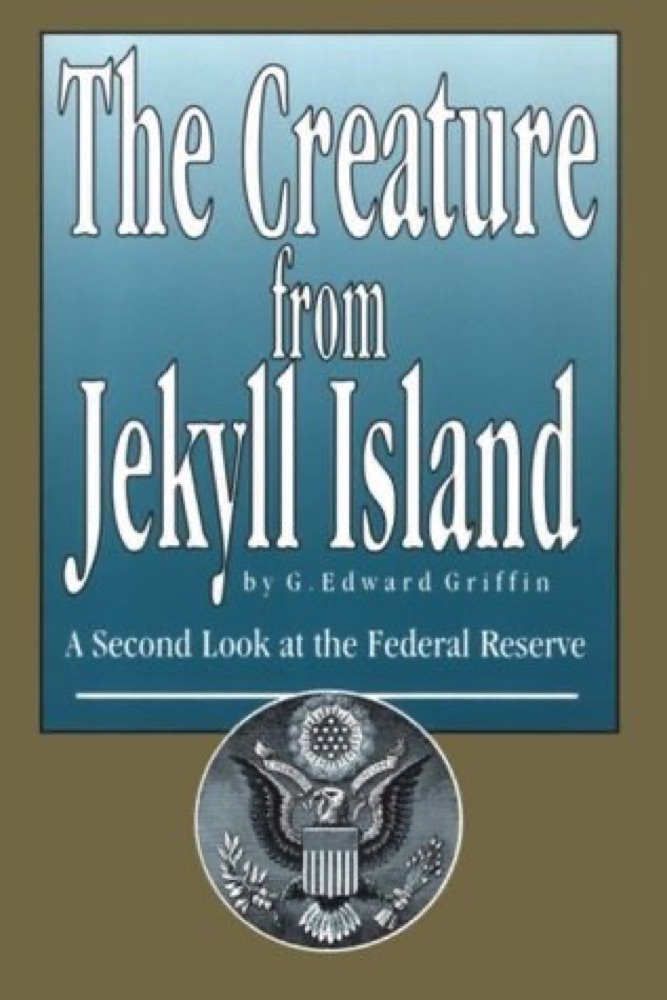
Where does money come from? Where does it go? Who makes it? The money magicians' secrets are unveiled. We get a close look at their mirrors and smoke machines, their pulleys, cogs, and wheels that create the grand illusion called money. A dry and boring subject? Just wait! You'll be hooked in five minutes. Reads like a detective story — which it really is. But it's all true. This book is about the most blatant scam of all history. It's all here: the cause of wars, boom-bust cycles, inflation, depression, prosperity. Creature from Jekyll Island will change the way you view the world, politics, and money. Your world view will definitely change. You'll never trust a politician again — or a banker.
Book details
- First published
- 1994
- Author
- G. Edward Griffin
- Genre
- Nonfiction
- Goodreads rating
- 4.30 (7k ratings)
Keep reading
The Great Crash 1929
 Currency Wars: The Making of the Next Global Crisis
 Griftopia: Bubble Machines, Vampire Squids, and the Long Con That Is Breaking America
 The Ascent of Money: A Financial History of the World
 Economics in One Lesson
 A Short History of Financial Euphoria
 Debt: The First 5,000 Years
 A Fighting Chance
 The Big Short: Inside the Doomsday Machine
 The Shock Doctrine: The Rise of Disaster Capitalism
 Too Big to Fail: The Inside Story of How Wall Street and Washington Fought to Save the Financial System from Crisis — and Themselves
 Principles for Dealing with the Changing World Order: Why Nations Succeed and Fail
 Occupy
 Talking to My Daughter About the Economy: or, How Capitalism Works—and How It Fails
 Basic Economics: A Citizen's Guide to the Economy
 The Bitcoin Standard: The Decentralized Alternative to Central Banking
 Boomerang: Travels in the New Third World
 Naked Economics: Undressing the Dismal Science
 Free to Choose: A Personal Statement
 Behold a Pale Horse
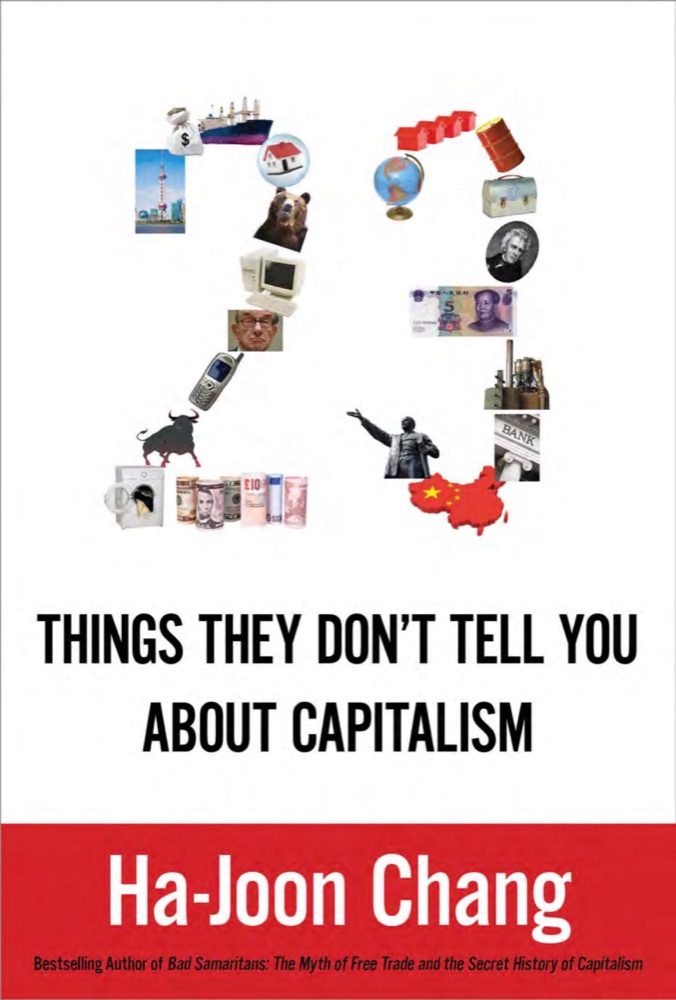 23 Things They Don't Tell You About Capitalism
 The Great Transformation: The Political and Economic Origins of Our Time
 First As Tragedy, Then As Farce
 The System: Who Rigged It, How We Fix It
 Evil Geniuses: The Unmaking of America
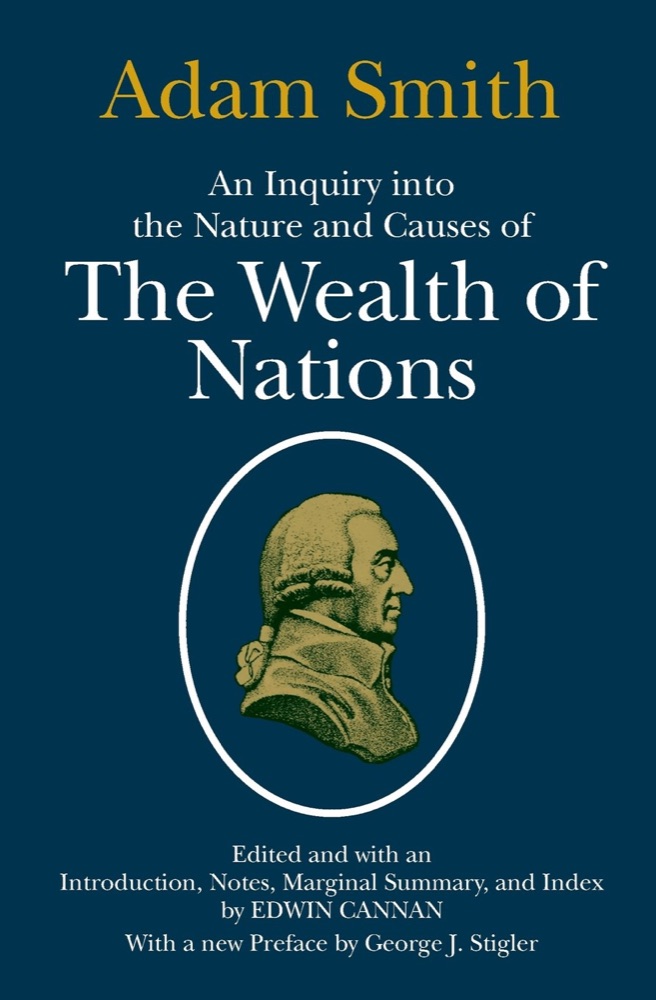 An Inquiry into the Nature and Causes of the Wealth of Nations
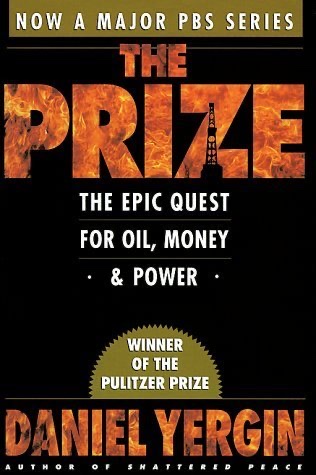 The Prize: The Epic Quest for Oil, Money, and Power
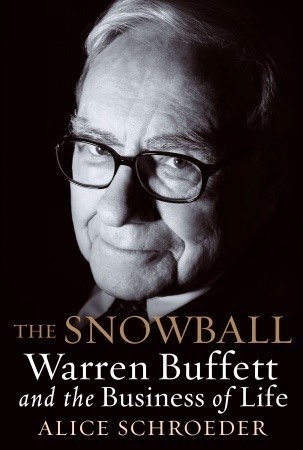 The Snowball: Warren Buffett and the Business of Life
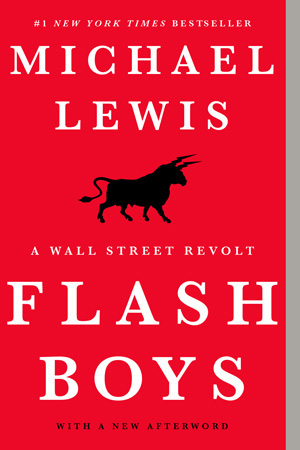 Flash Boys: A Wall Street Revolt
 Conspirators' Hierarchy: The Story of the Committee of 300
 New York 2140
 Confessions of an Economic Hit Man
 Power Systems: Conversations on Global Democratic Uprisings and the New Challenges to U.S. Empire
 Capital in the Twenty-First Century
 Utopia for Realists: How We Can Build the Ideal World
 The Price of Tomorrow: Why Deflation is the Key to an Abundant Future
 Capitalism: A Ghost Story
 I Survived Capitalism and All I Got Was This Lousy T-Shirt: Everything I Wish I Never Had to Learn About Money
 The Evolution of Everything: How New Ideas Emerge
 Vulture Capitalism: Corporate Crimes, Backdoor Bailouts, and the Death of Freedom
 America: The Farewell Tour
 Give People Money: The Simple Idea to Solve Inequality and Revolutionise Our Lives
 Who Owns the Future?
 Capitalism and Freedom
 American Colossus: The Triumph of Capitalism, 1865-1900
 Poor Economics: A Radical Rethinking of the Way to Fight Global Poverty
 The Iron Heel
 Human Action: A Treatise on Economics
 Berkshire Hathaway Letters to Shareholders
 Banker to the Poor: Micro-Lending and the Battle Against World Poverty
 The World Is Flat: A Brief History of the Twenty-first Century
 Ill Fares the Land
 The Mandibles: A Family, 2029–2047
 I Do What I Do
 Parliament of Whores: A Lone Humorist Attempts to Explain the Entire U.S. Government
 The Myth of the Rational Voter: Why Democracies Choose Bad Policies
 Bitcoin Billionaires: A True Story of Genius, Betrayal, and Redemption
 The Revolution: A Manifesto
 The View From Flyover Country: Essays by Sarah Kendzior
 The General Theory of Employment, Interest, and Money