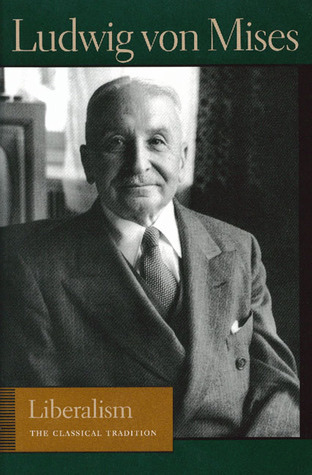
 Liberalism: The Classical Tradition
Quotes from the Book
All rational action is in the first place individual action. Only the individual thinks. Only the individual reasons. Only the individual acts.
The average man is both better informed and less corruptible in the decisions he makes as a consumer than as a voter at political elections.
Since its appearance the view that prostitution is a product of capitalism has gained ground enormously. And as, in addition, preachers still complain that the good old morals have decayed, and accuse modern culture of having led to loose living, everyone is convinced that all sexual wrongs represent a symptom of decadence peculiar to our age.
All rational action is economic. All economic activity is rational action. All rational action is in the first place individual action. Only the individual thinks. Only the individual reasons. Only the individual acts.
Wherever Europeans or the descendants of European emigrants live, we see Socialism at work to-day; and in Asia it is the banner round which the antagonists of European civilization gather. If the intellectual dominance of Socialism remains unshaken, then in a short time the whole co-operative system of culture which Europe has built up during thousands of years will be shattered. For a socialist order of society is unrealizable. All efforts to realize Socialism lead only to the destruction of society. Factories, mines, and railways will come to a standstill, towns will be deserted. The population of the industrial territories will die out or migrate elsewhere. The farmer will return to the self-sufficiency of the closed, domestic economy. Without private ownership in the means of production there is, in the long run, no production other than a hand-to-mouth production for one's own needs.
True, a socialistic society could see that 1000 litres of wine were better than 800 litres. It could decide whether or not 1000 litres of wine were to be preferred to 500 litres of oil. Such a decision would involve no calculation. The will of some man would decide. But the real business of economic administration, the adaptation of means to ends only begins when such a decision is taken. And only economic calculation makes this adaptation possible. Without such assistance, in the bewildering chaos of alternative materials and processes the human mind would be at a complete loss. Whenever we had to decide between different processes or different centres of production, we would be entirely at sea.
Adept as he was in the Hegelian dialectic — a system easy of abuse by those who seek to dominate thought by arbitrary flights of fancy and metaphysical verbosity — he was not slow in finding a way out of the dilemma in which socialists found themselves.
It suffices here to say that the planned economy which the advocates of dictatorship wish to set up is precisely as socialistic as the Socialism propagated by the self-styled Social Democrats.
When we call a capitalist society a consumers' democracy we mean that the power to dispose of the means of production, which belongs to the entrepreneurs and capitalists, can only be acquired by means of the consumers' ballot, held daily in the market-place.
Though the man of action, the politician, may sometimes pay no attention to the results of this examination, the man of thought will never cease to inquire into all things accessible to human intelligence. And in the long run thought must determine action.
Logic and reasoning, which might show the absurdity of such dreams of bliss and revenge, are to be thrust aside.
Socialism is the expression of the principle of violence crying from the workers' soul, just as Imperialism is the principle of violence speaking from the soul of the official and the soldier.
Professor Harold Laski declared that the attainment of power by the British Labour Party in the normal parliamentary fashion must result in a radical transformation of parliamentary government. A socialist administration needs ‘guarantees’ that its work of transformation would not be ‘disrupted’ by repeal in event of its defeat at the polls. Therefore the suspension of the Constitution is ‘inevitable’.
It is more fun to listen to the radio speeches of a dictator than to study economic treatises. The entrepreneurs and technologists who pave the way for economic improvement work in seclusion; their work is not suitable to be visualized on the screen. But the dictators, intent upon spreading death and destruction, are spectacularly in sight of the public. Dressed in military garb they eclipse in the eyes of the movie-goers the colourless bourgeois in plain clothes. The problems of society's economic organization are not suitable for light talk at fashionable cocktail parties. Neither can they be dealt with adequately by demagogues haranguing mass assemblies. They are serious things. They require painstaking study. They must not be taken lightly.
The nationalist, too, affirms Socialism, and objects only to its Internationalism. He wishes to combine Socialism with the ideas of Imperialism and the struggle against foreign nations. He is a national, not an international socialist; but he, also, approves of the essential principles of Socialism.
The lord of production is the consumer
Peace builds, war destroys. Nations are fundamentally peaceful because they recognize the predominant utility of peace. They accept war only in self-defence; wars of aggression they do not desire. It is the princes who want war, because thus they hope to get money, goods, and power. It is the business of the nations to prevent them from achieving their desire by denying them the means necessary for making war.
If Capitalism improves the economic position all round, it is of secondary importance that it does not raise all to the same level. A social order is not bad simply because it helps one more than the other.
Watch on YouTube
About Ludwig von Mises
We have collected 77 quotes from 3 books by Ludwig von Mises on BookQuoters.
More about the author →More by Ludwig von Mises
Liberalism: The Classical Tradition
 Human Action: A Treatise on Economics
Book details
- Author
- Ludwig von Mises
- Genre
- History
- Goodreads rating
- 4.32 (1k ratings) →
Keep reading
 Capitalism, Socialism and Democracy
Human Action: A Treatise on Economics
Capitalism, Socialism and Democracy
Human Action: A Treatise on Economics
 Why Marx Was Right
 The Road to Serfdom
Liberalism: The Classical Tradition
The Road to Serfdom
Liberalism: The Classical Tradition
 Capitalism: The Unknown Ideal
 Socialism: Utopian and Scientific
 Chomsky On Anarchism
 One-Dimensional Man: Studies in the Ideology of Advanced Industrial Society
 Capitalism and Freedom
 The Communist Manifesto
 The Constitution of Liberty
 Capital
 The Great Transformation: The Political and Economic Origins of Our Time
 The Fatal Conceit: The Errors of Socialism
 The Iron Heel
 First As Tragedy, Then As Farce
 The Revolution Betrayed
 Marx: A Very Short Introduction
 Blackshirts and Reds: Rational Fascism and the Overthrow of Communism
 Socialism Is Dead! Long Live Socialism!: The Marx Code—Socialism with a Human Face: A New World Order
 The Machiavellians: Defenders of Freedom
 Ill Fares the Land
 The End of History and the Last Man
 In Praise of Idleness and Other Essays
 An Inquiry into the Nature and Causes of the Wealth of Nations
 Economics in One Lesson
 Talking to My Daughter About the Economy: or, How Capitalism Works—and How It Fails
 Reflections on the Revolution in France
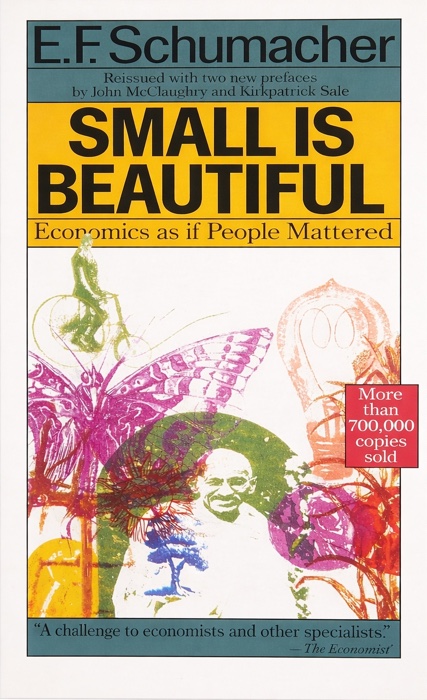 Small Is Beautiful: Economics as if People Mattered
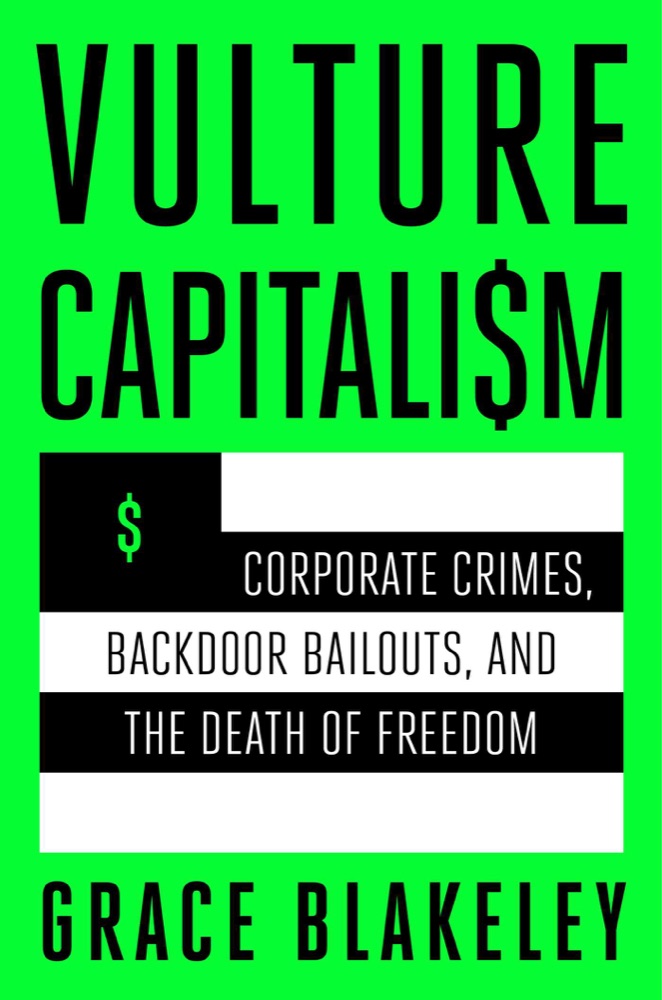 Vulture Capitalism: Corporate Crimes, Backdoor Bailouts, and the Death of Freedom
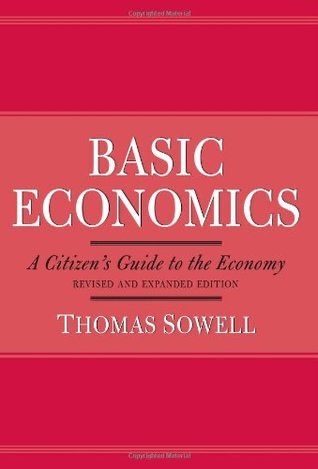 Basic Economics: A Citizen's Guide to the Economy
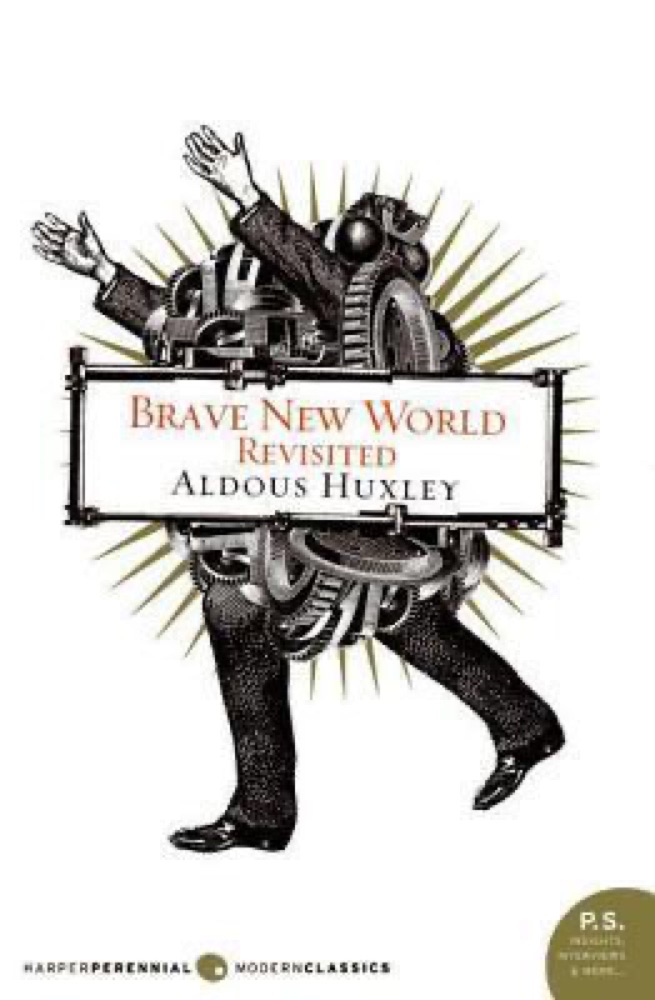 Brave New World Revisited
 Economic & Philosophic Manuscripts of 1844
 The Myth of the Rational Voter: Why Democracies Choose Bad Policies
 Quotations from Chairman Mao Tsetung
 Democracy in America
 23 Things They Don't Tell You About Capitalism
 The Utopia of Rules: On Technology, Stupidity, and the Secret Joys of Bureaucracy
 Four Futures: Life After Capitalism
 Political Theology: Four Chapters on the Concept of Sovereignty
 Conspirators' Hierarchy: The Story of the Committee of 300
 The Evolution of Everything: How New Ideas Emerge
 Seeing Like a State: How Certain Schemes to Improve the Human Condition Have Failed
 The Shock Doctrine: The Rise of Disaster Capitalism
 Occupy
 Imperialism: The Highest Stage of Capitalism
 Anarchy, State, and Utopia
 What Kind of Creatures Are We?
 Behold a Pale Horse
 The Soul of Man Under Socialism
 Free to Choose: A Personal Statement
 The Protestant Ethic and the Spirit of Capitalism
 The System: Who Rigged It, How We Fix It
 A Conflict of Visions: Ideological Origins of Political Struggles
 The Right to Be Lazy
 Politics
 Capitalist Realism: Is There No Alternative?
 Rights of Man
 Endgame, Vol. 1: The Problem of Civilization