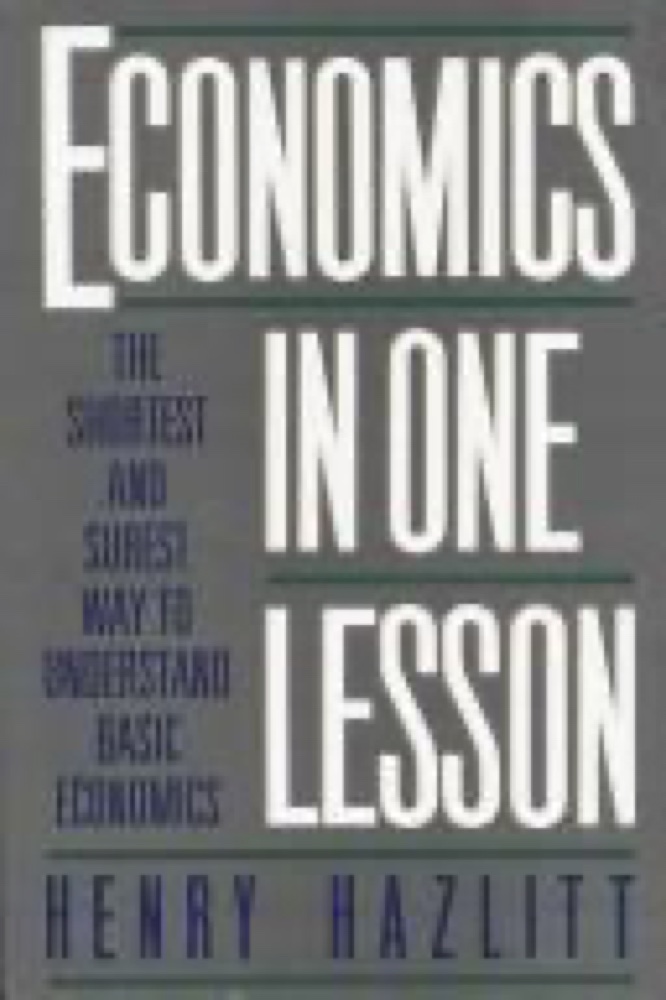
 Basic Economics: A Citizen's Guide to the Economy
Quotes from the Book
When Alexander the Great visited the philosopher Diogenes and asked whether he could do anything for him, Diogenes is said to have replied: ‘Yes, stand a little less between me and the sun.’ It is what every citizen is entitled to ask of his government.
Practically all government attempts to redistribute wealth and income tend to smother productive incentives and lead toward general impoverishment. It is the proper sphere of government to create and enforce a framework of law that prohibits force and fraud. But it must refrain from specific economic interventions. Government's main economic function is to encourage and preserve a free market. When Alexander the Great visited the philosopher Diogenes and asked whether he could do anything for him, Diogenes is said to have replied: "Yes, stand a little less between me and the sun." It is what every citizen is entitled to ask of his government.
This is perhaps as good a place as any to point out that what distinguishes many reformers from those who cannot accept their proposals is not their greater philanthropy, but their greater impatience. The question is not whether we wish to see everybody as well off as possible. Among men of good will such an aim can be taken for granted. The real question concerns the proper means of achieving it. And in trying to answer this we must never lose sight of a few elementary truisms. We cannot distribute more wealth than is created. We cannot in the long run pay labor as a whole more than it produces.
There are men regarded today as brilliant economists, who deprecate saving and recommend squandering on a national scale as the way of economic salvation; and when anyone points to what the consequences of these policies will be in the long run, they reply flippantly, as might the prodigal son of a warning father: "In the long run we are all dead." And such shallow wisecracks pass as devastating epigrams and the ripest wisdom.
..either immediately or ultimately every dollar of government spending must be raised through a dollar of taxation. Once we look at the matter. In this way, the supposed miracles of government spending will appear in another light.
Everything we get, outside of the free gifts of nature, must in some way be paid for. The world is full of so- called economists who in turn are full of schemes for getting something for nothing. They tell us that the government can spend and spend without taxing at all; that it can continue to pile up debt without ever paying it off, because "we owe it to ourselves.
ECONOMICS IS HAUNTED by more fallacies than any other study known to man. This is no accident. The inherent difficulties of the subject would be great enough in any case, but they are multiplied a thousandfold by a factor that is insignificant in, say, physics, mathematics or medicine—the special pleading of selfish interests.
the larger the percentage of the national income taken by taxes the greater the deterrent to private production and employment. When the total tax burden grows beyond a bearable size, the problem of devising taxes that will not discourage and disrupt production becomes insoluble.
There is a strange idea abroad, held by all monetary cranks, that credit is something a banker gives to a man. Credit, on the contrary, is something a man already has. He has it, perhaps, because he already has marketable assets of a greater cash value than the loan for which he is asking. Or he has it because his character and past record have earned it. He brings it into the bank with him. That is why the banker makes him the loan. The banker is not giving something for nothing.
In an exchange economy everybody’s money income is somebody else’s cost. Every increase in hourly wages, unless or until compensated by an equal increase in hourly productivity, is an increase in costs of production. An increase in costs of production, where the government controls prices and forbids any price increase, takes the profit from marginal producers, forces them out of business, means a shrinkage in production and a growth in unemployment. Even where a price increase is possible, the higher price discourages buyers, shrinks the market, and also leads to unemployment. If a 30 percent increase in hourly wages all around the circle forces a 30 percent increase in prices, labor can buy no more of the product than it could at the beginning; and the merry-go-round must start all over again.
For every dollar that is spent on the (boondoggle) bridge a dollar will be taken away from taxpayers. If the bridge costs $1,000,000 the taxpayers will lose $1,000, 000. They will have that much taken away from them which they would otherwise have spent on the things they needed most.
all loans, in the eyes of honest borrowers, must eventually he repaid. All credit is debt. Proposals for an increased volume of credit, therefore, are merely another name for proposals for an increased burden of debt. They would seem considerably less inviting if they were habitually referred to by the second name instead of by the first.
private loans will utilize existing resources and capital far better than government loans. Government loans will waste far more capital and resources than private loans. Government loans, in short, as compared with private loans, will reduce production, not increase it.
The ideas which now pass for brilliant innovations and advances are in fact mere revivals of ancient errors, and a further proof of the dictum that those who are ignorant of the past are condemned to repeat it.
Necessary policemen, firemen, street cleaners, health officers, judges, legislators and executives perform productive services as important as those of anyone in private industry. They make it possible for private industry to function in an atmosphere of law, order, freedom and peace. But their justification consists in the utility of their services. It does not consist in the "purchasing power" they possess by virtue of being on the public payroll.
The notion that we can dismiss the views of all previous thinkers surely leaves no basis for the hope that our own work will prove of any value to others.
You cannot make a man worth a given amount by making it illegal for anyone to offer him anything less. You merely deprive him of the right to earn the amount that his abilities and situation would permit him to earn, while you deprive the community even of the moderate services that he is capable of rendering. In brief, for a low wage you substitute unemployment. You do harm all around, with no comparable compensation.
It is significant that while there is a word "profiteer" to stigmatize those who make allegedly excessive profits, there is no such word as "wageer" - or "losseer.
The bad economist sees only what immediately strikes the eye; the good economist also looks beyond. The bad economist sees only the direct consequences of a proposed course; the good economist looks also at the longer and indirect consequences. The bad economist sees only what the effect of a given policy has been or will be on one particular group; the good economist inquires also what the effect of the policy will be on all groups.
What is put into the hands of B cannot be put into the hands of A.
Economics is haunted by more fallacies than any other study known to man. This is no accident. The inherent difficulties of the subject would be great enough in any case, but they are multiplied a thousandfold by a factor that is insignificant in, say, physics, mathematics or medicine - the special pleading of selfish interests. While every group has certain economic interests identical with those of all groups, every group has also, as we shall see, interests antagonistic to those of all other groups. While certain public policies would in the long run benefit everybody, other policies would benefit one group only at the expense of all other groups. The group that would benefit by such policies, having such a direct interest in them, will argue for them plausibly and persistently. It will hire the best buyable minds to devote their whole time to presenting its case. And it will finally either convince the general public that its case is sound, or so befuddle it that clear thinking on the subject becomes next to impossible. In addition to these endless pleadings of self-interest, there is a second main factor that spawns new economic fallacies every day. This is the persistent tendency of man to see only the immediate effects of a given policy, or its effects only on a special group, and to neglect to inquire what the long-run effects of that policy will be not only on that special group but on all groups. It is the fallacy of overlooking secondary consequences.
The function of profits, finally, is to put constant and unremitting pressure on the head of every competitive business to introduce further economies and efficiencies, no matter to what stage these may already have been brought.
Contrary to a popular impression, profits are achieved not by raising prices, but by introducing economies and efficiencies that cut costs of production.
Real wealth, of course, consists in what is produced and consumed: the food we eat, the clothes we wear, the houses we live in.
Today is already the tomorrow which the bad economist yesterday urged us to ignore.
Everything we get, outside of the free gifts of nature, must in some way be paid for.
the belief that public works necessarily create new jobs is false. If the money was raised by taxation, we saw, then for every dollar that the government spent on public works one less dollar was spent by the taxpayers to meet their own wants, and for every public job created one private job was destroyed.
when personal incomes are taxed 50, 60 or 70 percent. People begin to ask themselves why they should work six, eight or nine months of the entire year for the government, and only six, four or three months for themselves and their families. If they lose the whole dollar when they lose, but can keep only a fraction of it when they win, they decide that it is foolish to take risks with their capital.
The first thing that happens, for example, when a law is passed that no one shall be paid less than $106 for a forty-hour week is that no one who is not worth $106 a week to an employer will be employed at all. You cannot make a man worth a given amount by making it illegal for anyone to offer him anything less. You merely deprive him of the right to earn the amount that his abilities and situation would permit him to earn, while you deprive the community even of the moderate services that he is capable of rendering. In brief, for a low wage you substitute unemployment. You do harm all around, with no comparable compensation.
need is not demand. Effective economic demand requires not merely need but corresponding purchasing power.
A little philosophy inclineth men’s minds to atheism, but depth in philosophy bringeth men’s minds about to religion.
4
Mere inflation-that is, the mere issuance of more money, with the consequence of higher wages and prices-may look like the creation of more demand. But in terms of the actual production and exchange of real things it is not.
4
(1) he will use the extra profits to expand his operations by buying more machines to make more coats; or (2) he will invest the extra profits in some other industry; or (3) he will spend the extra profits on increasing his own consumption. Whichever of these three courses he takes, he will increase employment.
3
Here we shall have to say simply that all government expenditures must eventually be paid out of the proceeds of taxation; that inflation itself is merely a form, and a particularly vicious form, of taxation.
3
There is an excellent short book (126 pages) by Faustino Ballvè, Essentials of Economics (Irvington-on-Hudson, N.Y.: Foundation for Economic Education), which briefly summarizes principles and policies. A book that does that at somewhat greater length (327 pages) is Understanding the Dollar Crisis by Percy L. Greaves (Belmont, Mass.: Western Islands, 1973). Bettina Bien Greaves has assembled two volumes of readings on Free Market Economics (Foundation for Economic Education). The reader who aims at a thorough understanding, and feels prepared for it, should next read Human Action by Ludwig von Mises (Chicago: Contemporary Books, 1949, 1966, 907 pages). This book extended the logical unity and precision of economics beyond that of any previous work. A two-volume work written thirteen years after Human Action by a student of Mises is Murray N. Rothbard’s Man, Economy, and State (Mission, Kan.: Sheed, Andrews and McMeel, 1962, 987 pages). This contains much original and penetrating material; its exposition is admirably lucid; and its arrangement makes it in some respects more suitable for textbook use than Mises’ great work. Short books that discuss special economic subjects in a simple way are Planning for Freedom by Ludwig von Mises (South Holland, 111.: Libertarian Press, 1952), and Capitalism and Freedom by Milton Friedman (Chicago: University of Chicago Press, 1962). There is an excellent pamphlet by Murray N. Rothbard, What Has Government Done to Our Money? (Santa Ana, Calif.: Rampart College, 1964, 1974, 62 pages). On the urgent subject of inflation, a book by the present author has recently been published, The Inflation Crisis, and How to Resolve It (New Rochelle, N.Y.: Arlington House, 1978). Among recent works which discuss current ideologies and developments from a point of view similar to that of this volume are the present author’s The Failure of the “New Economics”: An Analysis of the Keynesian Fallacies (Arlington House, 1959); F. A. Hayek, The Road to Serfdom (1945) and the same author’s monumental Constitution of Liberty (Chicago: University of Chicago Press, 1960). Ludwig von Mises’ Socialism: An Economic and Sociological Analysis (London: Jonathan Cape, 1936, 1969) is the most thorough and devastating critique of collectivistic doctrines ever written. The reader should not overlook, of course, Frederic Bastiat’s Economic Sophisms (ca. 1844), and particularly his essay on “What Is Seen and What Is Not Seen.” Those who are interested in working through the economic classics might find it most profitable to do this in the reverse of their historical order. Presented in this order, the chief works to be consulted, with the dates of their first editions, are: Philip Wicksteed, The Common Sense of Political Economy, 1911; John Bates Clark, The Distribution of Wealth, 1899; Eugen von Böhm-Bawerk, The Positive Theory of Capital, 1888; Karl Menger, Principles of Economics, 1871; W. Stanley Jevons, The Theory of Political Economy, 1871; John Stuart Mill, Principles of Political Economy, 1848; David Ricardo, Principles of Political Economy and Taxation, 1817; and Adam Smith, The Wealth of Nations, 1776.
2
people are becoming aware that government has nothing to give them without first taking it away from somebody else—or from themselves. Increased handouts to selected groups mean merely increased taxes, or increased deficits and increased inflation.
2
Watch on YouTube
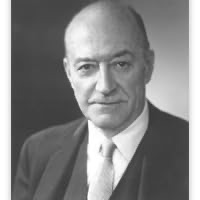
About Henry Hazlitt
We have collected 36 quotes from 1 book by Henry Hazlitt on BookQuoters.
More about the author →About the book
A million copy seller, Henry Hazlitt’s Economics in One Lesson is a classic economic primer. But it is also much more, having become a fundamental influence on modern “libertarian” economics of the type espoused by Ron Paul and others.Considered among the leading economic thinkers of the “Austrian School,” which includes Carl Menger, Ludwig von Mises, Friedrich (F.A.) Hayek, and others, Henry Hazlitt (1894-1993), was a libertarian philosopher, an economist, and a journalist. He was the founding vice-president of the Foundation for Economic Education and an early editor of The Freeman magazine, an influential libertarian publication. Hazlitt wrote Economics in One Lesson, his seminal work, in 1946. Concise and instructive, it is also deceptively prescient and far-reaching in its efforts to dissemble economic fallacies that are so prevalent they have almost become a new orthodoxy.Many cur
Book details
- First published
- 1946
- Author
- Henry Hazlitt
- Genre
- Nonfiction
- Goodreads rating
- 4.16 (22k ratings)
Keep reading
Basic Economics: A Citizen's Guide to the Economy
 Naked Economics: Undressing the Dismal Science
 23 Things They Don't Tell You About Capitalism
 Human Action: A Treatise on Economics
 An Inquiry into the Nature and Causes of the Wealth of Nations
 Talking to My Daughter About the Economy: or, How Capitalism Works—and How It Fails
 Free to Choose: A Personal Statement
 The Creature from Jekyll Island: A Second Look at the Federal Reserve
 The General Theory of Employment, Interest, and Money
 Capitalism and Freedom
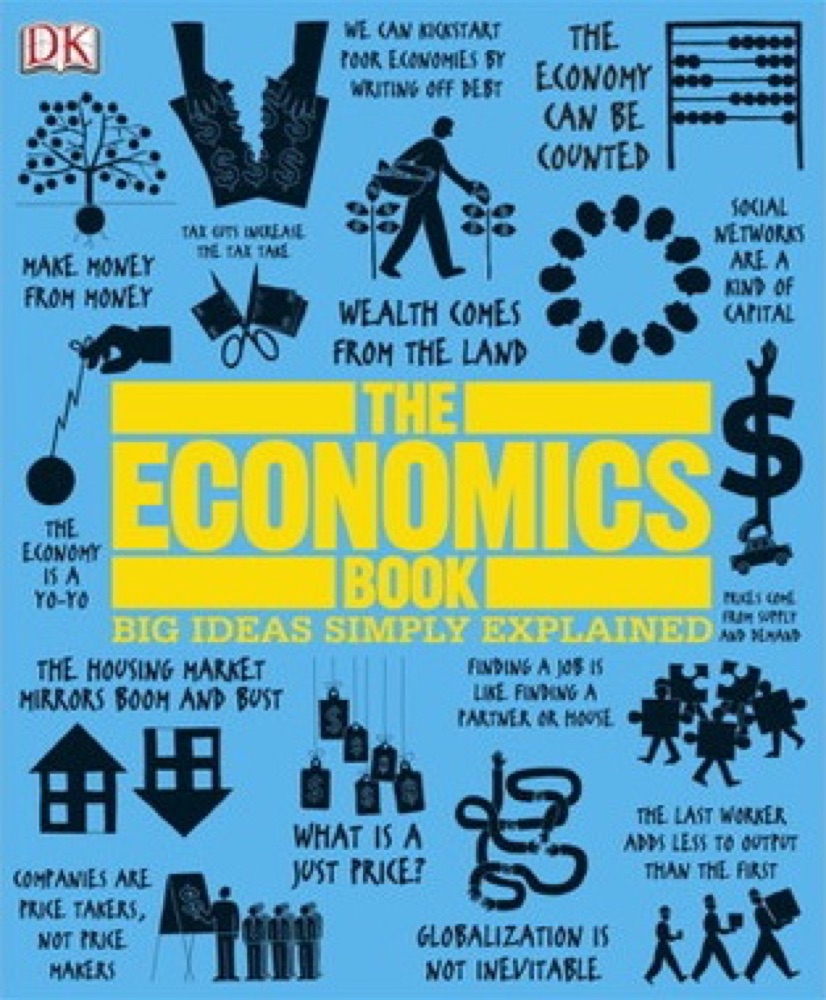 The Economics Book: Big Ideas Simply Explained
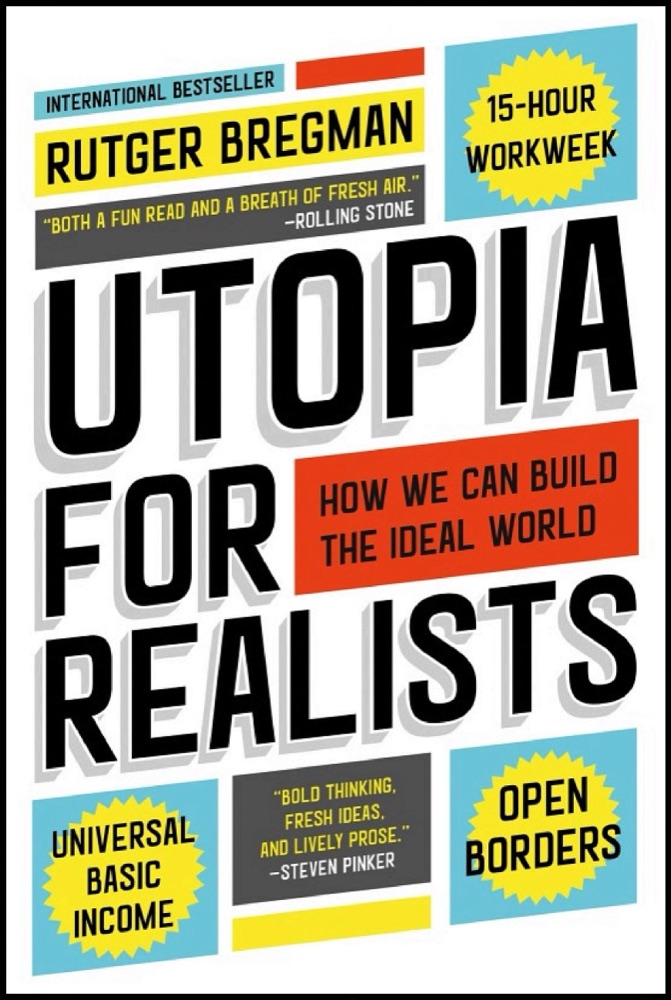 Utopia for Realists: How We Can Build the Ideal World
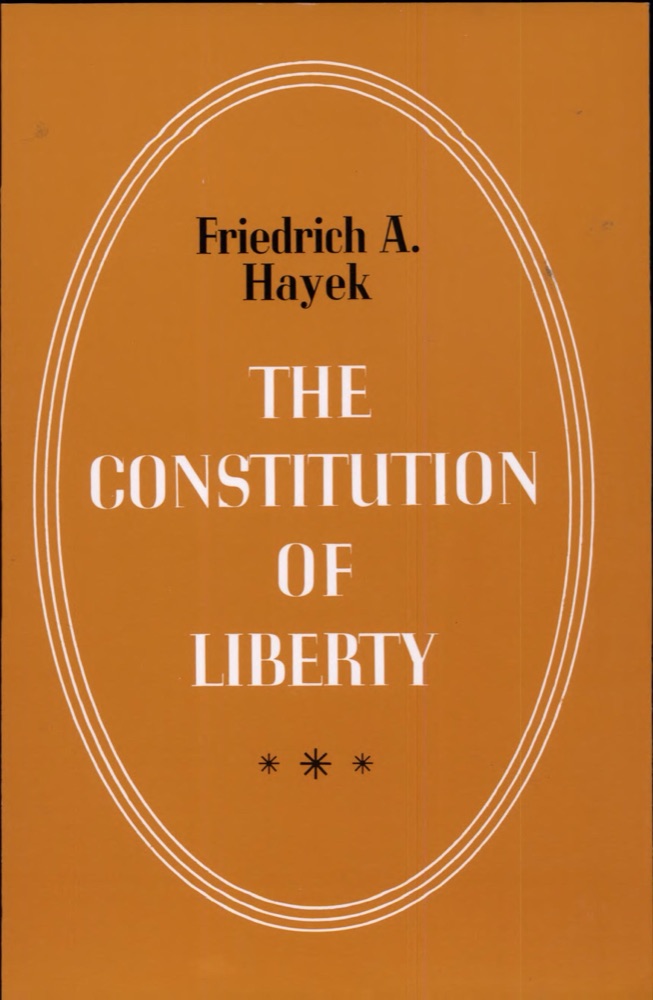 The Constitution of Liberty
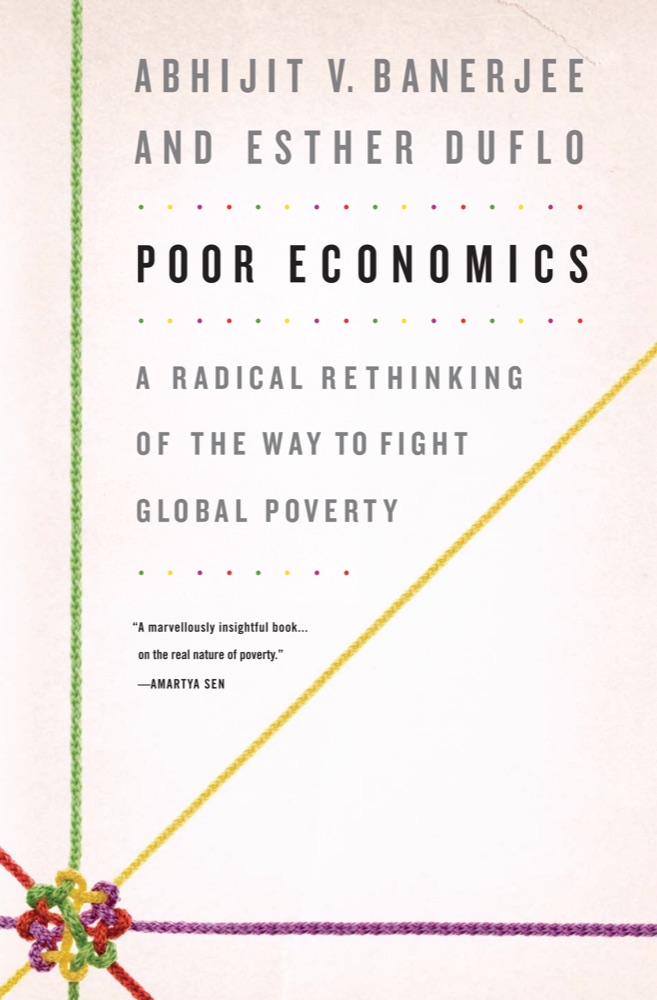 Poor Economics: A Radical Rethinking of the Way to Fight Global Poverty
 Debt: The First 5,000 Years
 Small Is Beautiful: Economics as if People Mattered
 Occupy
 The Myth of the Rational Voter: Why Democracies Choose Bad Policies
 Give People Money: The Simple Idea to Solve Inequality and Revolutionise Our Lives
 Capitalism, Socialism and Democracy
 Who Cooked Adam Smith's Dinner? A Story About Women and Economics
 Banker to the Poor: Micro-Lending and the Battle Against World Poverty
 SuperFreakonomics: Global Cooling, Patriotic Prostitutes And Why Suicide Bombers Should Buy Life Insurance
 Capital in the Twenty-First Century
 Capital
 Socialism: An Economic and Sociological Analysis
 First As Tragedy, Then As Farce
 Freakonomics: A Rogue Economist Explores the Hidden Side of Everything
 The Evolution of Everything: How New Ideas Emerge
 The Rational Optimist: How Prosperity Evolves
 The Great Transformation: The Political and Economic Origins of Our Time
 In Praise of Idleness and Other Essays
 The Road to Serfdom
 The Great Crash 1929
 Anarchy, State, and Utopia
 The System: Who Rigged It, How We Fix It
 Sex, Economy, Freedom, and Community: Eight Essays
 The Fatal Conceit: The Errors of Socialism
 Progress and Poverty
 The Snowball: Warren Buffett and the Business of Life
 Behold a Pale Horse
 Who Owns the Future?
 The Price of Tomorrow: Why Deflation is the Key to an Abundant Future
 The Bitcoin Standard: The Decentralized Alternative to Central Banking
 Ill Fares the Land
 Principles for Dealing with the Changing World Order: Why Nations Succeed and Fail
 Wage-Labour and Capital & Value, Price and Profit
 Sacred Economics: Money, Gift, and Society in the Age of Transition
 The World Is Flat: A Brief History of the Twenty-first Century
 Capitalism: The Unknown Ideal
 Wealth, Poverty and Politics: An International Perspective
 The View From Flyover Country: Essays by Sarah Kendzior
 Power Systems: Conversations on Global Democratic Uprisings and the New Challenges to U.S. Empire
 Four Futures: Life After Capitalism
 Justice: What's the Right Thing to Do?
 Confessions of an Economic Hit Man
 The Shock Doctrine: The Rise of Disaster Capitalism
 Rich Dad's Guide to Investing: What the Rich Invest in That the Poor and Middle Class Do Not!
 The Soul of Man Under Socialism
 Walkaway