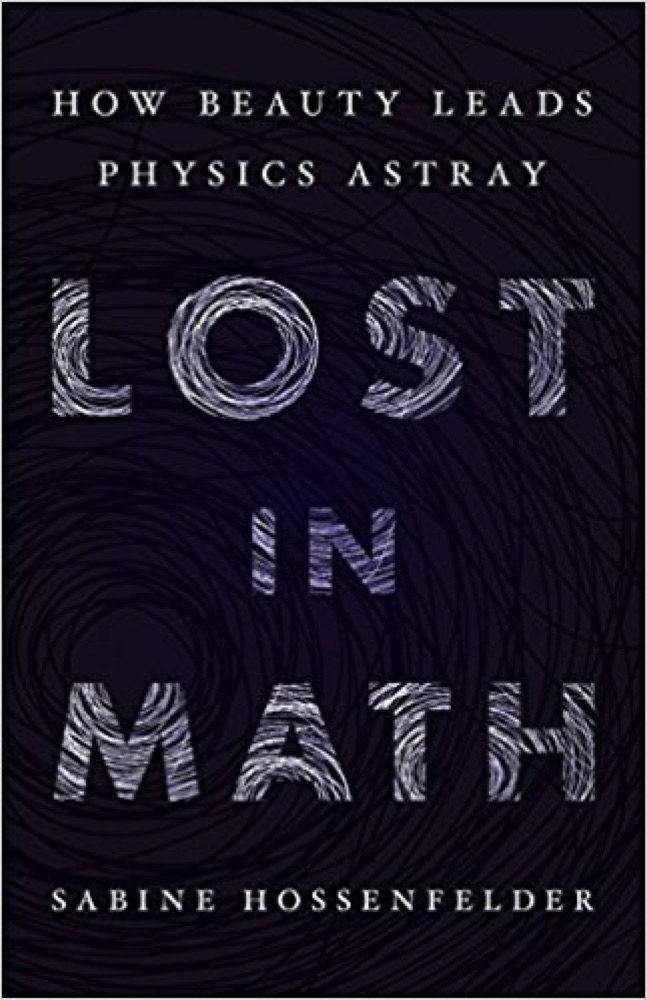

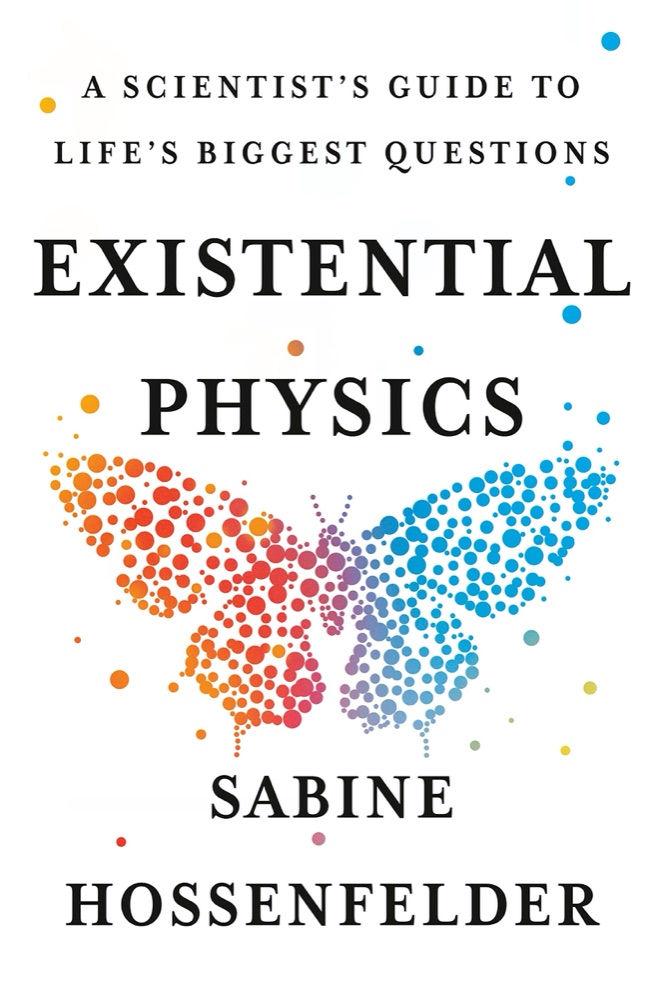
 Existential Physics: A Scientist's Guide to Life's Biggest Questions
Quotes from the Book
There are other reasons we use math in physics. Besides keeping us honest, math is also the most economical and unambiguous terminology that we know of. Language is malleable; it depends on context and interpretation. But math doesn’t care about culture or history. If a thousand people read a book, they read a thousand different books. But if a thousand people read an equation, they read the same equation.
15
For the most part, physicists and mathematicians have settled on a fine division of labour in which the former complain about the finickiness of the latter, and the latter complain about the sloppiness of the former.
10
It took twenty-five years from the prediction of the neutrino to its detection, almost fifty years to confirm the Higgs boson, a hundred years to directly detect gravitational waves. Now the time it takes to test a new fundamental law of nature can be longer than a scientist’s full career. This forces theorists to draw upon criteria other than empirical adequacy to decide which research avenues to pursue. Aesthetic appeal is one of them. In our search for new ideas, beauty plays many roles. It’s a guide, a reward, a motivation. It is also a systematic bias.
7
What failed physicists wasn’t their math; it was their choice of math. They believed that Mother Nature was elegant, simple, and kind about providing clues. They thought they could hear her whisper when they were talking to themselves. Now Nature spoke, and she said nothing, loud and clear.
2
If a thousand people read a book, they read a thousand different books. But if a thousand people read an equation, they read the same equation.
2
Theoretical physicists used to explain what was observed. Now they try to explain why they can't explain what was not observed
2
In physics, theories are made of math. We don’t use math because we want to scare away those not familiar with differential geometry and graded Lie algebras; we use it because we are fools. Math keeps us honest—it prevents us from lying to ourselves and to each other. You can be wrong with math, but you can’t lie.
2
The sense of beauty of a physical theory must be something hardwired in our brain and not a social construct. It is something that touches some internal chord. When you stumble on a beautiful theory you have the same emotional reaction that you feel in front of a piece of art.
2
When asked to judge the promise of a newly invented but untested theory, physicist draw on the concepts of naturalness simplicity or elegance and beauty. These hidden rules are ubiquitous in the foundations of physics. They are invaluable. And in utter conflic with the scientific mandate of objectivity.
1
if you quote this, you can be the first person to quote someone quoting someone quoting himself quoting someone
1
While I was in school I hated history, but since then I have come to recognize the usefulness of quoting dead people to support my convictions.
Data don’t come to us anymore—we have to know where to get them, and we can’t afford to search everywhere. Hence, the more difficult new experiments become, the more care theorists must take to not sleepwalk into a dead end while caught up in a beautiful dream.
The main reason we use math in physics, however, is because we can.
Their theories, they believe, are too good to not be true.
Arguments from beauty have failed us in the past, and I worry I am witnessing another failure right now. “So what?” you may say. “Hasn’t it always worked out in the end?” It has. But leaving aside that we could be further along had scientists not been distracted by beauty, physics has changed—and keeps on changing. In the past, we muddled through because data forced theoretical physicists to revise ill-conceived aesthetic ideals. But increasingly we first need theories to decide which experiments are most likely to reveal new phenomena, experiments that then take decades and billions of dollars to carry out. Data don’t come to us anymore—we have to know where to get them, and we can’t afford to search everywhere. Hence, the more difficult new experiments become, the more care theorists must take to not sleepwalk into a dead end while caught up in a beautiful dream. New demands require new methods. But which methods? I hope the philosophers have a plan.
After evidence forced him to give up the beautiful polyhedra, Kepler, in later life, became convinced that the planets play music along their paths. In his 1619 book Harmony of the World he derived the planet’s tunes and concluded that “the Earth sings Mi-Fa-Mi.” It wasn’t his best work. But Kepler’s analysis of the planetary orbits laid a basis for the later studies of Isaac Newton (1643–1727), the first scientist to rigorously use mathematics.
foundational physics, which is far from experimental test as science can be while still being science
More important is that besides these four families, there are five “exceptional” Lie groups, named G2, F4, E6, E7, and the largest one, E8. And it can be proved that these are all the simple Lie groups there are, period. To appreciate how bizarre this is, imagine you visit a website where you can order door signs with numbers: 1, 2, 3, 4, and so on, all the way up to infinity. Then you can also order an emu, an empty bottle, and the Eiffel Tower. That’s how awkwardly the exceptional Lie groups sit beside the orderly infinite families.
Watch on YouTube
About Sabine Hossenfelder
We have collected 39 quotes from 2 books by Sabine Hossenfelder on BookQuoters.
More about the author →More by Sabine Hossenfelder
Existential Physics: A Scientist's Guide to Life's Biggest Questions
About the book
A contrarian argues that modern physicists' obsession with beauty has given us wonderful math but bad science.
Whether pondering black holes or predicting discoveries at CERN, physicists believe the best theories are beautiful, natural, and elegant, and this standard separates popular theories from disposable ones. This is why, Sabine Hossenfelder argues, we have not seen a major breakthrough in the foundations of physics for more than four decades. The belief in beauty has become so dogmatic that it now conflicts with scientific objectivity: observation has been unable to confirm mindboggling theories, like supersymmetry or grand unification, invented by physicists based on aesthetic criteria. Worse, these "too good to not be true" theories are actually untestable and they have left the field in a cul-de-sac. To escape, physicists must rethink their methods. Only by embracing realit
Book details
- First published
- 2018
- Author
- Sabine Hossenfelder
- Genre
- Nonfiction
- Goodreads rating
- 4.05 (4k ratings)
Keep reading
 The Character of Physical Law
 Our Mathematical Universe: My Quest for the Ultimate Nature of Reality
 The Feynman Lectures on Physics
 From Eternity to Here: The Quest for the Ultimate Theory of Time
 The World According to Physics
Existential Physics: A Scientist's Guide to Life's Biggest Questions
The World According to Physics
Existential Physics: A Scientist's Guide to Life's Biggest Questions
 What Is Real?: The Unfinished Quest for the Meaning of Quantum Physics
 Helgoland: Making Sense of the Quantum Revolution
 The Particle at the End of the Universe: How the Hunt for the Higgs Boson Leads Us to the Edge of a New World
 Hyperspace
 The Grand Design
 QED: The Strange Theory of Light and Matter
 Chaos: Making a New Science
 Astrophysics for People in a Hurry
 Shape: The Hidden Geometry of Information, Biology, Strategy, Democracy, and EverythingElse
 A Briefer History of Time
 Against Method
 The Elegant Universe: Superstrings, Hidden Dimensions, and the Quest for the Ultimate Theory
 Six Easy Pieces: Essentials of Physics By Its Most Brilliant Teacher
 A Mathematician's Lament: How School Cheats Us Out of Our Most Fascinating and Imaginative Art Form
 The Accidental Universe: The World You Thought You Knew
 Black Holes and Baby Universes and Other Essays
 The Big Picture: On the Origins of Life, Meaning, and the Universe Itself
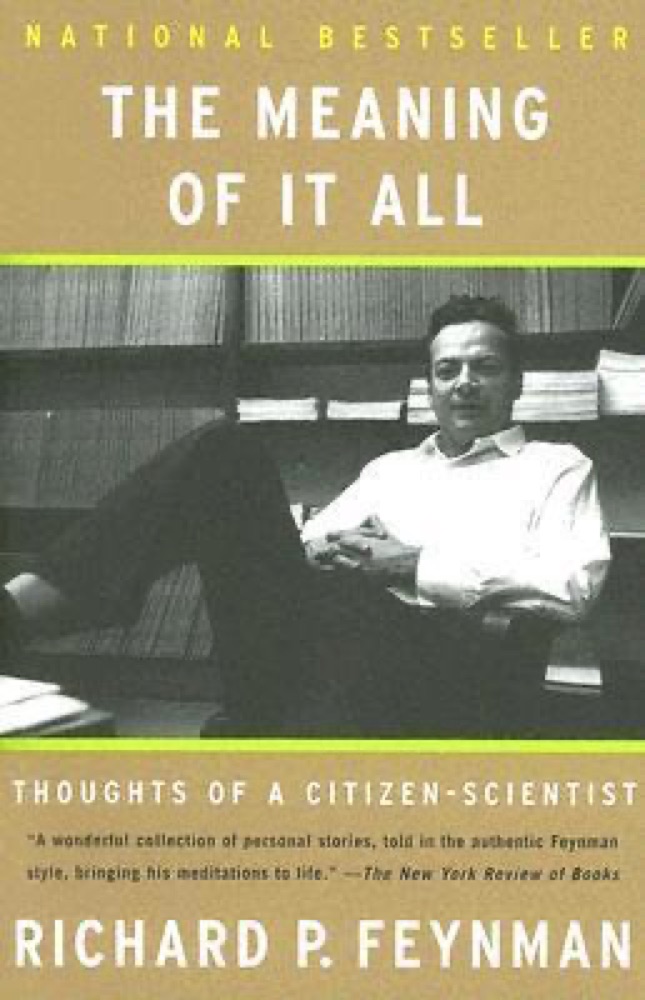 The Meaning of It All: Thoughts of a Citizen-Scientist
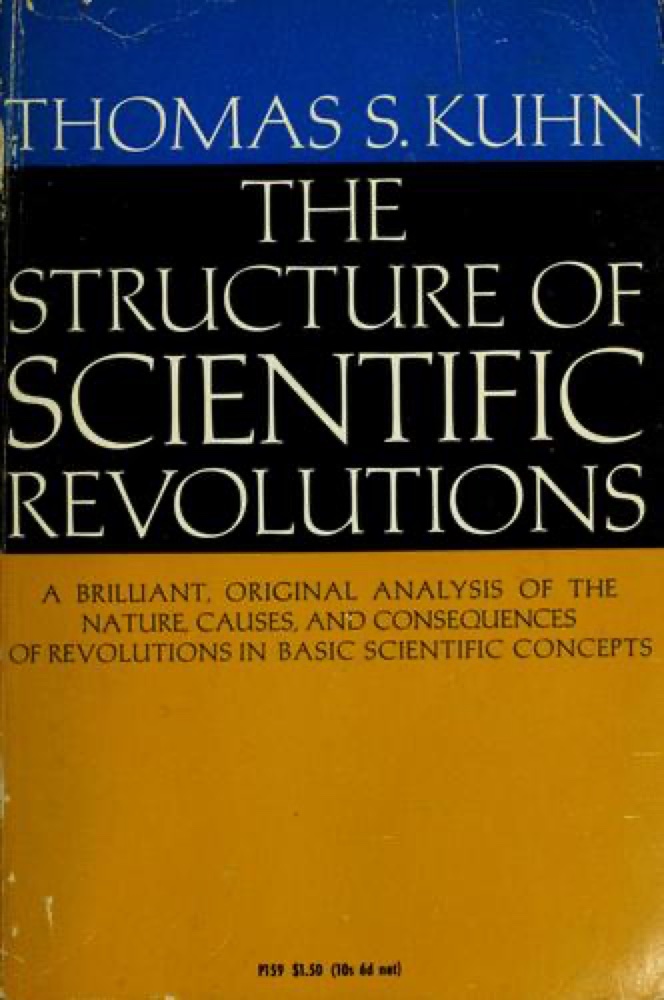 The Structure of Scientific Revolutions
 Genius: The Life and Science of Richard Feynman
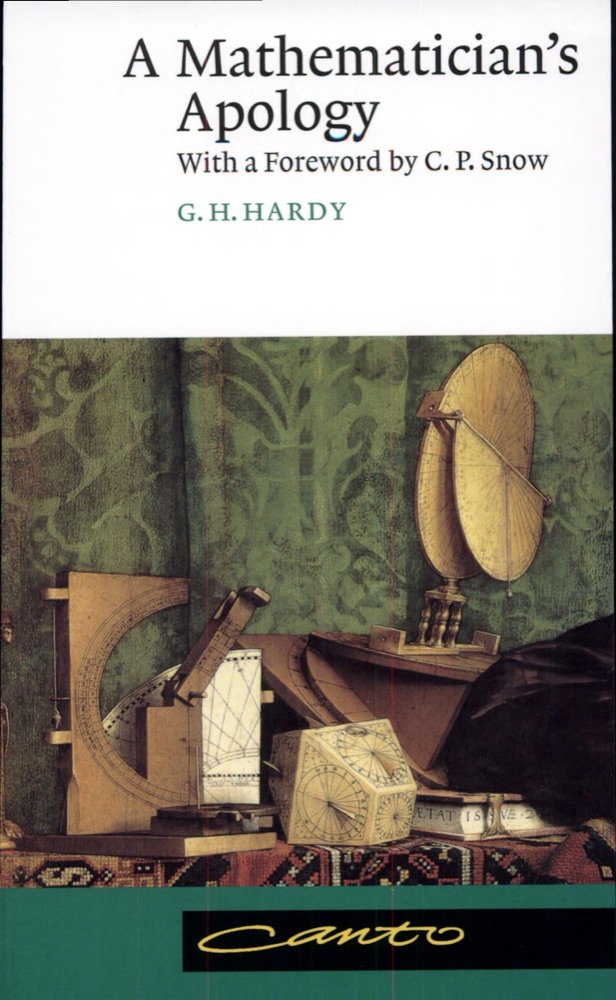 A Mathematician's Apology
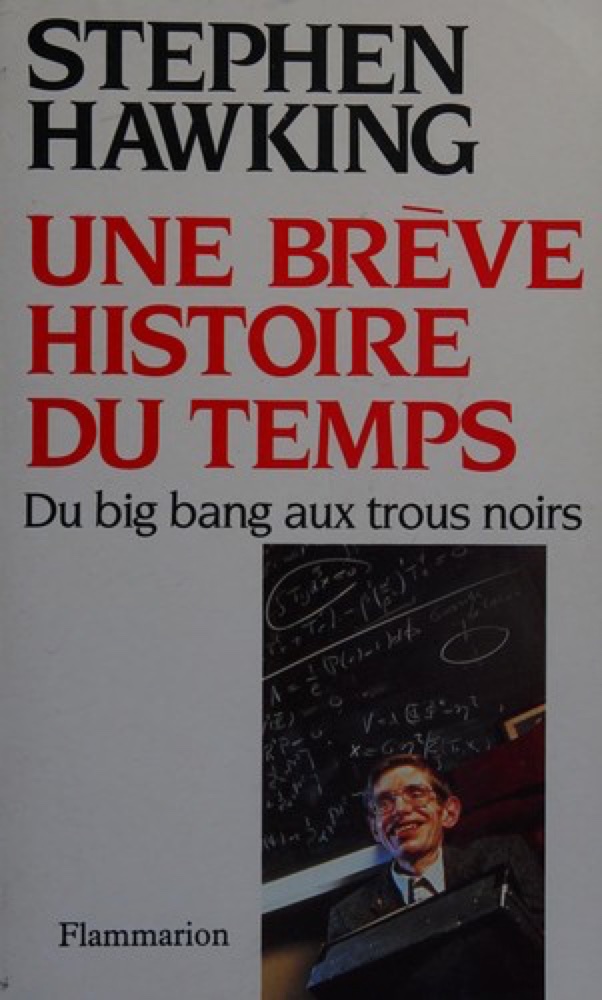 A Brief History of Time
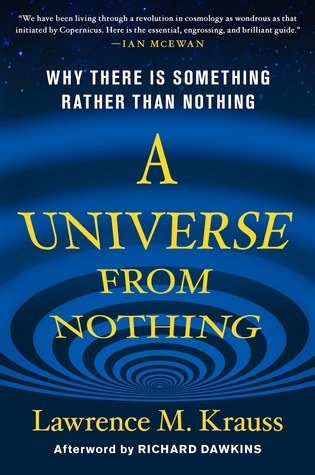 A Universe from Nothing: Why There Is Something Rather Than Nothing
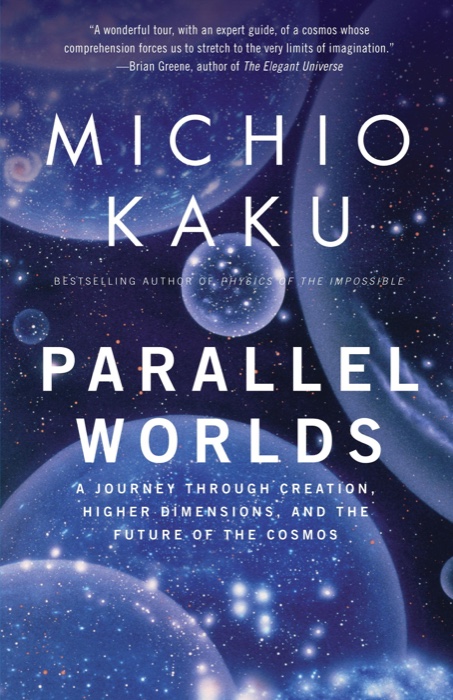 Parallel Worlds: A Journey Through Creation, Higher Dimensions, and the Future of the Cosmos
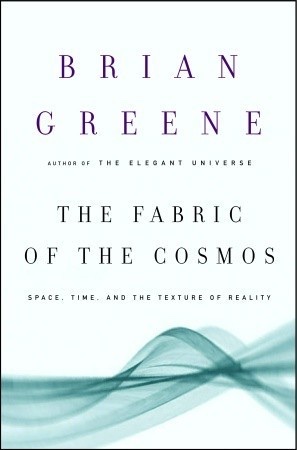 The Fabric of the Cosmos: Space, Time, and the Texture of Reality
 Gödel, Escher, Bach: An Eternal Golden Braid
 Metaphysics
 Humble Pi: A Comedy of Maths Errors
 The Case Against Reality: Why Evolution Hid the Truth from Our Eyes
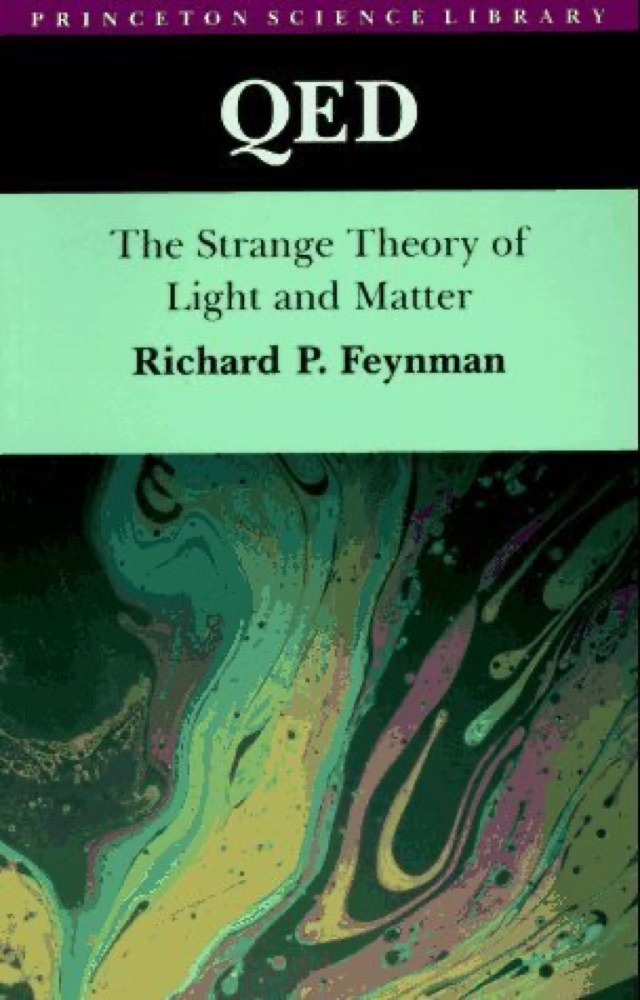 QED: The Strange Theory of Light and Matter
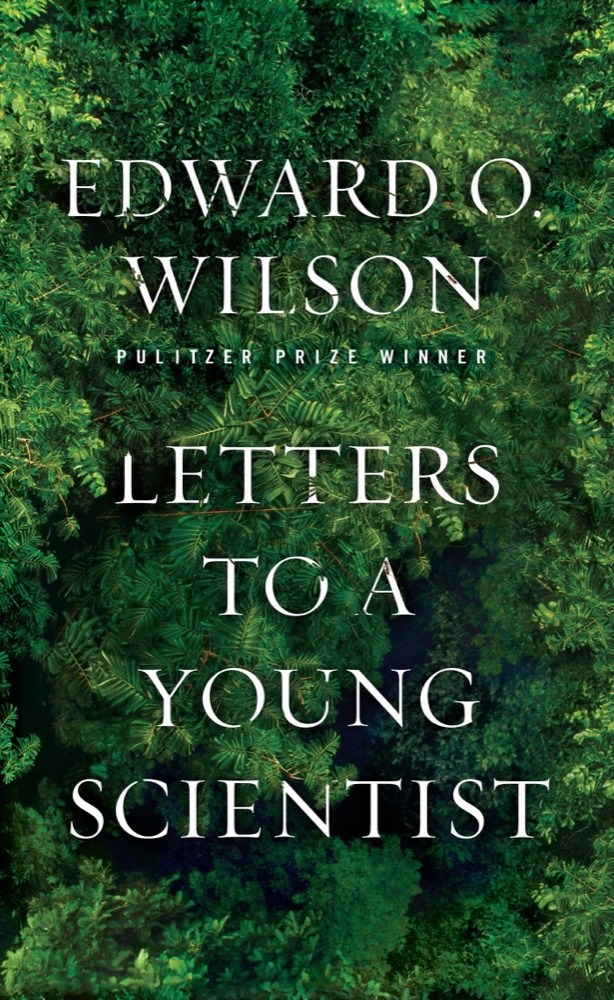 Letters to a Young Scientist
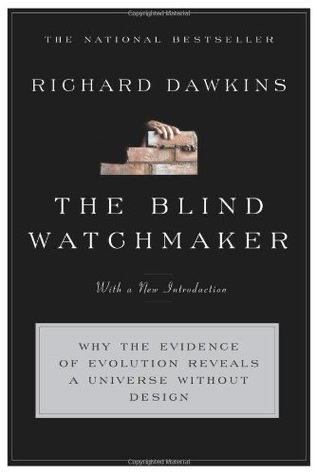 The Blind Watchmaker: Why the Evidence of Evolution Reveals a Universe Without Design
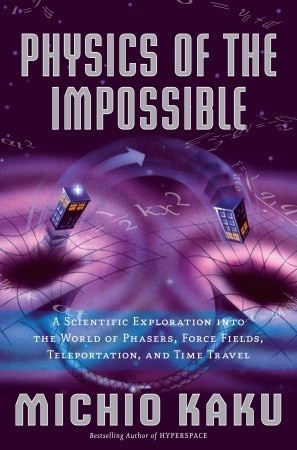 Physics of the Impossible: A Scientific Exploration Into the World of Phasers, Force Fields, Teleportation, and Time Travel
 The Road to Reality: A Complete Guide to the Laws of the Universe
 Death by Black Hole: And Other Cosmic Quandaries
 The Demon-Haunted World: Science as a Candle in the Dark
 The Black Hole War: My Battle with Stephen Hawking to Make the World Safe for Quantum Mechanics
 13 Things That Don't Make Sense: The Most Baffling Scientific Mysteries of Our Time
 The End of Time: The Next Revolution in Our Understanding of the Universe
 Why Does the World Exist?: An Existential Detective Story
 Math with Bad Drawings
 The Case for a Creator: A Journalist Investigates Scientific Evidence That Points Toward God
 The Universe in Your Hand: A Journey Through Space, Time, and Beyond
 The Ascent of Man
 The Golden Ratio: The Story of Phi, the World's Most Astonishing Number
 Three Roads To Quantum Gravity
 The Stuff of Thought: Language as a Window into Human Nature
 Consilience: The Unity of Knowledge
 Fermat's Enigma: The Epic Quest to Solve the World's Greatest Mathematical Problem
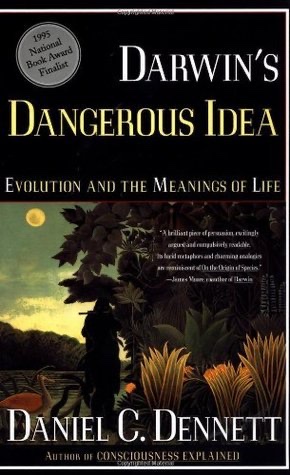 Darwin's Dangerous Idea: Evolution and the Meanings of Life
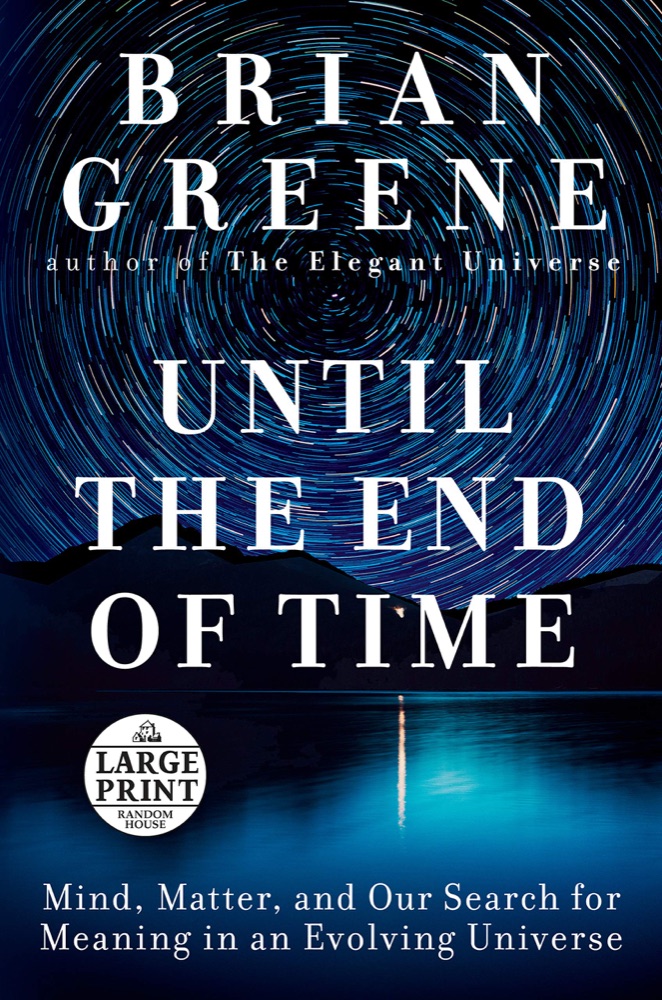 Until the End of Time: Mind, Matter, and Our Search for Meaning in an Evolving Universe
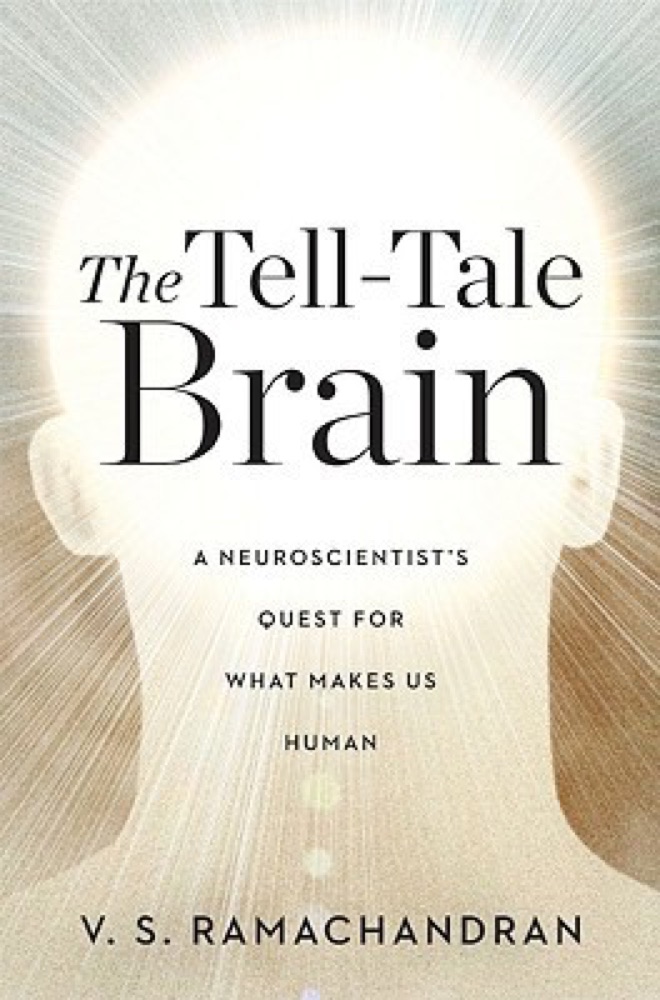 The Tell-Tale Brain: A Neuroscientist's Quest for What Makes Us Human