
 The Elegant Universe: Superstrings, Hidden Dimensions, and the Quest for the Ultimate Theory
Quotes from the Book
Cosmology is among the oldest subjects to captivate our species. And it’s no wonder. We’re storytellers, and what could be more grand than the story of creation?
Physicists have come to realize that mathematics, when used with sufficient care, is a proven pathway to truth.
You should never be surprised by or feel the need to explain why any physical system is in a high entropy state.
But, as Einstein once said, “For we convinced physicists, the distinction between past, present, and future is only an illusion, however persistent.”5
There is but one truly philosophical problem, and that is suicide,” the text began. I winced. “Whether or not the world has three dimensions or the mind nine or twelve categories,” it continued, “comes afterward”; such questions, the text explained, were part of the game humanity played, but they deserved attention only after the one true issue had been settled. The book was The Myth of Sisyphus and was written by the Algerian-born philosopher and Nobel laureate Albert Camus. After a moment, the iciness of his words melted under the light of comprehension. Yes, of course, I thought. You can ponder this or analyze that till the cows come home, but the real question is whether all your ponderings and analyses will convince you that life is worth living. That’s what it all comes down to. Everything else is detail.
The world of the everyday suddenly seemed nothing but an inverted magic act, lulling its audience into believing in the usual, familiar conceptions of space and time, while the astonishing truth of quantum reality lay carefully guarded by nature's sleights of hand.
Quantum mechanics challenges this view by revealing, at least in certain circumstances, a capacity to transcend space; long-range quantum connections can bypass spatial separation. Two objects can be far apart in space, but as far as quantum mechanics is concerned, it’s as if they’re a single entity.
Special relativity declares a similar law for all motion: the combined speed of any object’s motion through space and its motion through time is always precisely equal to the speed of light.
How, in looser language, does the part of the probability wave in Andromeda, and everywhere else, “know” to drop to zero simultaneously?19
The most extreme of those who hold this opinion would go as far as declaring that, indeed, when no one and no thing is “looking” at or interacting with the moon in any way, it is not there.
And since, according to the big bang theory, the bang is what is supposed to have happened at the beginning, the big bang leaves out the bang. It tells us nothing about what banged, why it banged, how it banged, or, frankly, whether it ever really banged at all.
thought of as it once was: intervening space,
the universe, according to quantum mechanics, participates in a game of chance.
Namely, each messenger particle is a string that’s executing a particular vibrational pattern. A photon is a string vibrating in one particular pattern, a W particle is a string vibrating in a different pattern, a gluon is a string vibrating in yet another pattern. And, of prime importance, what Schwarz and Scherk showed in 1974 is that there is a parti Table
After all, the reasoning goes, at the big bang everything emerged from one place since, we believe, all places we now think of as different were the same place way back in the beginning.
Watch on YouTube
About Brian Greene
We have collected 62 quotes from 3 books by Brian Greene on BookQuoters.
More about the author →More by Brian Greene
The Elegant Universe: Superstrings, Hidden Dimensions, and the Quest for the Ultimate Theory
 Until the End of Time: Mind, Matter, and Our Search for Meaning in an Evolving Universe
Book details
- Author
- Brian Greene
- Genre
- Nonfiction
- Goodreads rating
- 4.12 (41k ratings) →
Keep reading
The Elegant Universe: Superstrings, Hidden Dimensions, and the Quest for the Ultimate Theory
 Parallel Worlds: A Journey Through Creation, Higher Dimensions, and the Future of the Cosmos
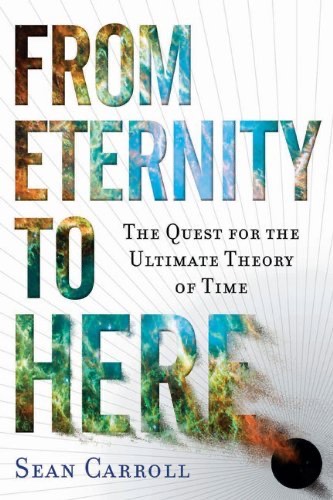 From Eternity to Here: The Quest for the Ultimate Theory of Time
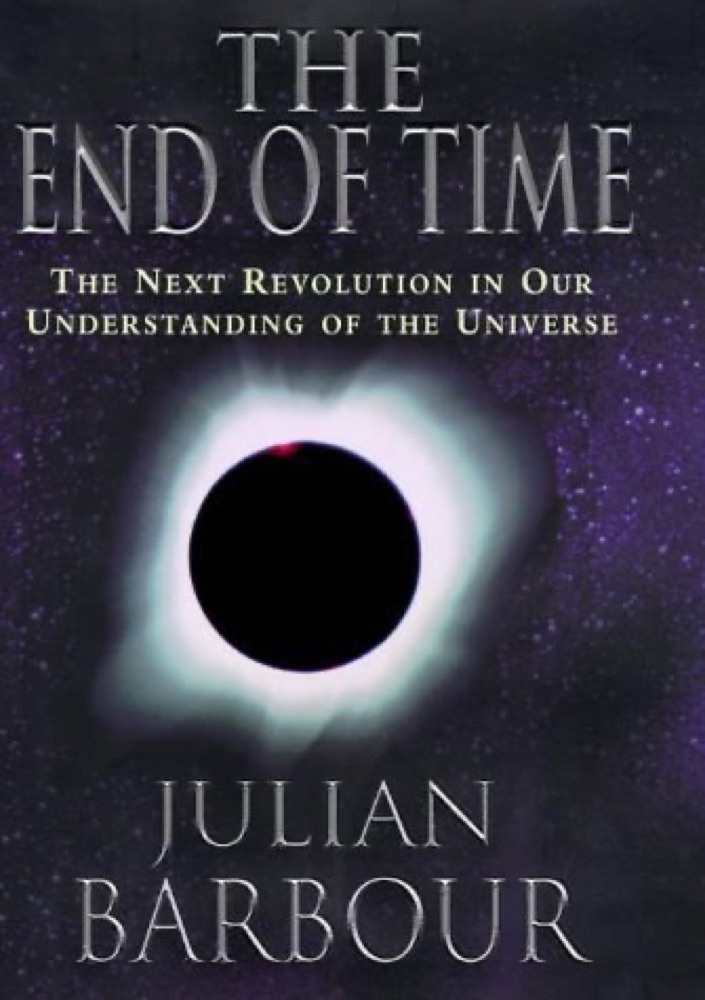 The End of Time: The Next Revolution in Our Understanding of the Universe
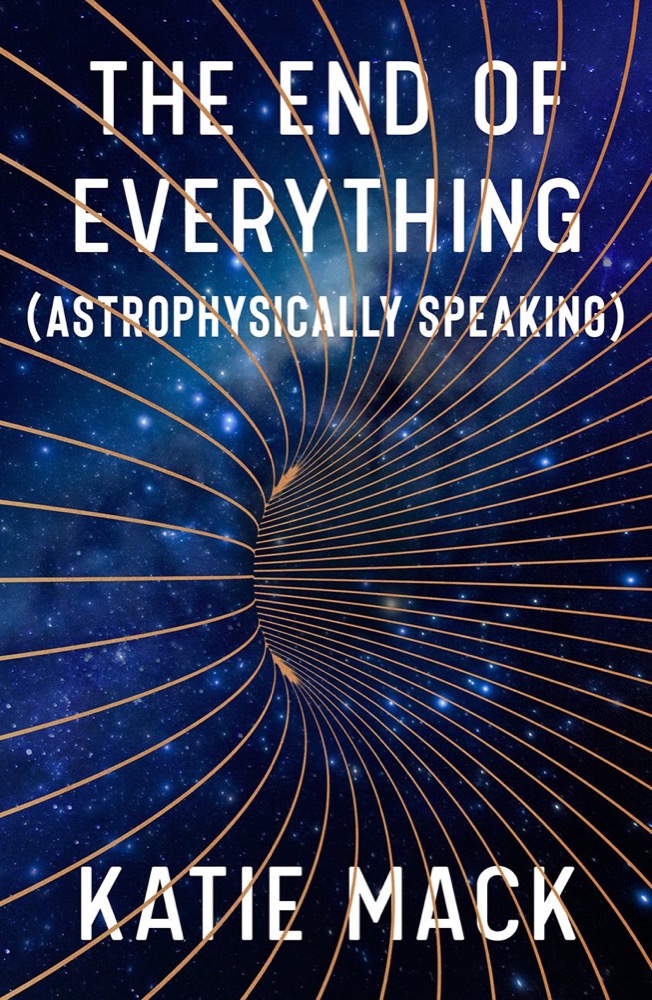 The End of Everything
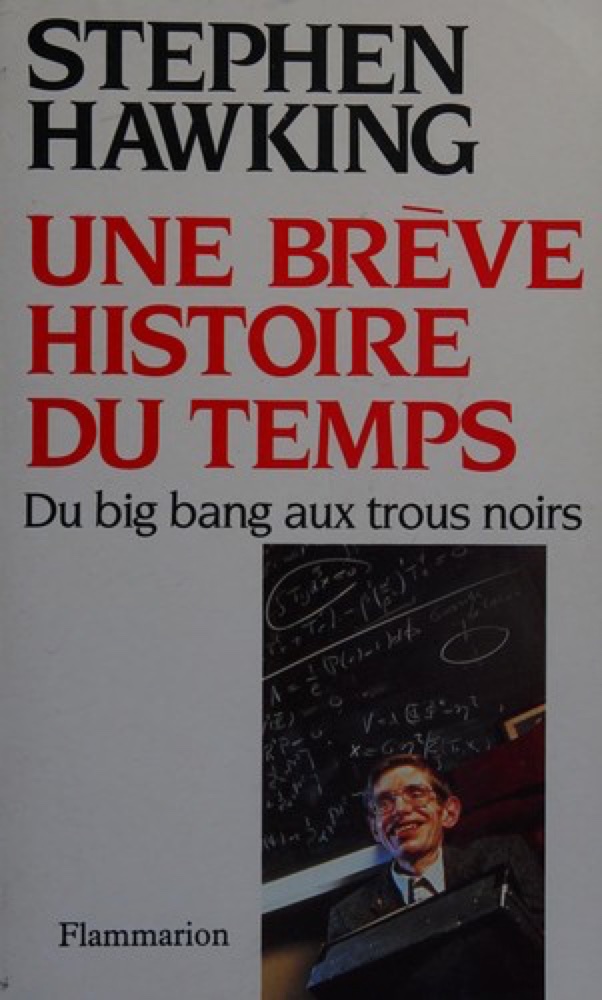 A Brief History of Time
 Astrophysics for People in a Hurry
 The Grand Design
 A Briefer History of Time
 The Universe in Your Hand: A Journey Through Space, Time, and Beyond
 Helgoland: Making Sense of the Quantum Revolution
 Our Mathematical Universe: My Quest for the Ultimate Nature of Reality
 The Feynman Lectures on Physics
 A Universe from Nothing: Why There Is Something Rather Than Nothing
 Hyperspace
 Existential Physics: A Scientist's Guide to Life's Biggest Questions
Until the End of Time: Mind, Matter, and Our Search for Meaning in an Evolving Universe
Existential Physics: A Scientist's Guide to Life's Biggest Questions
Until the End of Time: Mind, Matter, and Our Search for Meaning in an Evolving Universe
 The Big Picture: On the Origins of Life, Meaning, and the Universe Itself
 Why Does the World Exist?: An Existential Detective Story
 Six Easy Pieces: Essentials of Physics By Its Most Brilliant Teacher
 Welcome to the Universe: An Astrophysical Tour
 Black Holes and Baby Universes and Other Essays
 Chaos: Making a New Science
 Three Roads To Quantum Gravity
 The Character of Physical Law
 The Black Hole War: My Battle with Stephen Hawking to Make the World Safe for Quantum Mechanics
 Origins: Fourteen Billion Years of Cosmic Evolution
 Physics of the Impossible: A Scientific Exploration Into the World of Phasers, Force Fields, Teleportation, and Time Travel
 The Particle at the End of the Universe: How the Hunt for the Higgs Boson Leads Us to the Edge of a New World
 The Three-Body Problem
 The World According to Physics
 What Is Real?: The Unfinished Quest for the Meaning of Quantum Physics
 The Accidental Universe: The World You Thought You Knew
 The Case Against Reality: Why Evolution Hid the Truth from Our Eyes
 QED: The Strange Theory of Light and Matter
 When We Cease to Understand the World
 Death's End
 QED: The Strange Theory of Light and Matter
 Cosmos
 The Magic of Reality: How We Know What's Really True
 Life on the Edge: The Coming of Age of Quantum Biology
 The Complete Cosmicomics
 The Theory of Everything: The Origin and Fate of the Universe
 God: The Failed Hypothesis: How Science Shows That God Does Not Exist
 Metaphysics
 A Short History of Nearly Everything
 Lost in Math: How Beauty Leads Physics Astray
 The Order of Time
 Relativity: The Special and the General Theory
 Exhalation
 The Universe in a Single Atom: The Convergence of Science and Spirituality
 Genius: The Life and Science of Richard Feynman
 The Fifth Science
 The Blind Watchmaker: Why the Evidence of Evolution Reveals a Universe Without Design
 Bewilderment
 Songs of Distant Earth
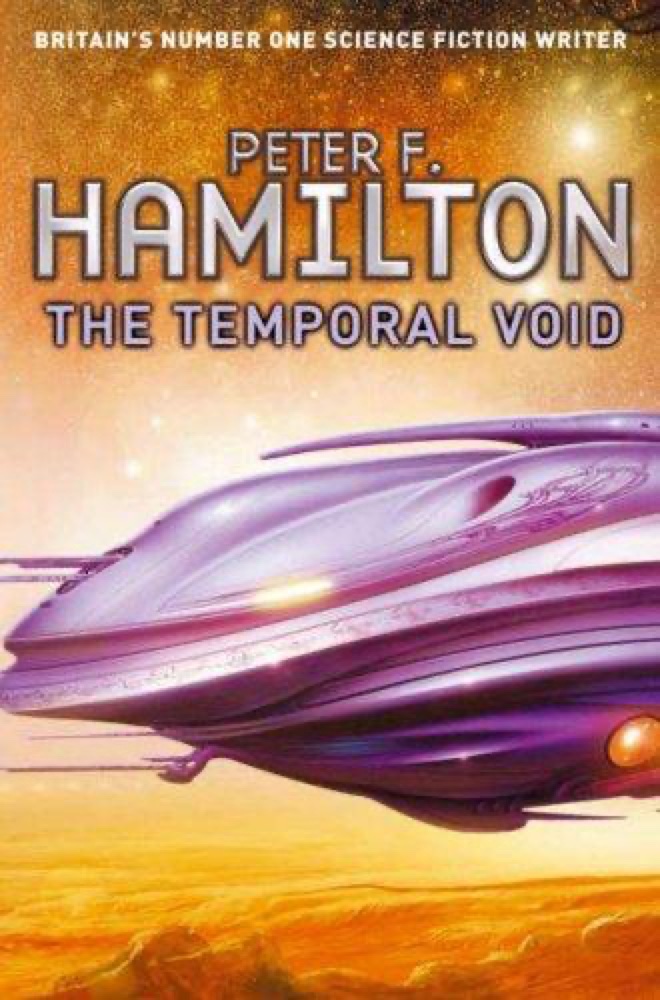 The Temporal Void
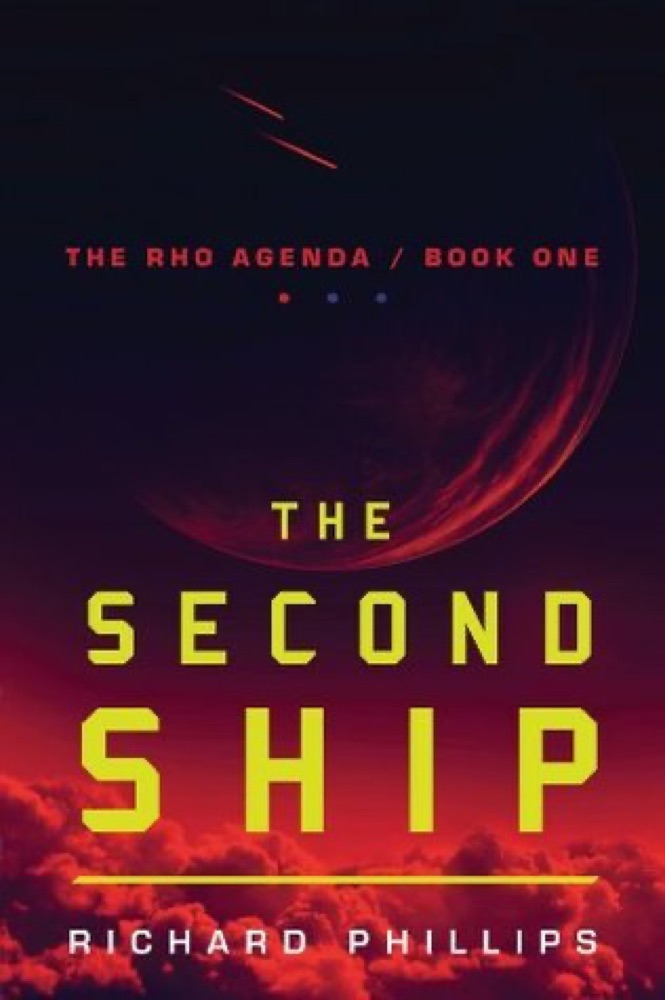 The Second Ship
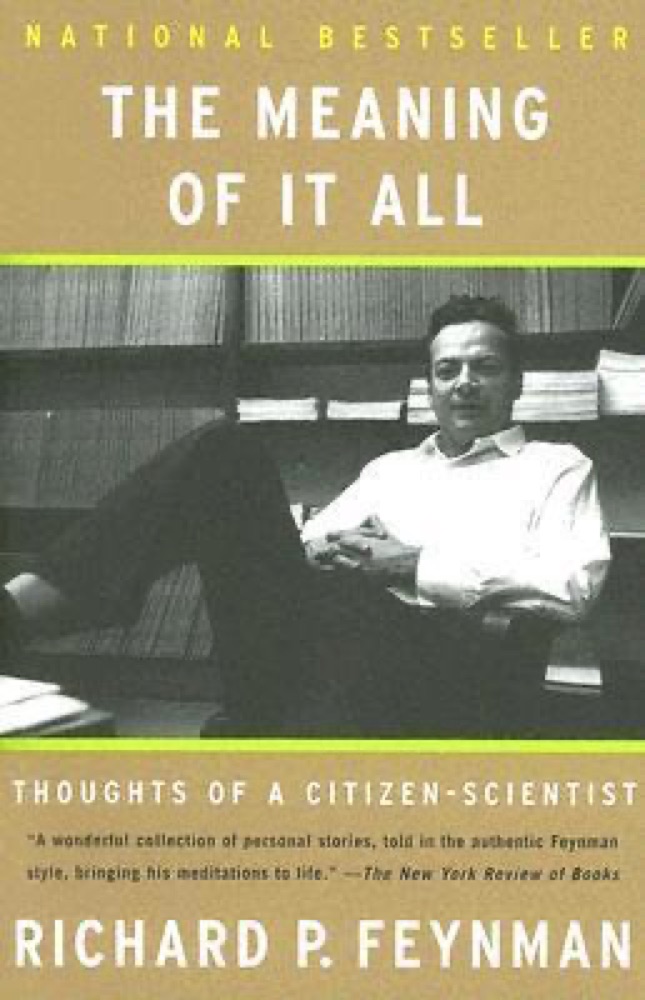 The Meaning of It All: Thoughts of a Citizen-Scientist