
 The Fabric of the Cosmos: Space, Time, and the Texture of Reality
Quotes from the Book
The boldness of asking deep questions may require unforeseen flexibility if we are to accept the answers.
...things are the way they are in our universe because if they weren't, we wouldn't be here to notice.
...quantum mechanics—the physics of our world—requires that you hold such pedestrian complaints in abeyance.
We all love a good story. We all love a tantalizing mystery. We all love the underdog pressing onward against seemingly insurmountable odds. We all, in one form or another, are trying to make sense of the world around us. And all of these elements lie at the core of modern physics. The story is among the grandest -- the unfolding of the entire universe; the mystery is among the toughest -- finding out how the cosmos came to be; the odds are among the most daunting -- bipeds, newly arrived by cosmic time scales trying to reveal the secrets of the ages; and the quest is among the deepest -- the search for fundamental laws to explain all we see and beyond, from the tiniest particles to the most distant galaxies.
Sometimes attaining the deepest familiarity with a question is our best substitute for actually having the answer.
Experience informs intuition. But it does more than that: Experience sets the frame within which we analyze and interpret what we perceive. You would no doubt expect, for instance, that the "wild child" raised by a pack of wolves would interpret the world from a perspective that differs substantially from your own. Even less extreme comparisons, such as those between people raised in very different cultural traditions, serve to underscore the degree to which our experiences determine our interpretive mindset.
For string theory to make sense, the universe should have nine spacial dimensions and one time dimension, for a total of ten dimensions.
As Feynman once wrote, "[Quantum mechanics] describes nature as absurd from the point of view of common sense. And it fully agrees with experiment. So I hope you can accept nature as She is—absurd.
Even if we choose to use the nonstandard notion of distance and thereby describe the radius as being shorter than the Planck length, the physics we encounter—as discussed in previous sections—will be identical to that of a universe in which the radius, in the conventional sense of distance, is larger than the Planck length
According to string theory, if we could examine these particles with even greater precision—a precision many orders of magnitude beyond our present technological capacity—we would find that each is not pointlike, but instead consists of a tiny one-dimensional loop. Like an infinitely thin rubber band, each particle contains a vibrating, oscillating, dancing filament that physicists, lacking Gell-Mann's literary flair, have named a string.
…The wonders of life and the universe are mere reflections of microscopic particles engaged in a pointless dance fully choreographed by the laws of physics.
Far from being accidental details, the properties of nature's basic building blocks are deeply entwined with the fabric of space and time.
Now, from special relativity we know that energy and mass are two sides of the same coin: Greater energy means greater mass, and vice versa. Thus, according to string theory, the mass of an elementary particle is determined by the energy of the vibrational pattern of its internal string. Heavier particles have internal strings that vibrate more energetically, while lighter particles have internal strings that vibrate less energetically.
If string theory is right, the microscopic fabric of our universe is a richly intertwined multidimensional labyrinth within which the strings of the universe endlessly twist and vibrate, rhythmically beating out the laws of the cosmos.
at high enough energy and temperature—such as occurred a mere fraction of a second after the big bang—electromagnetic and weak force fields dissolve into one another, take on indistinguishable characteristics, and are more accurately called electroweak fields.
First, gravity and quantum mechanics are part and parcel of how the universe works and therefore any purported unified theory must incorporate both. String theory accomplishes this. Second, studies by physicists over the past century have revealed that there are other key ideas—many of which have been experimentally confirmed—that appear central to our understanding of the universe. These include the concepts of spin, the family structure of matter particles, messenger particles, gauge symmetry, the equivalence principle, symmetry breaking, and supersymmetry, to name a few. All of these concepts emerge naturally from string theory. Third, unlike more conventional theories such as the standard model, which has 19 free parameters that can be adjusted to ensure agreement with experimental measurements, string theory has no adjustable parameters. In principle, its implications should be thoroughly definitive—they should provide an unambiguous test of whether the theory is right or wrong.
For instance, a black hole as light as a small asteroid would emit about as much radiation as a million-megaton hydrogen bomb, with radiation concentrated in the gamma-ray part of the electromagnetic spectrum.
Watch on YouTube
About Brian Greene
We have collected 62 quotes from 3 books by Brian Greene on BookQuoters.
More about the author →More by Brian Greene
The Fabric of the Cosmos: Space, Time, and the Texture of Reality
 Until the End of Time: Mind, Matter, and Our Search for Meaning in an Evolving Universe
Book details
- Author
- Brian Greene
- Genre
- Nonfiction
- Goodreads rating
- 4.09 (104k ratings) →
Keep reading
The Fabric of the Cosmos: Space, Time, and the Texture of Reality
 Hyperspace
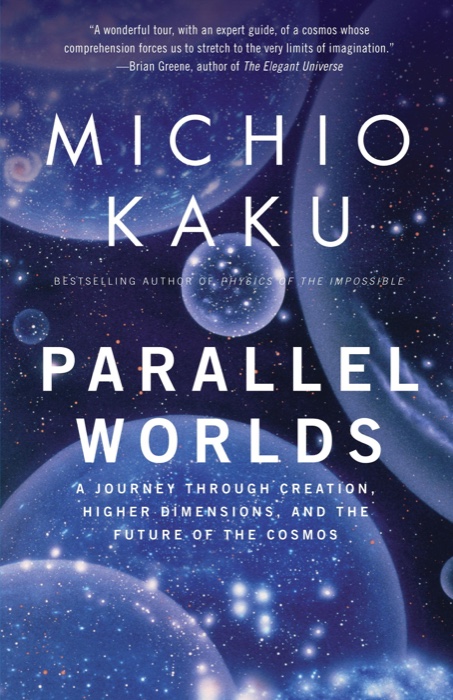 Parallel Worlds: A Journey Through Creation, Higher Dimensions, and the Future of the Cosmos
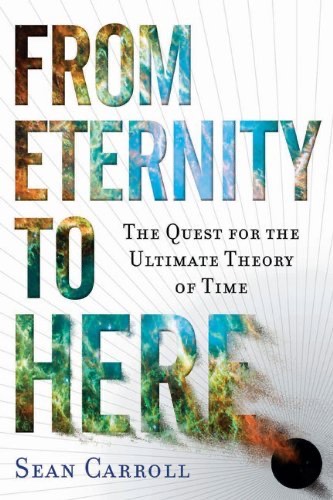 From Eternity to Here: The Quest for the Ultimate Theory of Time
 The Feynman Lectures on Physics
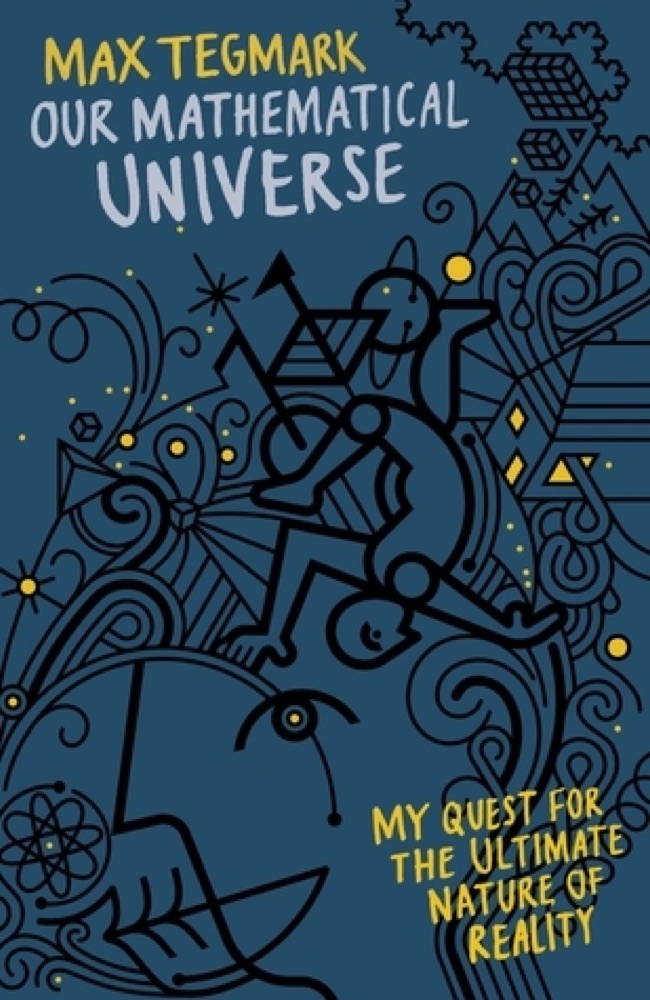 Our Mathematical Universe: My Quest for the Ultimate Nature of Reality
 The Particle at the End of the Universe: How the Hunt for the Higgs Boson Leads Us to the Edge of a New World
 The Grand Design
 A Briefer History of Time
 The Universe in Your Hand: A Journey Through Space, Time, and Beyond
 Astrophysics for People in a Hurry
 Helgoland: Making Sense of the Quantum Revolution
 A Brief History of Time
 The End of Everything
Until the End of Time: Mind, Matter, and Our Search for Meaning in an Evolving Universe
The End of Everything
Until the End of Time: Mind, Matter, and Our Search for Meaning in an Evolving Universe
 A Universe from Nothing: Why There Is Something Rather Than Nothing
 Three Roads To Quantum Gravity
 The Big Picture: On the Origins of Life, Meaning, and the Universe Itself
 Existential Physics: A Scientist's Guide to Life's Biggest Questions
 The End of Time: The Next Revolution in Our Understanding of the Universe
 The Character of Physical Law
 The World According to Physics
 Physics of the Impossible: A Scientific Exploration Into the World of Phasers, Force Fields, Teleportation, and Time Travel
 The Black Hole War: My Battle with Stephen Hawking to Make the World Safe for Quantum Mechanics
 Six Easy Pieces: Essentials of Physics By Its Most Brilliant Teacher
 QED: The Strange Theory of Light and Matter
 Chaos: Making a New Science
 The Accidental Universe: The World You Thought You Knew
 Welcome to the Universe: An Astrophysical Tour
 QED: The Strange Theory of Light and Matter
 Why Does the World Exist?: An Existential Detective Story
 Black Holes and Baby Universes and Other Essays
 Life on the Edge: The Coming of Age of Quantum Biology
 Origins: Fourteen Billion Years of Cosmic Evolution
 Lost in Math: How Beauty Leads Physics Astray
 The Theory of Everything: The Origin and Fate of the Universe
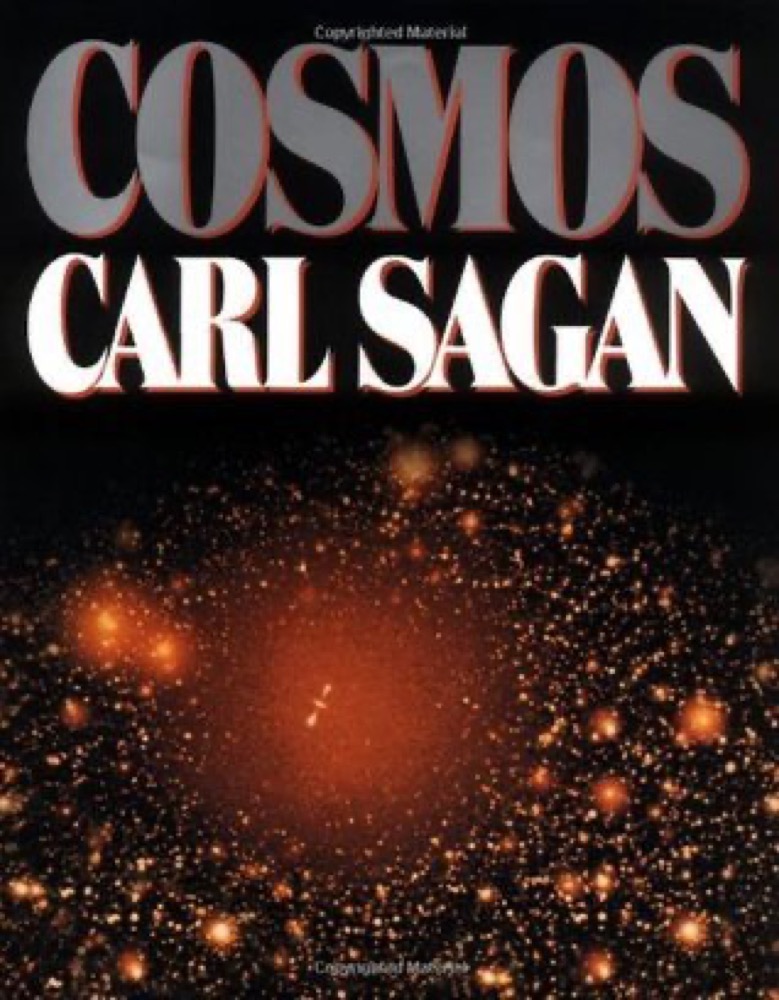 Cosmos
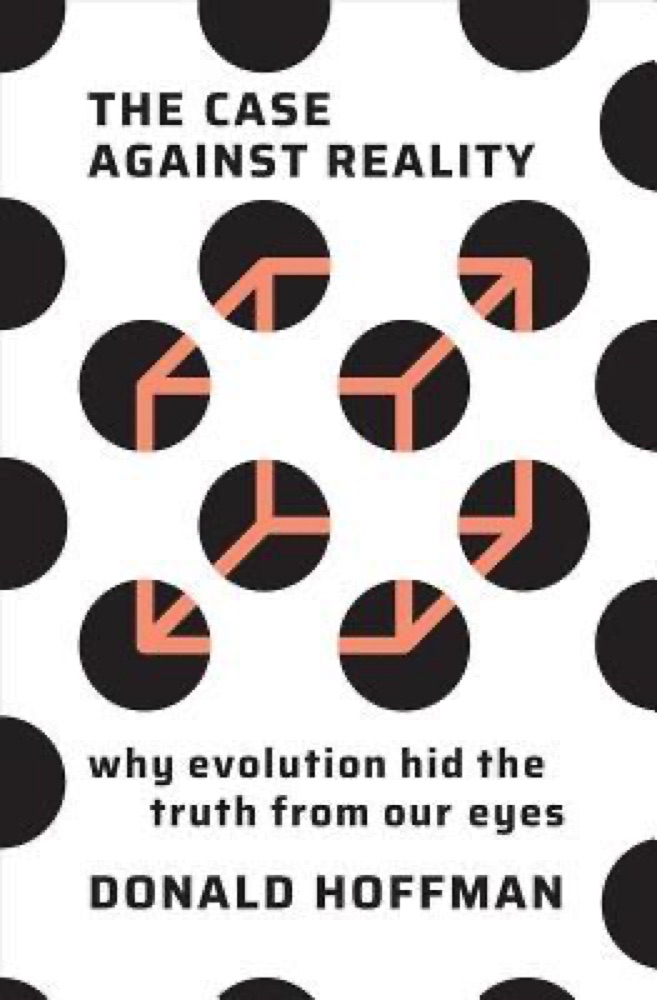 The Case Against Reality: Why Evolution Hid the Truth from Our Eyes
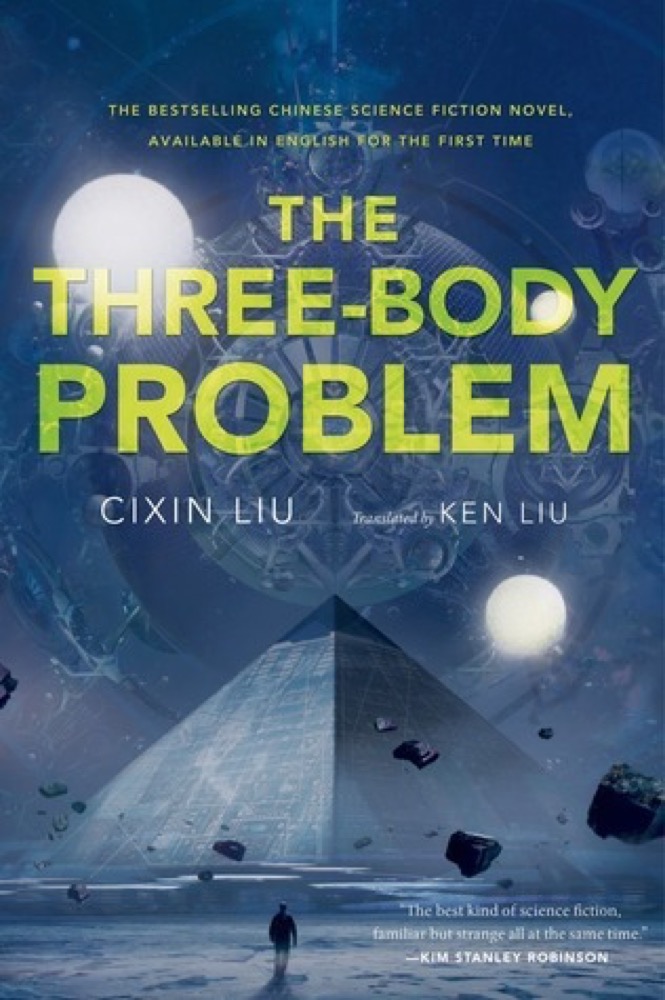 The Three-Body Problem
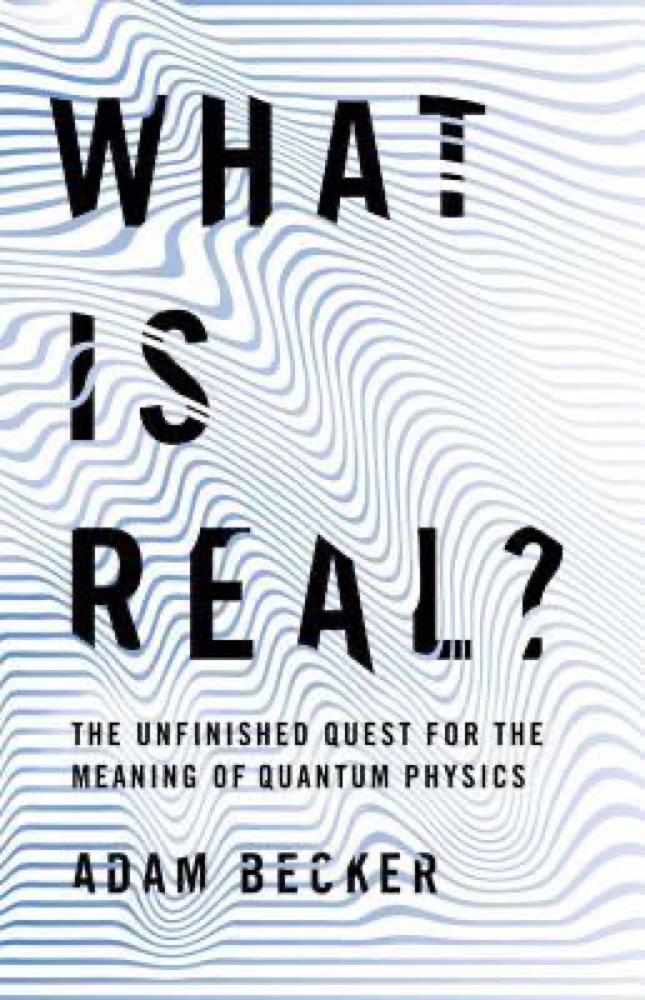 What Is Real?: The Unfinished Quest for the Meaning of Quantum Physics
 The Blind Watchmaker: Why the Evidence of Evolution Reveals a Universe Without Design
 A Short History of Nearly Everything
 Gödel, Escher, Bach: An Eternal Golden Braid
 Death's End
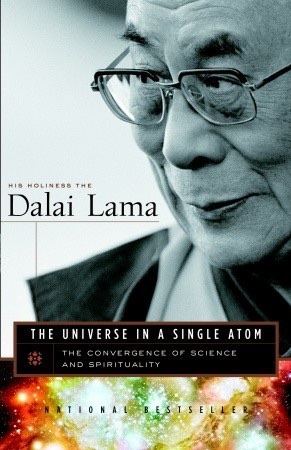 The Universe in a Single Atom: The Convergence of Science and Spirituality
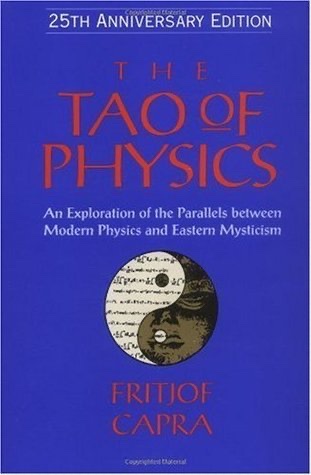 The Tao of Physics: An Exploration of the Parallels between Modern Physics and Eastern Mysticism
 The Magic of Reality: How We Know What's Really True
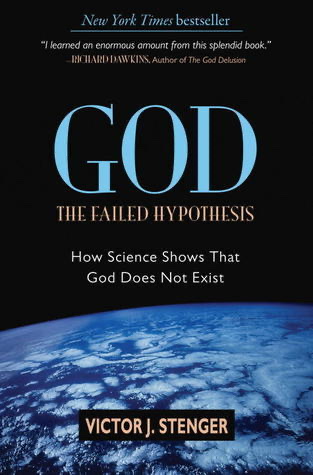 God: The Failed Hypothesis: How Science Shows That God Does Not Exist
 Genius: The Life and Science of Richard Feynman
 The Road to Reality: A Complete Guide to the Laws of the Universe
 When We Cease to Understand the World
 The Order of Time
 The Biology of Belief: Unleashing the Power of Consciousness, Matter and Miracles
 Metaphysics
 The Complete Cosmicomics
 Exhalation
 The Tell-Tale Brain: A Neuroscientist's Quest for What Makes Us Human
 Bewilderment
 The Information: A History, a Theory, a Flood