 The Log from the Sea of Cortez
Quotes from the Book
Humans seem to have an innate drive to master other creatures.
9
It would be wonderful if all the salmon we eat could be wild. But as one marine ecologist said to me recently, to continue to eat large wild fish at the rate we've been eating them we would need "four or five" oceans to support the crrent human population.
8
Natural selection has a new aspect, one that is psychological denial. Such denial where the “individual benefits as an individual from his ability to deny the truth even though society as a whole, which he is apart, suffers”.
2
It was one of those rare moments where one has a vision of the scope of the wild ocean. Not just small cylinders firing to keep a tiny engine running, but rather the giant, massive gears of nature, each one with its own reasoning, its own meta-logic, spinning in its particular circle in competition or in confluence with the gear below it. We zeroed in on the school, but our progress was painfully slow, It would have been foolish to speed into the tumult-we would have ruined our baits in the process and doomed our chances of hooking a tuna. But luckily, the commotion did not subside. If anything it only grew more frantic and exhuberant on our approach. Beneath the birds, beneath the dolphins, beneath the menhaden, there should have been an equally vast school of giant bluefin tuna, collaborating with vertebrates of the so-called higher orders of life to form the floor of the prey trap, sealing the baitfish in from below, while the dolphins and birds made up the trap's walls and ceiling. A strike from a giant tuna seemed inevitable.....as the boat moved forward, I saw seabirds gathering up ahead into a cloud, the size and violence of which I had never seen before. Gannets - big, albatross-like pelagic birds - flew hundreds of feet above the churning surface of the water. In a flock of many thousands, they whirled in unison and then, as if on command from some brigadier general of bird life, dropped in an arc, bird after bird, into the water beneath. The gyre of gannets turned in a clockwise direction, and down below, spinning counterclockwise, was the largest school of dolphins I'd ever seen. There in the angry blue-green sea, the dolphins had corralled a vast school of menhaden-small herringlike creatures that, when bitten, release globules of oil that float on the surface. Oil slicks flattened the water everywhere as the dolphins swirled around, using their exceptional intelligence and wolf-pack cooperation to befuddle and surround the fish, which in turn whirled in a clockwise direction.
2
In fact, every appearance of the species Salmo salar, or “Atlantic salmon,” in supermarkets today, be they labeled Canadian, Irish, Scotch, Chilean, or Norwegian, is farmed.
Today the fish is called lavraki—“the clever one.” If you wanted to indicate in modern Greek that someone had cleverly figured out something tricky and challenging, you would say that he epyase lavraki—“he caught a sea bass.
encouraging quote from Jules Verne: Tout ce qui est impossible reste à accomplir—All that is impossible remains to be accomplished.
When reeling a fish in to not simply feel “the power of wildness intimately but the same time recognize the right of that wildness to continue”.
Watch on YouTube
About Paul Greenberg
We have collected 8 quotes from 1 book by Paul Greenberg on BookQuoters.
More about the author →About the book
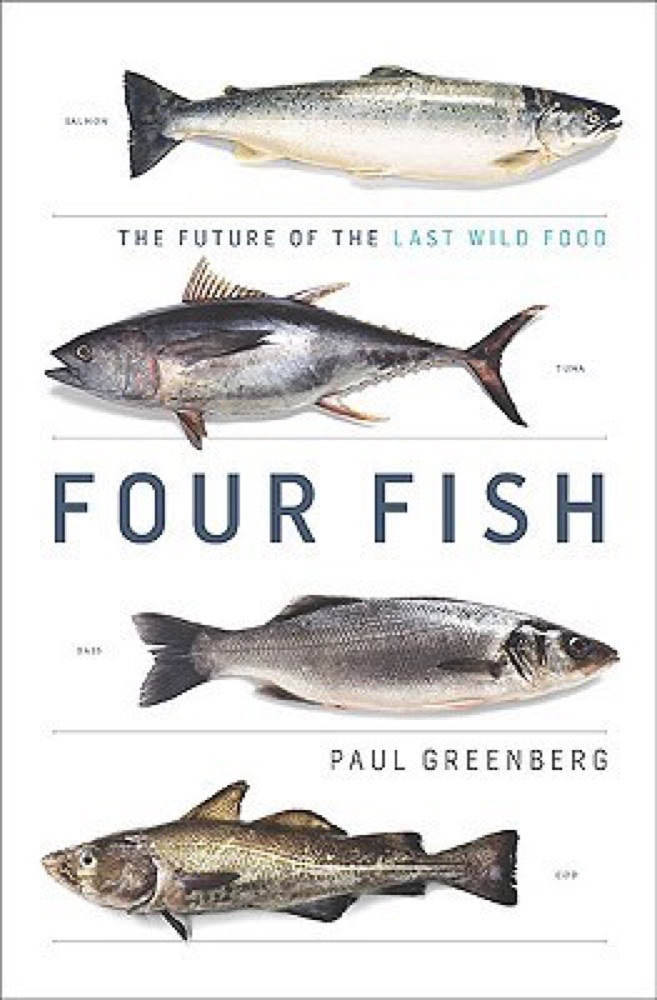
In Four Fish, award-winning writer and lifelong fisherman Paul Greenberg takes us on a culinary journey, exploring the history of the fish that dominate our menus — salmon, sea bass, cod, and tuna — and investigating where each stands at this critical moment in time.
He visits Norwegian megafarms that use genetic techniques once pioneered on sheep to grow millions of pounds of salmon a year. He travels to the ancestral river of the Yupik Eskimos to see the only Fair Trade–certified fishing company in the world. He makes clear how PCBs and mercury find their way into seafood; discovers how Mediterranean sea bass went global; challenges the author of Cod to taste the difference between a farmed and a wild cod; and almost sinks to the bottom of the South Pacific while searching for an alternative to endangered bluefin tuna.
Fish, Greenberg reveals, are the last truly wild food — for
Book details
- First published
- 2010
- Author
- Paul Greenberg
- Genre
- Nonfiction
- Goodreads rating
- 4.06 (7k ratings)
Keep reading
The Log from the Sea of Cortez
 Vanishing Treasures: A Bestiary of Extraordinary Endangered Creatures
 Feral: Rewilding the Land, the Sea and Human Life
 Wild Ones: A Sometimes Dismaying, Weirdly Reassuring Story About Looking at People Looking at Animals in America
 Martin Marten
 The Soul of an Octopus: A Surprising Exploration into the Wonder of Consciousness
 Beyond Words: What Animals Think and Feel
 Arctic Dreams
 Cod: A Biography of the Fish that Changed the World
 Other Minds
 Fuzz: When Nature Breaks the Law
 How Far the Light Reaches: A Life in Ten Sea Creatures
 What a Fish Knows: The Inner Lives of Our Underwater Cousins
 The Mountain in the Sea
 Shadows of Forgotten Ancestors
 Last Chance to See
 Why Fish Don’t Exist: A Story of Loss, Love, and the Hidden Order of Life
 Into the Drowning Deep
 Gathering Moss: A Natural and Cultural History of Mosses
 Eating Animals
 Kon-Tiki
 Ripple
 The Lost World
 Undeniable: Evolution and the Science of Creation
 The Omnivore's Dilemma: A Natural History of Four Meals
 The Origin of Species
 Billions & Billions: Thoughts on Life and Death at the Brink of the Millennium
 A Life on Our Planet: My Witness Statement and a Vision for the Future
 The Genius of Birds
 Twenty Thousand Leagues Under the Sea
 Ishmael: An Adventure of the Mind and Spirit
 Vesper Flights
 Adrift: Seventy-Six Days Lost at Sea
 Following the Equator: A Journey Around the World
 Maelstrom
 Under a White Sky: The Nature of the Future
 Playground
 A Language Older Than Words
 Endgame, Vol. 1: The Problem of Civilization
 Genome
 A Hunter-Gatherer's Guide to the 21st Century: Evolution and the Challenges of Modern Life
 The Mushroom at the End of the World: On the Possibility of Life in Capitalist Ruins
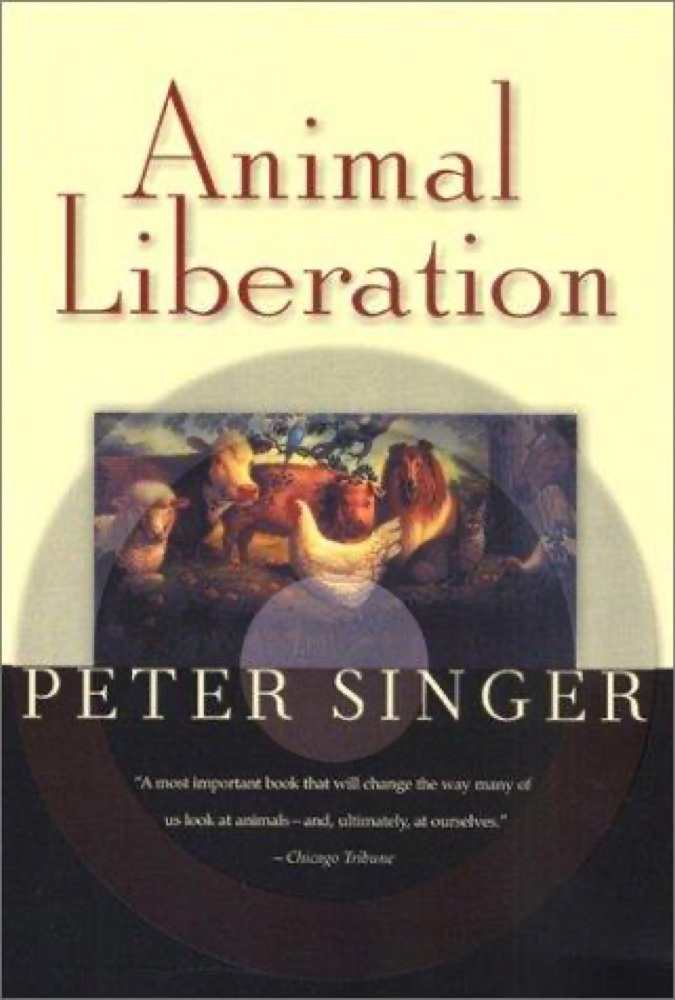 Animal Liberation
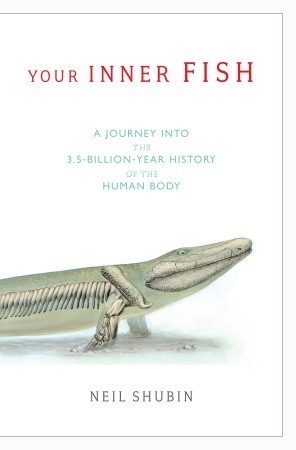 Your Inner Fish: A Journey Into the 3.5-Billion-Year History of the Human Body
 The Lives of a Cell: Notes of a Biology Watcher
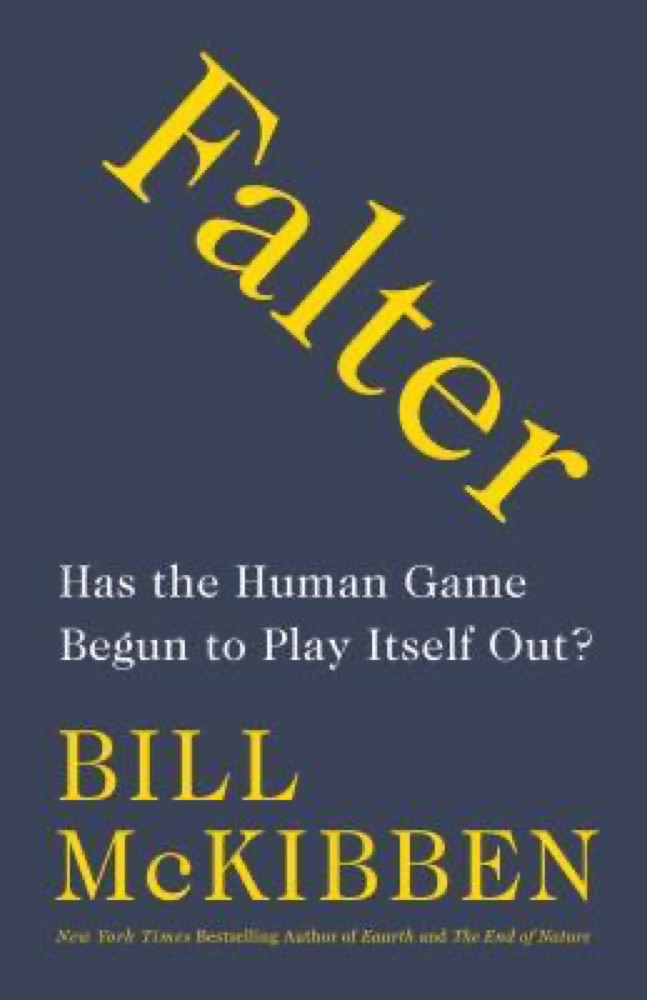 Falter: Has the Human Game Begun to Play Itself Out?
 Why We Run: A Natural History
 The World Peace Diet
 The Stone Gods
 Voyage of the Beagle
 Silent Spring
 Cannibalism: A Perfectly Natural History
 Fluke: Or, I Know Why the Winged Whale Sings
 The Ancestor's Tale: A Pilgrimage to the Dawn of Evolution
 Earth
Earth
 The Swarm
 Wilding
 Parasite
 Bringing it to the Table: On Farming and Food
 The Shape of Water