
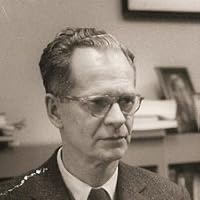
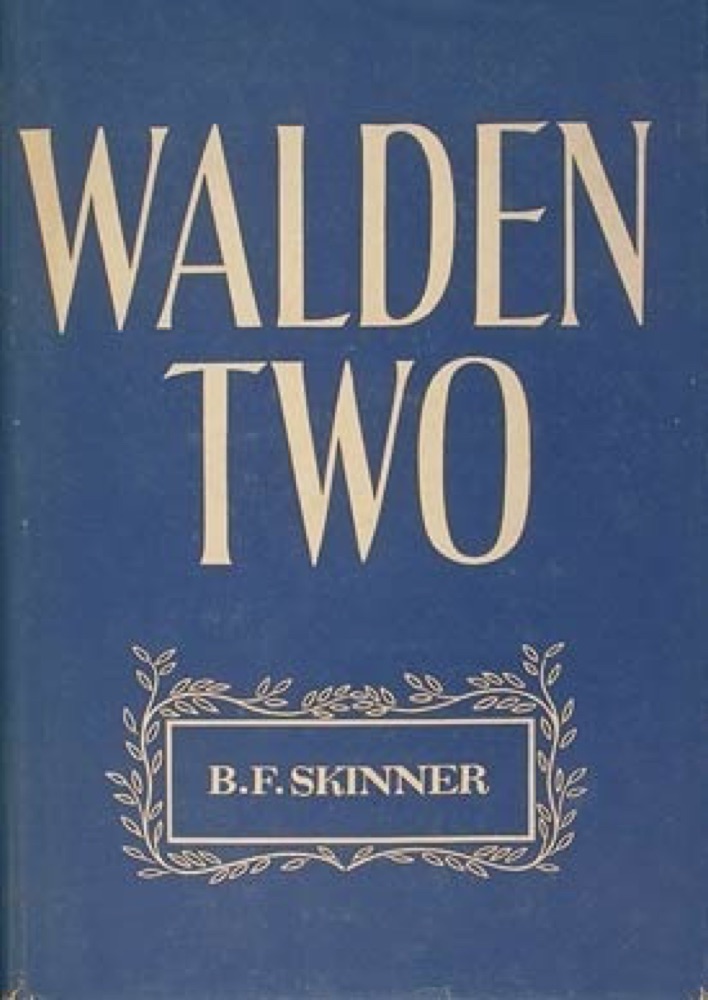
 Walden Two
Quotes from the Book
A person who has been punished is not thereby simply less inclined to behave in a given way; at best, he learns how to avoid punishment.
90
It is a surprising fact that those who object most violently to the manipulation of behaviour nevertheless make the most vigorous effort to manipulate minds.
39
Twenty-five hundred years ago it might have been said that man understood himself as well as any other part of his world. Today he is the thing he understands least. Physics and biology have come a long way, but there has been no comparable development of anything like a science of human behavior. Greek physics and biology are now of historical interest only (no modern physicist or biologist would turn to Aristotle for help), but the dialogues of Plato are still assigned to students and cited as if they threw light on human behavior. Aristotle could not have understood a page of modern physics or biology, but Socrates and his friends would have little trouble in following most current discussions of human affairs. And as to technology, we have made immense strides in controlling the physical and biological worlds, but our practices in government, education, and much of economics, though adapted to very different conditions, have not greatly improved. We can scarcely explain this by saying that the Greeks knew all there was to know about human behavior. Certainly they knew more than they knew about the physical world, but it was still not much. Moreover, their way of thinking about human behavior must have had some fatal flaw. Whereas Greek physics and biology, no matter how crude, led eventually to modern science, Greek theories of human behavior led nowhere. If they are with us today, it is not because they possessed some kind of eternal verity, but because they did not contain the seeds of anything better.
6
It is a mistake to suppose that all change or development is growth. The present condition of the earth’s surface is not mature or immature; the horse has not, so far as we know, reached some final and presumably optimal stage in evolutionary development. If a child’s language seems to grow like an embryo, it is only because the environmental contingencies have been neglected. The feral child has no language, not because his isolation has interfered with some growth process, but because he has not been exposed to a verbal community. We have no reason to call any culture mature in the sense that further growth is unlikely or that it would necessarily be a kind of deterioration. We call some cultures underdeveloped or immature in contrast with others we call ‘advanced’, but it is a crude form of jingoism to imply that any government, religion, or economic system is mature. The main objection to the metaphor of growth, in considering either the development of an individual or the evolution of a culture, is that it emphasizes a terminal state which does not have a function. We say that an organism grows toward maturity or in order to reach maturity. Maturity becomes a goal, and progress becomes movement towards a goal. A goal is literally a terminus—the end of something such as a foot race. It has no effect on the race except to bring it to an end. The word is used in this relatively empty sense when we say that the goal of life is death or that the goal of evolution is to fill the earth with life. Death is no doubt the end of life, and a full world may be the end of evolution, but these terminal conditions have no bearing on the processes through which they are reached. We do not live in order to die, and evolution does not proceed in order to fill the earth with life.
3
Autonomous man is a device used to explain what we cannot explain in any other way. He has been constructed from our ignorance, and as our understanding increases, the very stuff of which he is composed vanishes. Science does not dehumanize man, it de-homunculizes him, and it must do so if it is to prevent the abolition of the human species. To man qua man we readily say good riddance. Only by dispossessing him can we turn to the real causes of human behaviour. Only then can we turn from the inferred to the observed, from the miraculous to the natural, from the inaccessible to the manipulable.
2
Science is human behavior, and so is the opposition to science. What
2
A government is challenged when its citizens refuse to pay taxes, serve in the armed forces, participate in elections, and so on, and it may meet the challenge either by strengthening its contingencies or by bringing deferred gains to bear on the behaviour at issue. But how can it answer the question: ‘Why should I care whether my government, or my form of government, survives long after my death?’ Similarly, a religious organization is challenged when its communicants do not go to church, contribute to its support, take political action in its interests, and so on, and it may meet the challenge by strengthening its contingencies or pointing to deferred gains. But what is its answer to the question: ‘Why should I work for the long-term survival of my religion?’ An economic system is challenged when people. do not work productively, and it may respond by sharpening its contingencies or pointing to deferred advantages. But what is its answer to the question: ‘Why should I be concerned about the survival of a particular kind of economic system?’ The only honest answer to that kind of question seems to be this: ‘There is no good reason why you should be concerned, but if your culture has not convinced you that there is, so much the worse for your culture.
1
Unable to understand how or why the person we see behaves as he does, we attribute his behavior to a person we cannot see, whose behavior we cannot explain either but about whom we are not inclined to ask questions. We probably adopt this strategy not so much because of any lack of interest or power but because of a longstanding conviction that for much of human behavior there are no relevant antecedents. The function of the inner man is to provide an explanation which will not be explained in turn. Explanation stops with him. He is not a mediator between past history and current behavior, he is a center from which behavior emanates. He initiates, originates, and creates, and in doing so he remains, as he was for the Greeks, divine. We say that he is autonomous—and, so far as a science of behavior is concerned, that means miraculous. The position is, of course, vulnerable. Autonomous man serves to explain only the things we are not yet able to explain in other ways. His existence depends upon our ignorance, and he naturally loses status as we come to know more about behavior. The task of a scientific analysis is to explain how the behavior of a person as a physical system is related to the conditions under which the human species evolved and the conditions under which the individual lives. Unless there is indeed some capricious or creative intervention, these events must be related, and no intervention is in fact needed. The contingencies of survival responsible for man’s genetic endowment would produce tendencies to act aggressively, not feelings of aggression. The punishment of sexual behavior changes sexual behavior, and any feelings which may arise are at best by-products. Our age is not suffering from anxiety but from the accidents, crimes, wars, and other dangerous and painful things to which people are so often exposed. Young people drop out of school, refuse to get jobs, and associate only with others of their own age not because they feel alienated but because of defective social environments in homes, schools, factories, and elsewhere. We can follow the path taken by physics and biology by turning directly to the relation between behavior and the environment and neglecting supposed mediating states of mind. Physics did not advance by looking more closely at the jubilance of a falling body, or biology by looking at the nature of vital spirits, and we do not need to try to discover what personalities, states of mind, feelings, traits of character, plans, purposes, intentions, or the other perquisites of autonomous man really are in order to get on with a scientific analysis of behavior.
1
By questioning the control exercised by autonomous man and demonstrating the control exercised by the environment, a science of behavior also seems to question dignity or worth. A person is responsible for his behavior, not only in the sense that he may be justly blamed or punished when he behaves badly, but also in the sense that he is to be given credit and admired for his achievements. A scientific analysis shifts the credit as well as the blame to the environment, and traditional practices can then no longer be justified. These are sweeping changes, and those who are committed to traditional theories and practices naturally resist them.
There is a much more important reason why we have been so slow in discarding mentalistic explanations: it has been hard to find alternatives. Presumably we must look for them in the external environment, but the role of the environment is by no means clear. The history of the theory of evolution illustrates the problem. Before the nineteenth century, the environment was thought of simply as a passive setting in which many different kinds of organisms were born, reproduced themselves, and died. No one saw that the environment was responsible for the fact that there were many different kinds (and that fact, significantly enough, was attributed to a creative Mind). The trouble was that the environment acts in an inconspicuous way: it does not push or pull, it selects. For thousands of years in the history of human thought the process of natural selection went unseen in spite of its extraordinary importance. When it was eventually discovered, it became, of course, the key to evolutionary theory.
Watch on YouTube
About B.F. Skinner
We have collected 39 quotes from 2 books by B.F. Skinner on BookQuoters.
More about the author →More by B.F. Skinner
Walden Two
About the book
In this profound and profoundly controversial work, a landmark of 20th-century thought originally published in 1971, B. F. Skinner makes his definitive statement about humankind and society. Insisting that the problems of the world today can be solved only by dealing much more effectively with human behavior, Skinner argues that our traditional concepts of freedom and dignity must be sharply revised. They have played an important historical role in our struggle against many kinds of tyranny, he acknowledges, but they are now responsible for the futile defense of a presumed free and autonomous individual; they are perpetuating our use of punishment and blocking the development of more effective cultural practices. Basing his arguments on the massive results of the experimental analysis of behavior he pioneered, Skinner rejects traditional explanations of behavior in terms of states of min
Book details
- First published
- 1971
- Author
- B.F. Skinner
- Genre
- Nonfiction
- Goodreads rating
- 3.75 (2k ratings)
Keep reading
 The Blank Slate: The Modern Denial of Human Nature
 How the Mind Works
 Straw Dogs: Thoughts on Humans and Other Animals
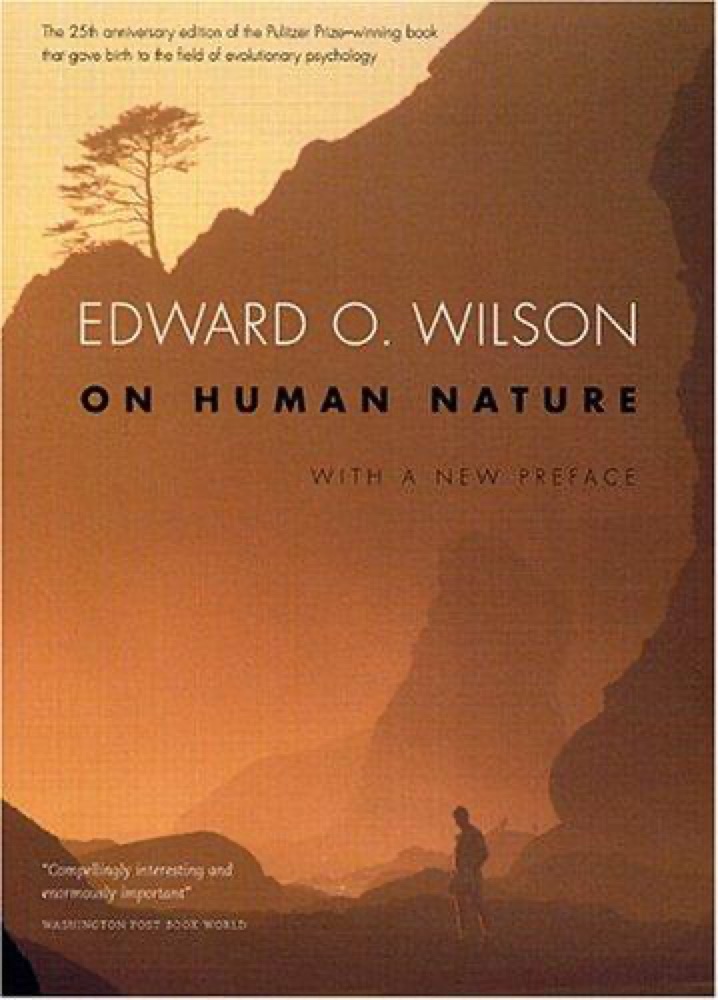 On Human Nature
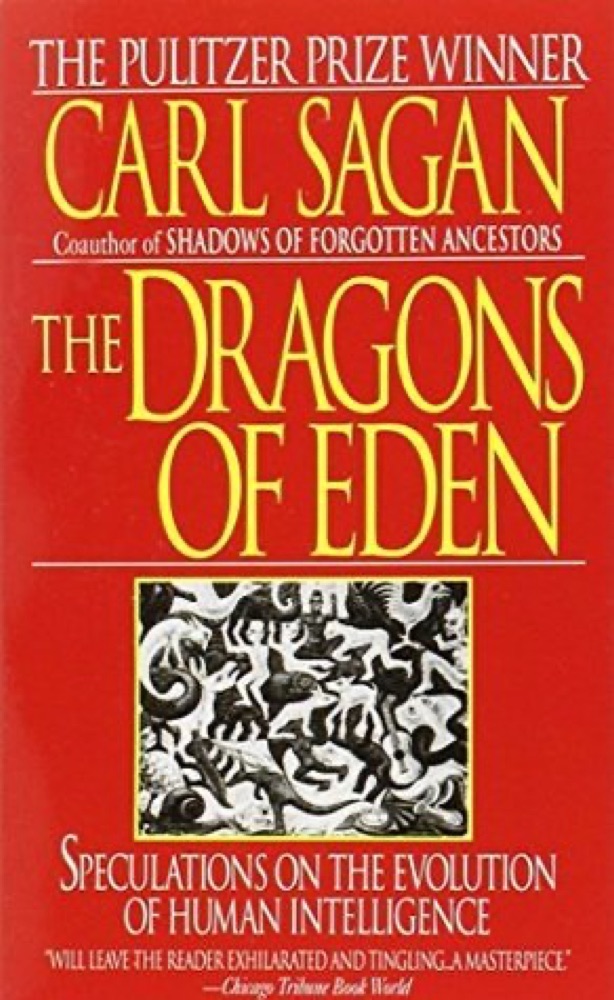 Dragons of Eden: Speculations on the Evolution of Human Intelligence
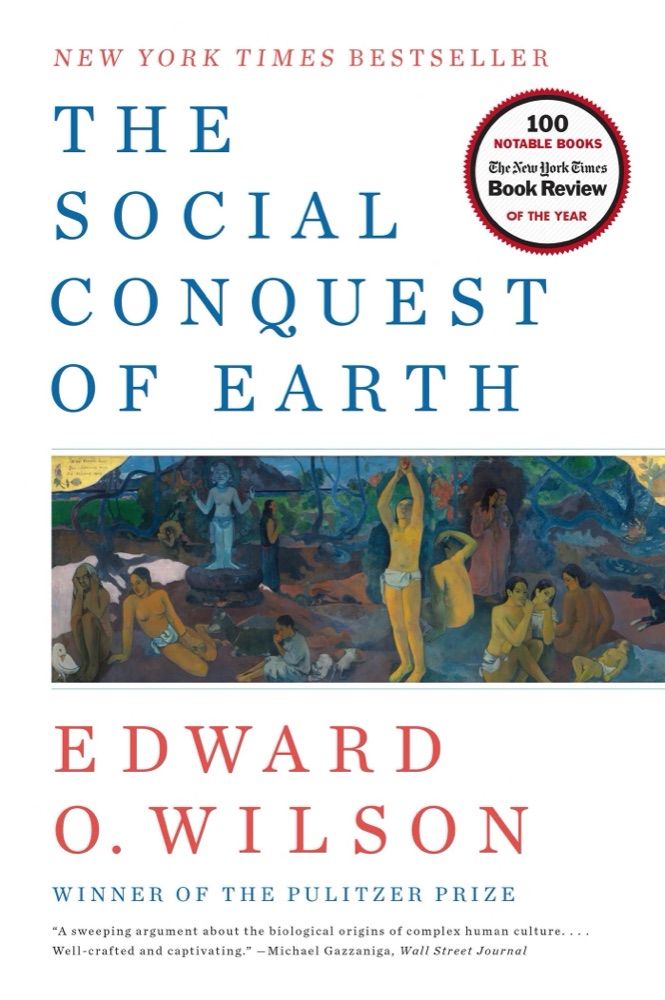 The Social Conquest of Earth
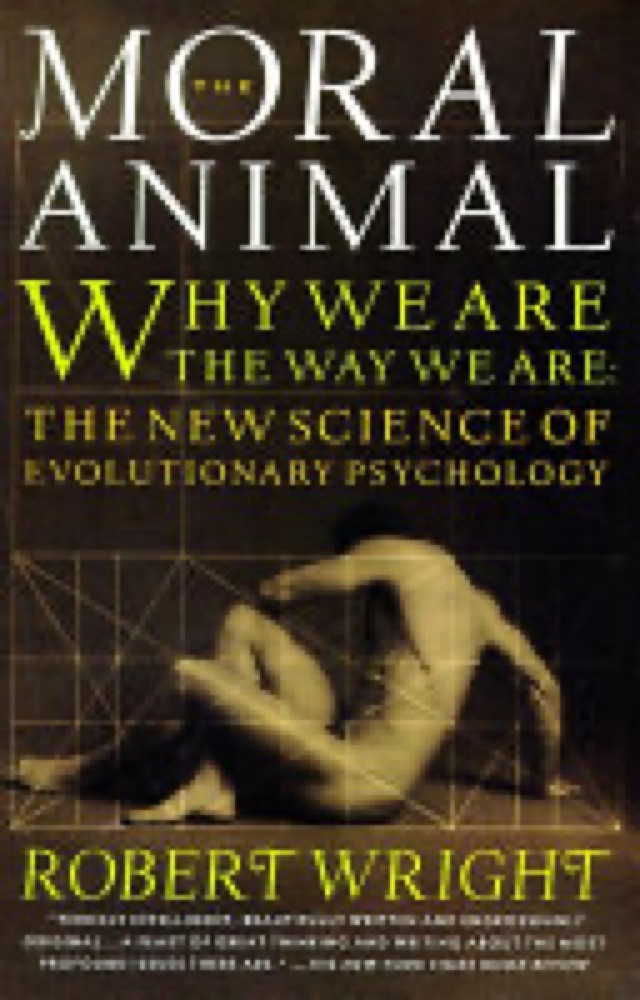 The Moral Animal: Why We Are the Way We Are - The New Science of Evolutionary Psychology
 The Abolition of Man
 The Fatal Conceit: The Errors of Socialism
 Homo Deus: A History of Tomorrow
Walden Two
Homo Deus: A History of Tomorrow
Walden Two
 Brave New World Revisited
 Human Action: A Treatise on Economics
 Maps of Meaning: The Architecture of Belief
 Enlightenment Now: The Case for Reason, Science, Humanism, and Progress
 Sapiens: A Brief History of Humankind
 Endgame, Vol. 1: The Problem of Civilization
 The Sane Society
 A Language Older Than Words
 The Ascent of Man
 The Birth and Death of Meaning: An Interdisciplinary Perspective on the Problem of Man
 A Hunter-Gatherer's Guide to the 21st Century: Evolution and the Challenges of Modern Life
 Psych: The Story of the Human Mind
 Darwin's Dangerous Idea: Evolution and the Meanings of Life
 Humankind: A Hopeful History
 After Virtue
 A Devil's Chaplain: Reflections on Hope, Lies, Science, and Love
 Why People Believe Weird Things: Pseudoscience, Superstition, and Other Confusions of Our Time
 Moral Tribes: Emotion, Reason, and the Gap Between Us and Them
 The Will to Meaning: Foundations and Applications of Logotherapy
 How Should We Then Live? The Rise and Decline of Western Thought and Culture
 The Elephant in the Brain: Hidden Motives in Everyday Life
 21 Lessons for the 21st Century
 Daybreak: Thoughts on the Prejudices of Morality
 The Moral Landscape: How Science Can Determine Human Values
 The Social Animal: The Hidden Sources of Love, Character, and Achievement
 The Gene: An Intimate History
 Against Method
 Lila: An Inquiry Into Morals
 What's Our Problem?: A Self-Help Book for Societies
 The Human Condition
 Obedience to Authority
 Civilized to Death: What Was Lost on the Way to Modernity
 Untimely Meditations
 Think: A Compelling Introduction to Philosophy
 Escape from Freedom
 The Crisis of the Modern World
 The Occult
 Consilience: The Unity of Knowledge
 The Log from the Sea of Cortez
 12 Rules for Life: An Antidote to Chaos
 The Master and His Emissary: The Divided Brain and the Making of the Western World
 The Undiscovered Self
 From Dawn to Decadence: 500 Years of Western Cultural Life, 1500 to the Present
 The Dawn of Everything: A New History of Humanity
 Science and Sanity: An Introduction to Non-Aristotelian Systems and General Semantics
 The Laws of Human Nature
 The Righteous Mind: Why Good People Are Divided by Politics and Religion
 Man and His Symbols
 Truth and Method