
 The Explicit Gospel
Quotes from the Book
Jesus was not revolutionary because he said we should love God and each other. Moses said that first. So did Buddha, Confucius, and countless other religious leaders we've never heard of. Madonna, Oprah, Dr. Phil, the Dali Lama, and probably a lot of Christian leaders will tell us that the point of religion is to get us to love each other. "God loves you" doesn't stir the world's opposition. However, start talking about God's absolute authority, holiness, ... Christ's substitutionary atonement, justification apart from works, the necessity of new birth, repentance, baptism, Communion, and the future judgment, and the mood in the room changes considerably.
78
If the focus of our testimony is our changed life, we as well as our hearers are bound to be disappointed.
16
If we think the main mission of the church is to improve life in Adam and add a little moral strength to this fading evil age, we have not yet understood the radical condition for which Christ is such a radical solution.
15
What would things look like if Satan really took control of a city? Over half a century ago, Presbyterian minister Donald Grey Barnhouse offered his own scenario in his weekly sermon that was also broadcast nationwide on CBS radio. Barnhouse speculated that if Satan took over Philadelphia (the city where Barnhouse pastored), all of the bars would be closed, pornography banished, and pristine streets would be filled with tidy pedestrians who smiled at each other. There would be no swearing. The children would say "Yes, sir" and "No, ma'am," and the churches would be full every Sunday...where Christ was not preached.
14
Regardless of the official theology held on paper, moralistic preaching (the bane of conservatives and liberals alike) assumes that we are not really helpless sinners who need to be rescued but decent folks who need good examples, exhortations, and instructions.
13
God’s downward descent to us in grace reversed by our upward ascent in pragmatic enthusiasm, we are increasingly becoming a sheep without a Shepherd—and all in the name of mission. Instead of churching the unchurched, we are well on our way to even unchurching the churched.
9
Even important biblical exhortations and commands become dislocated from their indicative, gospel habitat. Instead of the gospel giving us new thoughts, experiences, and a motivation for grateful obedience, we lodge the power of God in our own piety and programs.
1
Judging by its commercial, political, and media success, the evangelical movement seems to be booming. But is it still Christian? I am not asking that question glibly or simply to provoke a reaction. My concern is that we are getting dangerously close to the place in everyday American church life where the Bible is mined for “relevant” quotes but is largely irrelevant on its own terms; God is used as a personal resource rather than known, worshiped, and trusted; Jesus Christ is a coach with a good game plan for our victory rather than a Savior who has already achieved it for us; salvation is more a matter of having our best life now than being saved from God’s judgment by God himself; and the Holy Spirit is an electrical outlet we can plug into for the power we need to be all that we can be.
1
We are not called to live the gospel but to believe the gospel and to follow the law in view of God’s mercies.
1
He demands perfect righteousness, not good intentions.
1
Bad law-preaching levels some of us; Osteen’s omission of the law levels none of us; biblical preaching of the law levels all of us.
1
religious speech becomes assimilated to the pragmatic rationality of rules, steps, techniques, and programs for personal transformation and well-being.
1
If we are not explicitly and regularly taught out of it, we will always turn the message of God’s rescue operation into a message of self-help.
1
Christ is ubiquitous in this subculture, but more as an adjective (Christian) than as a proper name. While we swim in a sea of “Christian” things, Christ is increasingly reduced to a mascot or symbol of a subculture and the industries that feed it. Just as you don’t really need Jesus Christ in order to have T-shirts and coffee mugs, it is unclear to me why he is necessary for most of the things I hear a lot of pastors and Christians talking about in church these days.
1
Like the easy-listening Muzak that plays ubiquitously in the background in other shopping venues, the message of American Christianity has simply become trivial, sentimental, affirming, and irrelevant.
1
The challenge before us as Christian witnesses is whether we will offer Jesus Christ as the key to fulfilling our narcissistic preoccupation or as the Redeemer who liberates us from its guilt and power. Does Christ come to boost our ego or to crucify our ego and raise us up as new creatures with our identity in him?
Eighty-two percent of Americans (and a majority of evangelicals) believe that Benjamin Franklin’s aphorism
My argument in this book is not that evangelicalism is becoming theologically liberal but that it is becoming theologically vacuous. Far from engendering a smug complacency
I do not think we realize the extent of our schizophrenia: annually decrying the commercialization of Christmas by the culture while we assume a consumer-product-sales approach in our own churches every week.
Wherever Christ is truly and clearly being proclaimed, Satan is most actively present in opposition. The wars between the nations and enmity within families and neighborhoods is but the wake of the serpent’s tail as he seeks to devour the church. Yet even in this pursuit, he is more subtle than we imagine. He lulls us to sleep as we trim our message to the banality of popular culture and invoke Christ’s name for anything and everything but salvation from the coming judgment.
Jesus Christ was a communications specialist. He communicated His message in diverse ways, and with results that would be a credit to modern advertising and marketing agencies…
The church has a very narrow commission. It is not called to be an alternative neighborhood, circle of friends, political action committee, social club, or public service agency; it is called to deliver Christ so clearly and fully that believers are prepared to be salt and light in the worldly stations to which God has called them. Why should a person go through all the trouble of belonging to a church and showing up each Sunday if God is the passive receiver and we are the active giver?
The law tells us what to do; the gospel tells us what God has done for us in Christ.
Nothing comes close to the wisdom that God has displayed in the salvation of sinners.
We can be grateful that Jesus embraced the cross and then entered his glory instead of demanding glory first.
Start with Christ (that is, the gospel) and you get sanctification in the bargain; begin with Christ and move on to something else, and you lose both.
Watch on YouTube
About Michael Scott Horton
We have collected 26 quotes from 1 book by Michael Scott Horton on BookQuoters.
More about the author →About the book
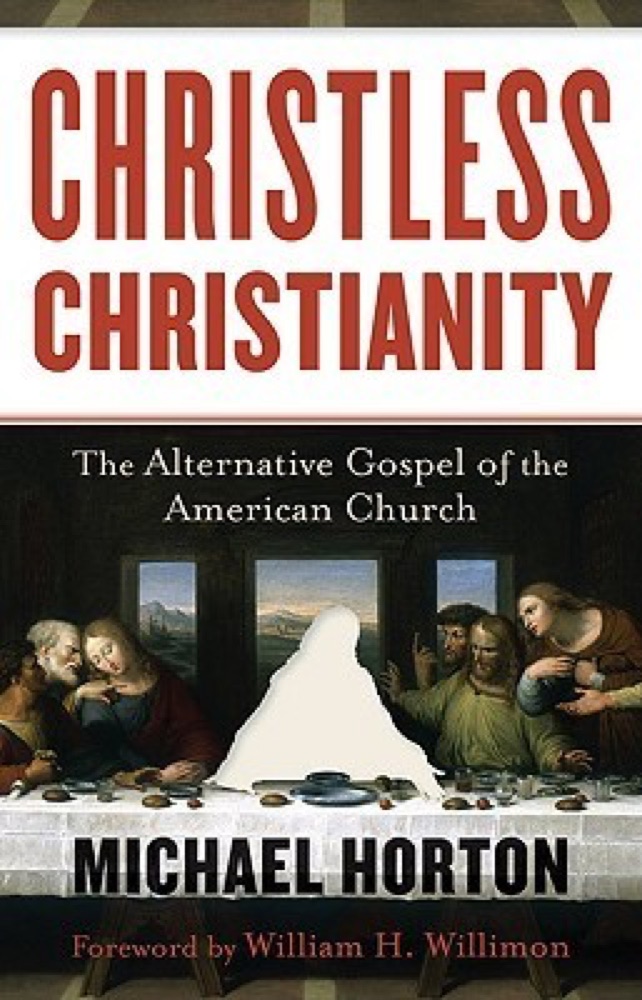
Is it possible that we have left Christ out of Christianity? Is the faith and practice of American Christians today more American than Christian? These are the provocative questions Michael Horton addresses in this thoughtful, insightful book. He argues that while we invoke the name of Christ, too often Christ and the Christ-centered gospel are pushed aside. The result is a message and a faith that are, in Horton's words, "trivial, sentimental, affirming, and irrelevant." This alternative "gospel" is a message of moralism, personal comfort, self-help, self-improvement, and individualistic religion. It trivializes God, making him a means to our selfish ends. Horton skillfully diagnoses the problem and points to the a return to the unadulterated gospel of salvation.
Book details
- First published
- 2008
- Author
- Michael Scott Horton
- Genre
- Nonfiction
- Goodreads rating
- 4.21 (2k ratings)
Keep reading
The Explicit Gospel
 Radical: Taking Back Your Faith from the American Dream
 The Prodigal God: Recovering the Heart of the Christian Faith
 Velvet Elvis: Repainting the Christian Faith
 Resident Aliens: Life in the Christian Colony
 Speaking of Jesus: The Art of Not-Evangelism
 Jesus for President: Politics for Ordinary Radicals
 unChristian: What a New Generation Really Thinks about Christianity... and Why It Matters
 The Secret Thoughts of an Unlikely Convert: An English Professor's Journey Into Christian Faith
 Simply Christian
 The Great Omission: Reclaiming Jesus's Essential Teachings on Discipleship
 A Generous Orthodoxy
 A Long Obedience in the Same Direction: Discipleship in an Instant Society
 The Normal Christian Life
 The Reason for God: Belief in an Age of Skepticism
 How People Change
 Total Truth: Liberating Christianity from its Cultural Captivity
 Amazing Grace: A Vocabulary of Faith
 Evangelism & the Sovereignty of God
 Shameless: A Case for Not Feeling Bad About Feeling Good
 Instruments in the Redeemer's Hands: People in Need of Change Helping People in Need of Change
 To Live Is Christ: Joining Paul's Journey of Faith
 Studies in the Sermon on the Mount
 The Benedict Option: A Strategy for Christians in a Post-Christian Nation
 Gospel: Recovering the Power that Made Christianity Revolutionary
 Encounters with Jesus: Unexpected Answers to Life's Biggest Questions
 The Cross of Christ
 Life Together: The Classic Exploration of Christian Community
 The Divine Conspiracy: Rediscovering Our Hidden Life in God
 All In: You Are One Decision Away From a Totally Different Life
 The Spirit of the Disciplines: Understanding How God Changes Lives
 The Gospel in a Pluralist Society
 Jesus Is: Find a New Way to Be Human
 Love Wins Low Price CD: Love Wins Low Price CD
 Leaving Church: A Memoir of Faith
 Jesus > Religion: Why He Is So Much Better Than Trying Harder, Doing More, and Being Good Enough
 The Ragamuffin Gospel
 The Crucible of Doubt: Reflections On the Quest for Faith
 The Jesus I Never Knew
 The Cost of Discipleship
 Jesus Among Other Gods: The Absolute Claims of the Christian Message
 Searching for God Knows What
 Pastrix: The Cranky, Beautiful Faith of a Sinner & Saint
 Surprised by Hope: A Study of Christian Hope and Resurrection
 Desiring God: Meditations of a Christian Hedonist
 Living the Cross Centered Life: Keeping the Gospel the Main Thing
 Adopted for Life: The Priority of Adoption for Christian Families & Churches
 Searching for Sunday: Loving, Leaving, and Finding the Church
 Because He Loves Me: How Christ Transforms Our Daily Life
 Believing God
 The Life You've Always Wanted: Spiritual Disciplines for Ordinary People
 Not a Fan: Becoming a Completely Committed Follower of Jesus
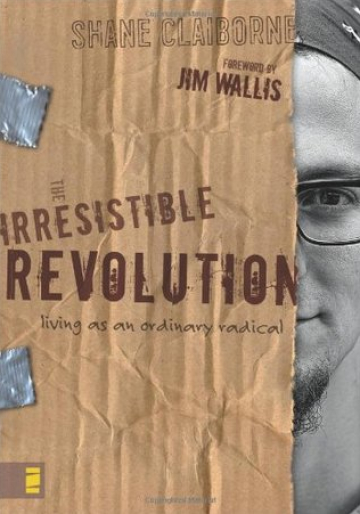 The Irresistible Revolution: Living as an Ordinary Radical
 Practicing the Way: Be with Jesus, Become Like Him, Do As He Did
 Discipline: The Glad Surrender
 What We Talk about When We Talk about God
 Celebration of Discipline: The Path to Spiritual Growth
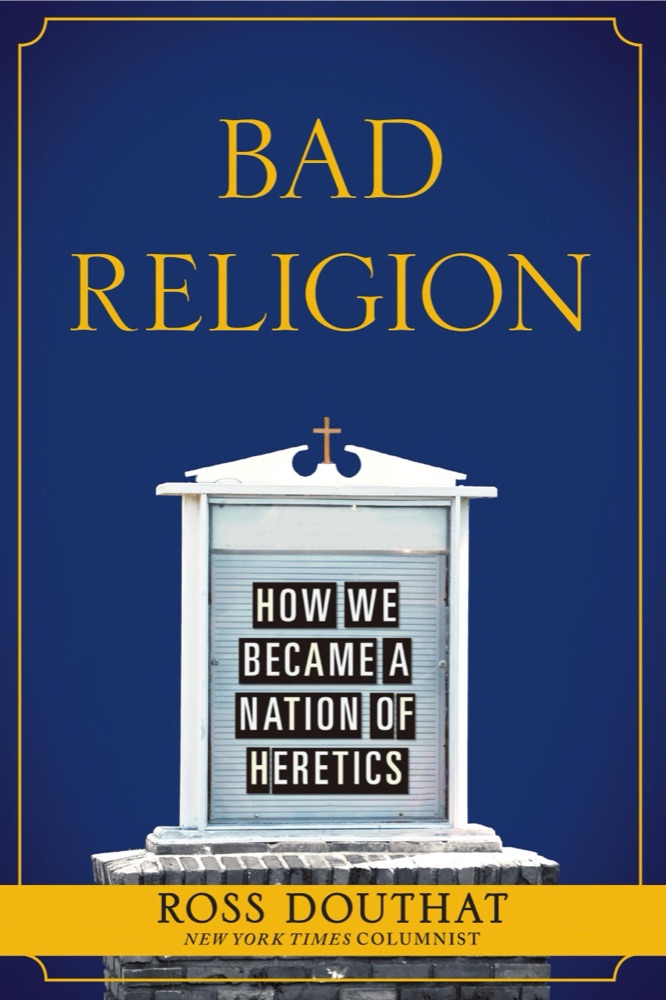 Bad Religion: How We Became a Nation of Heretics