
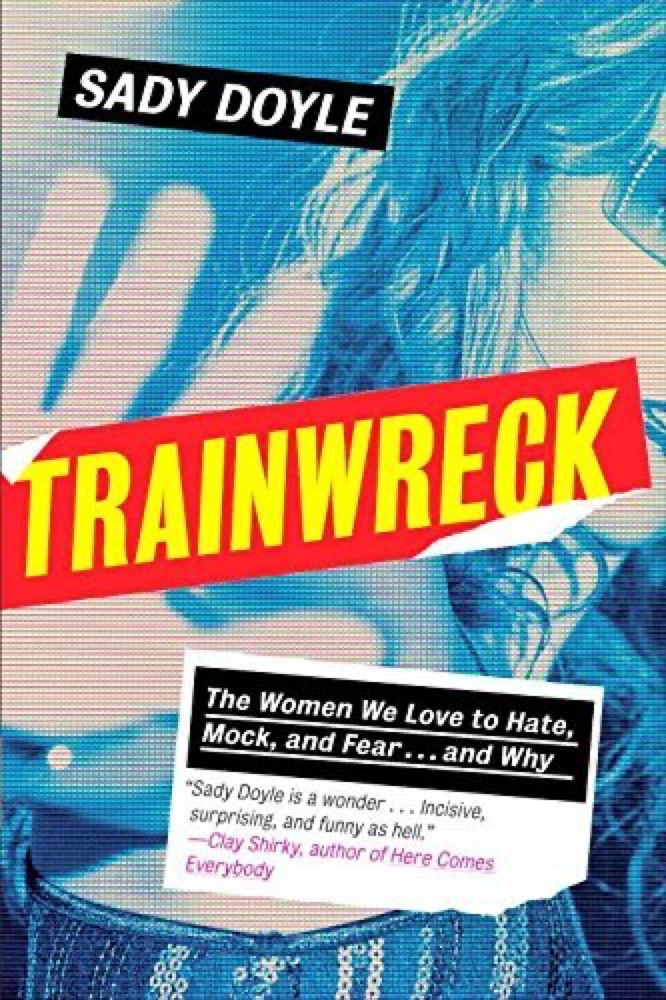
 Trainwreck: The Women We Love to Hate, Mock, and Fear... and Why
Quotes from the Book
There is little more threatening to the social order than a woman who's angry. The only thing scarier is a woman who's angry about something. The only thing scarier than that is a woman who's right.
5
In 2015, a study about jury deliberation bias conducted at Arizona State University found that "when men expressed their opinion with anger, participants rated them as more credible, which made them less confident in their own opinion. But when women expressed identical arguments and anger, they were perceived as more emotional, which made participants more confident in their own opinion.
2
The troubling implication is that mental illness in women is only acceptable (desirable, even) if it's beautiful - and a very specific type of beautiful at that - embodying a frail chicness that slots perfectly into the social narrative that white women must be protected at all costs, that their sadness can never be ugly, that Crazy women are only crazy if they're not hot.
2
When men get angry onscreen, they're angry at the system. When women are angry onscreen, they're angry at someone. Women are not allowed to be angry at the system, because that would be a tacit acceptance that we're all participants in the oppressive patriarchal structure that create this pressing, everyday anger. Women onscreen are only allowed to be angry at one person, one wrongdoing. Something they can fix. Something that doesn't antagonize audiences too much.
2
As with many things in the entertainment industry, likeability is actually code for marketability. The real question beneath “Is she likeable enough?” is “Can we sell her to people?
2
Because to me, likeability means palatability. And specifically, how palatable these characters are to a patriarchal world
1
You should be pretty, primped, and polite. Read: be fuckable enough to merit attention but don't enjoy the attention too much.
1
Unlikeable" is code. It's code for "fair game." If a woman in unlikable, she is stepping out of bounds. Which makes it fair game to decimate her socially, emotionally, or physically. Likeability gives us permission to annihilate women who don't bend to its rules.
1
All high school experiences are inherently dramatic because they are being experienced for the first time.
1
Every film is a prototype, and even if something similar has succeeded before, there’s no way to secure success via imitation. It’s a beautiful vicious cycle that is both pregnant with creative possibility and vicious in its capitalistic cannibalism.
1
The stranglehold pop culture has on us lies in its cyclical nature: it is both a mirror and an influence. There’s a reason moral panics have happened because of books, films, music videos, and video games. The stories and characters we see onscreen, the ones we grow up with, the ones that we enjoy publicly, and the ones that we secretly think are only ours to understand—all those stories influence how we see the world and how we see ourselves.
1
After all, likeability, in whatever form it takes is still, surely, a trap.
The greedy bastards of cinema become poster boys for masculine enterprise. Ambitious women, though, are usually pitted against each other or shown to be unhappy in some aspect of their life.
There is something awe inspiring about a truly coldhearted woman onscreen. It's the contradiction of desires that makes her so appealing and reviled, simultaneously. She's everything you've been told not to be - but present in the gorgeous wrapping you've been told you should aspire to.
Male anger is threatening - when men finally explode, it's presented as painful for the characters, so we are encouraged to empathize with them. Female rage, meanwhile, has been shown as dangerous to the women themselves.
I’ve devoured every serial killer-based film and series I can, read the biographies, listened to hours of true crime podcasts, watched intensely questionable YouTube videos and every new Netflix true crime documentary. I’ve rewatched The Silence of the Lambs every year, as my own sort of holiday classic, and if stressed out, I’ll turn to Zodiac as my comfort blanket movie. I see it as a safe peek inside a psychology so far removed from my life, so totally inconceivable morally, that it’s the cinematic equivalent of bungee jumping.
The Mean Girl looms large in this genre as an amplification of a teenage bully, or antagonist, or frenemy that we’ve all had in our lives. She gets her strength from creating a culture of fear, and the specter of our own personal mean girls can live on for years after we’ve left the high school hallways.
The prevalence of straight white women serves to highlight an ugly truth: that the difference between cute, acceptable unruliness and unruliness that results in ire is often as simple as the color of a woman's skin, who she prefers to sleep with, and her proximity to traditional femininity.
Watch on YouTube
About Anna Bogutskaya
We have collected 18 quotes from 1 book by Anna Bogutskaya on BookQuoters.
More about the author →About the book
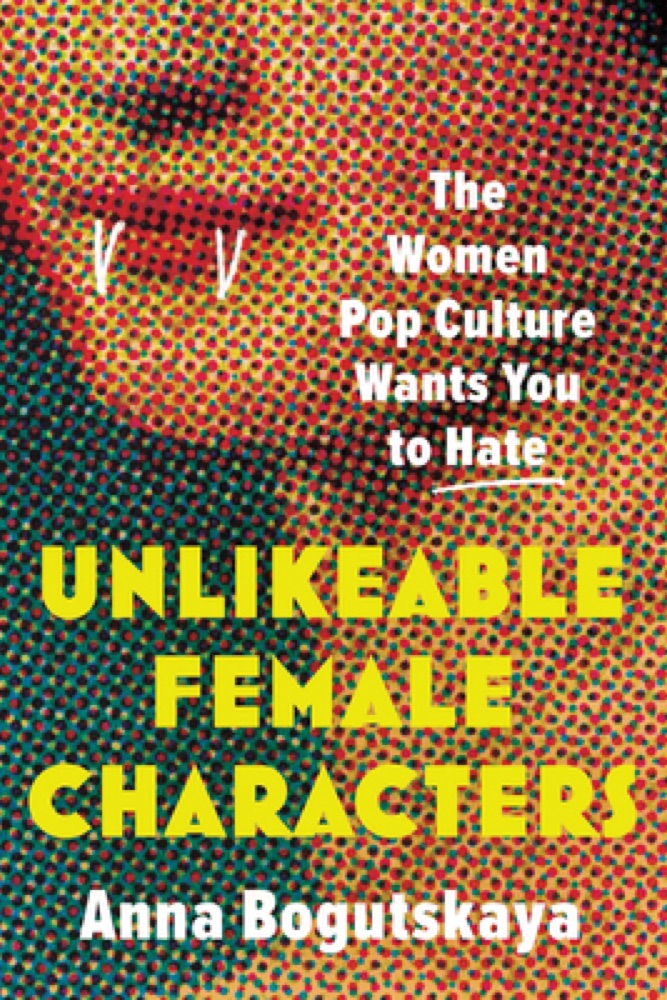
How bitches, trainwrecks, shrews, and crazy women have taken over pop culture and liberated women from having to be nice. Female characters throughout history have been burdened by the moral trap that is likeability. Any woman who dares to reveal her messy side has been treated as a cautionary tale.
Today, unlikeable female characters are everywhere in film, TV, and wider pop culture. For the first time ever, they are being accepted by audiences and even showered with industry awards. We are finally accepting that women are―gasp―fully fledged human beings. How did we get to this point?
Unlikeable Female Characters traces the evolution of highly memorable female characters, examining what exactly makes them popular, how audiences have reacted to them, and the ways in which pop culture is finally allowing us to celebrate the complexities of being a woman.
Anna Bogutskaya, film
Book details
- First published
- 2023
- Author
- Anna Bogutskaya
- Genre
- Nonfiction
- Goodreads rating
- 3.67 (4k ratings)
Keep reading
Trainwreck: The Women We Love to Hate, Mock, and Fear... and Why
 Too Fat, Too Slutty, Too Loud: The Rise and Reign of the Unruly Woman
 Sex Object: A Memoir
 Bitch: In Praise of Difficult Women
 Women and Other Monsters: Building a New Mythology
 Not That Bad: Dispatches from Rape Culture
 The Favorite Sister
 The Lady from the Black Lagoon: Hollywood Monsters and the Lost Legacy of Milicent Patrick
 Unspeakable Things: Sex, Lies and Revolution
 A Certain Hunger
 The Geek Feminist Revolution
 Full Frontal Feminism
 Where Am I Now?
 Brave
Brave
 Shrill: Notes from a Loud Woman
 The Witches Are Coming
 Rage Becomes Her: The Power of Women's Anger
 How to Be a Woman
 Dead Blondes and Bad Mothers
 Men Explain Things to Me
 Boys Will Be Boys: Power, Patriarchy and the Toxic Bonds of Mateship
 The Mother of All Questions
 The Change
 Gone Girl
 The Beauty Myth
 SCUM Manifesto
 Cunt: A Declaration of Independence
 The Female Eunuch
 Brief Interviews with Hideous Men
 The Women's Room
 Everyday Sexism
 Maeve Fly
 Mean
Mean
 Female Chauvinist Pigs: Women and the Rise of Raunch Culture
 Grotesque
 I Don't Care About Your Band: Lessons Learned from Indie Rockers, Trust Funders, Pornographers, Felons, Faux-Sensitive Hipsters, and Other Guys I've Dated
 Bad Feminist
 The Female Man
 The Rational Male
 Trick Mirror: Reflections on Self-Delusion
 Right Wing Women
 Animal: The Autobiography of a Female Body
 Monsters: A Fan's Dilemma
 The Soul of a Woman
 The Truth Will Set You Free, But First It Will Piss You Off!: Thoughts on Life, Love, and Rebellion
 Conviction
 Hunger Makes Me a Modern Girl
 Sex, Drugs, and Cocoa Puffs: A Low Culture Manifesto
 My Youth Romantic Comedy Is Wrong, As I Expected, Vol. 1
 Pandora's Jar: Women in the Greek Myths
 Moranifesto
 Cinderella Ate My Daughter: Dispatches from the Frontlines of the New Girlie-Girl Culture
 Why I Am Not a Feminist: A Feminist Manifesto
 It's Not About the Burqa
 Because You Love to Hate Me: 13 Tales of Villainy
 Desperately Seeking Shah Rukh: India's Lonely Young Women and the Search for Intimacy and Independence
 The Dialectic of Sex: The Case for Feminist Revolution
 Pornography: Men Possessing Women
 Her Majesty's Royal Coven
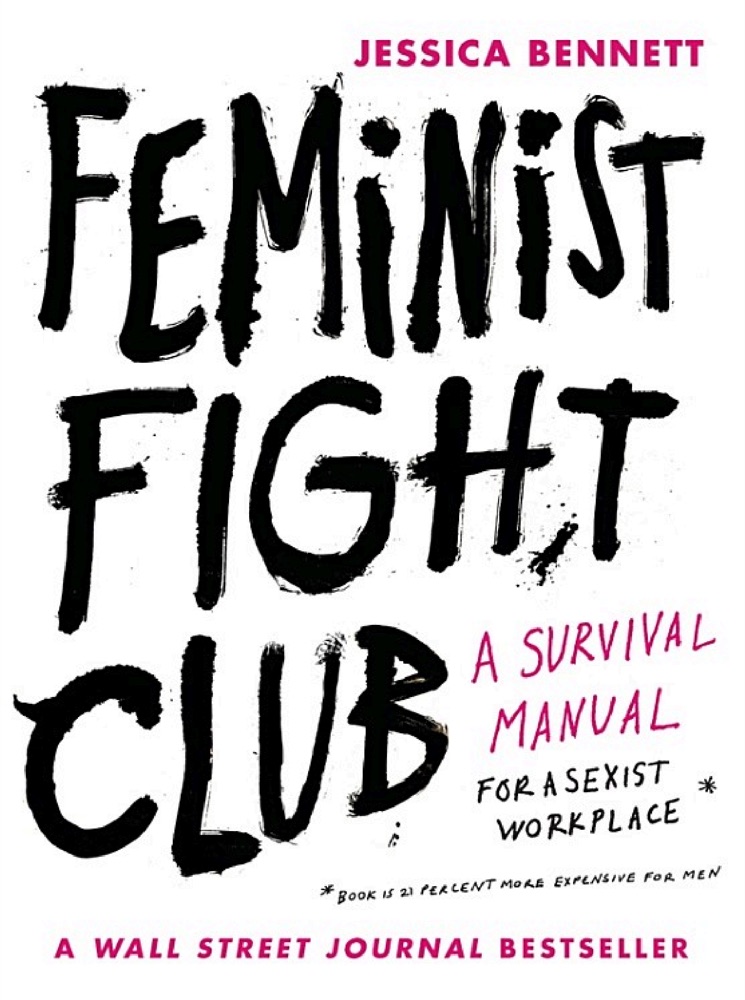 Feminist Fight Club: An Office Survival Manual for a Sexist Workplace