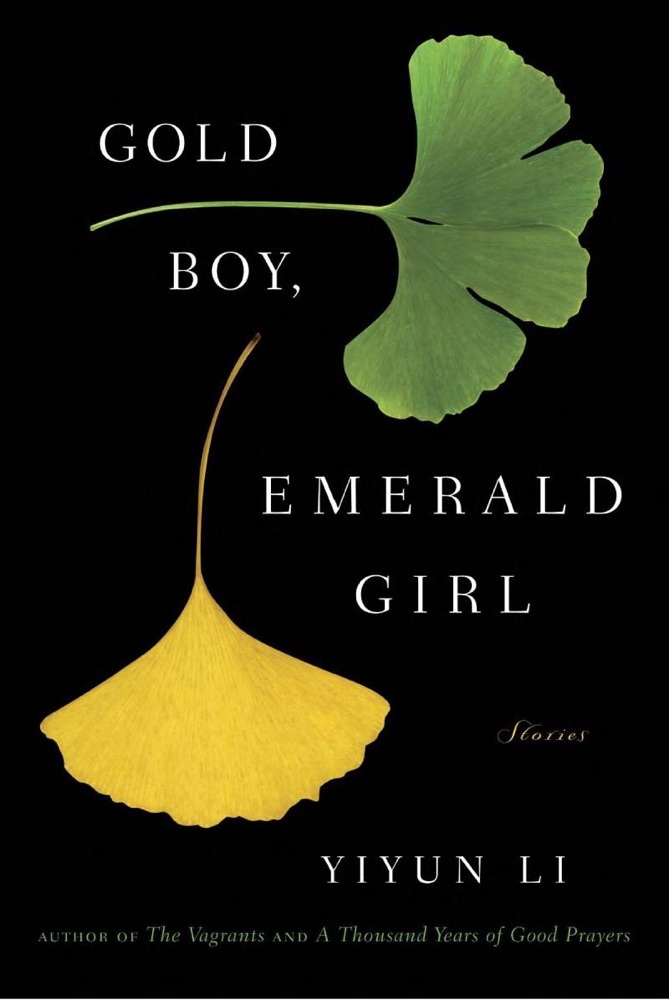
 Gold Boy, Emerald Girl
Quotes from the Book
It seemed to me that to honor the sensitivity and peculiarity of my children—so that each could have as much space as possible to grow into his individual self—was the best I could do as a mother. Yes, I loved them, and I still love them, but more important than loving is understanding and respecting them, and this includes, more than anything else, understanding and respecting their choices to end their lives.
15
And this, among other reasons, is why I am against the word “grief,” which in contemporary culture seems to indicate a process that has an end point: the sooner you get there, the sooner you prove yourself to be a good sport at living, and the less awkward people around you will feel. Sometimes people ask me where I am in the grieving process, and I wonder whether they understand anything at all about losing someone. How lonely the dead would feel, if the living were to stand up from death’s shadow, clap their hands, dust their pants, and say to themselves and to the world, I am done with my grieving; from this point on it’s life as usual, business as usual.
13
I don’t want an end point to my sorrow. The death of a child is not a heat wave or a snowstorm, nor an obstacle race to rush through and win, nor an acute or chronic illness to recover from. What is grief but a word, a shortcut, a simplification of something much larger than that word?
13
There is no real salvation from one's own life; books, however, off the approximation of it.
10
However, I do believe that we learn to suffer better. We become more discerning in our suffering: there are things that are worth suffering for, and then there is the rest—minor suffering and inessential pain—that is but pebbles, which can be ignored or kicked aside. We also become less rigid: suffering suffuses one’s being; one no longer resists.
8
My garden is not a metaphor for hope or regeneration, the flowers are never tasked to be the heralds for brightness and optimism. Things in nature merely grow. There is no suicidal or angry rose, there is no depressed or rebellious lily. Plants have but one goal: to live. In order to live they grow when they can, and go into dormancy if needed. They live until they die—and either they die as destined by nature or are cut down by other elements in nature. A garden is a placeholder. Flowers are placeholders.
6
Parents die, and children go on living. It is statistically sound to say that this is the case for the majority of the population. But sometimes children die before their parents. Children die, and parents go on living. Those parents go on living because they do not have many options they either live or follow their children down to Hades. Children die, and parents go on living. Those parents go on living because death, though a hard, hard thing, is not always the hardest thing. Both my children chose a hard thing. We are left with the hardest:to live after their deaths.
6
Life, in an absolute sense, is worth living, just as art is worth pursuing, science is worth exploring, justice is worth seeking. However, the fact that something is worth doing doesn't always mean a person is endowed with the capacity to do it, or that a person, once endowed with that capacity, can retain it. The gap between worth doing and being able to do is where aspiration dwells for the young and decline lies in wait for the old.
5
Is this life, which may be worth living, worth suffering for? If life is worth suffering for, should there be a limit, or should one have to suffer unquestioningly, all in the name of living?
5
A mother can do all things humanly possible for children and yet cannot keep them alive.
4
Many objects outlive people—this thought has often occurred to me when I see in a museum an eighteenth-century pianoforte or a twelfth-century sword or a bowl from 500 BCE. All of Vincent’s belongings and all of James’s belongings have outlived them; not a single item has left our care. There are Vincent’s many paintings hung around the house. There is James’s collection of pocket watches on a shelf. Everywhere I turn in the house there are objects: their meanings reside in the memories connected to them; the memories limn the voids, which cannot be filled by the objects.
4
Words may fall short, but they cast long shadows that sometimes can reach the unspeakable.
3
Thinking about my children is like air, like time. Thinking about them will only end when I reach the end of my life.
3
Fiction, I've learned from writing it and reading it, tends to be about the inexplicable and illogical. Sometimes my students complain about what they read in fiction - I don't believe this would happen in real life, or, I don't believe any parent would do that to their children. What can I say to a young person who has strong convictions but a failure of the imagination? Not much, really. The world, it seems to me, is governed by strong conviction and paltry imagination and meager understanding.
3
few weeks after James died, I wrote to Jane, a colleague who works in theater: “Our life seems to have entered the realm of Shakespearean dramas or Greek tragedies.” And she replied: “Your losses are indeed epic and unfathomably hard; no language of mine can meet that.” And yet life is still to be lived, inside tragedies, outside tragedies, and despite tragedies. Writing this book is a way to separate myself from that strange realm while simultaneously settling myself permanently into that realm.
3
I am not a grieving mother. I am the mother who will live, every single day, for the rest of my life, with the pain of losing Vincent and James, and with the memory of bringing them up.
3
Never feel that you’re obliged to show your pain to the world,” she said. “Very few people deserve to see your tears.
3
Writing, teaching, gardening, grocery shopping, cooking, doing laundry—all these activities are time-bound, and they do not compete with my children, who are timeless now. There is no rush, as I will have every single day, for the rest of my life, to think about Vincent and James, outside time, outside the many activities of everyday life.
3
I saw the news and have been agonizing over what to say to you. If there is anything I can do to ease your pain, let me know. You did everything you could to help James find his place in life, but he wanted to leave and one must let go. I, too, was unable to reach him in my very limited way, and I am devastated.
3
Why would a woman who knew suffering give birth to her children? That question from Vincent—I never had a good answer for him.
2
Grief fills the room up of my absent child, Lies in his bed, walks up and down with me, Puts on his pretty looks, repeats his words, Remembers me of all his gracious parts, Stuffs out his vacant garments with his form; Then, have I reason to be fond of grief? Fare you well. Had you such a loss as I, I could give better comfort than you do. I will not keep this form upon my head When there is such disorder in my wit.
2
Children die, and they are not happy. And their parents can never know if those children died because they were not happy, or they were not happy because they sensed, too early, that they must face their own deaths.
2
A mother can cook every meal with great care, but a mother’s care, like a point in geometry, is essential to the order of things, insubstantial in the scale of things.
2
If one is destined to live as a Sisyphus in an abyss, there is good sense in distinguishing a meaningful boulder from insignificant pebbles. A Sisyphus making a boulder out of a pebble would only become a comedy. In the past few months I've developed a habit of scrutinizing my mind: is this thought a pebble of a thought, is this worry a pebble of a worry, is this question, seemingly unanswerable, only a pebble of a question?
1
Life in an absolute sense, is worth living, just as art is worth pursuing, science is worth exploring, justice is worth seeking.
1
When life is full of tasks, obligations, and events, time carries us, too swiftly it seems, for is it not our perpetual protest about life that there is not enough time for this or that? But those who complain about that - myself at different phases of life, too - forget how fortunate they are: Life does not guarantee that time has the capacity to carry us. Time flies, time is fleeting, but then there comes a moment when time, no longer nimble-footed, no longer winged, is for us to carry.
1
For six years before Vincent’s death, I had lived with a dread that one day he might choose not to live. There were days of concern and nights of anxiety, and there were occasions for despair, but these feelings, I believed, were better kept under a calm surface. The prospect of a fire does not mean one has to carry an extinguisher on one’s back around the clock.
1
I do believe that we learn to suffer better. We become more discerning in our suffering: there are things that are worth suffering for, and then there is the rest—minor suffering and inessential pain—that is but pebbles, which can be ignored or kicked aside. We also become less rigid: suffering suffuses one’s being; one no longer resists.
1
Now that I have a garden, I’ve come to understand Trevor’s point: gardening is good training for a novelist. One learns to be patient, one learns to make concessions, one learns to redefine one’s visions and ambitions, and one learns to stop being a perfectionist. A garden is good training for life, too.
1
Watch on YouTube
About Yiyun Li
We have collected 130 quotes from 5 books by Yiyun Li on BookQuoters.
More about the author →More by Yiyun Li
Gold Boy, Emerald Girl
 Where Reasons End
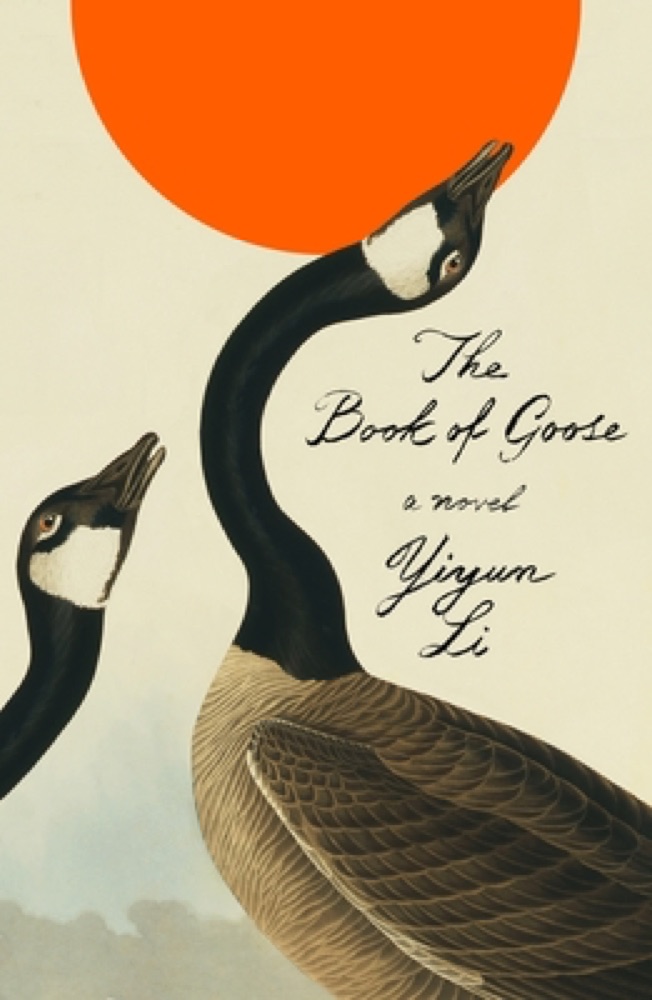 The Book of Goose
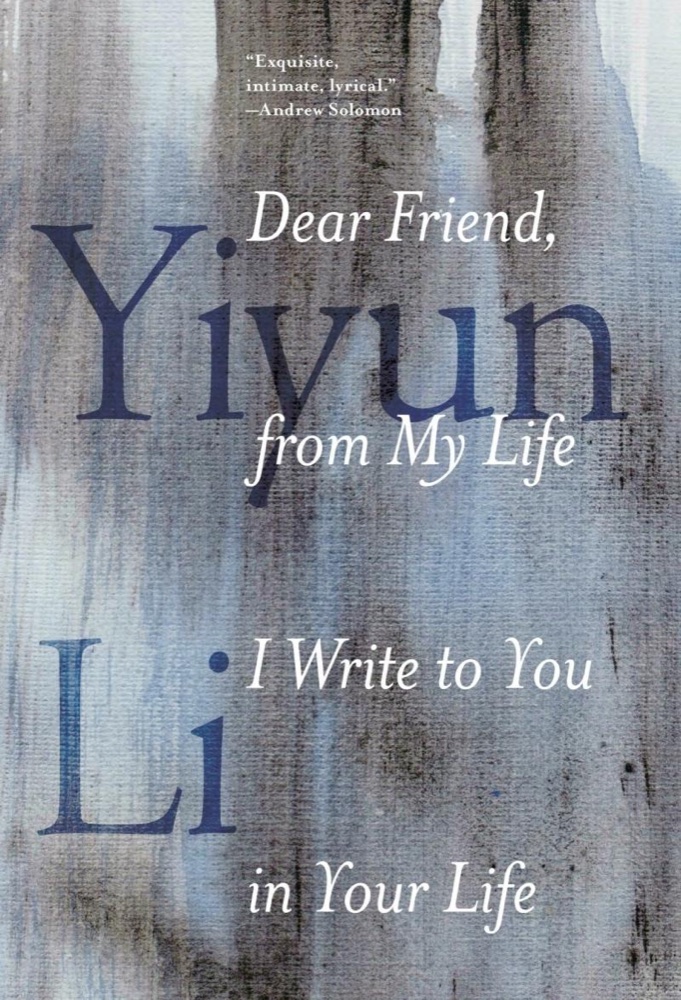 Dear Friend, from My Life I Write to You in Your Life
About the book
National Book Award Winner for NonfictionFinalist for the PEN/Jean Stein Book AwardAndrew Carnegie Medal for Excellence in NonfictionLong-listed for the National Book Critics Circle Award for AutobiographyOne of the New York Times Notable Books of the YearYiyun Li’s remarkable, defiant work of radical acceptance as she considers the loss of her son James.“There is no good way to say this,” Yiyun Li writes at the beginning of this book.“There is no good way to state these facts, which must be acknowledged . . . My husband and I had two children and lost them both. Vincent in 2017, at sixteen, James in 2024, at nineteen. Both chose suicide, and both died not far from home.”There is no good way to say this—because words fall short. It takes only an instant for death to become fact, “a single point in a time line.” Living now on this single point, Li turns to thinking and reasoning and searc
The buzz
- The New York TimesReview in The New York Timesprofessional review (via Book Marks)
- The Washington PostReview in The Washington Postprofessional review (via Book Marks)
- The GuardianReview in The Guardianprofessional review (via Book Marks)
- LA Review of BooksReview in LA Review of Booksprofessional review (via Book Marks)
- The Boston GlobeReview in The Boston Globeprofessional review (via Book Marks)
- Sydney Morning HeraldReview in Sydney Morning Heraldprofessional review (via Book Marks)
Keep reading
 Grief Is for People
 A Widow's Story
 Journal of a Solitude
 When Breath Becomes Air
 A Matter of Death and Life
 Why Be Happy When You Could Be Normal?
The Book of Goose
Why Be Happy When You Could Be Normal?
The Book of Goose
 Briefly Perfectly Human: Making an Authentic Life by Getting Real About the End
 These Precious Days: Essays
 On Grief and Grieving: Finding the Meaning of Grief Through the Five Stages of Loss
 No Cure for Being Human: And Other Truths I Need to Hear
 Any Ordinary Day
 Spring
 Wild Dark Shore
 These Silent Woods
 Blueberries: Essays Concerning Understanding
 The Beauty of What Remains: How Our Greatest Fear Becomes Our Greatest Gift
 Where the Lost Wander
 Lost & Found: A Memoir
 Motherhood
 Creatures of a Day: And Other Tales of Psychotherapy
Dear Friend, from My Life I Write to You in Your Life
Creatures of a Day: And Other Tales of Psychotherapy
Dear Friend, from My Life I Write to You in Your Life
 Life of Pi
 Managing Expectations: A Memoir in Essays – A Poignant Collection of Personal Stories on Acting, Failure, and Motherhood's Joy
 Confessions of a Funeral Director: How the Business of Death Saved My Life
Where Reasons End
Confessions of a Funeral Director: How the Business of Death Saved My Life
Where Reasons End
 Breasts and Eggs
 A Grief Observed
 Levels of Life
 Imagine Me Gone
 Nothing to Be Frightened Of
 Here I Am
 Bomb Shelter: Love, Time, and Other Explosives
 Carry On, Warrior: Thoughts on Life Unarmed
 The Setting Sun
 I Am, I Am, I Am: Seventeen Brushes with Death
 All the Little Live Things
 Tolstoy and the Purple Chair: My Year of Magical Reading
 Still Life
 Postcards from No Man's Land
 The Year of Magical Thinking
 Impossible Creatures
 A Living Remedy: A Memoir – A Daughter's Narrative of Adoption, Class Inequality, and Grief in America
 The Cost of Living: A Working Autobiography
 Heartwood
 Somewhere Towards the End
 You Could Make This Place Beautiful
 Day
Day
 No Time To Spare: Thinking About What Matters
 Stitches: A Handbook on Meaning, Hope, and Repair
 The Rules Do Not Apply
 Everything Happens for a Reason: And Other Lies I've Loved
 Good Dirt
 Children of the Mind
 Anthropology of an American Girl
 A Grace Disguised: How the Soul Grows through Loss
 Notes on Grief
 Refuge: An Unnatural History of Family and Place
 In Search of Our Mothers' Gardens: Womanist Prose