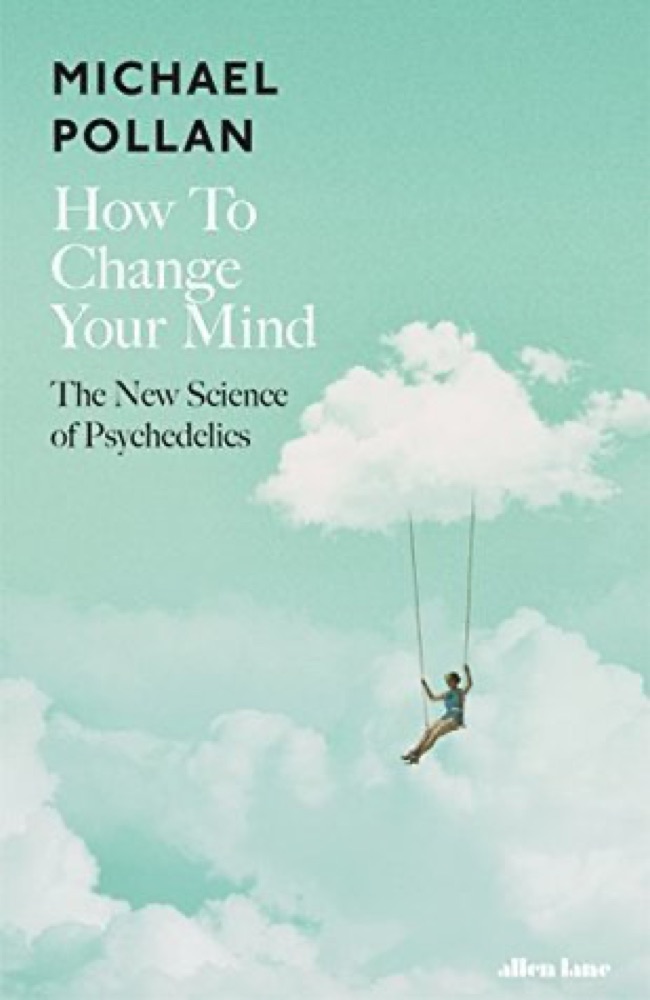
 How to Change Your Mind: The New Science of Psychedelics
Quotes from the Book
Whether you experience heaven or hell, remember that it is your mind which creates them.
36
The fact of the matter is that all apparent forms of matter and body are momentary clusters of energy. We are little more than flickers on a multidimensional television screen. This realization directly experienced can be delightful. You suddenly wake up from the delusion of separate form and hook up to the cosmic dance. Consciousness slides along the wave matrices, silently at the speed of light
15
as a guide and protection. Trust your divinity, trust your brain,
7
All deities and demons, all heavens and hells are internal.
3
Judged against the criterion of the use of available fact, the greatest psychologists of our century are William James and Carl Jung.5 Both of these men avoided the narrow paths of behaviorism and experimentalism. Both fought to preserve experience and consciousness as an area of scientific research. Both kept open to the advance of scientific theory and both refused to shut off eastern scholarship from consideration.
1
The underlying solution - repeated again and again - is to recognize that your brain is producing the visions. They do not exist. Nothing exists except as your consciousness gives it life.
1
Whenever in doubt, turn off your mind, relax, float downstream
Modern psychedelic chemicals provide a key to this forgotten realm of awareness. But just as this manual without the psychedelic awareness is nothing but an exercise in academic Tibetology, so, too, the potent chemical key is of little value without the guidance and the teachings.
There are two things which have caused misunderstanding. One is that the teachings seem to be addressed to the dead or the dying; the other that the title contains the expression “Liberation through Hearing” (in Tibetan, Thos-grol).
They forget that active memory is only a small part of our normal consciousness, and that our subconscious memory registers and preserves every past impression and experience which our waking mind fails to recall.
To provide “special training” for the “special experience” provided by psychedelic materials is the purpose of this version of the Tibetan Book of the Dead.
The background of this unusual book is not the niggardly European “either-or,” but a magnificently affirmative “both-and.
The psychologies of the east have always found practical application in the running of the state, in the running of daily life and family. A wealth of guides and handbooks exists: the Book of Tao, the Analects of Confucius, the Gita, the I Ching, the Tibetan Book of the Dead,
The methods of investigating consciousness change, such as meditation, yoga, monastic retreat, and sensory deprivation, and are seen as alien to scientific investigation. And most damning of all in the eyes of the European scholar, is the alleged disregard of eastern psychologies for the practical, behavioral and social aspects of life.
Eastern psychology, by contrast, offers us a long history of detailed observation and systematization of the range of human consciousness along with an enormous literature of practical methods for controlling and changing consciousness.
A psychology is based on the available data and the psychologists’ ability and willingness to utilize them. The behaviorism and experimentalism of twentieth-century western psychology is so narrow as to be mostly trivial. Consciousness is eliminated from the field of inquiry. Social application and social meaning are largely neglected. A curious ritualism is enacted by a priesthood rapidly growing in power and numbers
The Basic Trusts and Beliefs. You must be ready to accept the possibility that there is a limitless range of awarenesses for which we now have no words; that awareness can expand beyond the range of your ego, your self, your familiar identity, beyond everything you have learned, beyond your notions of space and time, beyond the differences which usually separate people from each other and from the world around them.
The first period (Chikhai Bardo) is that of complete transcendence—beyond words, beyond space-time, beyond self. There are no visions, no sense of self, no thoughts. There are only pure awareness and ecstatic freedom from all game (and biological) involvements.
The Tibetan Book of the Dead was called in its own language the Bardo Thödol, which means “Liberation by Hearing on the After-Death Plane.” The book stresses over and over that the free consciousness has only to hear and remember the teachings in order to be liberated.
The modern fixation on abstract, quantifiable, and rational modes of thought has profoundly alienated us from the directly sensorial and mimetic forms of knowing and relating maintained by indigenous cultures, allowing us to treat the natural world as something separate from ourselves. The entheogenic experience can temporarily reconnect the modern individual with lost participatory modes of awareness that may induce a greater sensitivity to his or her physical surroundings, beside raising a psychic periscope into the marginalized realms of mythological archetype and imaginative vision.
quantifiable, and rational modes of thought has profoundly alienated us from the directly sensorial and mimetic forms of knowing and relating maintained by indigenous cultures, allowing us to treat the natural world as something separate from ourselves. The entheogenic experience can temporarily reconnect the modern individual with lost participatory modes of awareness that may induce a greater sensitivity to his or her physical surroundings, beside raising a psychic periscope into the marginalized realms of mythological archetype and imaginative vision.
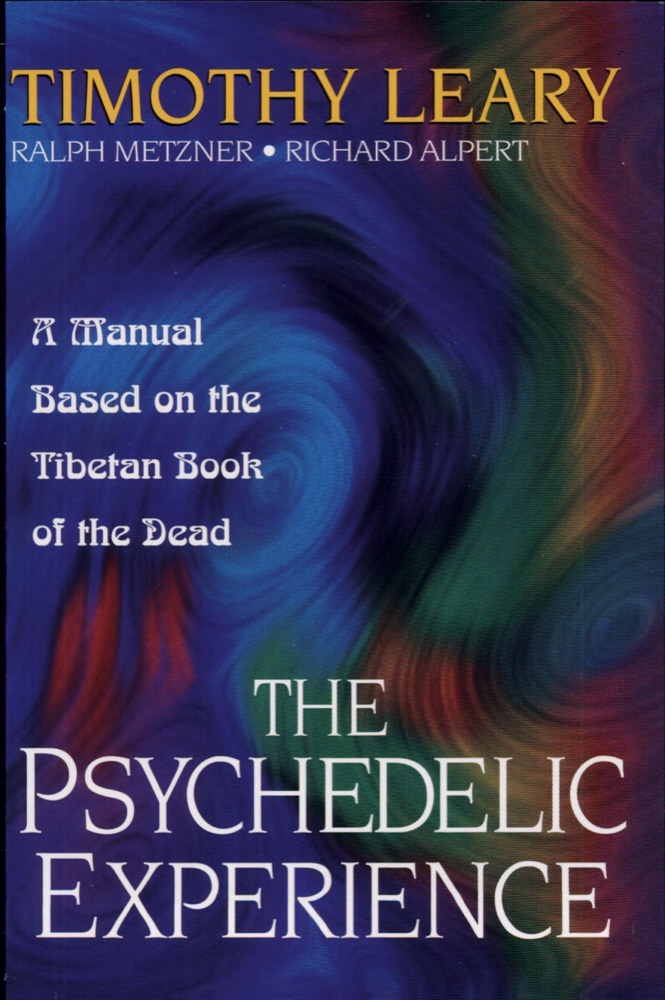
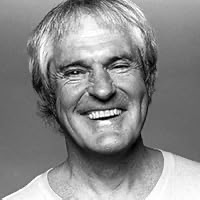
Leary’s first psychedelic trip, on psilocybin, occurred in Mexico in 1960, as he approached his fortieth birthday. Returning to Harvard, he changed the subject of his research from interpersonal communication and what he termed “existential transactions” to an exploration of the possible uses of psychedelics for transforming personality and behavior.
the free consciousness has only to hear and remember the teachings in order to be liberated. The Tibetan Book of the Dead is ostensibly a book describing the experiences to be expected at the moment of death, during an intermediate phase lasting forty-nine (seven times seven) days, and during rebirth into another bodily frame.
Watch on YouTube
About Timothy Leary
We have collected 23 quotes from 1 book by Timothy Leary on BookQuoters.
More about the author →About the book
This manual uses material from The Tibetan Book of the Dead for this preparation. The authors also make an important contribution to the interpretation of The Tibetan Book of the Dead. They show that it is concerned not with the dead, but with the living. The last section of the manual provides instructions for an actual psychedelic session, under adequate safeguards.
The authors were engaged in a program of experiments with LSD and other psychedelic drugs at Harvard University until sensational national publicity unfairly concentrating on student interest in the drugs, led to the suspension of the experiments. Since then, the authors have continued their work without academic auspices.
Book details
- First published
- 1964
- Author
- Timothy Leary
- Genre
- Nonfiction
- Goodreads rating
- 3.80 (6k ratings)
Keep reading
How to Change Your Mind: The New Science of Psychedelics
 Tibetan Book of the Dead
 Myths to Live By
 The Joy of Living: Unlocking the Secret and Science of Happiness
 Food of the Gods: The Search for the Original Tree of Knowledge
 In Love with the World: A Monk's Journey Through the Bardos of Living and Dying
 Eastern Body, Western Mind: Psychology and the Chakra System as a Path to the Self
 The Origin of Consciousness in the Breakdown of the Bicameral Mind
 The Doors of Perception & Heaven and Hell
 Pihkal: A Chemical Love Story
 The World's Religions
 The Yoga Sutras of Patanjali
 The Occult
 The Convoluted Universe, Book 1
 The Book of Secrets
 No Self, No Problem: How Neuropsychology Is Catching Up to Buddhism
 Waking Up: A Guide to Spirituality Without Religion
 Maps of Meaning: The Architecture of Belief
 Liber Null and Psychonaut: An Introduction to Chaos Magic
 Consciousness and the Brain: Deciphering How the Brain Codes Our Thoughts
 The Book: On the Taboo Against Knowing Who You Are
 Man and His Symbols
 How to Know Higher Worlds: A Modern Path of Initiation
 The Wise Heart: A Guide to the Universal Teachings of Buddhist Psychology
 The Tibetan Book of Living and Dying
 Hallucinations
 The Perennial Philosophy
 Seth Speaks: The Eternal Validity of the Soul
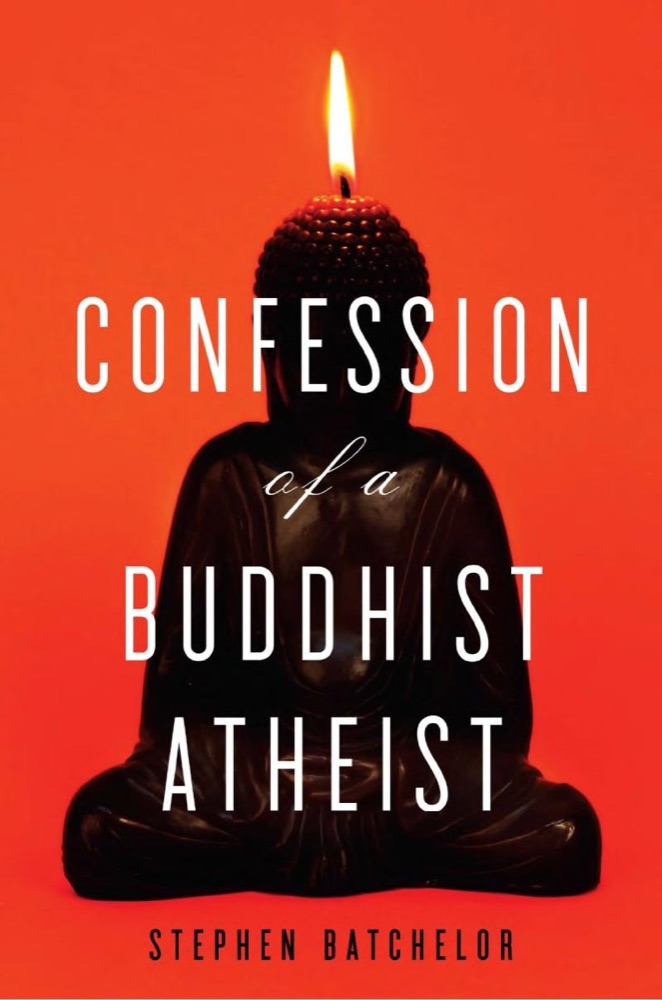 Confession of a Buddhist Atheist
 Travels
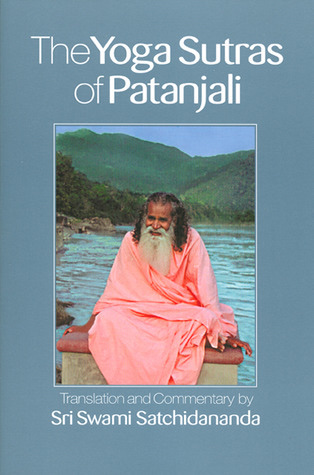 The Yoga Sutras of Pantanjali
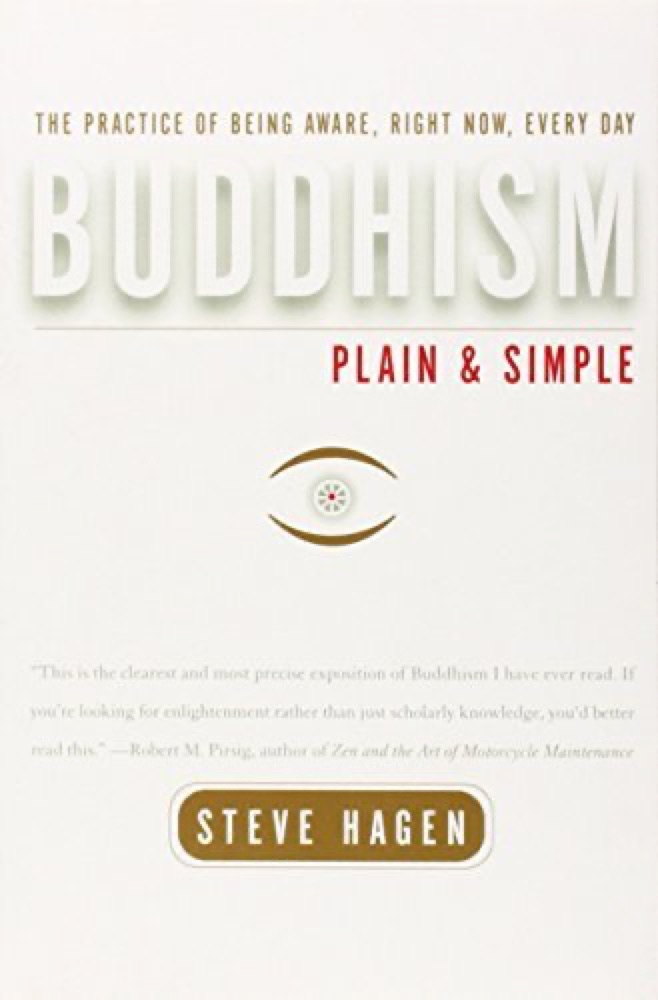 Buddhism Plain & Simple: The Practice of Being Aware, Right Now, Every Day
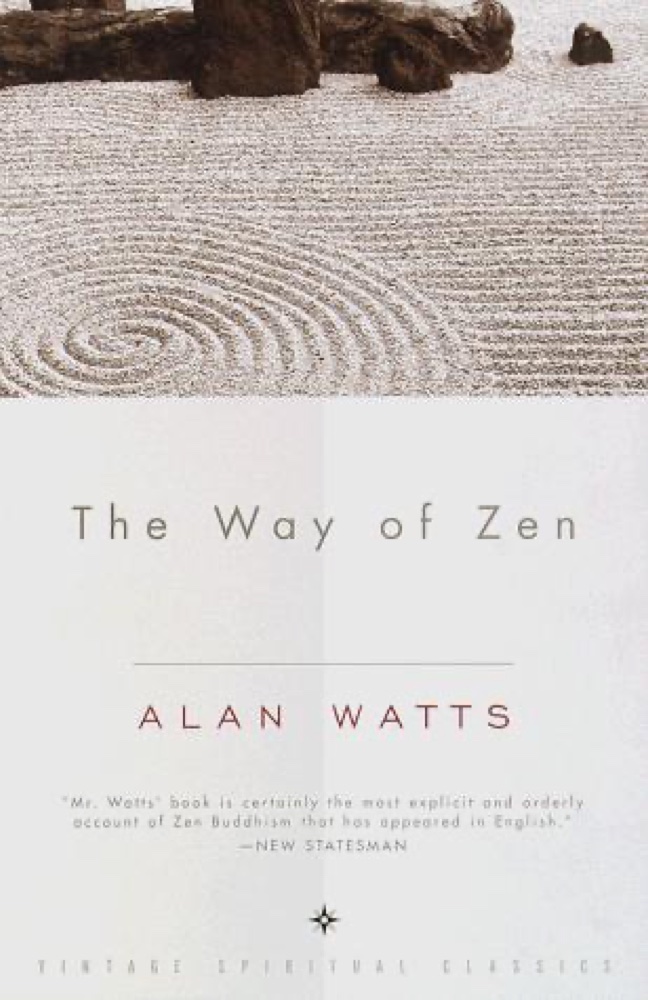 The Way of Zen
 The Master and His Emissary: The Divided Brain and the Making of the Western World
 Proof of Heaven: A Neurosurgeon's Journey into the Afterlife
 Many Lives, Many Masters: The True Story of a Prominent Psychiatrist, His Young Patient, and the Past Life Therapy That Changed Both Their Lives
 The Cosmic Serpent: DNA and the Origins of Knowledge
 The Mind Illuminated: A Complete Meditation Guide Integrating Buddhist Wisdom and Brain Science
 The Varieties of Religious Experience
 The Book of Secrets: Unlocking the Hidden Dimensions of Your Life
 The Doors of Perception
 Raja-Yoga
 The Active Side of Infinity
 Total Freedom: The Essential Krishnamurti
 The Source Field Investigations: The Hidden Science and Lost Civilizations Behind the 2012 Prophecies
 Ego and Archetype: Individuation and the Religious Function of the Psyche
 Meditation
 The Big Picture: On the Origins of Life, Meaning, and the Universe Itself
 The Spiral Dance: A Rebirth of the Ancient Religion of the Great Goddess
 Cutting Through Spiritual Materialism
 Autobiography of a Yogi
 Why Buddhism Is True: The Science and Philosophy of Meditation and Enlightenment
 Buddhism: A Very Short Introduction
 Finding Meaning in the Second Half of Life: How to Finally, Really Grow Up
 SynchroDestiny: Harnessing the Infinite Power of Coincidence to Create Miracles
 Destination: Void
 The Universe in a Single Atom: The Convergence of Science and Spirituality
 Modern Man in Search of a Soul
 Awakening the Buddha Within