
 The Big Picture: On the Origins of Life, Meaning, and the Universe Itself
Quotes from the Book
We are part of the universe that has developed a remarkable ability: We can hold an image of the world in our minds. We are matter contemplating itself.
51
At heart, science is the quest for awesome - the literal awe that you feel when you understand something profound for the first time. It's a feeling we are all born with, although it often gets lost as we grow up and more mundane concerns take over our lives.
24
Way back in 1831, Michael Faraday, one of the founders of our modern understanding of electromagnetism, was asked by an inquiring politician about the usefulness of this newfangled "electricity" stuff. His apocryphal reply: "I know not, but I wager that one day your government will tax it".
10
Einstein's paper on the photoelectric effect was the work for which he ultimately won the Nobel Prize. It was published in 1905, and Einstein has another paper in the very same journal where it appeared - his other paper was the one that formulated the special theory of relativity. That's what it was like to be Einstein in 1905; you publish a groundbreaking paper that helps lay the foundation of quantum mechanics, and for which you later win the Nobel Prize, but it's only the second most important paper that you publish in that issue of the journal.
7
(A substantial fraction of the atoms in the body of a typical physicist were once in the form of pizza.)
6
When society puts some small fraction of its wealth into asking and answering big questions, it reminds us all of the curiosity we have about our universe. And that leads to all sorts of good places.
6
Each day, the moon’s gravitational field tugs at the earth as it rotates underneath. At CERN, this tiny stress caused the total length of the LEP tunnel to stretch and contract by about a millimeter (one-twenty-fifth of an inch) every day. Not such a big deal in a seventeen-mile-long beam pipe, but enough to cause a tiny fluctuation in the energy of the electrons and positrons—one that was easily detectable by the high-precision instruments. After some initial puzzlement at the daily energy variations, the CERN physicists quickly figured out what was going on.
3
There are the force particles that carry gravity and electromagnetism and the nuclear forces, which hold the matter particles together. And then there is the Higgs, in its own unique category.
2
To be honest, physicists don’t react with unalloyed approval when I tell them about The Particle at the End of the Universe. As far as we know there isn’t any “end” to the universe, either at some location in space or at some future moment in time. And if there were a location where the universe could be said to end, there’s no reason to think you would find a particle there. And if you did, there’s no reason to think it would be the Higgs boson.
1
At one point Pope Pius XII tried to suggest that the Primeval Atom could be identified with “Let there be light” from Genesis, but Lemaître himself persuaded him to drop that line of reasoning.
1
Gone are the days—as recent as the first half of the twentieth century—when a genius like Italian physicist Enrico Fermi could propose a new theory of the weak interactions, then turn around and guide the construction of the first self-sustained artificial nuclear chain reaction
1
Passion for science derives from an aesthetic sensibility, not a practical one. We discover something new about the world, and that lets us better appreciate its beauty. On the surface, the weak interactions are a mess: The force-carrying bosons have different masses and charges, and different interaction strengths for different particles. Then we dig deeper, and an elegant mechanism emerges: a broken symmetry, hidden from our view by a field pervading space. It’s like being able to read poetry in the original language, instead of being stuck with mediocre translations.
1
That’s how science works. We don’t “prove” results like we can in mathematics or logic; we simply add to their plausibility by accumulating more and more evidence.
1
The world is made of fields—substances spread through all of space that we notice through their vibrations, which appear to us as particles. The electric field and the gravitational field might seem familiar, but according to quantum field theory even particles like electrons and quarks are really vibrations in certain kinds of fields. • The Higgs boson is a vibration in the Higgs field, just as a photon of light is a vibration in the electromagnetic field. • The four famous forces of nature arise from symmetries—changes we can make to a situation without changing anything important about what happens. (Yes, it makes no immediate sense that “a change that doesn’t make a difference” leads directly to “a force of nature” . . . but that was one of the startling insights of twentieth-century physics.) • Symmetries are sometimes hidden and therefore invisible to us. Physicists often say that hidden symmetries are “broken,” but they’re still there in the underlying laws of physics—they’re simply disguised in the immediately observable world. • The weak nuclear force, in particular, is based on a certain kind of symmetry. If that symmetry were unbroken, it would be impossible for elementary particles to have mass. They would all zip around at the speed of light. • But most elementary particles do have mass, and they don’t zip around at the speed of light. Therefore, the symmetry of the weak interactions must be broken. • When space is completely empty, most fields are turned off, set to zero. If a field is not zero in empty space, it can break a symmetry. In the case of the weak interactions, that’s the job of the Higgs field. Without it, the universe would be an utterly different place. Got
1
But Waldegrave didn’t simply give up; he challenged the scientists to provide him with an understandable explanation of the role of the Higgs boson, one that would fit on a single piece of paper. He offered a bottle of vintage champagne to whoever came up with the best explanation. Miller and four colleagues managed to cook up an engaging metaphor that was deemed suitable by the science minister. All five got bottles of champagne, and of course the United Kingdom supported the LHC.
1
That’s what it was like to be Einstein in 1905: You publish a groundbreaking paper that helps lay the foundations of quantum mechanics, and for which you later win the Nobel Prize, but it’s only the second-most important paper that you publish in that issue of the journal.
1
Lederman is also a charismatic personality, famous among his colleagues for his humor and storytelling ability. One of his favorite anecdotes relates the time when, as a graduate student, he arranged to bump into Albert Einstein while walking the grounds at the Institute for Advanced Study at Princeton. The great man listened patiently as the eager youngster explained the particle-physics research he was doing at Columbia, and then said with a smile, “That is not interesting.
1
It’s only because the data force us into corners that we are inspired to create the highly counterintuitive structures that form the basis for modern physics.
1
The strength of the electromagnetic interaction, for example, is fixed by a number called the “fine-structure constant,” a famous quantity in physics that is numerically close to 1/137.
1
signal of particles beyond the Standard Model, helping the Higgs decay into two photons.
There are tiny hints in the data that may indicate that this new particle is not just the minimal Higgs.
Calculating the relevant processes provides full employment for theoretical physicists.
(Neutrino masses aren’t completely understood as yet, so let’s pretend that they don’t interact with the Higgs, although the jury is still out.)
If a symmetry between electrons and electron neutrinos is like comparing apples to oranges, trying to connect fermions with bosons is like comparing bananas to orangutans.
Walter Wagner, the man who had gone to court to stop the Large Hadron Collider from beginning operations. A serious charge had been leveled: the LHC was a hazard to the very existence of life on earth. JO: So, roughly speaking, what are the chances the world is going to be destroyed? Is it one in a million, one in a billion? WW: Well, the best we can say right now is about a one-in-two chance. JO: Hold on a second. It’s . . . fifty-fifty? WW: Yeah, fifty-fifty . . . If you have something that can happen, and something that won’t necessarily happen, it’s going to either happen, or it’s going to not happen, and, so, the best guess is one in two. JO: I’m not sure that’s how probability works, Walter.
The most famous story about gravity involves Isaac Newton and an apple that supposedly fell on his head, inspiring him to concoct his theory of universal gravitation. (It’s mostly famous because Newton himself couldn’t stop telling it later in life, in an unnecessary attempt to add some extra juice to his reputation as a genius.)
an elegant mechanism emerges: a broken symmetry, hidden from our view by a field pervading space.
They then build detectors that patiently wait for the faint signal of a dark-matter particle passing through and perturbing a nucleus.
Then we compare the predicted abundance of such a WIMP with the actual abundance of dark matter.
Watch on YouTube
About Sean Carroll
We have collected 77 quotes from 3 books by Sean Carroll on BookQuoters.
More about the author →More by Sean Carroll
The Big Picture: On the Origins of Life, Meaning, and the Universe Itself
 From Eternity to Here: The Quest for the Ultimate Theory of Time
About the book
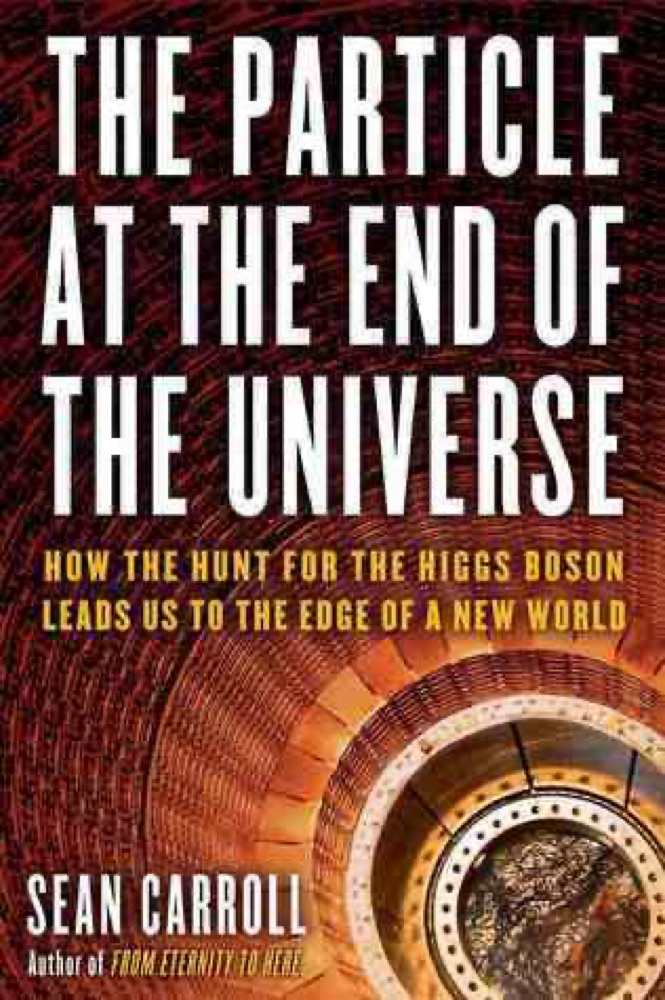
It was the universe’s most elusive particle, the linchpin for everything scientists dreamed up to explain how physics works. It had to be found. But projects as big as CERN’s Large Hadron Collider don’t happen without incredible risks – and occasional skullduggery. In the definitive account of this landmark event, Caltech physicist and acclaimed science writer Sean Carroll reveals the insights, rivalry, and wonder that fuelled the Higgs discovery, and takes us on a riveting and irresistible ride to the very edge of physics today.
Book details
- First published
- 2012
- Author
- Sean Carroll
- Genre
- Nonfiction
- Goodreads rating
- 4.06 (5k ratings)
Keep reading
 QED: The Strange Theory of Light and Matter
 The Feynman Lectures on Physics
From Eternity to Here: The Quest for the Ultimate Theory of Time
The Feynman Lectures on Physics
From Eternity to Here: The Quest for the Ultimate Theory of Time
 The Elegant Universe: Superstrings, Hidden Dimensions, and the Quest for the Ultimate Theory
 Physics of the Impossible: A Scientific Exploration Into the World of Phasers, Force Fields, Teleportation, and Time Travel
 Parallel Worlds: A Journey Through Creation, Higher Dimensions, and the Future of the Cosmos
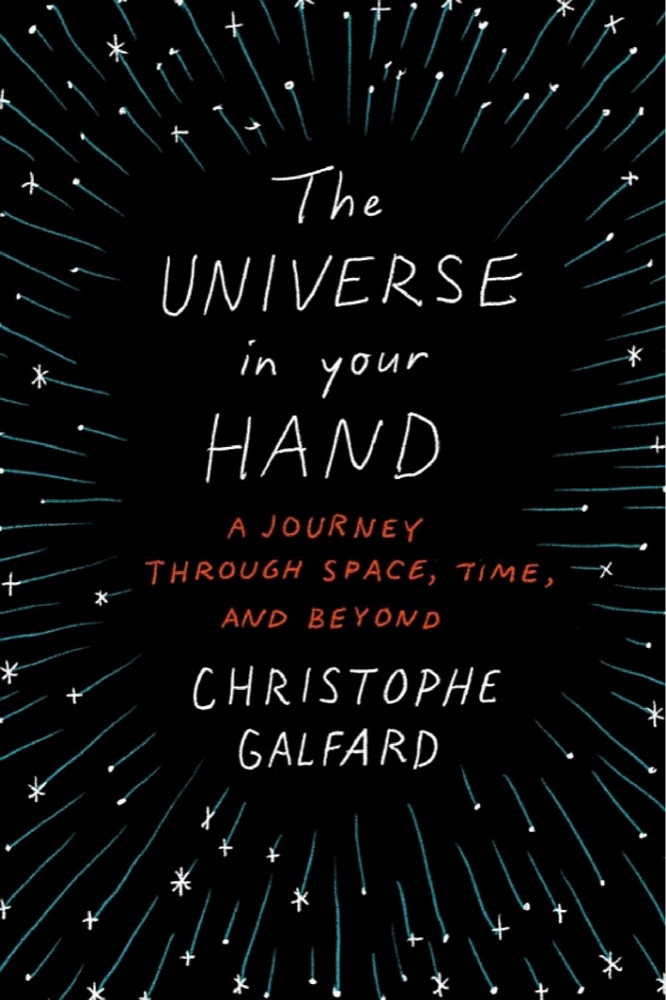 The Universe in Your Hand: A Journey Through Space, Time, and Beyond
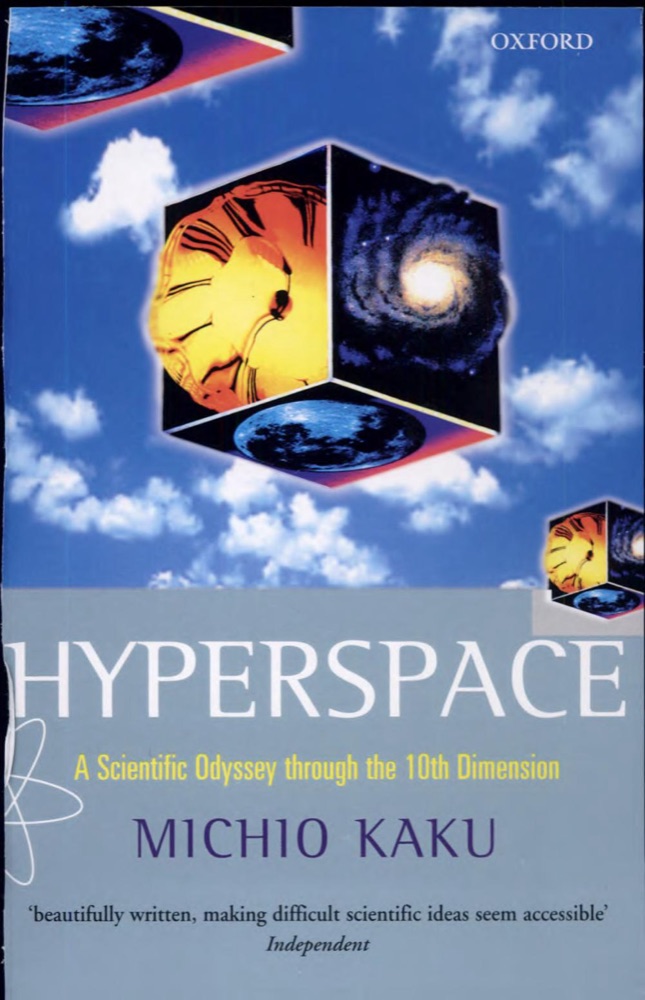 Hyperspace
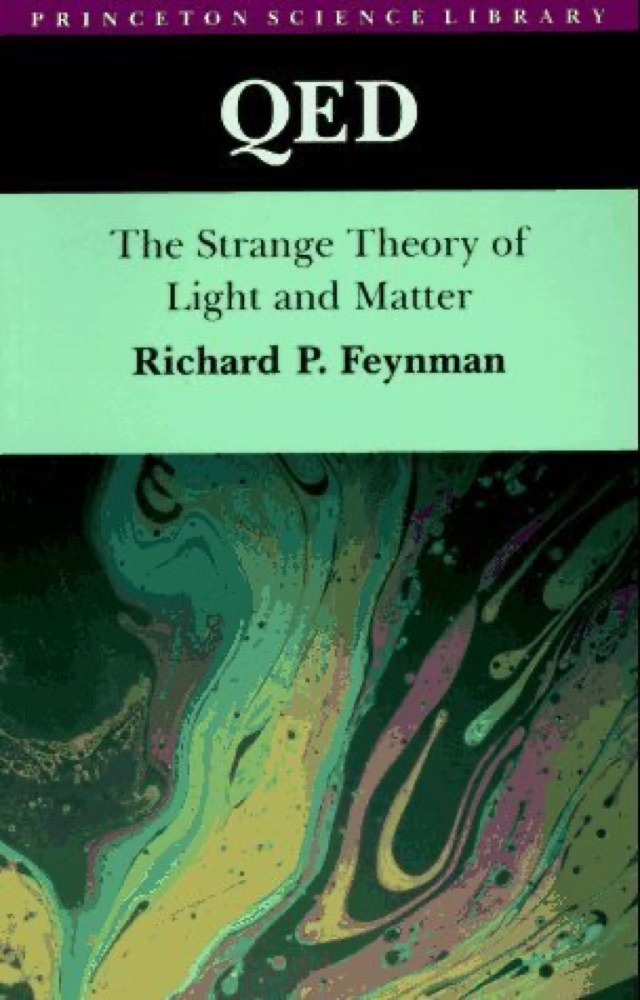 QED: The Strange Theory of Light and Matter
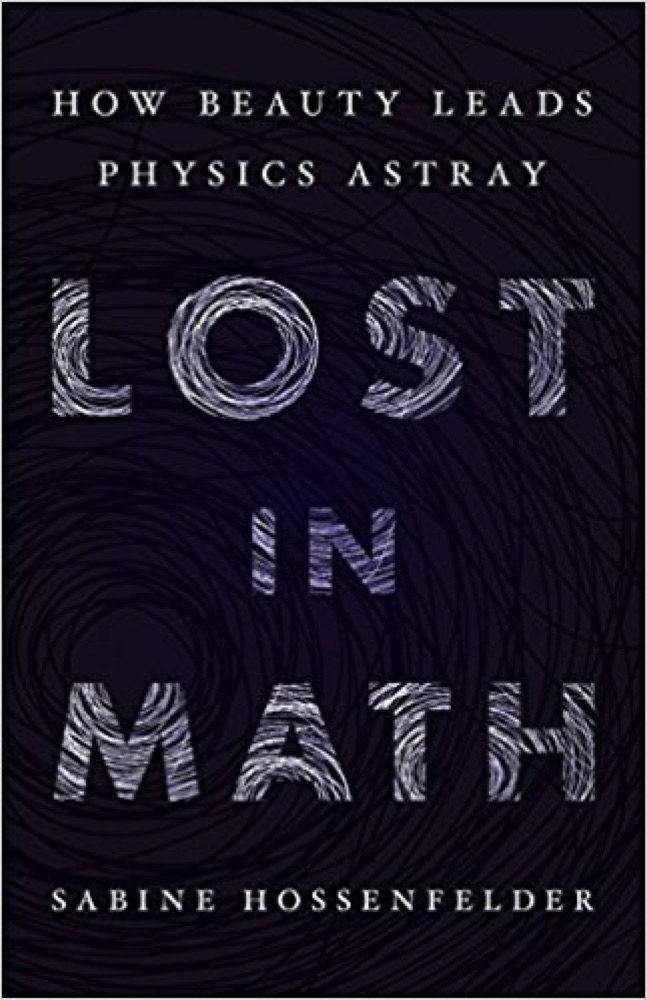 Lost in Math: How Beauty Leads Physics Astray
 Astrophysics for People in a Hurry
 A Briefer History of Time
 The Fabric of the Cosmos: Space, Time, and the Texture of Reality
 Genius: The Life and Science of Richard Feynman
 Six Easy Pieces: Essentials of Physics By Its Most Brilliant Teacher
 What Is Real?: The Unfinished Quest for the Meaning of Quantum Physics
 Welcome to the Universe: An Astrophysical Tour
 Helgoland: Making Sense of the Quantum Revolution
 Life on the Edge: The Coming of Age of Quantum Biology
 Origins: Fourteen Billion Years of Cosmic Evolution
 The Character of Physical Law
 A Brief History of Time
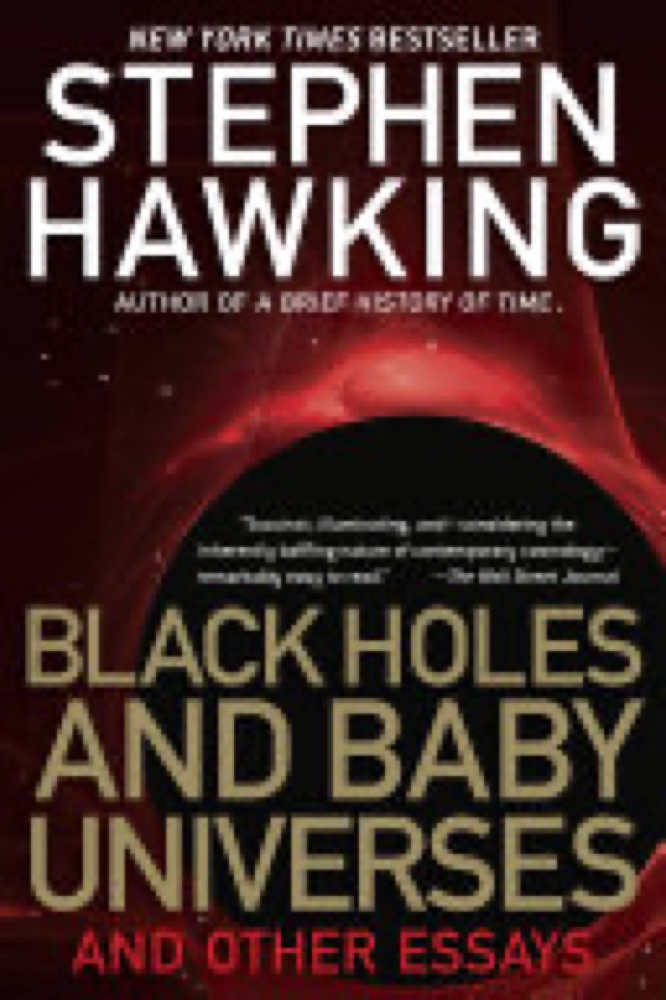 Black Holes and Baby Universes and Other Essays
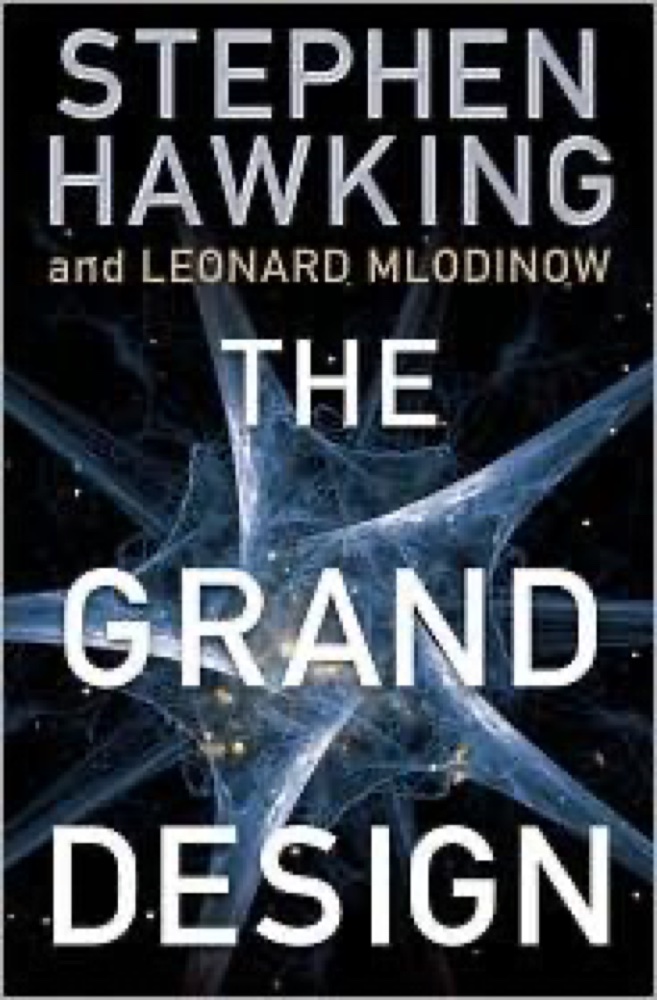 The Grand Design
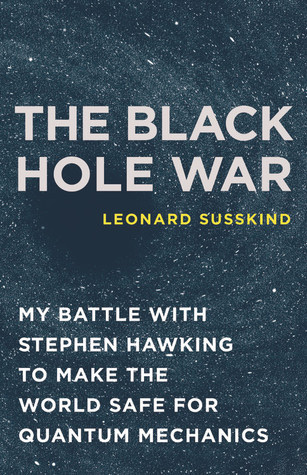 The Black Hole War: My Battle with Stephen Hawking to Make the World Safe for Quantum Mechanics
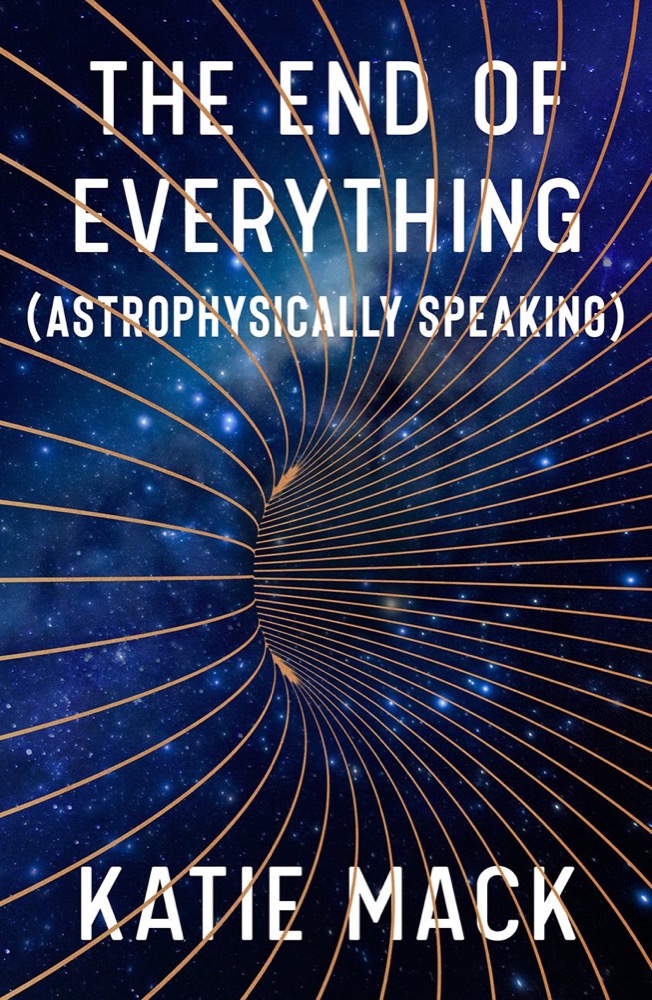 The End of Everything
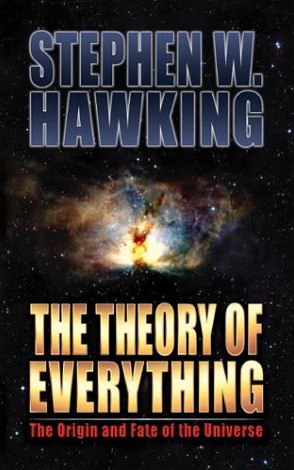 The Theory of Everything: The Origin and Fate of the Universe
 The World According to Physics
 Our Mathematical Universe: My Quest for the Ultimate Nature of Reality
The Big Picture: On the Origins of Life, Meaning, and the Universe Itself
Our Mathematical Universe: My Quest for the Ultimate Nature of Reality
The Big Picture: On the Origins of Life, Meaning, and the Universe Itself
 Existential Physics: A Scientist's Guide to Life's Biggest Questions
 A Universe from Nothing: Why There Is Something Rather Than Nothing
 The Making of the Atomic Bomb
 Chaos: Making a New Science
 The Disappearing Spoon: And Other True Tales of Madness, Love, and the History of the World from the Periodic Table of the Elements
 The Accidental Universe: The World You Thought You Knew
 For the Love of Physics: From the End of the Rainbow to the Edge of Time: A Journey Through the Wonders of Physics
 Until the End of Time: Mind, Matter, and Our Search for Meaning in an Evolving Universe
 A Short History of Nearly Everything
 The End of Time: The Next Revolution in Our Understanding of the Universe
 When We Cease to Understand the World
 Three Roads To Quantum Gravity
 The Second Ship
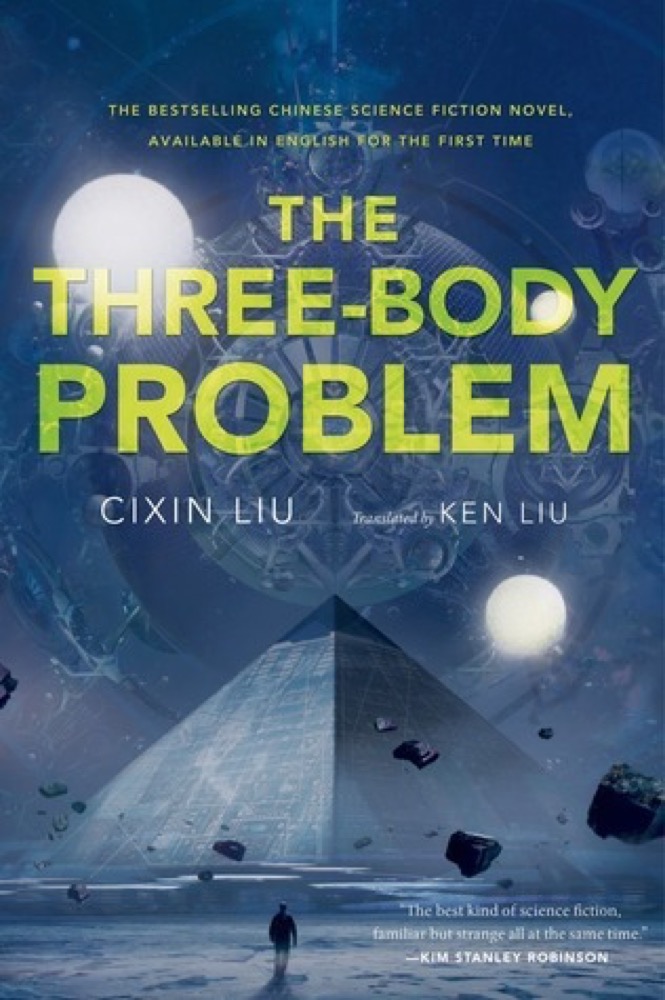 The Three-Body Problem
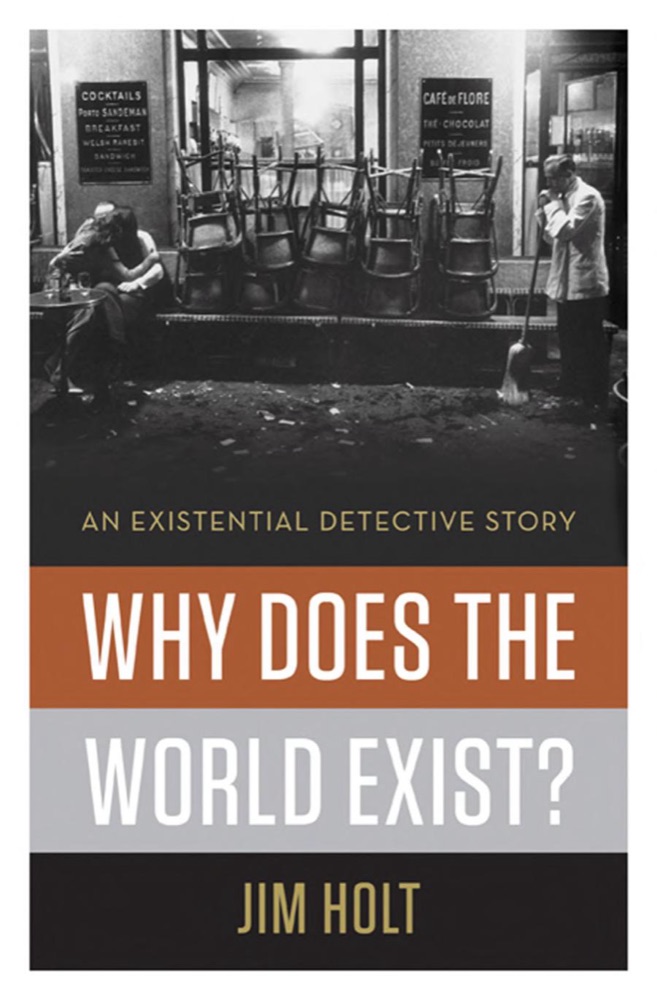 Why Does the World Exist?: An Existential Detective Story
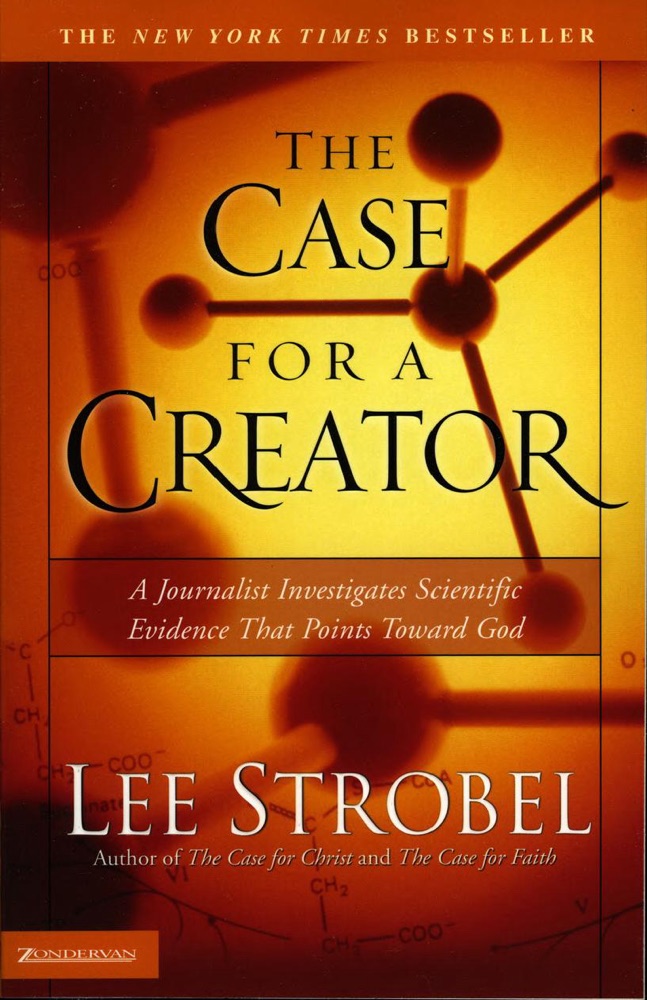 The Case for a Creator: A Journalist Investigates Scientific Evidence That Points Toward God
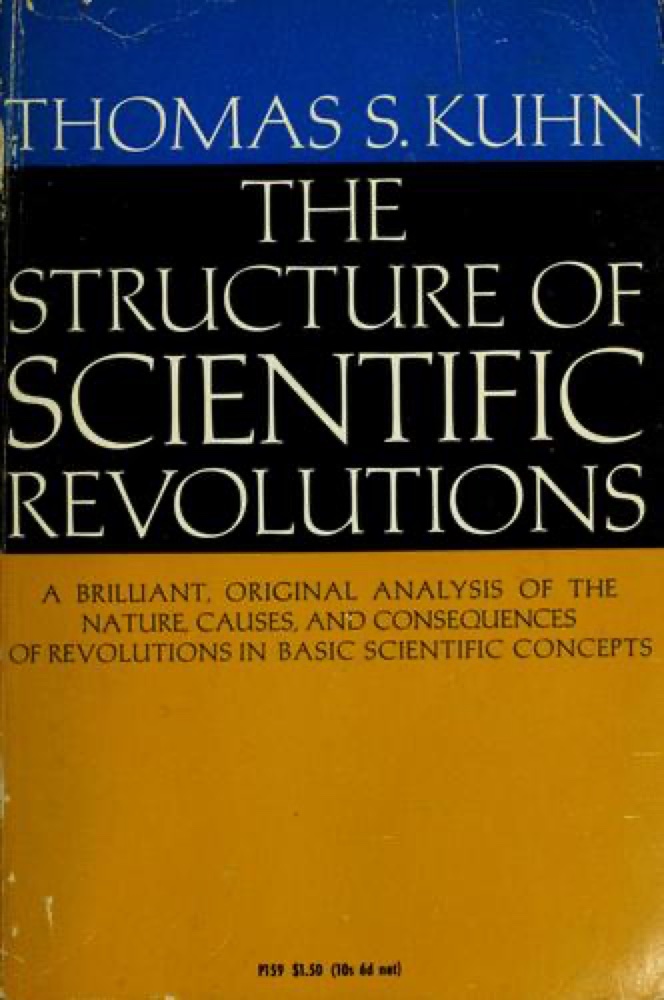 The Structure of Scientific Revolutions
 Brief Answers to the Big Questions
 How I Killed Pluto and Why It Had It Coming
 Cosmos
 13 Things That Don't Make Sense: The Most Baffling Scientific Mysteries of Our Time
 The Meaning of It All: Thoughts of a Citizen-Scientist
 Death's End
 What Technology Wants
 The Magic of Reality: How We Know What's Really True
 Soonish: Ten Emerging Technologies That'll Improve and/or Ruin Everything
 The Code Breaker: Jennifer Doudna, Gene Editing, and the Future of the Human Race
 The Tao of Physics: An Exploration of the Parallels between Modern Physics and Eastern Mysticism
 The Blind Watchmaker: Why the Evidence of Evolution Reveals a Universe Without Design