

 The Stranger
Quotes from the Book
You know what charm is: a way of getting the answer yes without having asked any clear question.
4.2k
I used to advertise my loyalty and I don't believe there is a single person I loved that I didn't eventually betray.
1.9k
People hasten to judge in order not to be judged themselves.
1.4k
Men are never convinced of your reasons, of your sincerity, of the seriousness of your sufferings, except by your death. So long as you are alive, your case is doubtful; you have a right only to their skepticism.
848
Friendship is less simple. It is long and hard to obtain but when one has it there's no getting rid of it; one simply has to cope with it. Don't think for a minute that your friends will telephone you every evening, as they ought to, in order to find out if this doesn't happen to be the evening when you are deciding to commit suicide, or simply whether you don't need company, whether you are not in the mood to go out. No, don't worry, they'll ring up the evening you are not alone, when life is beautiful. As for suicide, they would be more likely to push you to it, by virtue of what you owe to yourself, according to them. May heaven protect us, cher Monsieur, from being set upon a pedestal by our friends!
437
I love life - that’s my real weakness. I love it so much that I am incapable of imagining what is not life.
424
Don't lies eventually lead to the truth? And don't all my stories, true or false, tend toward the same conclusion? Don't they all have the same meaning? So what does it matter whether they are true or false if, in both cases, they are significant of what I have been and what I am? Sometimes it is easier to see clearly into the liar than into the man who tells the truth. Truth, like light, blinds. Falsehood, on the contrary, is a beautiful twilight that enhances every object.
380
I like people who dream or talk to themselves interminably; I like them, for they are double. They are here and elsewhere.
291
Your success and happiness are forgiven you only if you generously consent to share them. But to be happy it is essential not to be too concerned with others. Consequently, there is no escape. Happy and judged, or absolved and wretched.
273
He had been bored, that's all, bored like most people. Hence he had made himself out of whole cloth a life full of complications and drama. Something must happen - and that explains most human commitments. Something must happen, even loveless slavery, even war or death. Hurray then for funerals!
230
But the heart has its own memory and I have forgotten nothing.
227
We are all exceptional cases. We all want to appeal against something! Each of us insists on being innocent at all cost, even if he has to accuse the whole human race and heaven itself.
223
God is not needed to create guilt or to punish. Our fellow men suffice, aided by ourselves. You were speaking of the Last Judgement. Allow me to laugh respectfully. I shall wait for it resolutely, for I have known what is worse, the judgement of men. For them, no extenuating circumstances; even the good intention is ascribed to crime. Have you at least heard of the spitting cell, which a nation recently thought up to prove itself the greatest on earth? A walled-up box in which the prisoner can stand without moving. The solid door that locks him in the cement shell stops at chin level. Hence only his face is visible, and every passing jailer spits copiously on it. The prisoner, wedged into his cell, cannot wipe his face, though he is allowed, it is true. to close his eyes. Well, that, mon cher, is a human invention. They didn't need God for that little masterpiece.
182
Of course, true love is exceptional - two or three times a century, more or less. The rest of the time there is vanity or boredom.
153
I have a very old and very faithful attachment for dogs. I like them because they always forgive.
137
The truth is that every intelligent man, as you know, dreams of being a gangster and of ruling over society by force alone. As it is not so easy as the detective novels might lead one to believe, one generally relies on politics and joins the cruelest party.What does it matter, after all, if by humiliating one's mind one succeeds in dominating every one? I discovered in myself sweet dreams of oppression.
135
Thus I progressed on the surface of life, in the realm of words as it were, never in reality. All those books barely read, those friends barely loved, those cities barely visited, those women barely possessed! I went through the gestures out of boredom or absent-mindedness. Then came human beings; they wanted to cling, but there was nothing to cling to, and that was unfortunate--for them. As for me, I forgot. I never remembered anything but myself.
135
We're going forward, but nothing changes.
133
Believe me, for certain men at least, not taking what one doesn't desire is the hardest thing in the world.
132
Today we are always as ready to judge as we are to fornicate.
132
Ah cher ami, how poor in invention men are! They are They always think one commits suicide for a reason. But it's quite possible to commit suicide for two reasons. No, that never occurs to them. So what's the good of dying intentionally, of sacrificing yourself to the idea you want people to have of you? Once you are dead, they will take advantage of it to attribute idiotic or vulgar motives to your action. Martyrs, cher ami, must choose between being forgotten, mocked, or made use of. As for being understood--never!
95
One plays at being immortal and after a few weeks one doesn't even know whether or not one can hang on till the next day.
89
A single sentence will suffice for modern man. He fornicated and read the papers. After that vigorous definition, the subject will be, if I may say so, exhausted.
87
I felt as though I was partly unlearning what i had never learned and yet knew so well: I mean, how to live.
80
But too many people now climb onto the cross merely to be seen from a greater distance, even if they have to trample somewhat on the one who has been there so long.
78
Empires and churches are born under the sun of death.
70
I have to admit it humbly, mon cher compatriote, I was always bursting with vanity. I, I, I is the refrain of my whole life, which could be heard in everything I said. I could never talk without boasting, especially if I did so with that shattering discretion that was my specialty. It is quite true that I always lived free and powerful. I simply felt released in the regard to all the for the excellent reason that I recognized no equals. I always considered myself more intelligent than everyone else, as I’ve told you, but also more sensitive and more skillful, a crack shot, an incomparable driver, a better lover. Even in the fields in which it was easy for me to verify my inferiority–like tennis, for instance, in which I was but a passable partner–it was hard for me not to think that, with a little time and practice, I would surpass the best players. I admitted only superiorities in me and this explained my good will and serenity. When I was concerned with others, I was so out of pure condescension, in utter freedom, and all the credit went to me: my self-esteem would go up a degree.
68
Freedom is not a reward or a decoration that you toast in champagne. On the contrary, it's hard graft and a long-distance run, all alone, very exhausting. Alone in a dreary room, alone in the dock before the judges, and alone to make up your mind, before yourself and before the judgement of others. At the end of every freedom there is a sentence, which is why freedom is too heavy to bear.
66
How could sincerity be a condition of friendship? A liking for the truth at all costs is a passion that spares nothing and that nothing can withstand.
63
Did you know?
- The novel was originally published in French as La Chute by Gallimard in 1956.
- It was the last complete work of fiction Camus published during his lifetime.
- Camus won the Nobel Prize in Literature in 1957, the year after The Fall appeared.
- The entire book takes the form of a one-sided monologue, with the listener's responses never directly shown.
- Jean-Paul Sartre described it as "perhaps the most beautiful and the least understood" of Camus's books.
- The English translation by Justin O'Brien was published in 1956; a later translation by Robin Buss appeared from Penguin in 2006.
About Albert Camus
Albert Camus (1913-1960) was a French-Algerian writer and philosopher associated with absurdism, author of The Stranger and The Plague, who was awarded the Nobel Prize in Literature in 1957.
More about the author →More by Albert Camus
All books by Albert Camus →

About the book
The Fall (La Chute) is a short philosophical novel by Albert Camus, first published in French by Gallimard in 1956. It unfolds as a series of dramatic monologues delivered by Jean-Baptiste Clamence, a formerly successful Parisian defense lawyer, to a silent stranger he meets in an Amsterdam bar. Over several evenings Clamence, who now styles himself a "judge-penitent," recounts his fall from a life of apparent virtue and self-satisfaction to a reckoning with his own hypocrisy, prompted in part by his failure to act when he witnessed a woman drown.
The novel explores guilt, innocence, judgment, and self-deception, probing how people construct flattering images of themselves while evading responsibility. Through Clamence's confession, which gradually implicates his listener and the reader, Camus examines the impossibility of true innocence and the human tendency to judge others in order to escape being judged. Its themes of bad faith, the absence of God, and shared culpability place it among the major works of mid-century existential and absurdist literature.
The Fall was the last complete work of fiction Camus published before his death in 1960, and it appeared shortly before he was awarded the 1957 Nobel Prize in Literature. Jean-Paul Sartre, despite his public break with Camus, called it "perhaps the most beautiful and the least understood" of Camus's books. The novel is widely studied for its ironic, confessional structure and remains one of Camus's most discussed works.
Key characters
- Jean-Baptiste ClamenceThe narrator, a former Parisian lawyer who now calls himself a "judge-penitent"
- The listenerAn unnamed stranger to whom Clamence delivers his confession over several days
Book details
- First published
- 1956
- Length
- 147 pages
- Reading time
- 2 hours
- Author
- Albert Camus
- Genre
- Fiction
- Goodreads rating
- 4.02 (142k ratings) →
- First line
- “May I, monsieur, offer my services without running the risk of intruding?”
Critical reception
- Jean-Paul Sartre called it "perhaps the most beautiful and the least understood" of Camus's works.
- It is widely regarded as one of Camus's major works and the last work of fiction he completed before his death in 1960.
- It appeared shortly before Camus received the 1957 Nobel Prize in Literature.
Keep reading
 Embers
 The Setting Sun
 The Fountainhead
 The Story of My Experiments With Truth
 The Joke
 The Gay Science
 The Fall of Babel
 The Magus
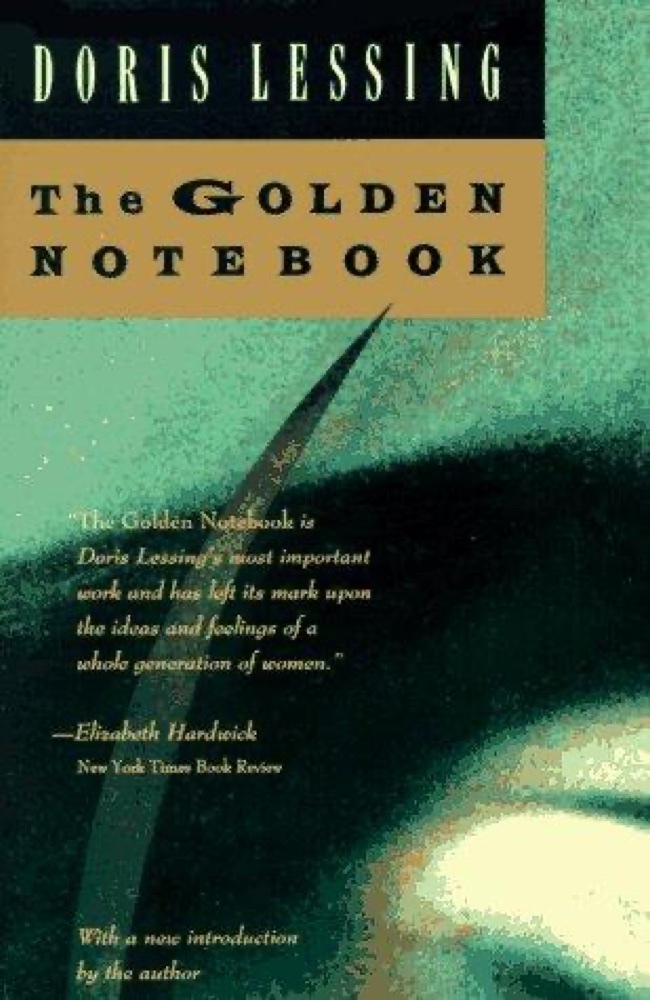 The Golden Notebook
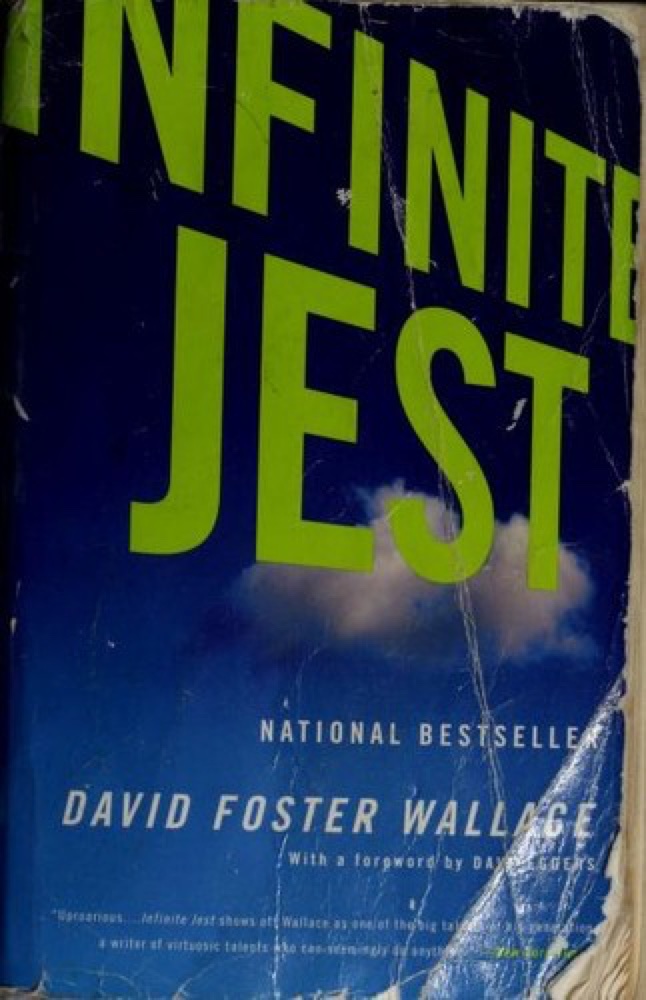 Infinite Jest
 My Friends
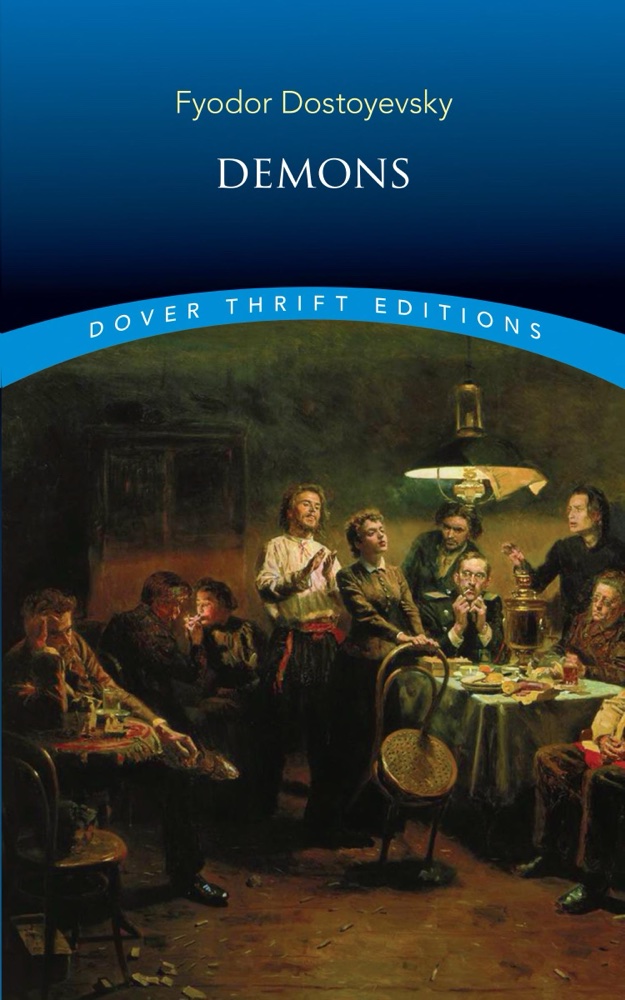 Demons
 Demian
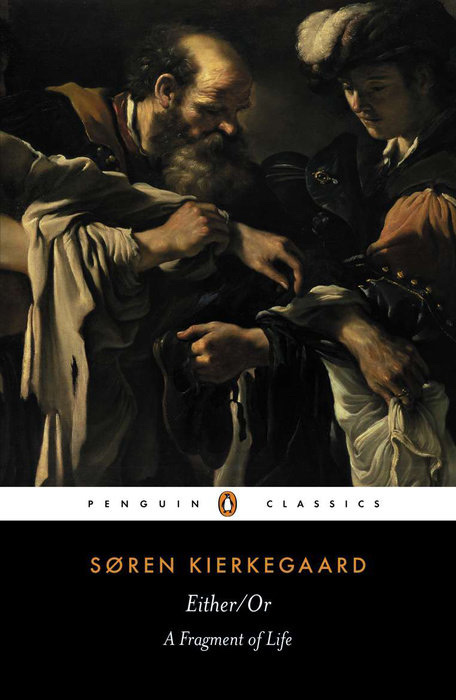 Either/Or: A Fragment of Life
 The Adolescent
 East of Eden
 Sexus
Sexus
 Doctor Zhivago
 Notes from Underground
 Twilight of the Idols
 Slouching Towards Bethlehem
 Eyeless in Gaza
 Dust Tracks on a Road
 Trust
Trust
 The Ides of March
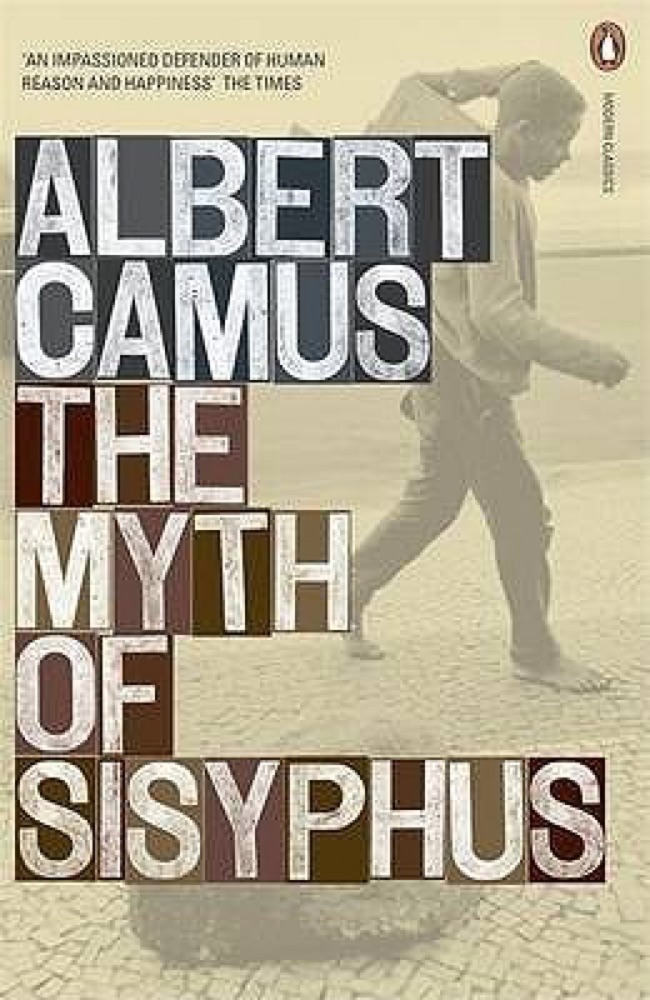 The Myth of Sisyphus
 Arm of the Sphinx
 The Spy
 Odd Hours
 Human, All Too Human
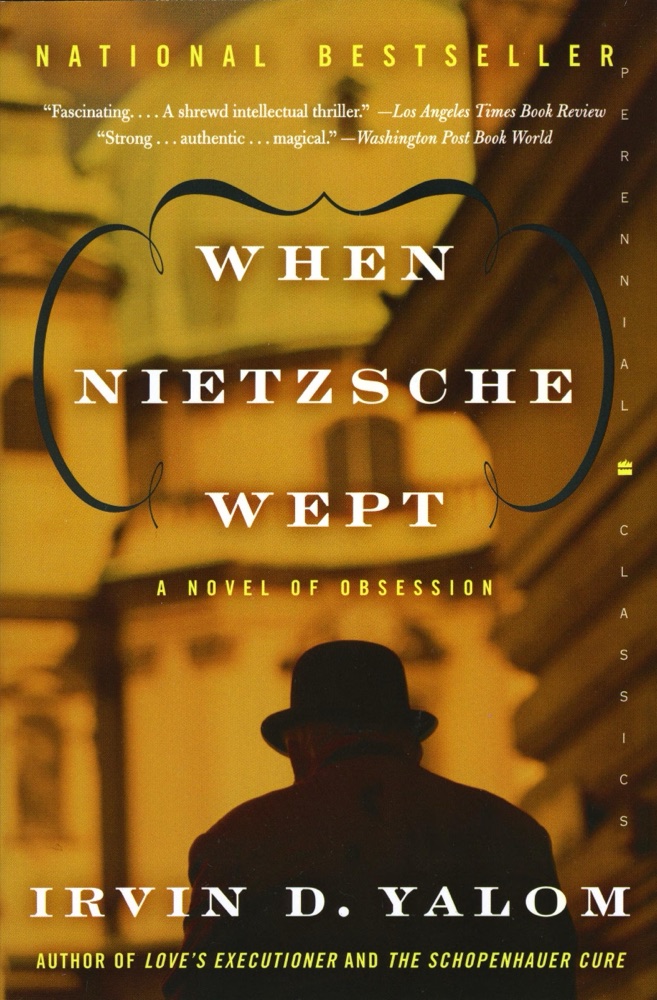 When Nietzsche Wept
 The First Fifteen Lives of Harry August
 The Screwtape Letters
 Nutshell
 The Good Soldier
 A Hero of Our Time
 The Brothers Karamazov
 The Secret Scripture
 The Schopenhauer Cure
 Asymmetry
 The Untouchable
 Point Counter Point
 Colorless Tsukuru Tazaki and His Years of Pilgrimage
 Dream Count
 The Story of the Lost Child
 The Manticore
 The Fencing Master
 Selected Stories
 The First Circle
 Brideshead Revisited: The Sacred and Profane Memories of Captain Charles Ryder
 Children of the Mind
 Cuckold
 Sexing the Cherry
 Absalom, Absalom!
 The Man Without Qualities
 The Razor's Edge
 No One Writes Back
 The Count of Monte Cristo
 V.
V.
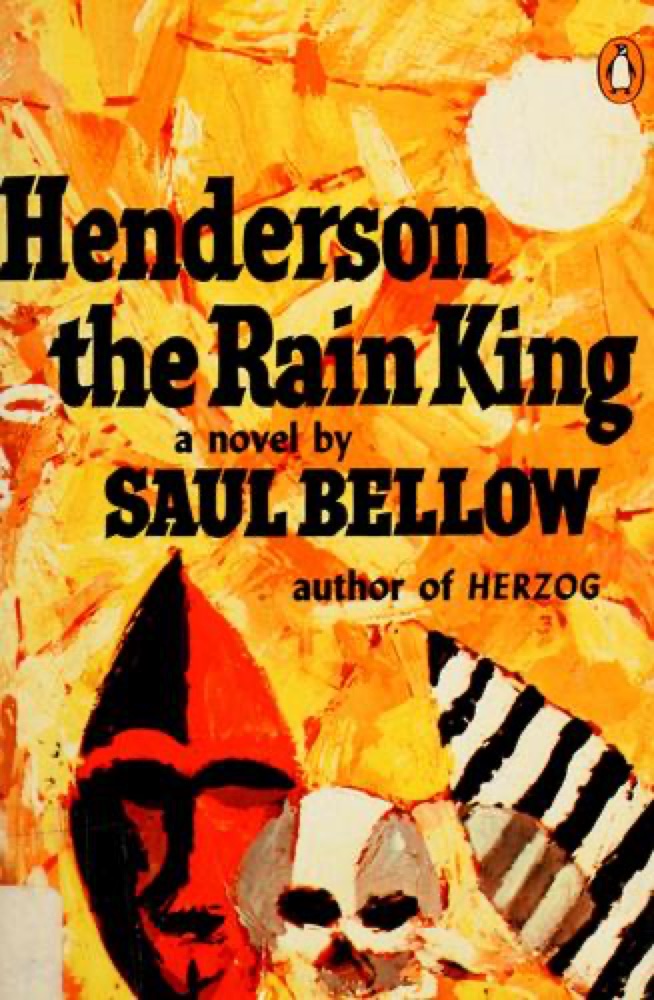 Henderson the Rain King