 Steppenwolf
Quotes from the Book
Wisdom cannot be imparted. Wisdom that a wise man attempts to impart always sounds like foolishness to someone else ... Knowledge can be communicated, but not wisdom. One can find it, live it, do wonders through it, but one cannot communicate and teach it.
When someone seeks," said Siddhartha, "then it easily happens that his eyes see only the thing that he seeks, and he is able to find nothing, to take in nothing because he always thinks only about the thing he is seeking, because he has one goal, because he is obsessed with his goal. Seeking means: having a goal. But finding means: being free, being open, having no goal.
It is not for me to judge another man's life. I must judge, I must choose, I must spurn, purely for myself. For myself, alone.
I have always believed, and I still believe, that whatever good or bad fortune may come our way we can always give it meaning and transform it into something of value.
What could I say to you that would be of value, except that perhaps you seek too much, that as a result of your seeking you cannot find.
We are not going in circles, we are going upwards. The path is a spiral; we have already climbed many steps.
It may be important to great thinkers to examine the world, to explain and despise it. But I think it is only important to love the world, not to despise it, not for us to hate each other, but to be able to regard the world and ourselves and all beings with love, admiration and respect.
So she thoroughly taught him that one cannot take pleasure without giving pleasure, and that every gesture, every caress, every touch, every glance, every last bit of the body has its secret, which brings happiness to the person who knows how to wake it. She taught him that after a celebration of love the lovers should not part without admiring each other, without being conquered or having conquered, so that neither is bleak or glutted or has the bad feeling of being used or misused.
I have had to experience so much stupidity, so many vices, so much error, so much nausea, disillusionment and sorrow, just in order to become a child again and begin anew. I had to experience despair, I had to sink to the greatest mental depths, to thoughts of suicide, in order to experience grace.
Words do not express thoughts very well. they always become a little different immediately they are expressed, a little distorted, a little foolish. And yet it also pleases me and seems right that what is of value and wisdom to one man seems nonsense to another.
I will no longer mutilate and destroy myself in order to find a secret behind the ruins.
Your soul is the whole world.
My real self wanders elsewhere, far away, wanders on and on invisibly and has nothing to do with my life.
. . . gentleness is stronger than severity, water is stronger than rock, love is stronger than force.
When someone is seeking,” said Siddartha, “It happens quite easily that he only sees the thing that he is seeking; that he is unable to find anything, unable to absorb anything, because he is only thinking of the thing he is seeking, because he has a goal, because he is obsessed with his goal. Seeking means: to have a goal; but finding means: to be free, to be receptive, to have no goal. You, O worthy one, are perhaps indeed a seeker, for in striving towards your goal, you do not see many things that are under your nose.
I can think. I can wait. I can fast.
Have you also learned that secret from the river; that there is no such thing as time?" That the river is everywhere at the same time, at the source and at the mouth, at the waterfall, at the ferry, at the current, in the ocean and in the mountains, everywhere and that the present only exists for it, not the shadow of the past nor the shadow of the future.
I have always thirsted for knowledge, I have always been full of questions.
And all the voices, all the goals, all the yearnings, all the sorrows, all the pleasures, all the good and evil, all of them together was the world. All of them together was the stream of events, the music of life.
He has robbed me, yet he has given me something of greater value . . . he has given to me myself.
I shall no longer be instructed by the Yoga Veda or the Aharva Veda, or the ascetics, or any other doctrine whatsoever. I shall learn from myself, be a pupil of myself; I shall get to know myself, the mystery of Siddhartha." He looked around as if he were seeing the world for the first time.
Opinions mean nothing; they may be beautiful or ugly, clever or foolish, anyone can embrace or reject them.
One must find the source within one's own Self, one must possess it. Everything else was seeking -- a detour, an error.
They both listened silently to the water, which to them was not just water, but the voice of life, the voice of Being, the voice of perpetual Becoming.
Dreams and restless thoughts came flowing to him from the river, from the twinkling stars at night, from the sun's melting rays. Dreams and a restlessness of the soul came to him.
Not in his speech, not in his thoughts, I see his greatness, only in his actions, in his life.
And here is a doctrine at which you will laugh. It seems to me, Govinda, that love is the most important thing in the world.
The reason why I do not know anything about myself, the reason why Siddhartha has remained alien and unknown to myself is due to one thing, to one single thing--I was afraid of myself, I was fleeing from myself. I was seeking Atman, I was seeking Brahman, I was determined to dismember myself and tear away its layers of husk in order to find in its unknown innermost recess the kernel at the heart of those layers, the Atman, life, the divine principle, the ultimate. But in so doing, I was losing myself.
One can beg, buy, be presented with and find love in the streets, but it can never be stolen.
Did you know?
- The novel was first published in German in 1922 as "Siddhartha: Eine Indische Dichtung."
- Its first English translation did not appear until 1951, nearly three decades after the German original.
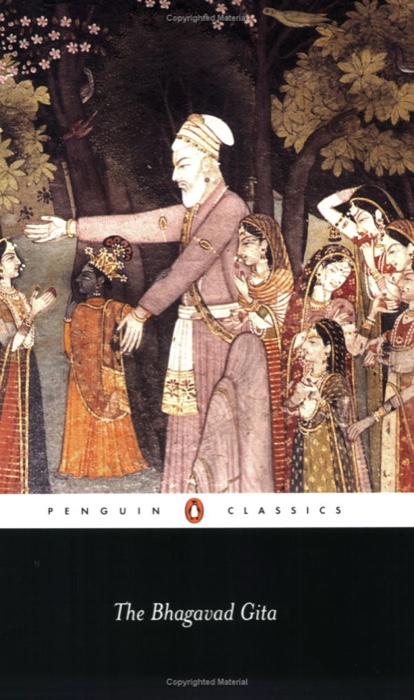
- Hesse drew heavily on Indian philosophy, particularly the Upanishads and the Bhagavad Gita.
- The river, tended by the ferryman Vasudeva, serves as the novel's central symbol of unity and the illusion of time.
- A 1972 film adaptation of Siddhartha was directed by Conrad Rooks and starred Shashi Kapoor.
About Hermann Hesse
Hermann Hesse (1877-1962) was a German-Swiss writer whose novels include Demian, Steppenwolf, and The Glass Bead Game. He was awarded the Nobel Prize in Literature in 1946.
More about the author →More by Hermann Hesse
All books by Hermann Hesse →
About the book
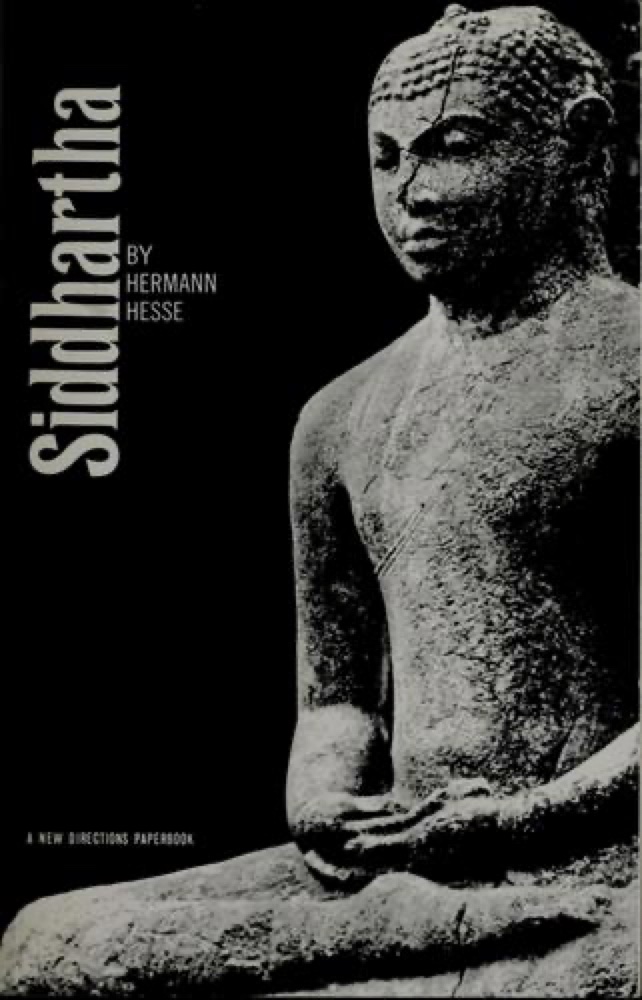
"Siddhartha" is Hermann Hesse's 1922 novel about a young Brahmin's son in ancient India who leaves home in search of spiritual enlightenment. Together with his devoted friend Govinda he first joins the wandering ascetics, the Samanas, and later encounters the Buddha, called Gotama. Dissatisfied with received doctrine, Siddhartha turns instead to the world of the senses, learning love from the courtesan Kamala and commerce from the merchant Kamaswami, before disillusionment leads him to a river and the ferryman Vasudeva, where he finally finds peace.
At its heart the book argues that wisdom cannot be taught but must be lived: enlightenment comes through the totality of one's own conscious experience rather than through the words of any teacher. Hesse drew deeply on Indian philosophy, particularly the Upanishads and the Bhagavad Gita, and structured the journey around the river as a symbol of the unity and timelessness of all things. Recurring themes include the search for the self, the tension between asceticism and indulgence, and the idea that time is an illusion.
Written by a German-Swiss author who would win the Nobel Prize in Literature in 1946, "Siddhartha" became one of the most widely read works of twentieth-century world literature after its English translation appeared in 1951. It found an especially large audience among Western readers drawn to Eastern spirituality, and remains a touchstone introduction to themes of self-discovery and inner peace.
Key characters
- SiddharthaA Brahmin's son who leaves home in search of spiritual enlightenment
- GovindaSiddhartha's devoted childhood friend and fellow seeker
- GotamaThe Buddha, whose teachings Siddhartha reveres but declines to follow
- KamalaA courtesan who teaches Siddhartha about love
- KamaswamiA wealthy merchant who employs Siddhartha in the world of commerce
- VasudevaThe serene ferryman who guides Siddhartha to peace beside the river
Book details
- First published
- 1922
- Length
- 152 pages
- Reading time
- 1 hour
- Author
- Hermann Hesse
- Genre
- Classics
- Goodreads rating
- 4.09 (902k ratings) →
- First line
- “In the shade of the house, in the sunshine of the riverbank near the boats, in the shade of the Sal-wood forest, in the shade of the fig tree is where Siddhartha grew up, the handsome son of the Brahman, the young falcon, together with his friend Govinda, son of a Brahman.”
Movie & TV adaptations
- IMDb
If you liked this, read…
- 1SteppenwolfAnother Hesse novel exploring the divided self and the search for meaning
- 2DemianHesse's earlier coming-of-age story about spiritual self-discovery
- 3The ProphetKahlil Gibran's lyrical meditation on life and the spirit
Keep reading
 Demian
 The Bhagavad Gita
 The Dhammapada
 The Upanishads
 The Story of My Life
 Faust
Faust
 Embers
 The Fountainhead
 Autobiography of a Yogi
 Cuckold
 Report to Greco
 Doctor Zhivago
 Hippie
 Prince Lestat
 The Alchemist
 Lilith
 Narcissus and Goldmund
 Awakening the Buddha Within
 The Secret Scripture
 The Prophet
 The Journey Home
 The Zahir
 De Profundis
 Sacred Journey of the Peaceful Warrior
 Without Dogma
 The Complete Essays
 Be Here Now
 Lord of Light
 When Nietzsche Wept
 The Myth of Sisyphus and Other Essays
 Walden
 Tao Te Ching
 Perelandra
 A Soldier of the Great War
 Either/Or: A Fragment of Life
 The Gay Science
 Sexing the Cherry
 Brave Story
 The Palace of Illusions
 Evidence: Poems
 Henderson the Rain King
 A Joseph Campbell Companion: Reflections on the Art of Living
 Twilight of the Idols
 The Letters of Vincent van Gogh
 The Idiot
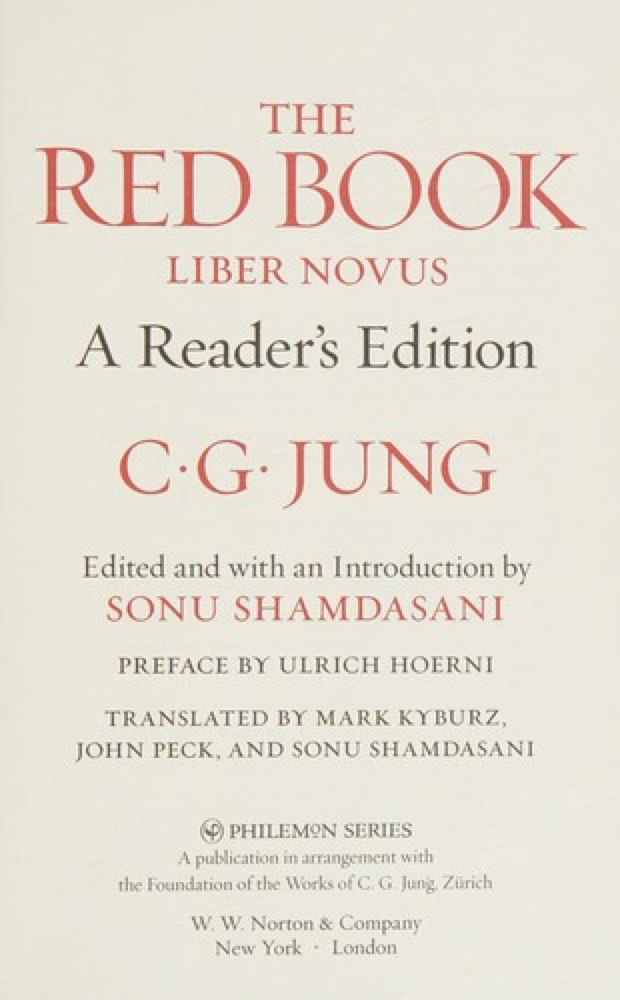 The Red Book: Liber Novus
 Daniel Deronda
 Fragments
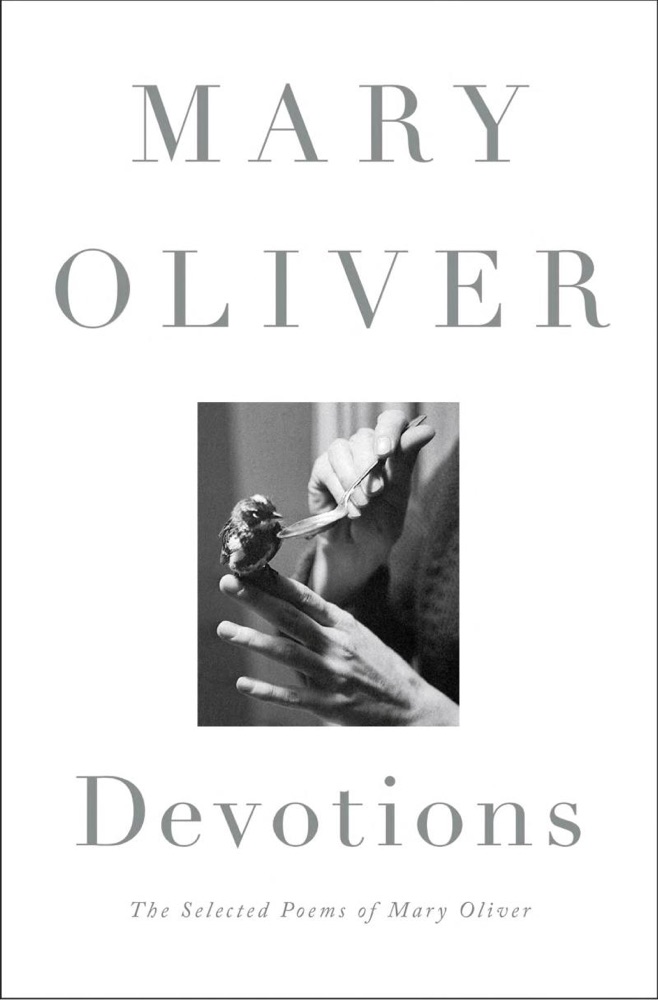 Devotions: The Selected Poems of Mary Oliver
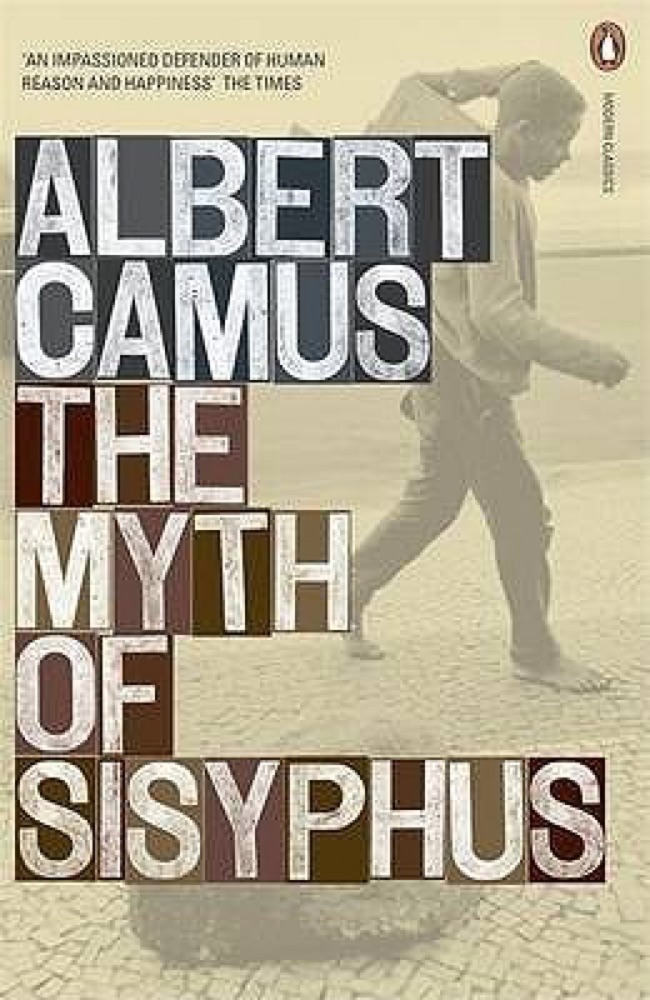 The Myth of Sisyphus
 Atlas Shrugged
 Island
 East of Eden
 Surprised by Joy: The Shape of My Early Life
 Gilead
 The Soul of a Butterfly: Reflections on Life's Journey
 Tropic of Capricorn
 The Glass Bead Game
 The Magus
 The Home and the World