
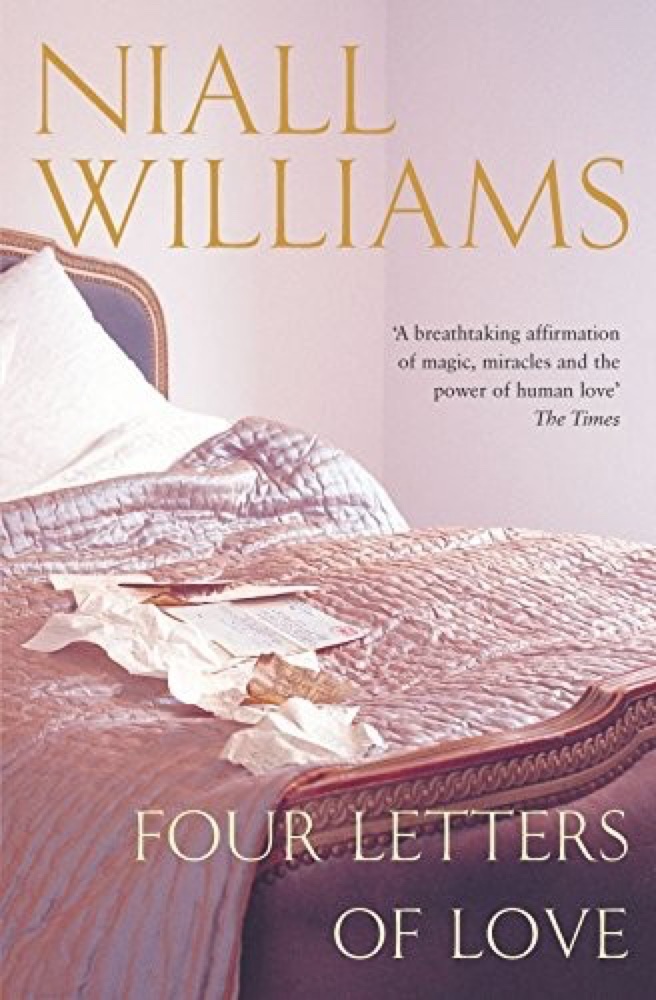
 Four Letters of Love
Quotes from the Book
It was a condensed explanation, but I came to understand him to mean you could stop at, not all, but most of the moments of your life, stop for one heartbeat and, no matter what the state of your head or heart, say This is happiness, because of the simple truth that you were alive to say it.
47
Books, music, painting are not life, can never be as full, rich, complex, surprising or beautiful, but the best of them can catch an echo of that, can turn you back to look out the window, go out the door aware that you’ve been enriched, that you have been in the company of something alive that has caused you to realise once again how astonishing life is, and you leave the book, gallery or concert hall with that illumination, which feels I’m going to say holy, by which I mean human raptness. So
26
Neighbours, as Jesus knew, can be a not insignificant challenge to anyone’s Christianity.
23
Now, as far as I was concerned, there are two ways of living, and because we're on a ball in space these were more or less exactly poles apart. The first, accept the world as it is. The world is concrete and considerable, with beauties and flaws both, and both immense, profound and perplexing, and if you can take it as it is and for what it is you'll all but guarantee an easier path, because it's a given that acceptance is one of the keys to any kind of contentment. The second, that acceptance is surrender, that there's a place for it, but that place is somewhere just before your last breath where you say "All right then, I have tried" and accept that you have lived and loved as best you could, have pushed against every wall, stood up after every disappointment, and until that last moment, you shouldn't accept anything, you should make things better.
20
The truth turns into a story when it grows old. We all become stories in the end. So, though the narrative was flawed, the sense was of a life so lived it was epic.
17
Because there were fewer sources of where to find out anything, there was more listening.
17
After a liquid lunch in Craven’s, he had found the margins of the roads badly drawn.
16
The fact is, I did not appreciate until much later in my own life what subterfuge and sacrifice it took to be independent and undefeated by the pressures of reality.
15
I sometimes think the worst thing a young person can feel is when you can find no answer to the question of what you are supposed to do with this life you’ve been given. At moments you’re aware of it balanced on your tongue, but not what comes next. Something like that. I can now say that another version of that happens in old age, when it occurs to you that since you’ve lived this long you must have learned something, so you open your eyes before dawn and think: What is it that I’ve learned, what is it I want to say?
14
I’m at an age now when in the early mornings I’m often revisited by all my own mistakes, stupidities and unintended cruelties. They sit around the edge of the bed and look at me and say nothing. But I see them well enough.
13
At the time you’re living it you can sometimes think your life is nothing much. It’s ordinary and everyday and should be and could be in this or that way better. It is without the perspective by which any meaning can be derived because it’s too sensual and urgent and immediate, which is the way life is to be lived. We’re all, all the time, striving, and though that means there’s a more-or-less constant supply of failure, it’s not such a terrible thing if you think that we keep on trying. There’s something to consider for that.
13
Everybody carries a world. But certain people change the air about them.
13
That was one of the things about him. He walked this line between the comic and the poignant, between the certainly doomed and the hopelessly hopeful. In time I came to think it the common ground of all humanity.
12
All of me knelt down. All of me bowed. Inside the chapel of myself, all my candles lit.
11
It was where, when darkness fell, it fell absolutely, and when you went outside the wind sometimes drew apart the clouds and you stood in the revelation of so many stars you could not credit the wonder and felt smaller in body as your soul felt enormous.
11
The truth is, like all places in the past, it cannot be found any longer.
10
We all have to find a story to live by and live inside, or we couldn’t endure the certainty of suffering.
10
Sometimes a moment pierces so perfectly the shields of our everyday it becomes part of you and enjoys the privilege of being immemorial.
10
Nobody in Faha could remember when it started. Rain there on the western seaboard was a condition of living. It came straight-down and sideways, frontwards, backwards and any other wards God could think of. It came in sweeps, in waves, sometimes in veils. It came dressed as drizzle, as mizzle, as mist, as showers, frequent and widespread, as a wet fog, as a damp day, a drop, a dripping, and an out-and-out downpour. It came the fine day, the bright day, and the day promised dry. It came at any time of the day and night, and in all seasons, regardless of calendar and forecast, until in Faha your clothes were rain and your skin was rain and your house was rain with a fireplace. It came off the grey vastness of an Atlantic that threw itself against the land like a lover once spurned and resolved not to be so again. It came accompanied by seagulls and smells of salt and seaweed. It came with cold air and curtained light. It came like a judgment, or, in benign version, like a blessing God had forgotten he had left on. It came for a handkerchief of blue sky, came on westerlies, sometimes—why not?—on easterlies, came in clouds that broke their backs on the mountains in Kerry and fell into Clare, making mud the ground and blind the air. It came disguised as hail, as sleet, but never as snow. It came softly sometimes, tenderly sometimes, its spears turned to kisses, in rain that pretended it was not rain, that had come down to be closer to the fields whose green it loved and fostered, until it drowned them.
10
It is a dolorous fact that a meal, months in the dreaming, weeks in the planning and days in the preparation, is eaten in minutes.
9
Forgive an old man. I say this here because pretty soon you get to a place where you’re not sure there’ll be a tomorrow, where you think I better say this now, here, because not only is time no longer on your side, you realise that it never was, that things were passing by faster than you could appreciate, and whole marvels, the quickening green of springtime, the shapeless shaped songs of unseen birds, the rising and falling of white waves, were passing without you noticing.
9
I loved you once is among the saddest lines in humanity.
9
key thing to understand about Ganga was that he loved a story. He believed that human beings were inside a story that had no ending because its teller had started it without conceiving of one, and that after ten thousand tales was no nearer to finding the resolution of the last page. Story was the stuff of life, and to realise you were inside one allowed you to sometimes surrender to the plot, to bear a little easier the griefs and sufferings and to enjoy more fully the twists that came along the way.
9
recited the dictum of Felix Pilkington, ‘Life is a comedy, with sad bits.
7
When you are born in one century and find yourself walking around in another there's a certain infirmity to your footing. May we all be so lucky to live long enough to see our time turn to fable.
7
Your love is doomed, you must give it everything you’ve got.
7
For the most part we don’t realise how fixed are our judgements of others, how founded they are in first impressions and the smallest evidences we seize on to prove to ourselves that, see, we were right.
6
It seems to me the quality that makes any book, music, painting worthwhile is life, just that. Books, music, painting are not life, can never be as full, rich, complex, surprising or beautiful, but the best of them can catch an echo of that, can turn you back to look out the window, go out the door aware that you’ve been enriched, that you have been in the company of something alive that has caused you to realise once again how astonishing life is, and you leave the book, gallery or concert hall with that illumination, which feels I’m going to say holy, by which I mean human raptness.
6
As a shield against despair she had decided early on to live with the expectation of doom, an inspired tactic, because, by expecting it, it never fully arrived.
6
Watch on YouTube
About Niall Williams
We have collected 74 quotes from 4 books by Niall Williams on BookQuoters.
More about the author →More by Niall Williams
About the book
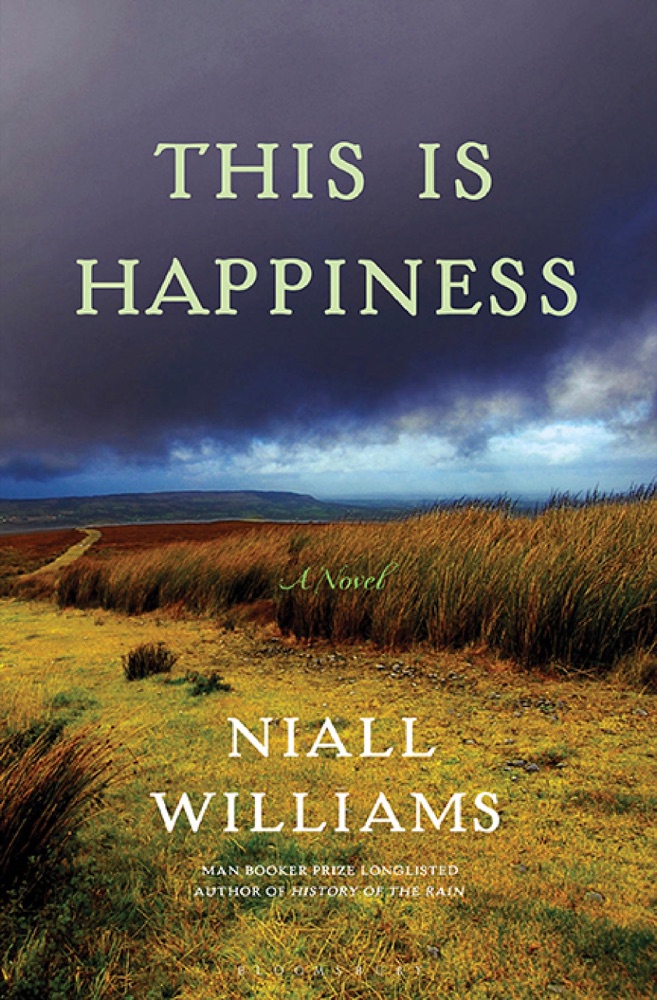
Change is coming to Faha, a small Irish parish that hasn't changed in a thousand years.
For one thing, the rain is stopping. Nobody remembers when it started; rain on the western seaboard is a condition of living. But now – just as Father Coffey proclaims the coming of the electricity – the rain clouds are lifting. Seventeen-year-old Noel Crowe is idling in the unexpected sunshine when Christy makes his first entrance into Faha, bringing secrets he needs to atone for. Though he can't explain it, Noel knows right then: something has changed.
As the people of Faha anticipate the endlessly procrastinated advent of the electricity, and Noel navigates his own coming-of-age and his fallings in and out of love, Christy's past gradually comes to light, casting a new glow on a small world.
Harking back to a simpler time, This Is Happiness is a tender portrait of a community – its idios
Book details
- First published
- 2019
- Author
- Niall Williams
- Genre
- Fiction
- Goodreads rating
- 4.22 (36k ratings)
The buzz
- The New York TimesReview in The New York Timesprofessional review (via Book Marks)
- The Washington PostReview in The Washington Postprofessional review (via Book Marks)
- The Wall Street JournalReview in The Wall Street Journalprofessional review (via Book Marks)
- The GuardianReview in The Guardianprofessional review (via Book Marks)
- The Boston GlobeReview in The Boston Globeprofessional review (via Book Marks)
- Toronto StarReview in Toronto Starprofessional review (via Book Marks)
Keep reading
 In Search of Lost Time
 The Clockmaker's Daughter
 Jayber Crow
 My Friends
 Brideshead Revisited: The Sacred and Profane Memories of Captain Charles Ryder
 The Illusion of Separateness
 Beautiful Ruins
 Swann's Way
 Let the Great World Spin
 The City of Mirrors
 Light Years
 And the Mountains Echoed
 Light in August
 Killing Commendatore
 The Narrow Road to the Deep North
 The Emperor of Gladness
 A Passage to India
 The Stone Diaries
 The Secret History
 The Sea Keeper's Daughters
 Outline
 TransAtlantic
 Dream Count
 The Age of Miracles
 Chances Are...
 Warlight
 Joyland
 Three Comrades
 Moon Palace
 Embers
 The Cat's Table
 You Can't Go Home Again
 The Great Mistake
 The Passage
 West with the Night
 To Paradise
 The Ground Beneath Her Feet
 A Room with a View
 Betting on the Muse: Poems & Stories
 The Goldfinch
 The Tunnel
 The Blythes Are Quoted
 Snow
Snow
 A Sudden Light
 The Angel Esmeralda
 The Lake
 What Matters Most is How Well You Walk Through the Fire
 Men Without Women
 Testament of Youth
 The Place of Tides
 All the Colors of the Dark
 A Little Life
 Ilustrado
 The Untouchable
 Independent People
 The Book of Love
 I Cheerfully Refuse
 Traveling Mercies: Some Thoughts on Faith
 The Jewel in the Crown
 Year of Wonders