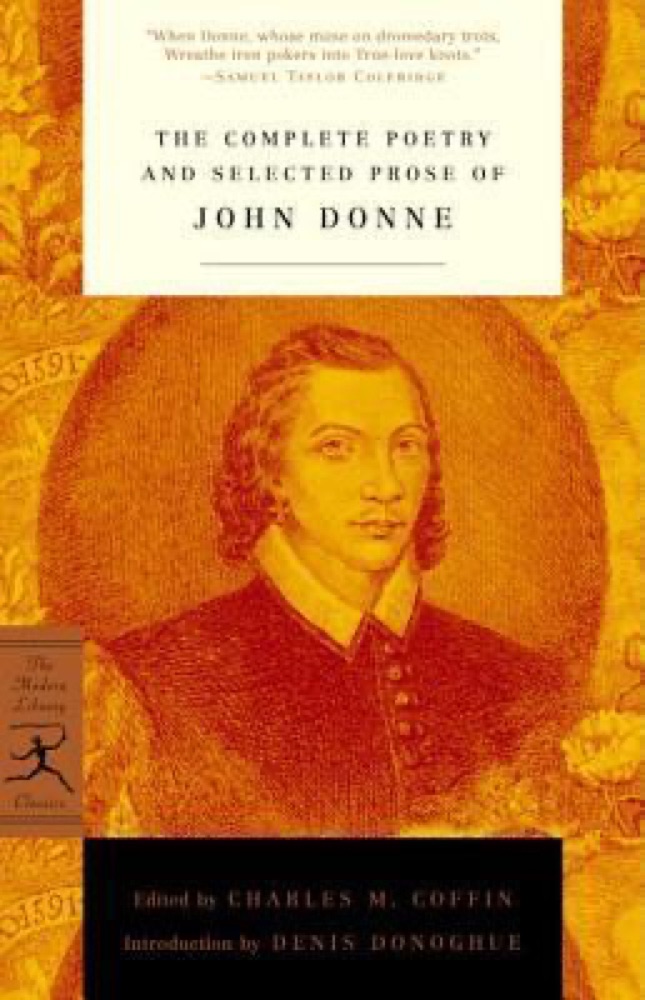

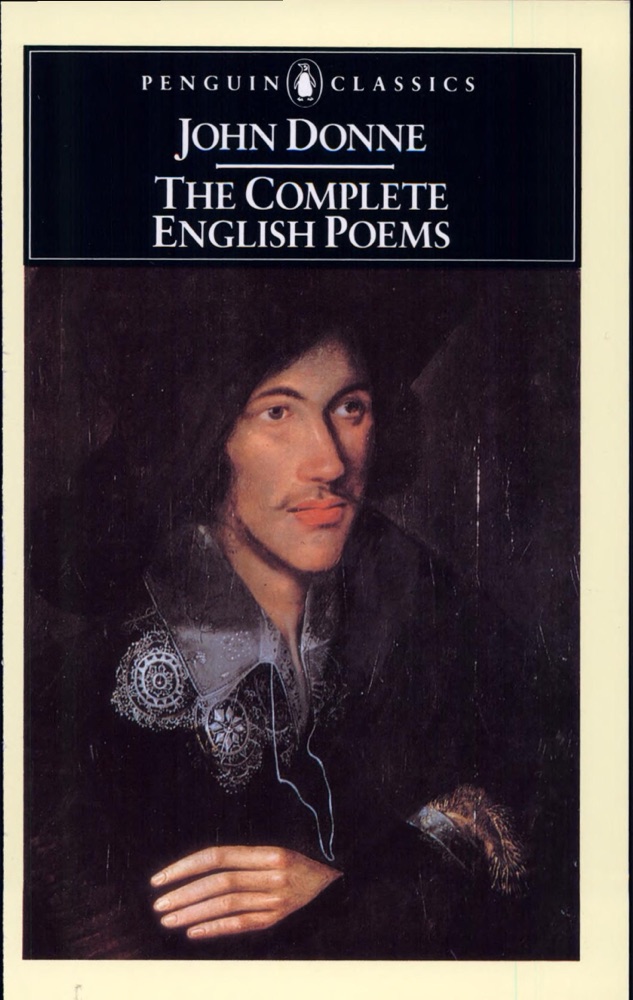
 The Complete English Poems
Quotes from the Book
No spring nor summer beauty hath such grace as I have seen in one autumnal face." [The Autumnal]
866
Death Be Not Proud Death, be not proud, though some have called thee Mighty and dreadful, for thou art not so; For those, whom thou think'st thou dost overthrow, Die not, poor Death, nor yet canst thou kill me. From rest and sleep, which but thy picture[s] be, Much pleasure, then from thee much more must flow, And soonest our best men with thee do go, Rest of their bones, and soul's delivery. Thou'rt slave to Fate, chance, kings, and desperate men, And dost with poison, war, and sickness dwell, And poppy, or charms can make us sleep as well, And better than thy stroke ; why swell'st thou then? One short sleep past, we wake eternally, And Death shall be no more; Death, thou shalt die.
194
Yet nothing can to nothing fall, Nor any place be empty quite; Therefore I think my breast hath all Those pieces still, though they be not unite; And now, as broken glasses show A hundred lesser faces, so My rags of heart can like, wish, and adore, But after one such love, can love no more.
171
I did best when I had least truth for my subjects.
29
Filled with her love, may I be rather grown Mad with much heart, then idiot with none.
26
On a huge hill, Cragged and steep, Truth stands, and hee that will Reach her, about must, and about must goe; And what the hills suddenness resists, winne so; Yet strive so, that before age, deaths twilight, Thy Soule rest, for none can worke in that night.
9
He is stark mad, whoever says, That he hath been in love an hour, Yet not that love so soon decays, But that it can ten in less space devour ; Who will believe me, if I swear That I have had the plague a year? Who would not laugh at me, if I should say I saw a flash of powder burn a day? Ah, what a trifle is a heart, If once into love's hands it come ! All other griefs allow a part To other griefs, and ask themselves but some ; They come to us, but us love draws ; He swallows us and never chaws ; By him, as by chain'd shot, whole ranks do die ; He is the tyrant pike, our hearts the fry. If 'twere not so, what did become Of my heart when I first saw thee? I brought a heart into the room, But from the room I carried none with me. If it had gone to thee, I know Mine would have taught thine heart to show More pity unto me ; but Love, alas ! At one first blow did shiver it as glass. Yet nothing can to nothing fall, Nor any place be empty quite ; Therefore I think my breast hath all Those pieces still, though they be not unite ; And now, as broken glasses show A hundred lesser faces, so My rags of heart can like, wish, and adore, But after one such love, can love no more.
4
The force of originality “that made Donne so potent an influence in the seventeenth century makes him now at once for us, without his being the less felt as of his period, contemporary—obviously a living poet in the most important sense.” In “The Good-Morrow” Leavis said that
3
Change is the nursery Of musicke, joy, life, and eternity. (Elegie III: Change)
1
Watch on YouTube
About John Donne
We have collected 39 quotes from 2 books by John Donne on BookQuoters.
More about the author →More by John Donne
The Complete English Poems
About the book
This Modern Library edition contains all of John Donne's great metaphysical love poetry. Here are such well-known songs and sonnets as "A Forbidding Mourning," "The Extasie," and "A Nocturnall Upon S. Lucies Day," along with the love elegies "Jealosie," "His Parting From Her," and "To His Mistris Going to Bed." Presented as well are Donne's satires, epigrams, verse letters, and holy sonnets, along with his most ambitious and important poems, the Anniversaries. In addition, there is a generous sampling of Donne's prose, including many of his private letters; Ignatius His Conclave, a satiric onslaught on the Jesuits; excerpts from Biathanatos, his celebrated defense of suicide; and his most famous sermons, concluding with the final "Death's Duell." "We have only to read [Donne]," wrote Virginia Woolf, "to submit to the sound of that passionate and penetrating voice, and his figure rises ag
Book details
- First published
- 1929
- Author
- John Donne
- Genre
- Literature
- Goodreads rating
- 4.24 (4k ratings)
Keep reading
The Complete English Poems
 Collected Poems
 Shakespeare's Sonnets
 The Complete Poems
 The Complete Poems
 The Complete Poems of Emily Dickinson
 Phantastes
 A Shropshire Lad
 Selected Poems
 The Collected Poems of W.B. Yeats
 100 Selected Poems
 The Complete Stories and Poems
 Venus and Adonis
 Selected Poems
 Don Juan
 Childe Harold's Pilgrimage
 Complete Poems and Selected Letters
![The Complete Poems of Emily Bronte [with Biographical Introduction]](/i/book/g/b2/the-complete-poems-of-emily-bronte-with-biographical-introduction.jpg) The Complete Poems of Emily Bronte [with Biographical Introduction]
The Complete Poems of Emily Bronte [with Biographical Introduction]
 The Complete Works
 Shirley
 The Complete Poems
 The Complete Poems
 The Complete Poems
 Les Fleurs du Mal
 The Spanish Tragedy
 Selected Poems
 Brideshead Revisited: The Sacred and Profane Memories of Captain Charles Ryder
 The Faerie Queene
 Gitanjali
 Villette
 The Collected Poems of Emily Dickinson
 Complete Poems
 Sonnets from the Portuguese
 The Collected Poems
 Collected Poems
 The Last Man
 The Collected Poems
 Spring and All
 Oblomov
 The Letters of Abélard and Héloïse
 A Defence of Poetry
 Collected Poems
 Our Mutual Friend
 Poems of Edgar Allan Poe
 Sonnets to Orpheus
 Poems New and Collected
 Oliver Twist
 Winter Hours: Prose, Prose Poems, and Poems
 New and Selected Poems, Vol. 2
 The Dream Songs
 Prometheus Unbound
 Songs of Innocence and of Experience
 Thirst
 Great Expectations
 Meditations in an Emergency
 The Lifted Veil
 The Duchess of Malfi
 Wuthering Heights
 Keturah and Lord Death
 The Divine Comedy