 The Making of the Atomic Bomb
Quotes from the Book
Oppenheimer’s warnings were ignored—and ultimately, he was silenced. Like that rebellious Greek god Prometheus—who stole fire from Zeus and bestowed it upon humankind, Oppenheimer gave us atomic fire. But then, when he tried to control it, when he sought to make us aware of its terrible dangers, the powers-that-be, like Zeus, rose up in anger to punish him.
23
The kind of person that I admire most would be one who becomes extraordinarily good at doing a lot of things but still maintains a tear-stained countenance.
21
Great wits are near to madness, closely allied and thin partitions do their bounds divide.
14
Scientists aren’t responsible for the facts that are in nature. . . . If anyone should have a sense of sin, it’s God. He put the facts there.
13
As the sociologist Daniel Bell later observed, Oppenheimer’s ordeal signified that the postwar “messianic role of the scientists” was now at an end.
10
Once again, Bohr was God and Oppie was his prophet.
9
In battle, in forest, at the precipice in the mountains On the dark great sea, in the midst of javelins and arrows, In sleep, in confusion, in the depths of shame, The good deeds a man has done before defend him.
8
Man is a creature whose substance is faith. What his faith is, he is.
8
He harshly criticized Soviet tyranny, but lamented the fact that so many Americans were willing to sacrifice their civil liberties in the name of anticommunism.
7
No one can be certain of Oppenheimer’s reaction had he learned that on the eve of the Hiroshima bombing, the president knew the Japanese were “looking for peace,” and that the military use of atomic bombs on cities was an option rather than a necessity for ending the war in August. But we do know that after the war he came to believe that he had been misled, and that this knowledge served as a constant reminder that it was henceforth his obligation to be skeptical of what he was told by government officials.
6
One day in class, after a particularly difficult lecture, Oppenheimer quipped, “I can make it clearer; I can’t make it simpler.
6
Oppenheimer decided to import the entire Princeton team of twenty scientists to Los Alamos. This turned out to be a particularly serendipitous decision, as the Princeton group included not only Robert Wilson but a brilliant and cheerfully mischievous twenty-four-year-old physicist named Richard Feynman.
6
Oppenheimer’s story also reminds us that our identity as a people remains intimately connected with the culture of things nuclear. “We have had the bomb on our minds since 1945,” E. L. Doctorow has observed. “It was first our weaponry and then our diplomacy, and now it’s our economy. How can we suppose that something so monstrously powerful would not, after forty years, compose our identity? The great golem we have made against our enemies is our culture, our bomb culture—its logic, its faith, its vision.
6
After a particularly grueling day on horseback, Robert wrote a friend wistfully, “My two great loves are physics and New Mexico. It’s a pity they can’t be combined.
5
FOR A FEW YEARS after World War II, scientists had been regarded as a new class of intellectuals, members of a public-policy priesthood who might legitimately offer expertise not only as scientists but as public philosophers. With Oppenheimer’s defrocking, scientists knew that in the future they could serve the state only as experts on narrow scientific issues. As the sociologist Daniel Bell later observed, Oppenheimer’s ordeal signified that the postwar “messianic role of the scientists” was now at an end. Scientists working within the system could not dissent from government policy, as Oppenheimer had done by writing his 1953 Foreign A fairs essay, and still expect to serve on government advisory boards. The trial thus represented a watershed in the relations of the scientist to the government. The narrowest vision of how American scientists should serve their country had triumphed.
5
By the age of twelve, he was using the family typewriter to correspond with a number of well-known local geologists about the rock formations he had studied in Central Park. Not aware of his youth, one of these correspondents nominated Robert for membership in the New York Mineralogical Club, and soon thereafter a letter arrived inviting him to deliver a lecture before the club. Dreading the thought of having to talk to an audience of adults, Robert begged his father to explain that they had invited a twelve-year-old. Greatly amused, Julius encouraged his son to accept this honor. On the designated evening, Robert showed up at the club with his parents, who proudly introduced their son as “J. Robert Oppenheimer.” The startled audience of geologists and amateur rock collectors burst out laughing when he stepped up to the podium; a wooden box had to be found for him to stand on so that the audience could see more than the shock of his wiry black hair sticking up above the lectern. Shy and awkward, Robert nevertheless read his prepared remarks and was given a hearty round of applause. Julius
5
indifference to the sufferings one causes . . . is the terrible and permanent form of cruelty.” Far from being indifferent,
4
They paid more to tap my phone than they paid me to run the Los Alamos Project.
4
Weinberg, whom Oppenheimer had come to regard as one of his brightest students, observed that mathematical formulas were like temporary hand-holds for a rock-climber. Each hand-hold more or less dictates the position of the next hand-hold. “A record of that,” Weinberg said, “is a record of a particular climb. It gives you very little of the shape of the rock.
4
The reason why a bad philosophy leads to such hell is that it is what you think and want and treasure and foster in times of preparation that determine what you do in the pinch, and that it takes an error to father a sin.
4
There was much that Oppenheimer did not know. As he later recalled, “We didn’t know beans about the military situation in Japan. We didn’t know whether they could be caused to surrender by other means or whether the invasion was really inevitable. But in the backs of our minds was the notion that the invasion was inevitable because we had been told that.” Among other things, he was unaware that military intelligence in Washington had intercepted and decoded messages from Japan indicating that the Japanese government understood the war was lost and was seeking acceptable surrender terms.
4
The bottom line is that Robert always wished to be, and was, free to think for himself and to make his own political choices. Commitments have to be put in perspective to be understood, and the failure to do that was the most damaging characteristic of the McCarthy period. The most relevant political fact about Robert Oppenheimer was that in the 1930s he was devoted to working for social and economic justice in America, and to achieve this goal he chose to stand with the left.
4
Oppenheimer’s defeat was also a defeat for American liberalism.
4
Today unemployment and war constitutes [sic] so serious a threat to the well being and security of the members of our society that many are asking whether that society is capable of meeting its most essential obligations. Communists ask much more of society than this: they ask for all men that opportunity, discipline, and freedom which have characterized the high cultures of the past. But we know that today, with the knowledge and power that are ours, no culture which ignores the elementary needs, no culture based on the denial of opportunity, on indifference to human want, can be either honest or fruitful.
4
Ever since his emotional crisis of 1926, Robert had been trying to achieve some kind of inner equilibrium. Discipline and work had always been his guiding principles, but now he self-consciously elevated these traits to a philosophy of life. In the spring of 1932, Robert wrote his brother a long letter explaining why. The fact that discipline, he argued, “is good for the soul is more fundamental than any of the grounds given for its goodness. I believe that through discipline, though not through discipline alone, we can achieve serenity, and a certain small but precious measure of freedom from the accidents of incarnation . . . and that detachment which preserves the world which it renounces. I believe that through discipline we learn to preserve what is essential to our happiness in more and more adverse circumstances, and to abandon with simplicity what would else have seemed to us indispensable.” And only through discipline is it possible “to see the world without the gross distortion of personal desire, and in seeing it so, accept more easily our earthly privation and its earthly horror.
3
This was only a different way of saying what he had learned from reading Proust forty years earlier in Corsica: that “indifference to the sufferings one causes . . . is the terrible and permanent form of cruelty.” Far from being indifferent, Robert was acutely aware of the suffering he had caused others in his life—and yet he would not allow himself to succumb to guilt. He would accept responsibility; he had never tried to deny his responsibility. But since the security hearing, he nevertheless no longer seemed to have the capacity or motivation to fight against the “cruelty” of indifference. In that sense, Rabi had been right: “They achieved their goal. They killed him.
3
Nine months later, on September 1, 1939, Oppenheimer and a different collaborator—yet another student, Hartland Snyder—published a paper titled “On Continued Gravitational Contraction.” Historically, of course, the date is best known for Hitler’s invasion of Poland and the start of World War II. But in its quiet way, this publication was also a momentous event. The physicist and science historian Jeremy Bernstein calls it “one of the great papers in twentieth-century physics.” At the time, it attracted little attention. Only decades later would physicists understand that in 1939 Oppenheimer and Snyder had opened the door to twenty-first-century physics.
3
As the physicist Richard Feynman once observed, “[Quantum mechanics] describes nature as absurd from the point of view of common sense. And it fully agrees with experiment. So I hope you can accept nature as She is— absurd.” Quantum mechanics seems to study that which doesn’t exist—but nevertheless proves true. It works. In the decades to come, quantum physics would open the door to a host of practical inventions that now define the digital age, including the modern personal computer, nuclear power, genetic engineering, and laser technology (from which we get such consumer products as the CD player and the bar-code reader commonly used in supermarkets). If the youthful Oppenheimer loved quantum mechanics for the sheer beauty of its abstractions, it was nevertheless a theory that would soon spawn a revolution in how human beings relate to the world.
3
Einstein, of course, didn’t think America was Nazi Germany and he didn’t believe Oppenheimer needed to flee. But he was truly alarmed by McCarthyism. In early 1951 he wrote his friend Queen Elizabeth of Belgium that here in America, “The German calamity of years ago repeats itself: People acquiesce without resistance and align themselves with the forces of evil.
3
Adler returned to his father’s Temple Emanu-El in 1873 and preached a sermon on what he called the “Judaism of the Future.” To survive in the modern age, the younger Adler argued, Judaism must renounce its “narrow spirit of exclusion.” Instead of defining themselves by their biblical identity as the “Chosen People,” Jews should distinguish themselves by their social concern and their deeds on behalf of the laboring classes.
3
About Kai Bird
Kai Bird is an American Pulitzer Prize-winning author and journalist best known for his biographies of political figures. Born in 1951, the son of a U.S. Foreign Service officer, he spent his childhood across Jerusalem, Beirut, Cairo, and Bombay, and has also won the National Book Critics Circle Award for biography, the Duff Cooper Prize, and a Guggenheim Fellowship.
More about the author →About the book
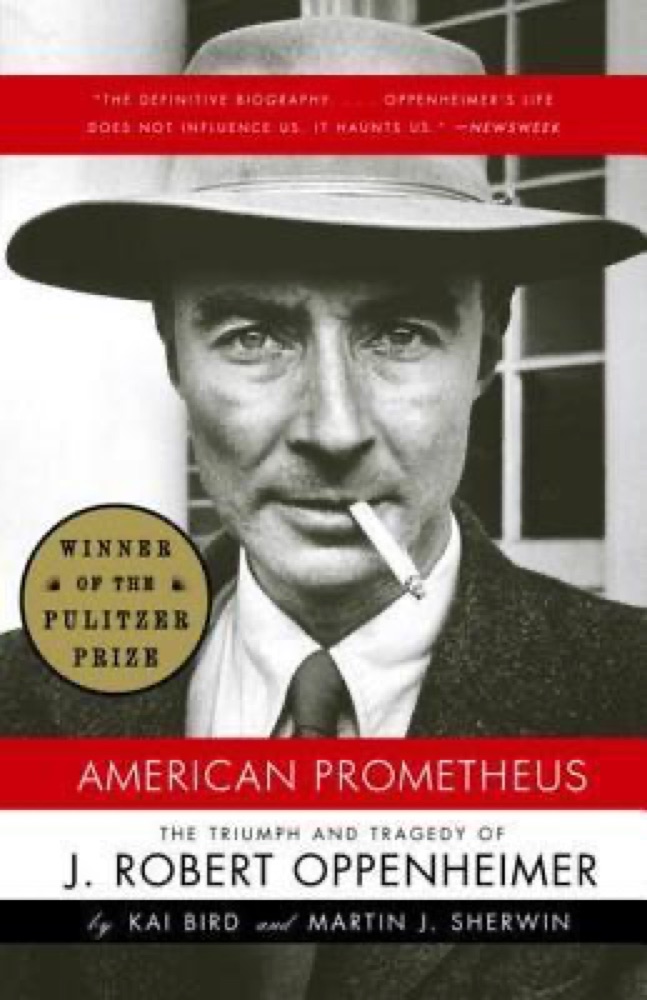
American Prometheus is the first full-scale biography of J. Robert Oppenheimer, the theoretical physicist who led the Manhattan Project and became famous as the "father of the atomic bomb." Written by Kai Bird and Martin J. Sherwin over a span of 25 years, the book traces Oppenheimer's whole life: his privileged New York childhood and schooling at the Ethical Culture School, his brilliance as a young physicist at Harvard, Cambridge, Gottingen, and Berkeley, his wartime leadership at Los Alamos, and his eventual downfall when he was branded a security risk at the height of anticommunist hysteria in 1954.
The biography dwells on the collision between scientific genius and political power. It follows Oppenheimer's 1930s left-wing activism and his "hazy and vague" connections to the Communist Party, his conviction that the United States had to build the bomb before Nazi Germany, and his later misgivings, including his opposition to the hydrogen bomb and his radical proposal for international control of atomic materials. Bird and Sherwin present his story as one of triumph and tragedy, portraying a complex and often abrasive man made into a symbol of modern science confronting the consequences of its own progress, and of the arms race and nuclear ethics that followed.
Widely praised as an American epic, the book won the 2006 Pulitzer Prize for Biography and the National Book Critics Circle Award. Reviewers at The Guardian, The New York Times, Kirkus, Publishers Weekly, and The New York Review of Books admired its dogged research and thriller-like narrative, with critics calling it one of the best scientific biographies to appear in years despite its formidable length. Its cultural reach widened further when it served as the basis for Christopher Nolan's 2023 film Oppenheimer, starring Cillian Murphy.
Keep reading
The Making of the Atomic Bomb
 Witness
 Einstein: His Life and Universe
 Too Like the Lightning
 Koba the Dread: Laughter and the Twenty Million
 Radio Free Albemuth
 The Last Lion: Winston Spencer Churchill: Alone, 1932-40
 Bomb: The Race to Build—and Steal—the World's Most Dangerous Weapon
 The Best and the Brightest
 The Autobiography of Eleanor Roosevelt
 Last and First Men
 Closing the Ring
 Genius: The Life and Science of Richard Feynman
 The Periodic Table
 When We Cease to Understand the World
 Solar
Solar
 Second Foundation
 Joseph Anton: A Memoir
 The Monuments Men: Allied Heroes, Nazi Thieves, and the Greatest Treasure Hunt in History
 The Log from the Sea of Cortez
 The Honourable Schoolboy
 The Untold History of The United States
 The Discovery of India
 The Golden House
 The Winds of War
 The Proud Tower: A Portrait of the World Before the War, 1890-1914
 The Last Lion 3: Winston Spencer Churchill: Defender of the Realm, 1940-1965
 The Wizard and the Prophet: Two Remarkable Scientists and Their Dueling Visions to Shape Tomorrow's World
 No Name in the Street
 The Secret Agent
 In the Light of What We Know
 The Invisible Bridge: The Fall of Nixon and the Rise of Reagan
 They Thought They Were Free: The Germans 1933-45
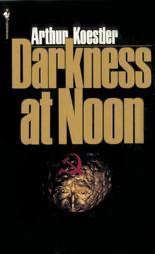 Darkness at Noon
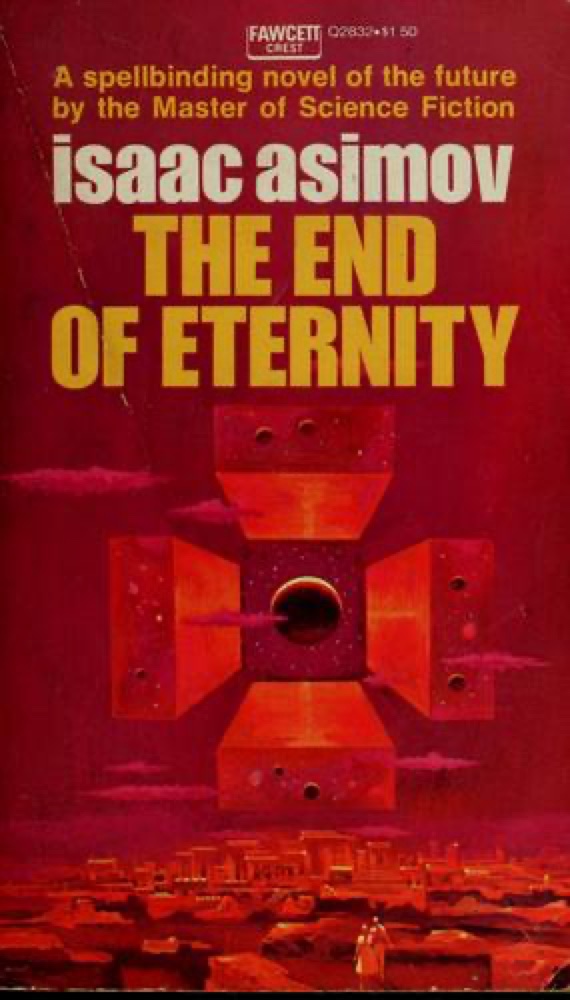 The End of Eternity
 Songs of Distant Earth
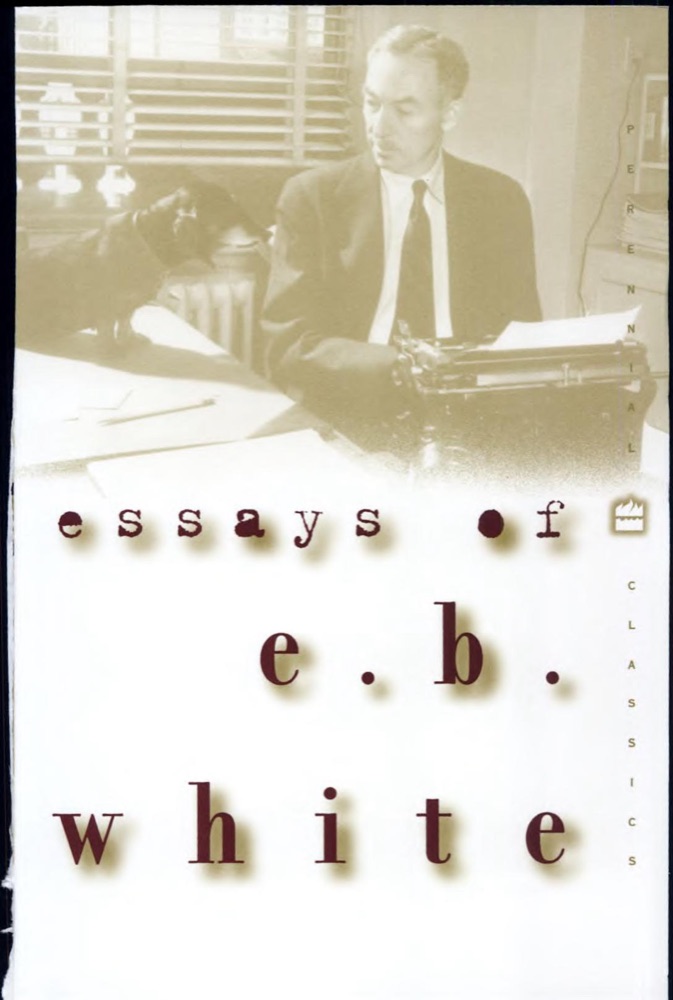 Essays of E.B. White
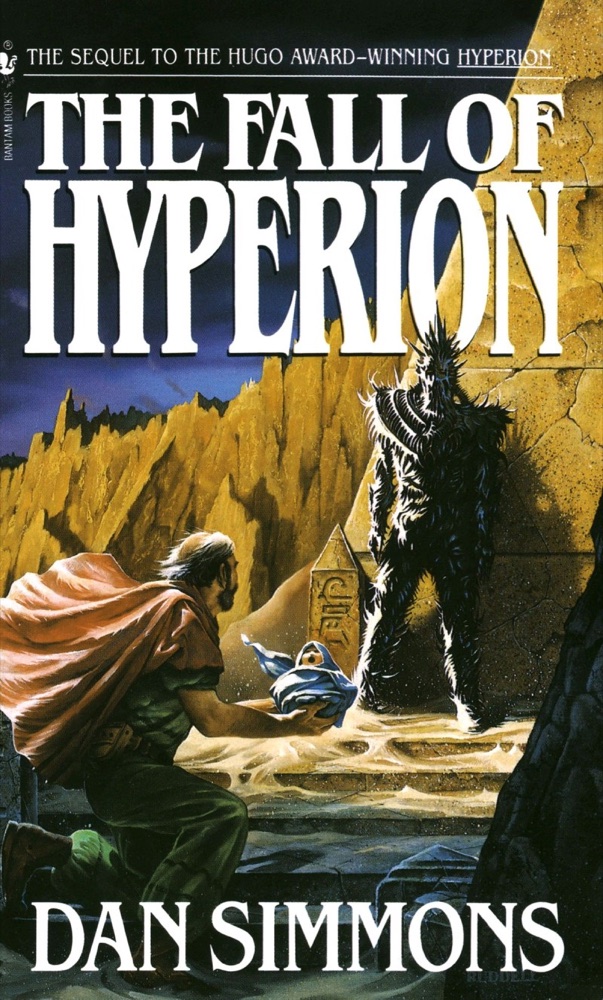 The Fall of Hyperion
 Brave New World Revisited
 Quicksilver
 The Fifties
 The Upright Thinkers: The Human Journey from Living in Trees to Understanding the Cosmos
 Modern Times: The World from the Twenties to the Nineties
 The Splendid and the Vile: A Saga of Churchill, Family, and Defiance During the Blitz
 The Spy Who Came In from the Cold
 Armageddon in Retrospect
 Truman
 Eifelheim
 Hocus Pocus
 The Education of Henry Adams
 Epitaph for a Spy
 Childhood's End
 Eichmann in Jerusalem: A Report on the Banality of Evil
 The Mask of Dimitrios
 Arguably: Selected Essays
 A Full Life: Reflections at Ninety
 The Star Diaries
 From Dawn to Decadence: 500 Years of Western Cultural Life, 1500 to the Present
 J
J