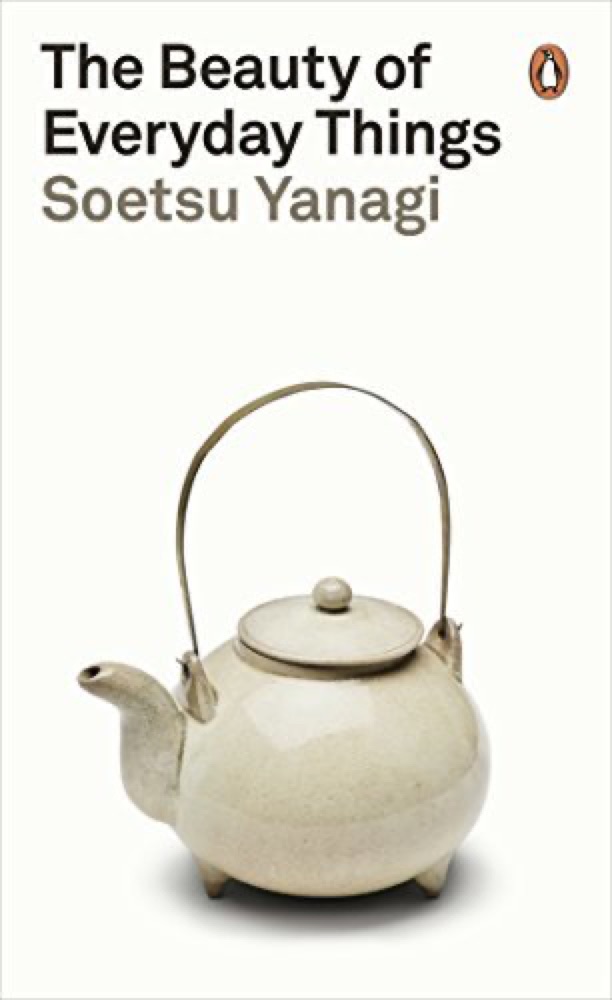
 Beauty
Quotes from the Book
Even the common articles made for daily use become endowed with beauty when they are loved.
13
What is the proper way of seeing? In brief, it is to see things as they are. However, very few people possess this purity of sight. That is, such people are not seeing things as they are, but are influenced by preconceptions. 'Knowing' has been added to 'seeing'.
10
Under the snow's reflected light creeping into the houses, beneath the dim lamplight, various types of manual work is taken up. This is how time is forgotten; this is how work absorbs the hours and days. If time remains unused, winter becomes a curse.
6
Society cannot be proud when a product is available only to a select few...Equating the expensive with the beautiful cannot be a point of pride.
6
The world of utility and the world of beauty are not separate realms.
3
Beauty knows no borders. Beauty is where heart and heart meet. It is where human happiness mingles, where you can hear voices speaking in friendly tones. Art connects one heart with another; it is a meeting place of love. Art knows no conflict; it makes us forget our petty selves. It is where we make our home in the heart of others. Beauty is love.
1
These days, personal taste has suffered a decline. Colours have become garish, forms flimsy, and designs hideous. It is only natural that surrounded by such objects, our sense of beauty should be dulled.
1
People these days waste a tremendous amount of paper. They waste it because it is of poor quality and is made to be wasted. Or it might be more correctly said that the perception of good paper as a precious commodity has dwindled. But does this careless treatment of paper mean that our lives are any better? No, it is precisely such irresponsible thinking that should be avoided at all costs. Both from a moral and aesthetic point of view, it should be shunned. It lacks any feeling of gratitude or appreciation for one of the blessings of nature.
1
People often judge the level of a civilization by the amount of paper it uses. That, however, is simply a matter of volume, not quality. Quality is how the heart and soul of a civilization should be measured. How can bad paper and high civilization possibly be bedmates?
1
A pattern is the depiction of the fundamental nature of an object, it is what remains of an object's form after all that is unnecessary had been removed.
1
What must be avoided at all costs is dishonest, distorted, and ornate work. What must be sought is the natural, direct, simple, sturdy, and safe.
To put it in somewhat contradictory terms, true tea existed only before the advent of the tea ceremony. After the coming of tea, when deformation came to be consciously sought, common everyday beauty disappeared and unnatural manipulation began. This meant the demise of the beauty of tea. Every country, according to its historical and geographical conditions, has its own peculiar character. India is characterized by intellect, China by ready action and Japan by aesthetic perception - the three splendors of the East. Indians are adept at thinking, Chinese at acting and Japanese at appreciating art. In Europe, France is close to Japan, Judaism to China and Germany to India. In Germany, however, the intellect tends to be philosophical rather than religious. While there may be many intrinsic contradictions, I still think that there is probably no country like Japan whose people live in surroundings composed of specially chosen objects. Behind it all is undoubtedly some sort of educated taste or standard of beauty. In Korea, the number of monochrome pieces in white or black glaze is stupendous. there are no intricate designs featuring a multitude of colors. the same is true for Korean textiles, which are undyed. Everyone wears white clothing.
It may be cheap, but it should also be sturdy. What must be avoided at all costs is dishonest, distorted and ornate work. What must be sought is the natural, direct, simple, sturdy and safe. Confining beauty to visual appreciation and excluding the beauty of practical objects has proven to be a grave error on the part of modern man. A true appreciation of beauty cannot be fostered by ignoring practical handicrafts. After all, there is no greater opportunity for appreciating beauty than through its use in our daily lives, no greater opportunity for coming into direct contact with the beautiful. It was the tea masters who first recognized this fact. Their profound aesthetic insight came as a result of their experience with utilitarian objects. If life and beauty are treated as belonging to different realms, our aesthetic sensibilities will gradually wither and decline. It is said that someone living in proximity to a flowering garden grows insensitive to its fragrance. Likewise, when one becomes too familiar with a sight, one loses the ability to truly see it. Habit robs us of the power to perceive anew, much less the power to be moved. Thus it has taken us all these years, all these ages, to detect the beauty in common objects. The world of utility and the world of beauty are not separate realms. Users and the used have exchanged a vow: the more an object is used the more beautiful it will become and the more the user uses an object, the more the object will be used. When machines are in control, the beauty they produce is cold and shallow. It is the human hand that creates subtlety and warmth. Weakness cannot withstand the rigors of daily use. The true meaning of the tea ceremony is being forgotten. The beauty of the way of tea should be the beauty of the ordinary, the beauty of honest poverty. Equating the expensive with the beautiful cannot be a point of pride. Under the snow's reflected light creeping into the houses, beneath the dim lamplight, various types of manual work are taken up. This is how time is forgotten; this is how work absorbs the hours and days. yet there is work to do, work to be done with the hands. Once this work begins, the clock no longer measures the passage of time. The history of kogin is the history of utility being transformed into beauty. Through their own efforts, these people made their daily lives more beautiful. This is the true calling, the mission, of handicrafts. We are drawn by that beauty and we have much to learn from it. As rich as it is, America is perhaps unrivalled for its vulgar lack of propriety and decorum, which may account for its having the world's highest crime rate. The art of empty space seen in the Nanga school of monochrome painting and the abstract, free-flowing art of calligraphy have already begun to exert considerable influence on the West. Asian art represents a latent treasure trove of immense and wide-reaching value for the future and that is precisely because it presents a sharp contrast to Western art. No other country has pursued the art of imperfection as eagerly as Japan. Just as Western art and architecture owe much to the sponsorship of the House of Medici during the Reformation, tea and Noh owe much to the protection of the shogun Ashikaga Yoshimasa ( 1436-1490 ). The most brilliant era of Japanese culture, the Higashiyama period ( 1443-1490 ). Literally, sabi commonly means "loneliness" but as a Buddhist term it originally referred to the cessation of attachment. The beauty of tea is the beauty of sabi. It might also be called the beauty of poverty or in our day it might be simply be called the beauty of simplicity. The tea masters familiar with this beauty were called sukisha-ki meaning "lacking". The sukisha were masters of enjoying what was lacking.
Disreputable and heinous acts are often carried out in the name of the nation. Nations do not always abide by the truth; instead truth is manipulated and distorted.
One's assessment of an object must be free and unhampered, with nothing between you and the object. You must look directly at it. To decide that a particular piece must be valuable because it has a particular [artist's signature] seal is weak and demeaning. Your assessment only gains meaning when you look at the object directly, free and unfettered.
It is the times we live in that are at fault.
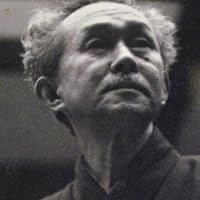
About Soetsu Yanagi
We have collected 16 quotes from 1 book by Soetsu Yanagi on BookQuoters.
More about the author →About the book
The daily lives of ordinary people are replete with objects, common things used in commonplace settings. These objects are our constant companions in life. As such, writes Soetsu Yanagi, they should be made with care and built to last, treated with respect and even affection. They should be natural and simple, sturdy and safe—the aesthetic result of wholeheartedly fulfilling utilitarian needs. They should, in short, be things of beauty.
In an age of feeble and ugly machine-made things, these essays call for us to deepen and transform our relationship with the objects that surround us. Inspired by the work of the simple, humble craftsmen Yanagi encountered during his lifelong travels through Japan and Korea, they are an earnest defence of modest, honest, handcrafted things—from traditional teacups to jars to cloth and paper. Objects like these exemplify the enduring appeal of simplici
Book details
- First published
- 2019
- Author
- Soetsu Yanagi
- Genre
- Nonfiction
- Goodreads rating
- 3.48 (2k ratings)
Keep reading
Beauty
 The Architecture of Happiness
 Ways of Seeing
 In Praise of Shadows
 From Dawn to Decadence: 500 Years of Western Cultural Life, 1500 to the Present
 The Art of the Commonplace: The Agrarian Essays
 The Soul of Man Under Socialism
 Sculpting in Time
 The Book of Tea
 Critique of Judgment
 What's Wrong with the World
 A Philosophical Enquiry into the Origin of Our Ideas of the Sublime and Beautiful
 Only Dull People Are Brilliant at Breakfast
 The Abundance
 Shop Class as Soulcraft: An Inquiry Into the Value of Work
 The Blank Slate: The Modern Denial of Human Nature
 Small Is Beautiful: Economics as if People Mattered
 Gathering Moss: A Natural and Cultural History of Mosses
 Sacred Economics: Money, Gift, and Society in the Age of Transition
 Thick: And Other Essays
 The Home and the World
 Skinny Legs and All
 The Wave in the Mind: Talks and Essays on the Writer, the Reader and the Imagination
 The Humans
 The Shock of the New
 North of Beautiful
 The Essays of Ralph Waldo Emerson
 The Intellectual Life: Its Spirit, Conditions, Methods
 The Will to Power
 The World-Ending Fire: The Essential Wendell Berry
 Human, All Too Human
 The Elegance of the Hedgehog
 The Picture of Dorian Gray
 Zen and the Art of Motorcycle Maintenance
 A Sand County Almanac and Sketches Here and There
 The Wisdom of Life
 The Essential Writings of Ralph Waldo Emerson
 Nature and Selected Essays
 The Source of Self-Regard: Selected Essays, Speeches, and Meditations
 A Treatise of Human Nature
 The Discovery of India
 A Language Older Than Words
 The Medium is the Massage
 Stories of Your Life and Others
 Walden Two
 Even Cowgirls Get the Blues
 Flaubert's Parrot
 Tender Buttons
 What If This Were Enough?: Essays
 Understanding Media: The Extensions of Man
 Art as Therapy
 One Man's Meat
 Drive Your Plow Over the Bones of the Dead
 The One-Straw Revolution
 All the Beauty in the World: The Metropolitan Museum of Art and Me
 Yumi and the Nightmare Painter
 Heretics
 The Design of Everyday Things
 Sex, Economy, Freedom, and Community: Eight Essays
 The Pleasures and Sorrows of Work