
 Life of Pi
Quotes from the Book
What his uncle does not understand is that in walking backwards, his back to the world, his back to God, he is not grieving. He is objecting. Because when everything cherished by you in life has been taken away, what else is there to do but object?
22
Love is a house with many rooms, this room to feed the love, this one to entertain it, this one to clean it, this one to dress it, this one to allow it to rest, and each of these rooms can also just as well be the room for laughing or the room for listening or the room for apologizing or the room for intimate togetherness, and, of course, there are the rooms for the new members of the household.
16
That's the nature of grief: It's a creature with many arms but few legs, and it staggers about, searching for support.
14
Because to suffer and do nothing is to be nothing, while to suffer and do something is to become someone.
13
How strange, this habit of weeping. Do animals weep? Surely they feel sadness—but do they express it with tears? He doubts it. He has never heard of a weeping cat or dog, or of a weeping wild animal. It seems to be a uniquely human trait. He doesn’t see what purpose it serves. He weeps hard, even violently, and at the end of it, what? Desolate tiredness. A handkerchief soaked in tears and mucus. Red eyes for everyone to notice. And weeping is undignified. It lies beyond the tutorials of etiquette and remains a personal idiom, individual in its expression. The twist of face, quantity of tears, quality of sob, pitch of voice, volume of clamour, effect on the complexion, the play of hands, the posture taken: One discovers weeping—one’s weeping personality—only upon weeping. It is a strange discovery, not only to others but to oneself. Resolve
12
This tiny habitation on wheels, with bit parts of the living room, the washroom, and the fireplace, is a pathetic admission that human life is no more than this: an attempt to feel at home while racing towards oblivion. He
12
Loneliness comes up to him like a sniffing dog. It circles him insistently. He waves it away, but it refuses to leave him alone.
8
Love is a house with an unshakable foundation and an indestructible roof.
7
We must do the same with death in our lives: resolve it, give it meaning, put it into context, however hard that might be.
6
A very long sentence, anchored in solid nouns, with countless subordinate clauses, scores of adjectives and adverbs, and bold conjunctions that launched the sentence in a new direction--besides unexpected interludes--has finally, with a surprisingly quiet full stop, come to an end.
5
The sad fact is that there are no natural deaths, despite what doctors say. Every death is felt by someone as a murder, as the unjust taking of a loved being.
4
Under the pathologist's microscope, life and death fight in an illuminated circle in a sort of cellular bullfight. The pathologist's job is to find the bull among the matador cells
4
That's the great, enduring challenge of our modern times, is it not, to marry faith and reason? So hard--so unreasonable--to root our lives upon a distant wisp of holiness. Faith is grand but impractical: How does one live an eternal idea in a daily way? It's so much easier to be reasonable. Reason is practical, its rewards are immediate, its workings are clear. But alas, reason is blind. Reason, on its own, leads us nowhere, especially in the face of adversity. How do we balance the two, how do we live with both faith and reason?
4
And so the explanation for why Agatha Christie is the most popular author in the history of the world. Her appeal is as wide and her dissemination as great as the Bible's, because she is a modern apostle, a female one--about time, after two thousand years of men blathering on. And this new apostle answers the same questions Jesus answered: What are we to do with death? Because murder mysteries are always resolved in the end, the mystery neatly dispelled. We must do the same with death in our lives: resolve it, give it meaning, put it into context however hard that might be.
3
We are random animals. That is who we are, and we have only ourselves, nothing more--there is no greater relationship.
3
Grief is a disease. We were riddled with its pockmarks, tormented by its fevers, broken by its blows. It ate at us like maggots, attacked us like lice- we scratched ourselves to the edge of madness. In the process we became as withered as crickets, as tired as old dogs.
3
The holy word is story, and story is the holy word.
3
Stories full of metaphors are by writers who play the language like a mandolin for our entertainment, novelists,
3
Now he realized that this matter of faith was either radically to be taken seriously or radically not to be taken seriously.
3
That is Christianity at heart: a single miracle surrounded and sustained by stories, like an island surrounded by the sea.
2
And she prays with her eyes closed. It's just a crucifix. And if he's an ape, so be it-he's an ape. He's still the Son of God.
2
Do you understand? You've been praying to a crucified chimpanzee all these years. Your Son of Man is not a god-he's just an ape on a cross!
2
His heart is expended that way, of loving the single, particular individual. He loved Clara with every fibre of his being, but now he has nothing left. Or rather, he has learned to live with her absence, and he has no wish to fill that absence; that would be like losing her a second time. Instead he would prefer to be kind to everyone, a less personal but broader love.
2
I noticed how those who know the truth are always treated with suspicion and disdain. That was the case with Jesus, of course. But look at old Miss Marple. Always she knows, and everyone is surprised that she does. And the same with Hercule Poirot. How can that ridiculous little man know anything? But he does, he does. It is the triumph of the meek, in Agatha Christie as in the Gospels.
2
There are many ways in which life's little candle can be snuffed out. A cold wind pursues us all.
2
While Odo has mastered the simple human trick of making porridge, Peter has learned the difficult animal skill of doing nothing. He's learned to unshackle himself from the race of time and contemplate time itself. As far as he can tell, that's what Odo spends most of his time doing: being in time, like one sits by a river, watching the water go by. It's a lesson hard learned, just to sit there and be.
2
We loved our son like the sea loves an island, always surrounding him with our arms, always touching him and crashing upon his shore with our care and concern. When he was gone, the sea had only itself to contemplate.
2
Tomás shudders. He lifts his head. A breeze is blowing. In whatever direction he looks, there is majestic normalcy: wild growth here, tilled fields over there, the road, the sky, the sun. Everything is in its place, and time is moving with its usual discretion. Then, in an instant, without any warning, a little boy tripped everything up. Surely the fields will notice; they will rise, dust themselves, and come closer to take a concerned look. The road will curl up like a snake and make sad pronouncements. The sun will darken with desolation. Gravity itself will be upset and objects will float in existential hesitation. But no. The fields remain still, the road continues to lie hard and fixed, and the morning sun does not stop shining with unblinking coolness.
2
Watch on YouTube
About Yann Martel
We have collected 78 quotes from 4 books by Yann Martel on BookQuoters.
More about the author →More by Yann Martel
About the book
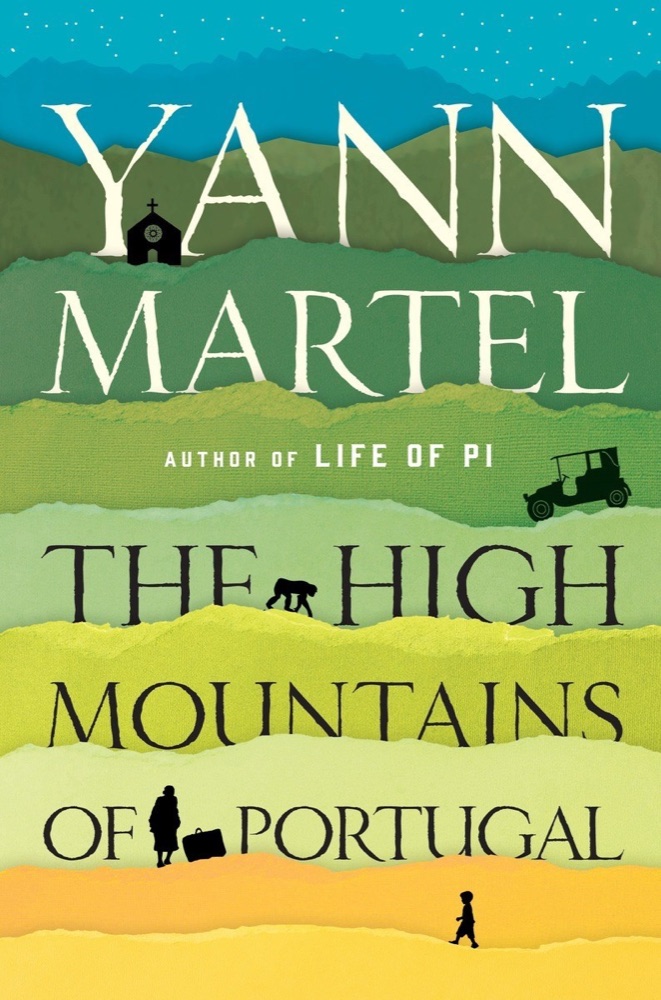
In Lisbon in 1904, a young man named Tomás discovers an old journal. It hints at the existence of an extraordinary artifact that—if he can find it—would redefine history. Traveling in one of Europe’s earliest automobiles, he sets out in search of this strange treasure.
Thirty-five years later, a Portuguese pathologist devoted to the murder mysteries of Agatha Christie finds himself at the center of a mystery of his own and drawn into the consequences of Tomás’s quest.
Fifty years on, a Canadian senator takes refuge in his ancestral village in northern Portugal, grieving the loss of his beloved wife. But he arrives with an unusual companion: a chimpanzee. And there the century-old quest will come to an unexpected conclusion.
The High Mountains of Portugal—part quest, part ghost story, part contemporary fable—offers a haunting exploration of great love and great loss. Filled with
Book details
- First published
- 2016
- Author
- Yann Martel
- Genre
- Fiction
- Goodreads rating
- 3.39 (22k ratings)
The buzz
- The New York TimesReview in The New York Timesprofessional review (via Book Marks)
- The New YorkerReview in The New Yorkerprofessional review (via Book Marks)
- The Washington PostReview in The Washington Postprofessional review (via Book Marks)
- The GuardianReview in The Guardianprofessional review (via Book Marks)
- NPRReview in NPRprofessional review (via Book Marks)
- The Boston GlobeReview in The Boston Globeprofessional review (via Book Marks)
Keep reading
 Jayber Crow
 Pet Sematary
 A Luminous Republic
 The Everlasting Man
 The Signature of All Things
 The Fall of Hyperion
 In Search of Lost Time
 The Crossing
 The Wolf Gift
 Light Years
 The Exorcist
 Absalom, Absalom!
 Independent People
Life of Pi
Independent People
Life of Pi
 A Severe Mercy: A Story of Faith, Tragedy and Triumph
 The Empusium
 The Clockmaker's Daughter
 The Covenant of Water
 My Friends
 The Sparrow
 Birds Without Wings
 Embers
 Plainwater: Essays and Poetry
 Laurus
 Libra
Libra
 Arm of the Sphinx
 The Screwtape Letters
 The Secret Scripture
 The Ground Beneath Her Feet
 Sexing the Cherry
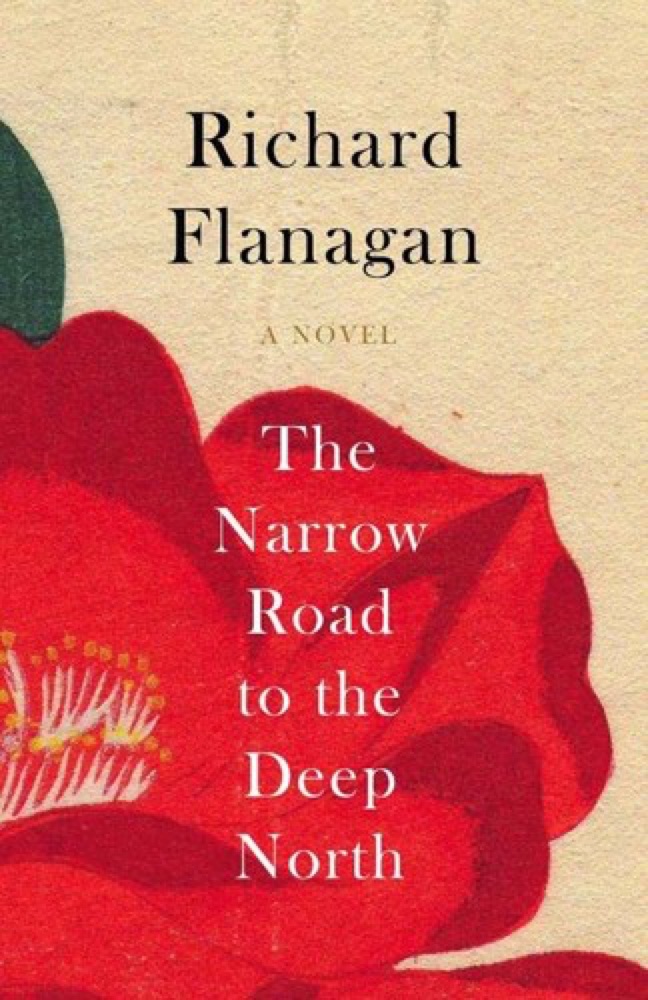 The Narrow Road to the Deep North
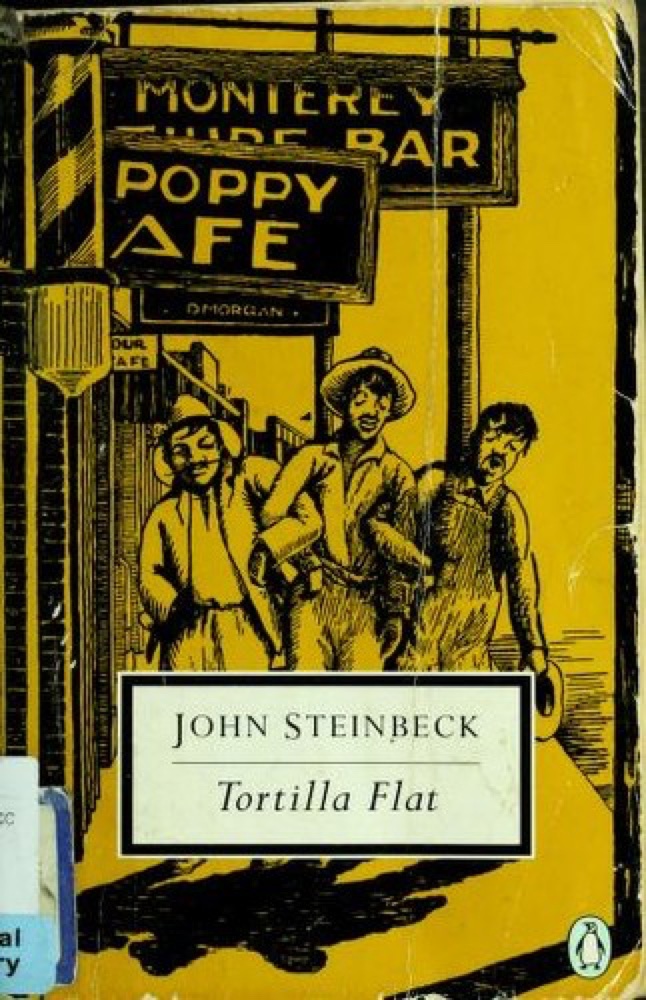 Tortilla Flat
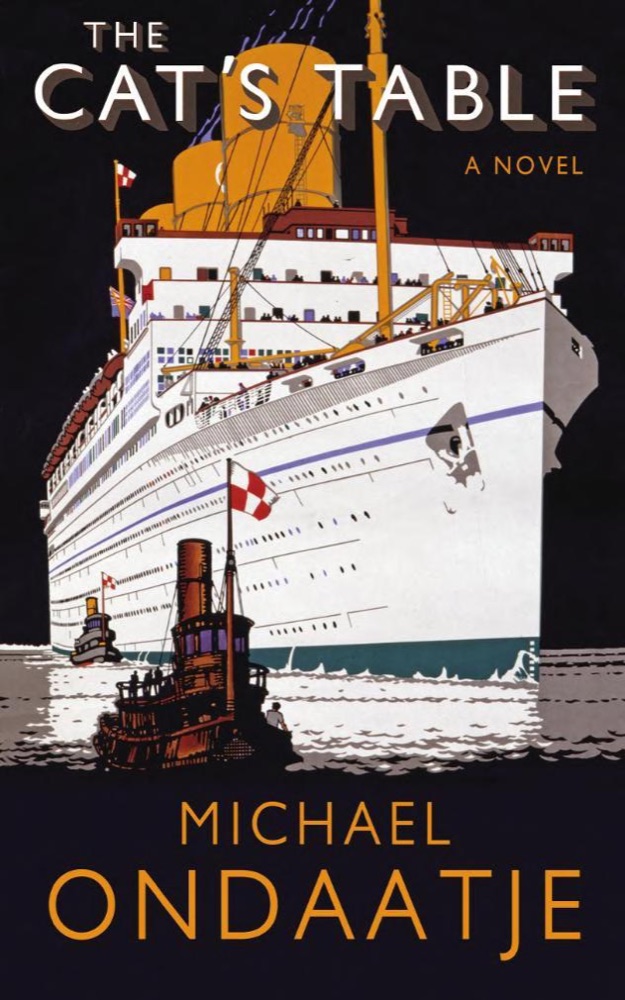 The Cat's Table
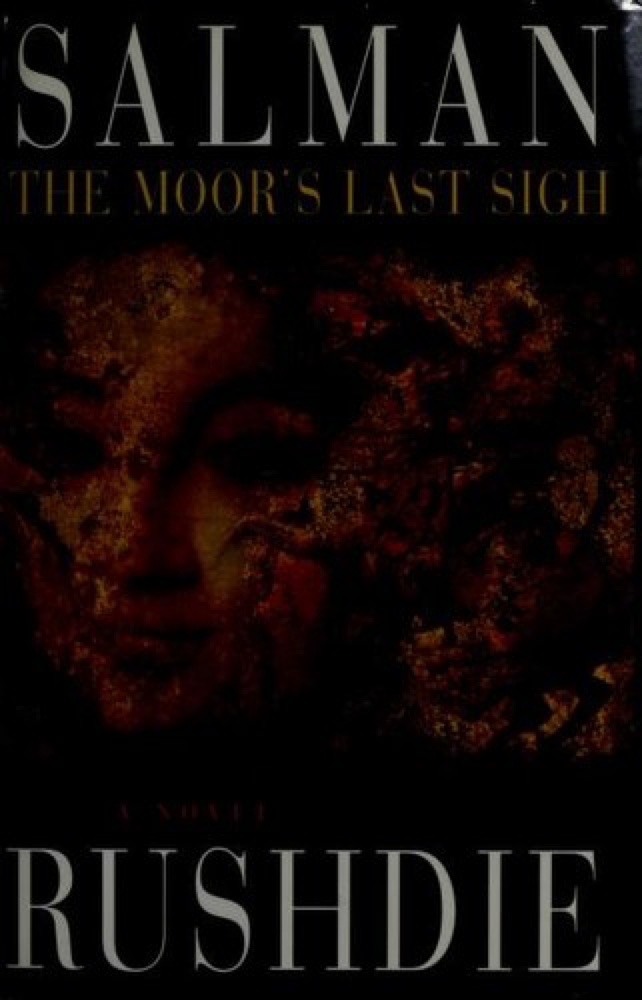 The Moor's Last Sigh
 Children of God
 The Infinities
 The Chrysalids
 The Fall
 V.
V.
 The Golden Tresses of the Dead
 Toll the Hounds
 The Etched City
 Sword & Citadel
 Day
Day
 The Man with the Compound Eyes
 The Gone-Away World
 Nutshell
 Nothing to Be Frightened Of
 Drive Your Plow Over the Bones of the Dead
 The Man in the High Castle
 Brideshead Revisited: The Sacred and Profane Memories of Captain Charles Ryder
 Held
Held
 Another Roadside Attraction
 Island
 Lincoln in the Bardo
 Look Homeward, Angel
 The Island of Missing Trees
 Eifelheim
 The Stranger in the Lifeboat
 Ben-Hur: A Tale of the Christ