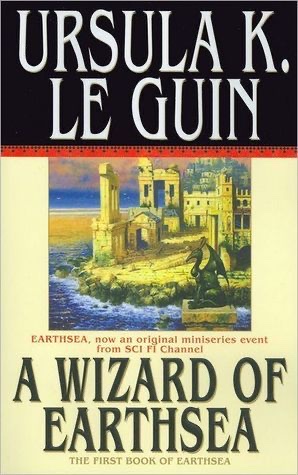
 A Wizard of Earthsea
Quotes from the Book
It is good to have an end to journey toward; but it is the journey that matters, in the end.
To learn which questions are unanswerable, and not to answer them: this skill is most needful in times of stress and darkness.
The only thing that makes life possible is permanent, intolerable uncertainty: not knowing what comes next.
Light is the left hand of darkness and darkness the right hand of light. Two are one, life and death, lying together like lovers in kemmer, like hands joined together, like the end and the way.
Truth is a matter of the imagination.
How does one hate a country, or love one? Tibe talks about it; I lack the trick of it. I know people, I know towns, farms, hills and rivers and rocks, I know how the sun at sunset in autumn falls on the side of a certain plowland in the hills; but what is the sense of giving a boundary to all that, of giving it a name and ceasing to love where the name ceases to apply? What is love of one's country; is it hate of one's uncountry? Then it's not a good thing. Is it simply self-love? That's a good thing, but one mustn't make a virtue of it, or a profession... Insofar as I love life, I love the hills of the Domain of Estre, but that sort of love does not have a boundary-line of hate. And beyond that, I am ignorant, I hope.
A profound love between two people involves, after all, the power and chance of doing profound hurt.
I talk about the gods, I am an atheist. But I am an artist too, and therefore a liar. Distrust everything I say. I am telling the truth. The only truth I can understand or express is, logically defined, a lie. Psychologically defined, a symbol. Aesthetically defined, a metaphor.
I certainly wasn't happy. Happiness has to do with reason, and only reason earns it. What I was given was the thing you can't earn, and can't keep, and often don't even recognize at the time; I mean joy.
It is a terrible thing, this kindess that human beings do not lose. Terrible, because when we are finally naked in the dark and cold, it is all we have. We who are so rich, so full of strength, we end up with that small change. We have nothing else to give.
No, I don't mean love, when I say patriotism. I mean fear. The fear of the other. And its expressions are political, not poetical: hate, rivalry, aggression.
The artist deals with what cannot be said in words. The artist whose medium is fiction does this in words. The novelist says in words what cannot be said in words.
If civilization has an opposite, it is war.
A man wants his virility regarded. A woman wants her femininity appreciated, however indirect and subtle the indications of regard and appreciation. [Here] one is respected and judged only as a human being. It is an appalling experience.
Distrust everything I say. I am telling the truth.
Science fiction is not prescriptive; it is descriptive.
I'll make my report as if I told a story, for I was taught as a child on my homeworld that Truth is a matter of the imagination.
For it seemed to me, and I think to him, that it was from that sexual tension between us, admitted now and understood but not assuaged, that the great and sudden assurance of friendship between us rose: a friendship so much needed by us both in our exile, and already so well proved in the days and nights of our better journey, that it might as well be called, now as later, love. But it was from the difference between us, not from the affinities and likenesses, but from the difference, that that love came: and it was itself the bridge, the only bridge, across what divided us. For us to meet sexually would be for us to meet once more as aliens. We had touched, in the only way we could touch. We left it at that. I do not know if we were right.
How does one hate a country, or love one?... I know people, I know towns, farms, hills and rivers and rocks, I know how the sun at sunset in autumn falls on the side of a certain plowland in the hills; but what is the sense of giving a boundary to all that, of giving a name and ceasing to love where the name ceases to apply? What is the love of one's country; is it hate of one's uncountry? Then it's not a good thing.
To oppose something is to maintain it.
But it doesn't take a thousand men to open a door, my lord." "It might to keep it open.
To exhibit the perfect uselessness of knowing the answer to the wrong question.
The Gethenians do not see one another as men or women. This is almost impossible for our imaginations to accept. After all, what is the first question we ask about a newborn baby? ....there is no division of humanity into strong and weak halves, protected/ protective. One is respected and judged only as a human being. You cannot cast a Gethnian in the role of Man or Woman, while adopting towards 'him' a corresponding role dependant on your expetations of the interactions between persons of the same or oppositve sex. It is an appalling experience for a Terran
To be an atheist is to maintain God. His existence or his non existence, it amounts to much the same, on the plane of proof. Thus proof is a word not often used among the Handdarata, who have chosen not to treat God as a fact, subject either to proof or to belief: and they have broken the circle, and go free. To learn which questions are unanswerable, and not to answer them: this skill is most needful in times of stress and darkness.
Sanity returns (in most cases) when the book is closed.
I suppose the most important thing, the heaviest single factor in one's life, is whether one's born male or female. In most societies it determines one's expectations, activities, outlook, ethics, manners—almost everything. Vocabulary. Semiotic usages. Clothing. Even food. Women... women tend to eat less... It's extremely hard to separate the innate differences from the learned ones. Even where women participate equally with men in the society, they still after all do all the childbearing, and so most of the child-rearing....
Sometimes you must go against the wheel's turn.
There is neither source nor end, for all things are in the Center of Time. As all the stars may be reflected in a round raindrop falling in the night: so too do all the stars reflect the raindrop. There is neither darkness nor death, for all things are, in the Light of the Moment, and their end and their beginning are one.
Did you know?
- The novel is set on the planet Gethen, nicknamed Winter for its perpetually frigid climate.
- Its inhabitants are ambisexual, having no fixed sex except during a periodic phase called kemmer.
- It won both the Hugo Award and the Nebula Award for Best Novel.
- The book is part of Le Guin's loosely connected Hainish (Ekumen) universe.
- Le Guin was the daughter of anthropologist Alfred Kroeber, an influence reflected in her detailed alien societies.
- The title evokes a Taoist theme of balance between light and darkness.
About Ursula K. Le Guin
Ursula K. Le Guin (1929-2018) was an American writer celebrated for her science fiction and fantasy, including the Hainish Cycle and the Earthsea books. The daughter of anthropologist A.L. Kroeber and writer Theodora Kroeber, she won numerous Hugo and Nebula Awards over a career spanning nearly sixty years and was named a Grand Master of the Science Fiction and Fantasy Writers of America.
More about the author →More by Ursula K. Le Guin
All books by Ursula K. Le Guin →
About the book
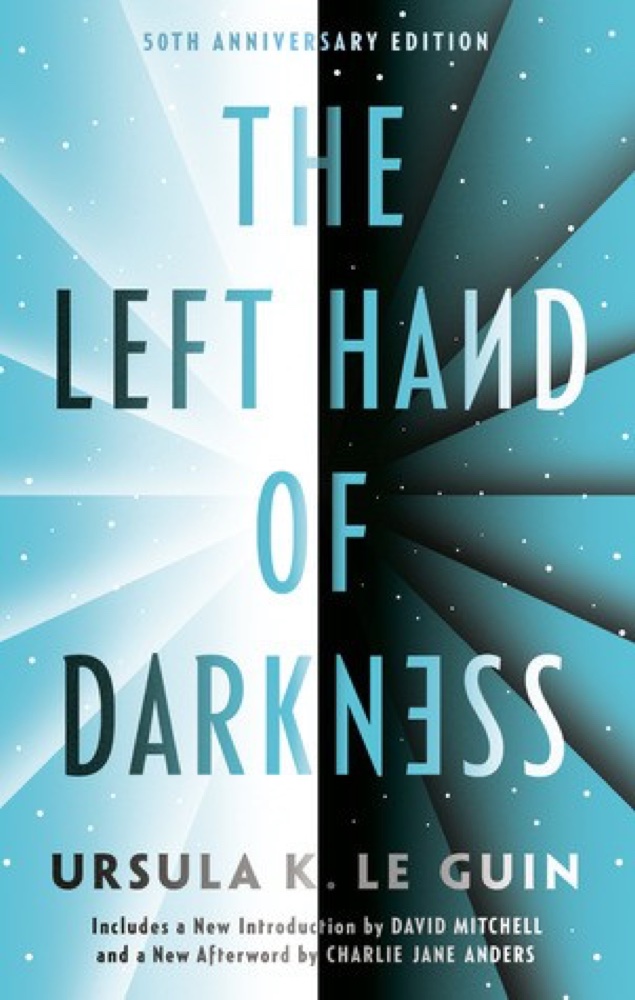
The Left Hand of Darkness, published in 1969, is Ursula K. Le Guin's science fiction novel set on the icebound planet Gethen, also called Winter. Genly Ai, a lone envoy of the interstellar Ekumen, arrives to persuade Gethen to join a peaceful confederation of worlds, and must navigate the intrigues of the kingdom of Karhide and the rival state of Orgoreyn while trying to bridge the cultural gulf between himself and the people he has come to know.
The Gethenians are ambisexual: they have no fixed sex, entering a periodic sexual phase called kemmer during which an individual may become male or female, and otherwise living without the gender divisions that shape human society. Through this premise the novel explores gender, sexuality, and the ways prejudice and identity are constructed, alongside themes of loyalty and betrayal, cross-cultural understanding, and a Taoist sense of balance between light and darkness reflected in its title.
Widely regarded as a landmark of intellectual science fiction, the book won both the Hugo Award and the Nebula Award for Best Novel, and it helped establish Le Guin among the foremost writers in the field. It is set in her loosely connected Hainish universe and remains one of her most influential and studied works, frequently cited for its thought experiment about a society without fixed gender.
Key characters
- Genly AiTerran envoy of the Ekumen sent to bring Gethen into the interstellar confederation
- EstravenGethenian statesman who becomes Ai's ally and friend
- Argaven XVKing of Karhide
- TibeArgaven's cousin and rival who seizes power in Karhide
- ObsleOrgota official who deals with Genly Ai in Orgoreyn
Book details
- First published
- 1969
- Length
- 286 pages
- Reading time
- 5 hours
- Author
- Ursula K. Le Guin
- Genre
- Classics
- Goodreads rating
- 4.09 (232k ratings) →
- First line
- “I'll make my report as if I told a story, for I was taught as a child on my homeworld that Truth is a matter of the imagination.”
Series & reading order
- 1 Rocannon's World
- 2 Planet of Exile
- 3 City of Illusions
- 4 The Left Hand of Darkness
- 5 The Dispossessed
- 6 The Word for World Is Forest
If you liked this, read…
- 1The DispossessedAnother Hainish-universe novel by Le Guin exploring society and politics through science fiction
- 2DuneA richly imagined alien world where politics, culture, and environment shape the story
Keep reading
 Night Watch
 A Tale of Love and Darkness
 Genesis
 Sexing the Cherry
 East of Eden
 The Stone Gods
 That Hideous Strength
 Forge of Darkness
 Dune
Dune
 Nutshell
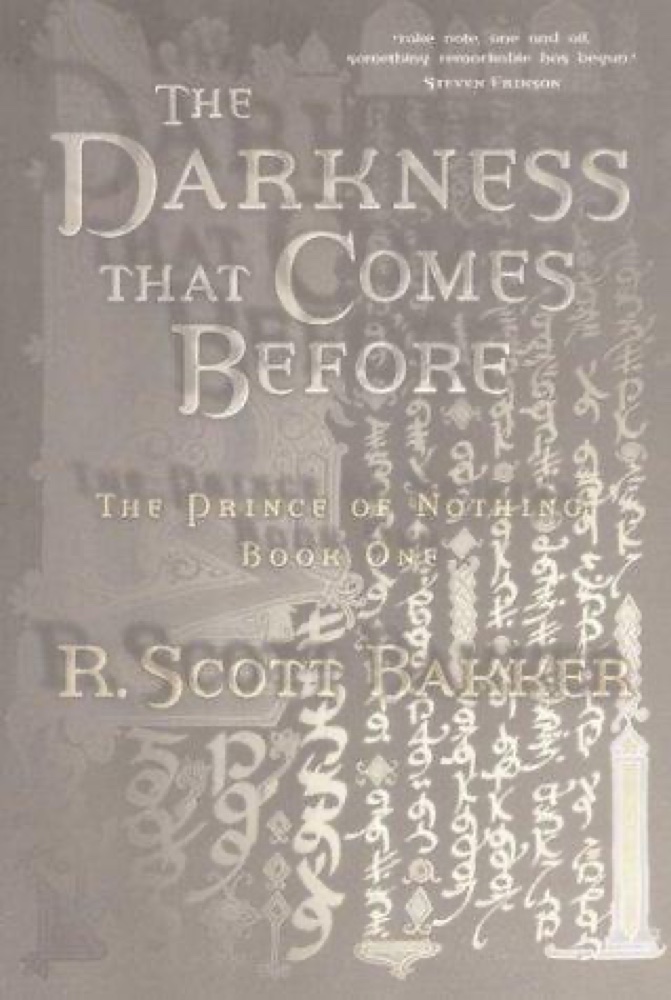 The Darkness That Comes Before
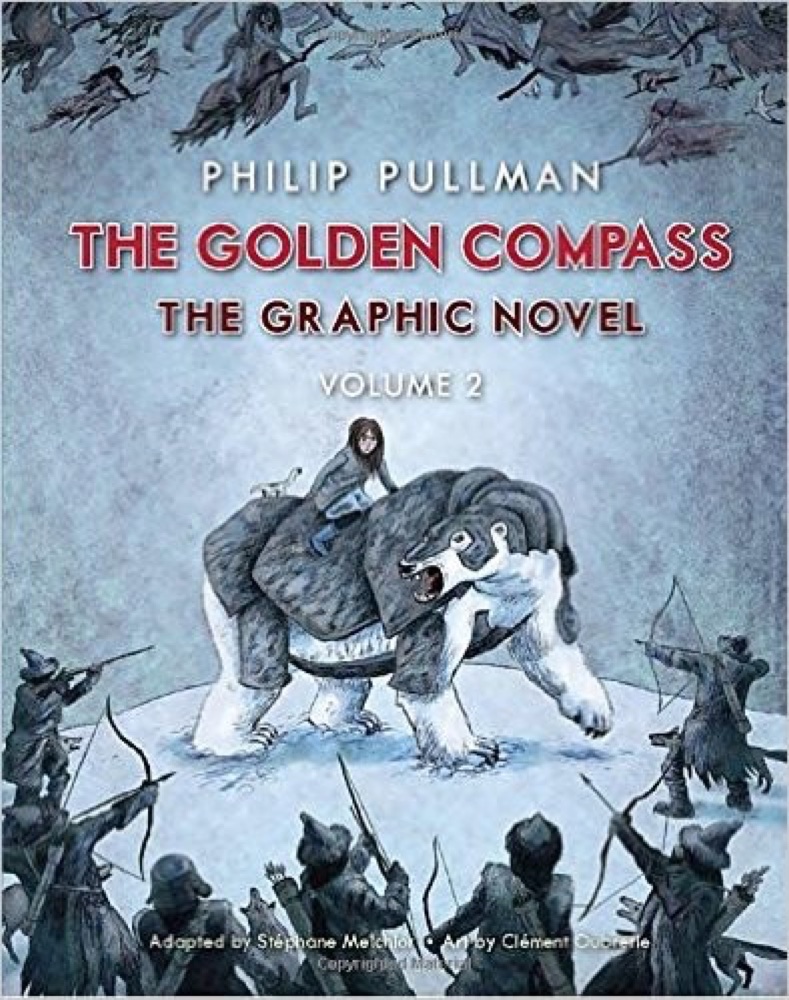 The Golden Compass
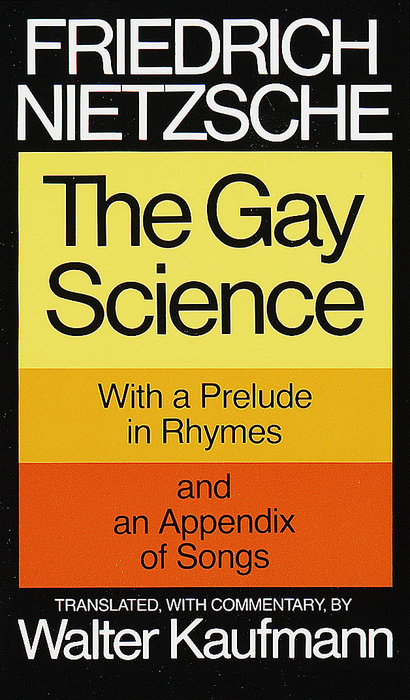 The Gay Science
 Daniel Deronda
 The Magus
 The Man in the High Castle
 Shōgun
 No Time To Spare: Thinking About What Matters
 Angle of Repose
 Point Counter Point
 The Resistance
 The Magic Mountain
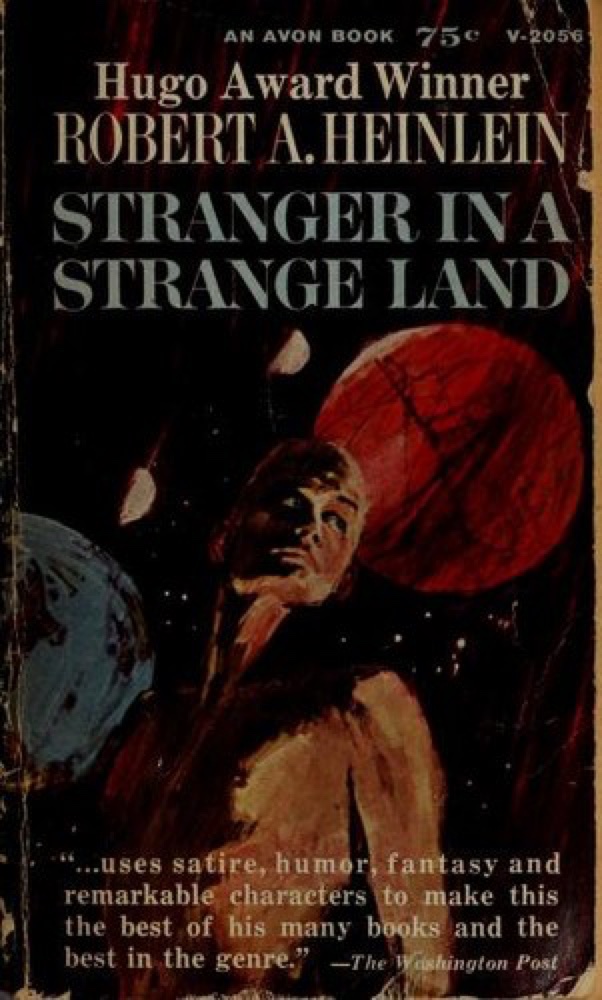 Stranger in a Strange Land
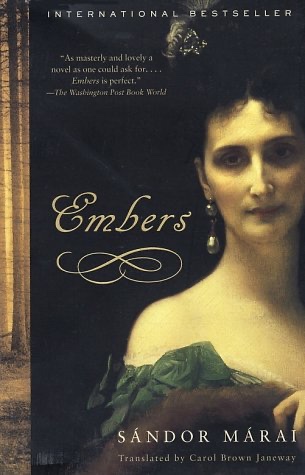 Embers
 Libra
Libra
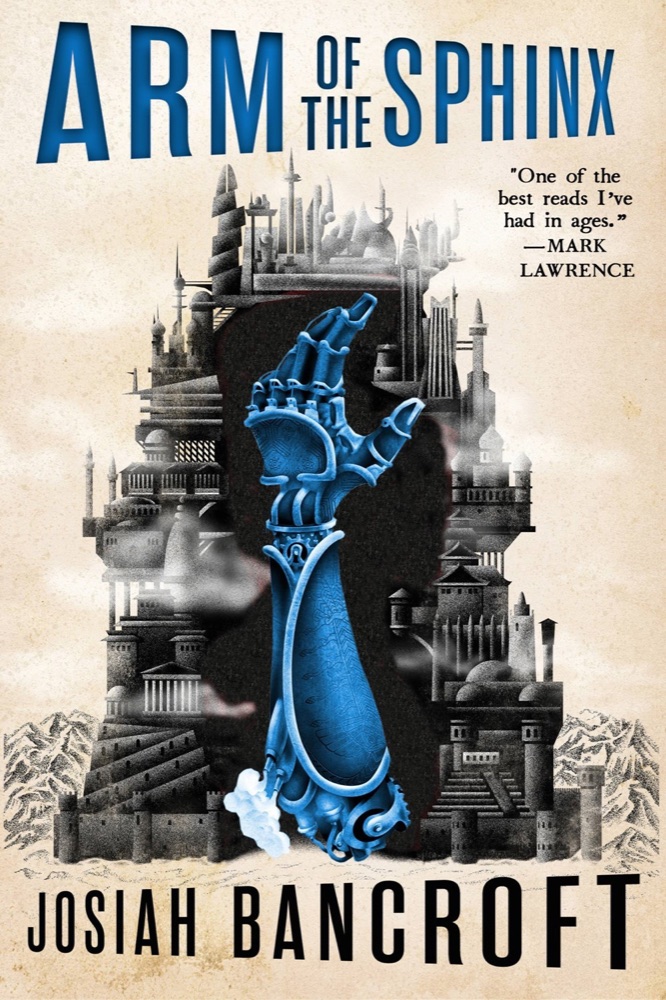 Arm of the Sphinx
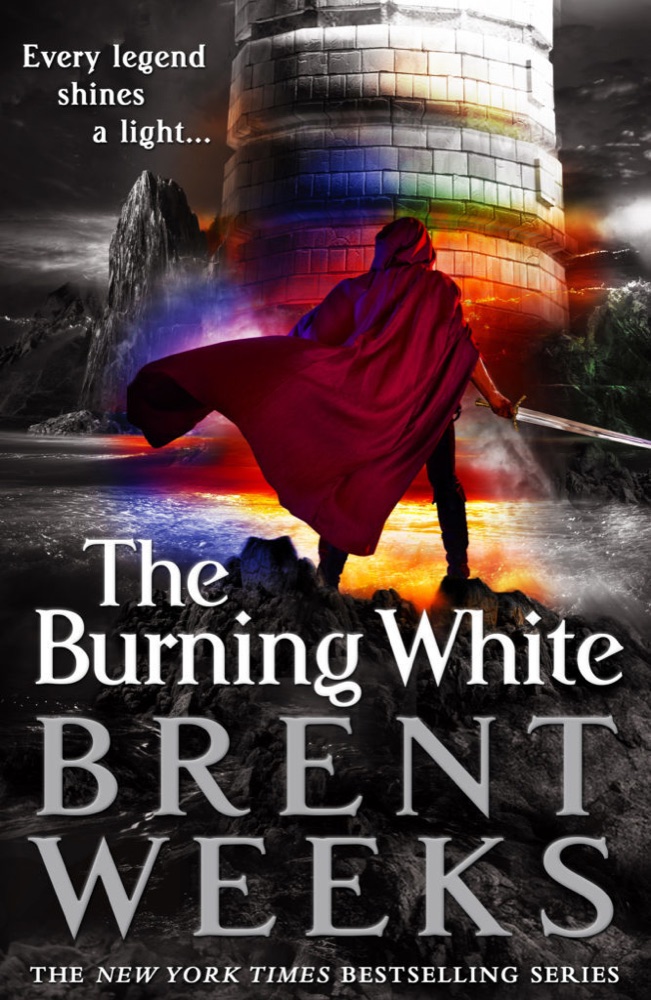 The Burning White
 The Fall
 The Story of My Experiments With Truth
 Blade of Tyshalle
 Empire of Silence
 The Blinding Knife
 The Handmaid's Tale
 Oranges Are Not the Only Fruit
 Hard-Boiled Wonderland and the End of the World
 The Snowman
 1984
1984
 Where Reasons End
 Shadow & Claw
 American Gods
 Wolf Hall
 Fall of Light
 Acceptance
 Gnomon
 When Women Were Dragons
 A Sudden Light
 The Secret History
 Children of the Mind
 Children of Dune
 The Fountainhead
 Anthills of the Savannah
 Selected Stories
 The Claw of the Conciliator
 We the Living
 The Gone-Away World
 The Fall of Babel
 A Luminous Republic
 Island
 Black Leopard, Red Wolf
 Stories of Your Life and Others