
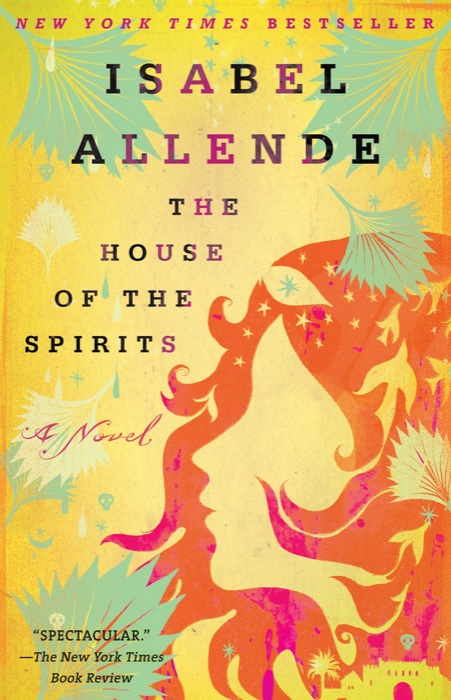
 The House of the Spirits
Quotes from the Book
My worst flaw is that I tell secrets, my own and everybody else's.
34
Literary characters, like my grandmother's apparitions, are fragile beings, easily frightened; they must be treated with care so they will feel comfortable in my pages
19
Nostalgia is my vice. Nostalgia is a melancholy, and slightly saccharine, sentiment, like tenderness
16
But that's how nostalgia is: a slow dance in a large circle. Memories don't organize themselves chronologically, they're like smoke, changing, ephemeral, and if they're not written down they fade into oblivion.
14
El exiliado mira hacia el pasado, lamiéndose las heridas; el inmigrante mira hacia el futuro, dispuesto a aprovechar las oportunidades a su alcance.
14
I have a hundred-year-old aunt who aspires to sainthood, and whose only wish has been to go into the convent, but no congregation, not even the Little Sisters of Charity, could tolerate her for more than a few weeks, so the family has had to look after her. Believe me, there is nothing so insufferable as a saint, I wouldn't sic one on my worst enemy.
14
If, for example, I saw my grandparents or my daughter for an instant, would I recognize them? Probably not, because in looking so hard for a way to keep them alive, remembering them in the most minimal details, I have been changing them, adorning them with qualities they may not have had. I have given them a destiny much more complex than the ones they lived.
13
I've been so thoroughly incorporated into the California culture that I practice meditation and go to a therapist, even though I always set a trap: during my meditation I invent stories to keep from being bored, and in therapy I invent stories to keep from boring the psychologist.
13
Writing, when all is said and done, is an attempt to understand one's own circumstance and to clarify the confusion of existence, including insecurities that do not torment normal people, only chronic nonconformists, many of whom end up as writers after having failed in other undertakings.
11
The last time I was in Chile, I was hypnotized by a friend who is studying to be a curandero, a healer, who led me back through several incarnations. It wasn't easy to return to the present, however, since my friend hadn't reached that part of the course, but the experiment was well worth the effort because I discovered that in former lives I was not Genghis Khan, as my mother believes.
8
Catholics form a majority in Chile, although there are more and more Evangelicals and Pentacostals who irritate everyone because they have a direct understanding with God while everyone else must pass through the priestly bureaucracy.
8
The North Americans' sense of time is very special. They are short on patience. Everything must be quick, including food and sex, which the rest of the world treats ceremoniously. Gringos invented two terms that are untranslatable into most languages: “snack” and “quickie,” to refer to eating standing up and loving on the run . . . that, too, sometimes standing up. The most popular books are manuals: how to become a millionaire in ten easy lessons, how to lose fifteen pounds a week, how to recover from your divorce, and so on. People always go around looking for shortcuts, and ways to escape anything they consider unpleasant: ugliness, old age, weight, illness, poverty, and failure in any of its aspects.
6
Word by word I have created the person I am and the invented country in which I live.
4
No heredé los poderes psíquicos de mi abuela, pero ella me abrió la mente a los misterios del mundo. Acepto que cualquier cosa es posible. Ella sostenía que existen múltiples dimensiones de la realidad y no es prudente confiar sólo en la razón y en nuestros limitados sentidos para entender la vida; existen otras herramientas de percepción, como el instinto, la imaginación, los sueños, las emociones, la intuición. Me introdujo al realismo mágico mucho antes que el llamado boom de la literatura latinoamericana lo pusiera de moda.
4
He armado la idea de mi país como un rompecabezas, seleccionando aquellas piezas que se ajustan a mi diseño e ignorando las demás.
4
They are more interesting than most men, but that does not affect the reality: they live in an unyielding patriarchy. To begin with, a woman’s work or intellect isn’t respected; we must work twice as hard as any man to earn half the recognition
3
I think of my destiny as an expatriate. It is my fate to wander from place to place, and to adapt to new soils. I believe I will be able to do that because handfuls of Chilean soil are caught in my roots; I carry them with me always.
3
Gringos invented two terms that are untranslatable into most languages: “snack” and “quickie,” to refer to eating standing up and loving on the run . . . that, too, sometimes standing up.
3
Fourth of July picnic. And by the way, that picnic, like everything else in this land, is a model of efficiency: you drive at top speed, set up in a previously reserved space, spread out the baskets, bolt your food, kick the ball, and rush home to avoid the traffic. In Chile, a similar project would take three days.
3
moral crisis is produced when the same affluent Catholics who faithfully go to mass deny their workers a dignified wage.
3
Si me preguntaban mi nacionalidad, debía dar largas explicaciones y dibujar un mapa para demostrar que Chile no quedaba en el centro de Asia, sino en el sur de América. A menudo lo confundían con China, porque el nombre sonaba parecido. Los belgas, acostumbrados a la idea de las colonias en África, solían sorprenderse de que mi marido pareciera inglés y yo no fuera negra; alguna vez me preguntaron por qué no usaba el traje típico, que tal vez imaginaban como los vestidos de Carmen Miranda en las películas de Hollywood: falda a lunares y un canasto con piñas en la cabeza.
3
El golpe militar no surgió de la nada; las fuerzas que apoyaron a la dictadura estaban allí, pero no las habíamos percibido. Algunos defectos de los chilenos que antes estaban bajo la superficie emergieron en gloria y majestad durante ese período. No es posible que de la noche a la mañana se organizara la represión en tan vasta escala sin que la tendencia totalitaria existiera en un sector de la sociedad; por lo visto no éramos tan democráticos como creíamos. Por su parte el gobierno de Salvador Allende no era inocente como me gusta imaginarlo; hubo ineptitud, corrupción, soberbia. En la vida real héroes y villanos suelen confundirse, pero puedo asegurar que en los gobiernos democráticos, incluyendo el de la Unidad Popular, no hubo jamás la crueldad que la nación ha sufrido cada vez que intervienen los militares.
3
Más o menos cada diez años echo una mirada hacia el pasado y puedo ver el mapa de mi viaje, si es que eso puede llamarse un mapa; parece más bien un plato de tallarines. Si uno vive lo suficiente y mira para atrás, es obvio que no hacemos más que andar en círculos.
3
I have none of the sense of decorum, the modesty, or the pessimism of my relatives, and none of their fear of what people will say, of extravagance, or of God. I don’t speak or write apologetically, instead I’m rather grandiloquent, and I like attracting attention. That is, I simply am as I am today, after a lot of living. In my childhood I was a strange little insect; in adolescence, a shy mouse—for many years my nickname was Laucha, which was what we called our ordinary household mice—and in my youthful years I was everything from a rabid feminist to a flower-crowned hippie. My worst flaw is that I tell secrets, my own and everybody else’s. In short, a disaster. If I lived in Chile no one would speak to me. But one thing I am is hospitable.
2
No, literature was definitely not a reasonable career path in a country like Chile where intellectual scorn for women was absolute.
2
All the women I know write, paint, sculpt, or do crafts in their leisure time—which is very scarce. Art has replaced knitting.
2
The tradition of industrious women is fundamental in my country, where sloth is a male privilege. It is forgivable in men, just as alcoholism is tolerated among them, because it is assumed that these are unavoidable biological characteristics: if you’re born that way, you’re born that way. . . . That isn’t true of women, you understand.
2
Watch on YouTube
About Isabel Allende
We have collected 327 quotes from 19 books by Isabel Allende on BookQuoters.
More about the author →More by Isabel Allende
All books by Isabel Allende →
About the book
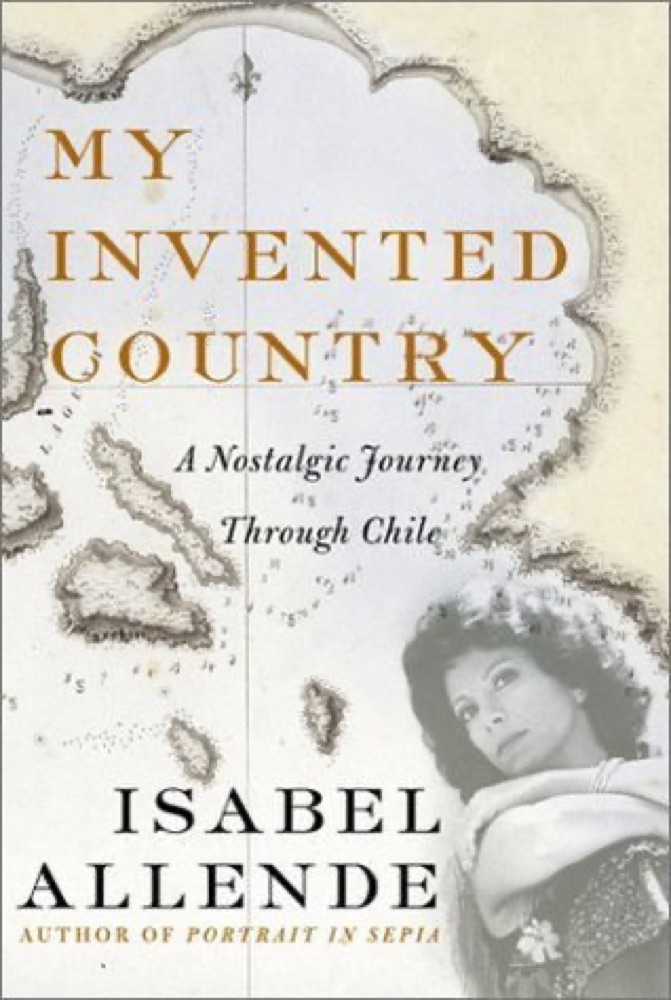
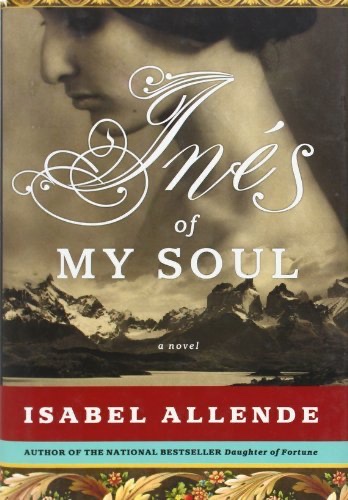
Isabel Allende's first memory of Chile is of a house she never knew. The "large old house" on the Calle Cueto, where her mother was born and which her grandfather evoked so frequently that Isabel felt as if she had lived there, became the protagonist of her first novel, The House of the Spirits. It appears again at the beginning of Allende's playful, seductively compelling memoir My Invented Country, and leads us into this gifted writer's world.
Here are the almost mythic figures of a Chilean family -- grandparents and great-grandparents, aunts, uncles, and friends -- with whom readers of Allende's fiction will feel immediately at home. And here, too, is an unforgettable portrait of a charming, idiosyncratic Chilean people with a violent history and an indomitable spirit. Although she claims to have been an outsider in her native land -- "I never fit in anywhere, not into my family, m
Book details
- First published
- 2003
- Author
- Isabel Allende
- Genre
- Nonfiction
- Goodreads rating
- 3.89 (13k ratings)
Keep reading
 A Sunny Place for Shady People
 Travels With My Aunt
The House of the Spirits
Travels With My Aunt
The House of the Spirits
 Incidental Inventions
 Dreaming in Cuban
 Before Night Falls
 My Broken Language
 Amulet
 Shame
Shame
 The Motorcycle Diaries: Notes on a Latin American Journey
 Maya's Notebook
 Violeta
 Ficciones
 Brave New World / Brave New World Revisited
 Talking to Ourselves
 The Sound of Things Falling
 A General Theory of Oblivion
 The Little Virtues
 The Time in Between
 My Last Sigh
 Borderlands/La Frontera: The New Mestiza
 Soul Mountain
 Dancing Girls and Other Stories
 Ordesa
 The Aleph and Other Stories
 Lobizona
 Firmin: Adventures of a Metropolitan Lowlife
 Let Me Tell You What I Mean
 The Labyrinth of Solitude and Other Writings
 Like Water for Chocolate
 Real Estate
 La reina del sur
 Divisadero
 Emma in the Night
 Old Babes in the Wood: Stories
 Agatha Christie: An Autobiography
 Travels with Charley: In Search of America
 The Rachel Papers
 Elizabeth Costello
 An Unnecessary Woman
 The Invention of Morel
 Lost in Translation: A Life in a New Language
 Travels with Herodotus
 South of No North
 Lizard
 The Charioteer
 Those Who Leave and Those Who Stay
 All That I Am
 Dreams of Trespass: Tales of a Harem Girlhood
 The Story of the Lost Child
 How to Suppress Women's Writing
 Notes To Self
 The Book of Chameleons
 Hot Milk
 Distant Star
 My Childhood
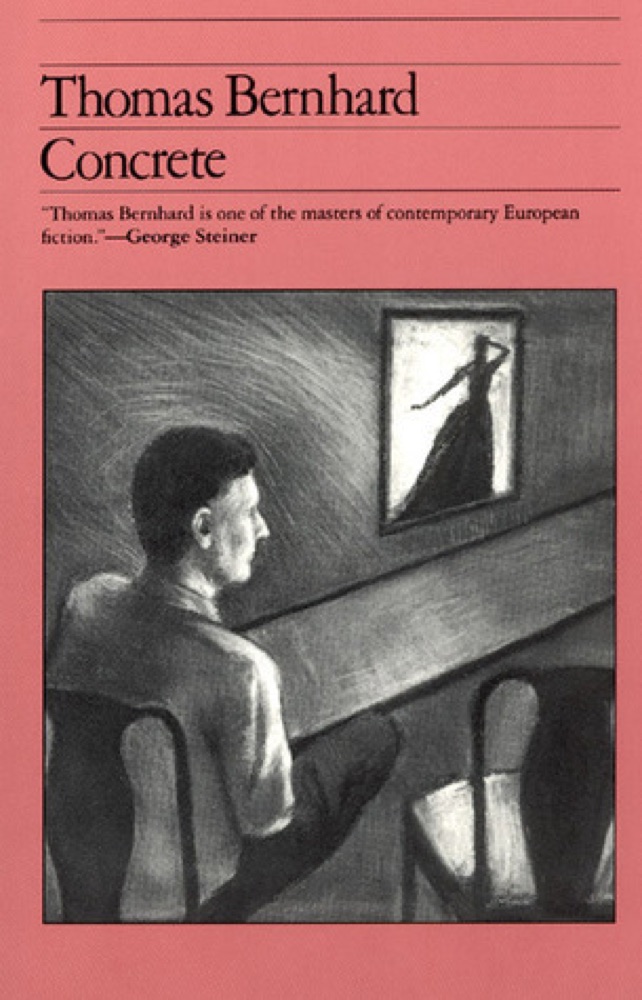 Concrete
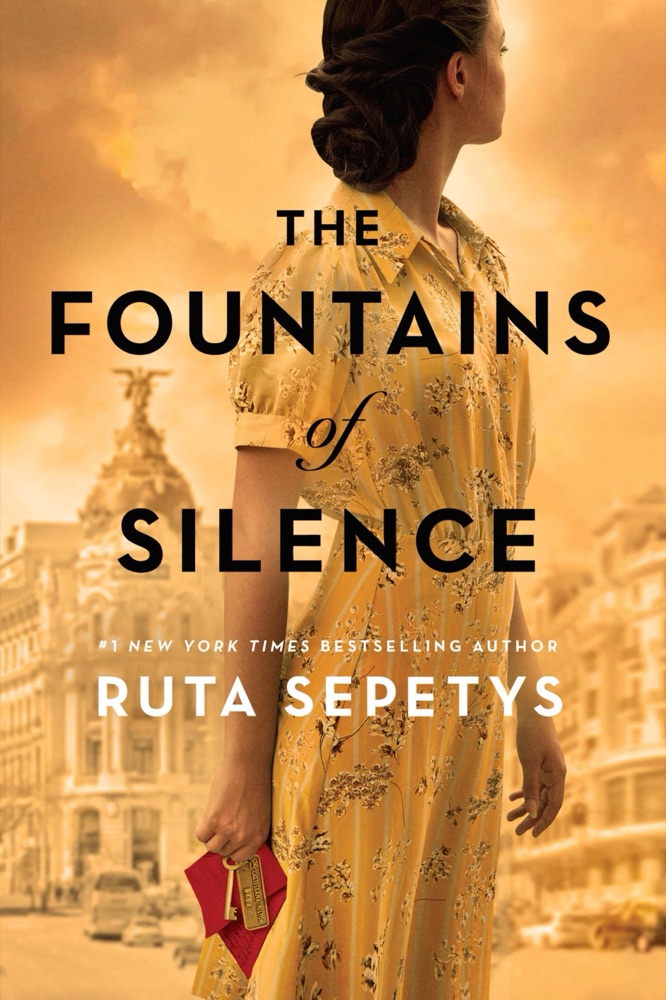 The Fountains of Silence
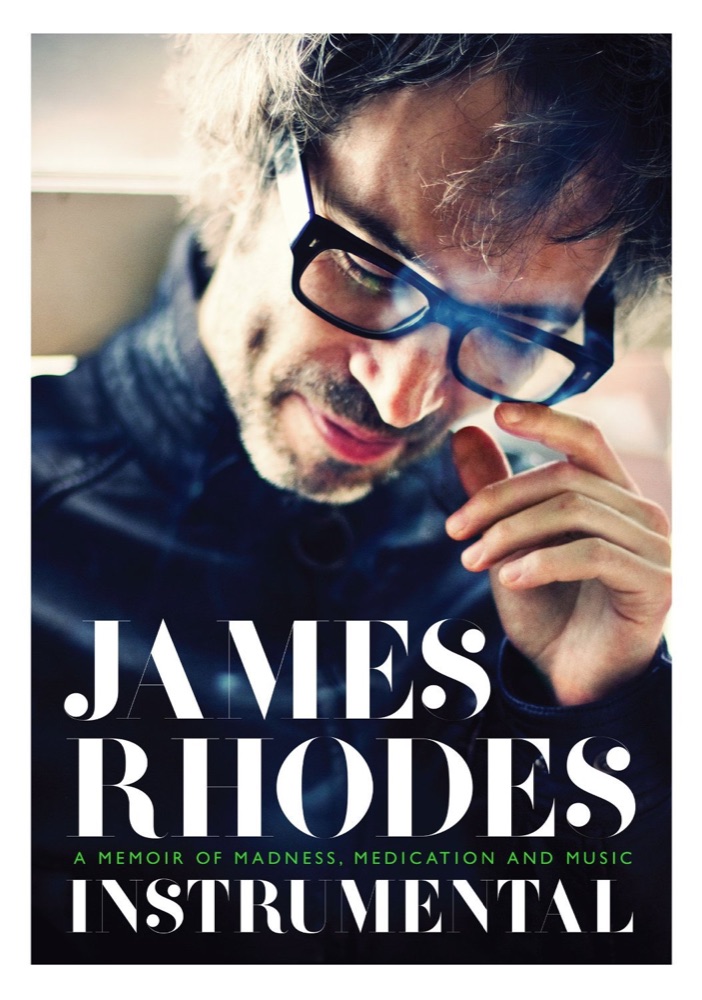 Instrumental: A Memoir of Madness, Medication and Music
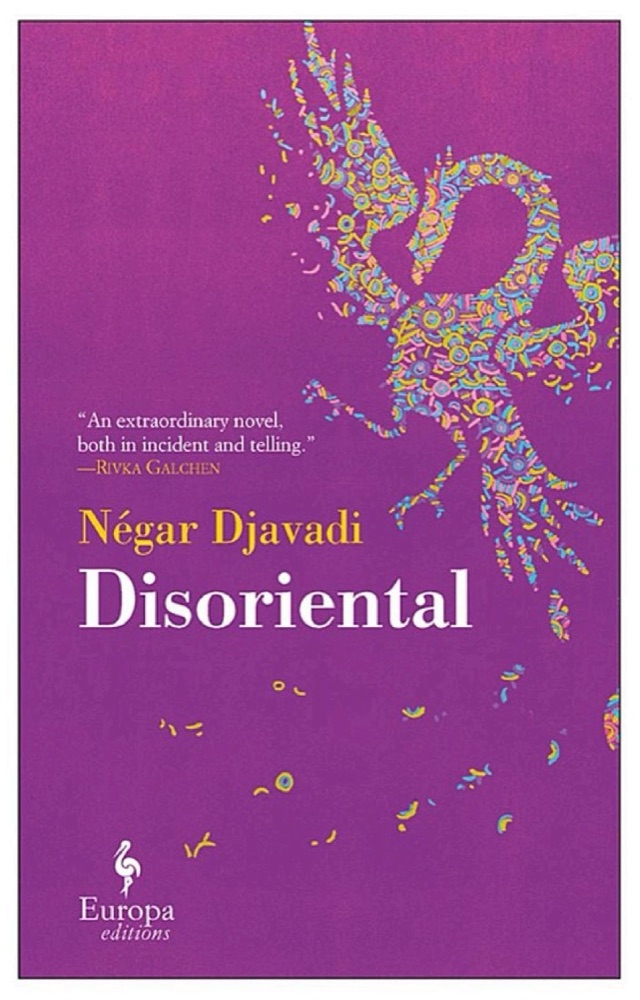 Disoriental