 The Book of Salt
Quotes from the Book
If you're fluent in a language there's a place you belong.
5
You don't notice erosion when it's happening.
4
To understand mom’s many tongues and therefore close the distance between myself and the people I loved and the people I was losing—most of all my mother. I wanted to arm myself against Western Art’s easy idiom, to master a more complex language, one that richly described my world.
3
They were not the faith I chose. Like mom’s ghostly visitors when she was five, my cousins chose me, knocking on my midnight door, portentous at my bedside. After all my god denying and god shopping. After all my hours in Quaker pews, reading Yoruba books, studying Lukumí prayers. Just so the universe could be cute a decade later and pass me a note in class. You were born into the church, Qui Qui.
2
Language that aims toward perfection, she told me, is a lie. Shakespeare knew this, she said, and broke English until its dictionaries grew by a thousand entries. Tennyson knew it in 1835 when he, the Great Poet, used one word to express a vastness. Break, break, break.
2
Language was not what connected us as a family. A dinner table ritual, where people gather to discuss news of the day, was not at the heart of how we communicated. Bodies were the mother tongue at Abuela’s, with Spanish second and English third. Dancing and ass-slapping, palmfuls of rice, ponytail-pulling and wound-dressing, banging a pot to the clave beat. Hands didn’t get lost in translation. Hips bridged gaps where words failed.
2
All these literary patriarchs paraded their woe like it was some main event. Hamlet brooded, Romeo beat his chest, Willy went mad. Why didn’t they dance like the Perez women? Were they so above the fray? No billboards or sitcoms had declared my Perez cousins queen, and I now saw freedom in this. No false thrones, just the shitstorm of life. Grab a shovel and sing a work song. Build a throne that’s real.
2
Books were recipes for my inner life's feast.
2
Zipping my lips meant swallowing my contradictions and confusions, guarding the flavor for only myself.
2
I had never read a book like abuela's living room, but still I savored it my preferred way - like the private, treasured pages of a novel.
2
Mom, if you ever read this book (and make it this far without disowning me), I ask you one favor: break this English language today and tomorrow and the day after and bestow it new life with each breaking. Endow your fullness upon this cracked colonial tongue. You language genius. This is your English. You earned it. I am only a guest here.
1
I lacked the craft and dexterity to match my narrative intoxication. But the son montunos and Mozart of my adolescence offered themselves anew, this time as dramaturgical structures. Fugues and batá songs had sturdy architectures. Bach gave me motivic momentum. Batá gave me slow-build suspense. One scene ended tempestuously, raucously. What next, after all that explosion, how to start anew? Schubert offered clues. There lay the answer in his A-major sonata, the one I’d recorded at Yale. After fortissimo, a note or two to test the water. After cacophony, a single solitary melodic line.
1
Find your fellow travelers. It was a foundational Vogel teaching. When a door opens for you, bring another person through. Oft-repeated Paula scripture.
1
Your Spanish is broken?” Paula said. “Then write your broken Spanish.
1
This is stuff that’s not written anywhere, Quiara. Y recuerdas que, if it’s not written down, it doesn’t exist. Didn’t I always say how much power a library shelf holds?
1
But how I yearned to share the numinous world I had come to study, metabolize, and respect. Maybe that’s why I began looking away from Sterling Library. Because I was dreaming, instead, of a library I might fit into. One with space to hold my cousins, my tías, my sister, mi madre. An archive made of us, that held our concepts and reality so that future Perez girls would have no question of our existence or validity.
1
Flannery O’Connor was first on the agenda. Previously I’d been taught to read for plot and theme, but O’Connor was all landscape. I had never been to the South and now here it was, grotesque and monstrous. In her paragraphs the air tasted of molasses and smiling strangers exposed invisible fangs. In O’Connor the devil lurked in all corners, most especially the pious and proper ones. This author wrote blunt and with hell on her mind, odd and unwholesome and bad to the bone.
1
He read the poem like he loved the poem, intoning phrases as though they cast spells. In his voice, language was erotic and voluptuous—and he lingered for a moment in delicious places. I thought, I want to belong somewhere the way that stranger’s voice belongs to those words.
1
My emergent superpower, an increasing fluency in Western Canon, brought exhilaration and comfort because if you’re fluent in a language, there’s a place you belong.
1
I feared that not crying meant I hadn’t loved them enough. Perhaps weeping and dancing live in the same place within us, and I had shuttered that part of me away. The part that touches grief, euphoria, and god. Without tears, I could never legitimately call them my losses, only ours.
1
If you won a shopping spree and loaded your cart full of cousins, that was Abuela’s house.
1
Life is nice. Sometimes a bit hard. Romance feels good.
1
This is my warning lobbed right at the mirror: that if you ask for an audience, you best have something to say. That if you have something to say, the clock is ticking on the hours left to say it.
1
Underground, mom had built magnificent thrones. Could I build a throne made of visibility?
1
There beyond us twinkled the City of Brotherly Love. Somewhere in that cluster of lights, a founding father had written about 'self-evident truths'. But I no faith in self-evidence of any kind.
1
we watch our old silences become loud songs. We are here.
You, my Perez women, understand because you are the throne and the dance. You shook your asses as the world’s walls tried to crush you. Mami, primas, hermana, no one else qualifies for the job. We must be our own librarians because we alone are literate in our bodies. By naming our pain and voicing our imperfections, we declare our tremendous survival. Our offspring deserve to inherit these strategies. We have worked hard to be here. We owe them ourselves. We owe each other.
Ho. All the shame a woman carried. How mom branded the word unto her heart. AZADA AZADA AZADA! But what use was a garden tool, I railed, when the Perez women had divorced mother nature? Abuela’s gandules harvest, over. Mom’s circle of sage, dead. My horse farm woods, gone. Ripped and rent from all soil, we who had once been earth-women and were now North Philly—treeless rubble, tire-strewn and derelict. But wait. Hadn’t one plot of land persisted? Migrated with us all this way? One human-size patch of earth? Our bodies. I am tired soil, break me, wound me. I AM A WHORE….
Every morning I lit a candle, played batá music, and warmed up with a poem for Oshun, Orisha of female sensuality
Perez nudity was rebirth of a daily order, a resetting of the spirit to its naïve state, both a freedom and a strong protection.
Watch on YouTube
About Quiara Alegría Hudes
We have collected 30 quotes from 1 book by Quiara Alegría Hudes on BookQuoters.
More about the author →About the book
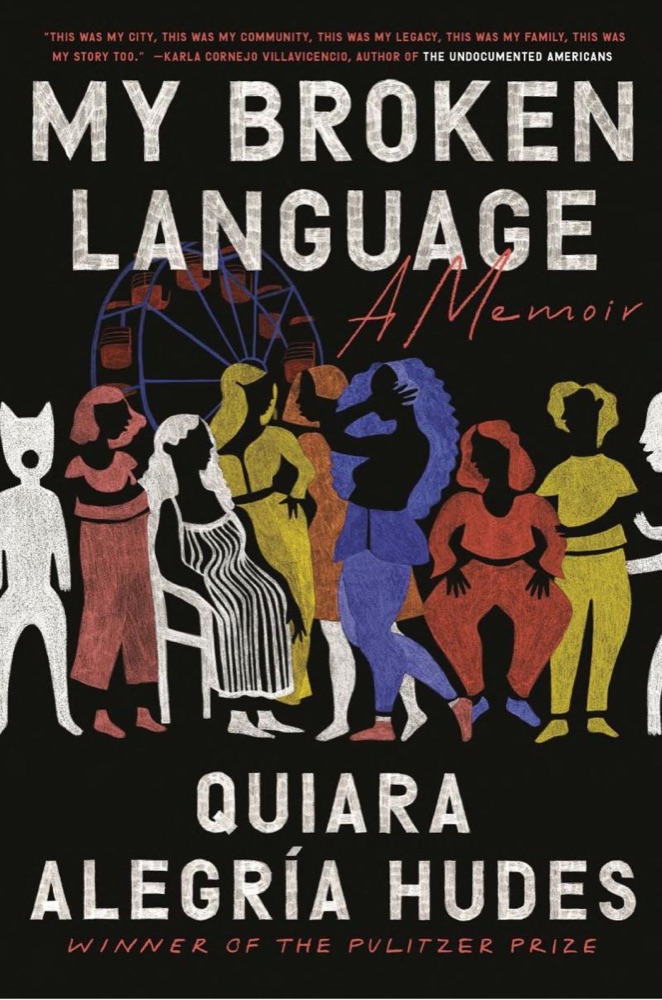
Pulitzer Prize-winning playwright Quiara Alegría Hudes tells her lyrical story of coming of age against the backdrop of an ailing Philadelphia barrio, with her sprawling idiosyncratic, love-and-trouble-filled Puerto Rican family as a collective muse.
Quiara Alegría Hudes was the sharp-eyed girl on the stairs while her family danced in her grandmother's tight North Philly kitchen. She was awed by her aunts and uncles and cousins, but haunted by the secrets of the family and the unspoken, untold stories of the barrio--even as she tried to find her own voice in the sea of language around her, written and spoken, English and Spanish, bodies and books, Western art and sacred altars. Her family became her private pantheon, a gathering circle of powerful orisha-like women with tragic real-world wounds, and she vowed to tell their stories--but first she'd have to get off the stairs and join t
Book details
- First published
- 2021
- Author
- Quiara Alegría Hudes
- Genre
- Biography
- Goodreads rating
- 4.18 (4k ratings)
Keep reading
The Book of Salt
 Inferno
 The Tender Bar
 In the Heart of the Heart of the Country and Other Stories
 The Art of Inheriting Secrets
 Singin' and Swingin' and Gettin' Merry Like Christmas
 Hot Milk
 Lost in Translation: A Life in a New Language
 The Chronology of Water
 Mother Mary Comes to Me
 Em and The Big Hoom
 Divine Secrets of the Ya-Ya Sisterhood
 The Madness Vase
 Divisadero
 Her Body and Other Parties
 Those Who Leave and Those Who Stay
 Let Me Tell You What I Mean
 Dreaming in Cuban
 Johnny Panic and the Bible of Dreams: Short Stories, Prose and Diary Excerpts
 Aftershocks
 The Stream of Life
 The Unworthy
 Palimpsest
 The Word Exchange
 Belong to Me
 Clap When You Land
 Devotion
 Sixty Stories
 The Names
 Erasure
 My Invented Country: A Nostalgic Journey Through Chile
 Glass, Irony and God
 The Tunnel
 Crazy Brave
 The Diving Bell and the Butterfly
 Plainwater: Essays and Poetry
 Walking in My Joy: In These Streets
 All This Could Be Different
 The Savage Detectives
 Take the Cannoli
 Broken Music
 The Muse
 The Complete Poems of Emily Dickinson
 Art and Lies
 A Northern Light
 The Sentence
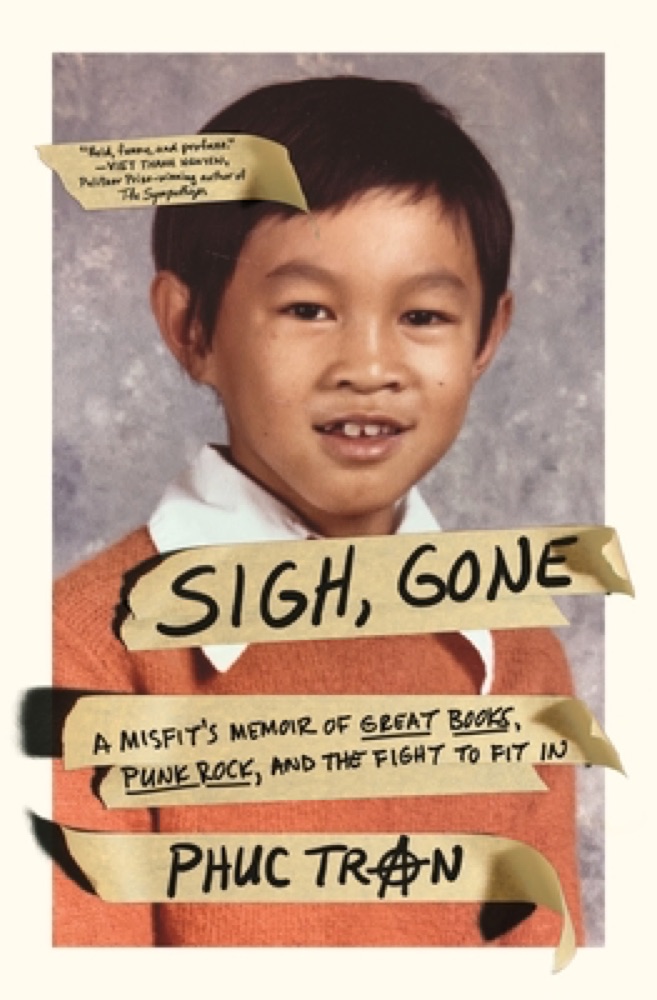 Sigh, Gone: A Misfit's Memoir of Great Books, Punk Rock, and the Fight to Fit In
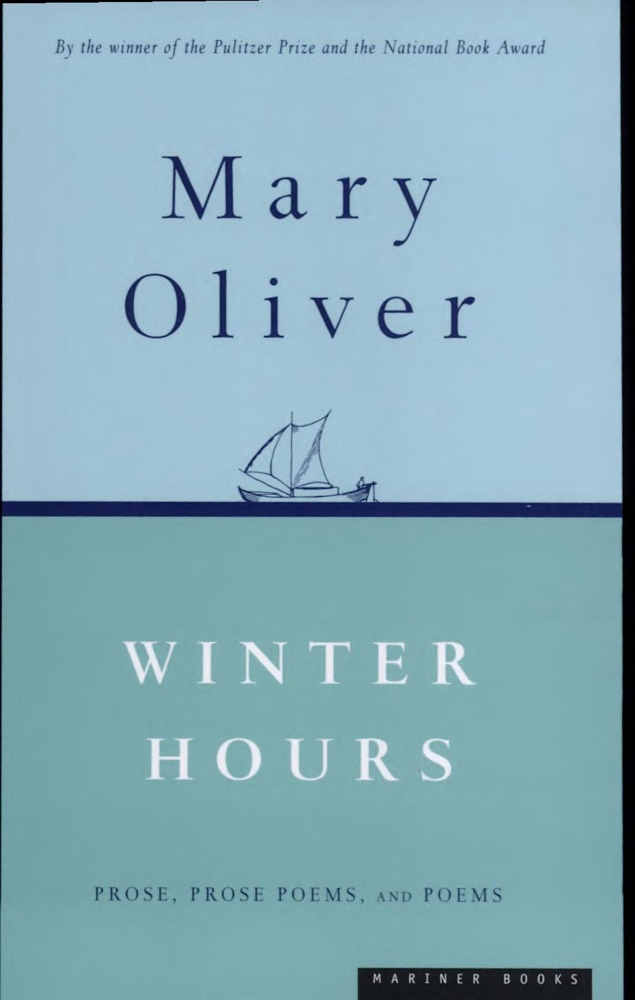 Winter Hours: Prose, Prose Poems, and Poems
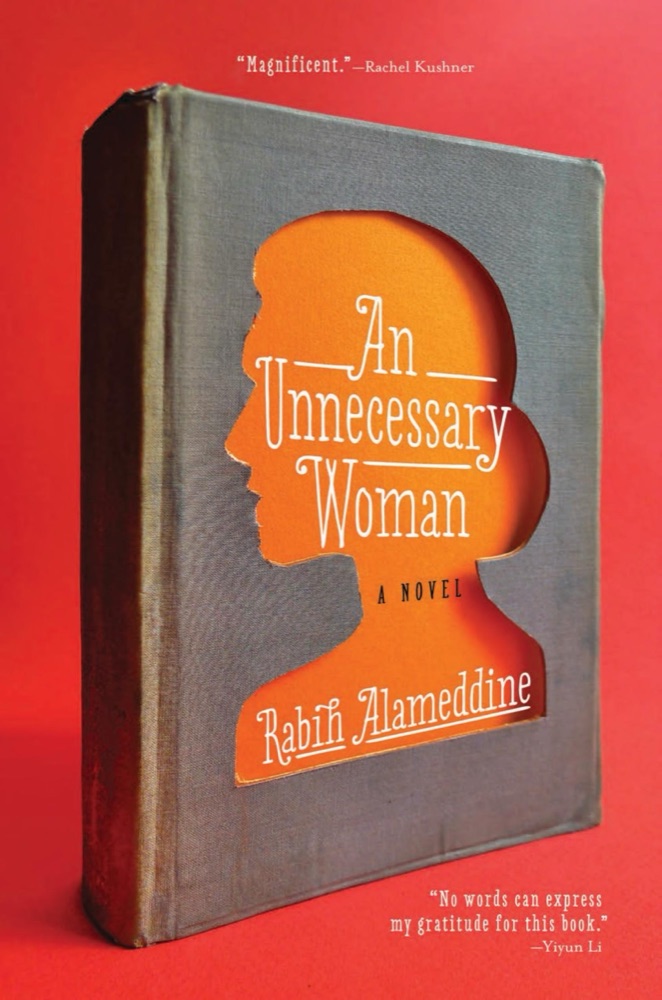 An Unnecessary Woman
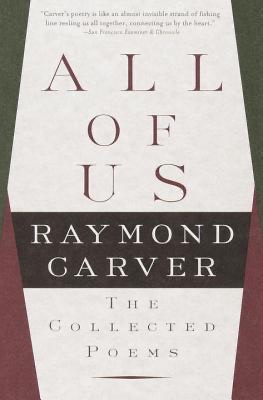 All of Us: The Collected Poems
 Piece by Piece
 The Notebooks of Malte Laurids Brigge
 Out of Oz
 The Story of My Life
 The Enchanted
 In Search of Our Mothers' Gardens: Womanist Prose
 Edinburgh
 Incidental Inventions
 The Hurting Kind: Poems
 Enormous Changes at the Last Minute: Stories