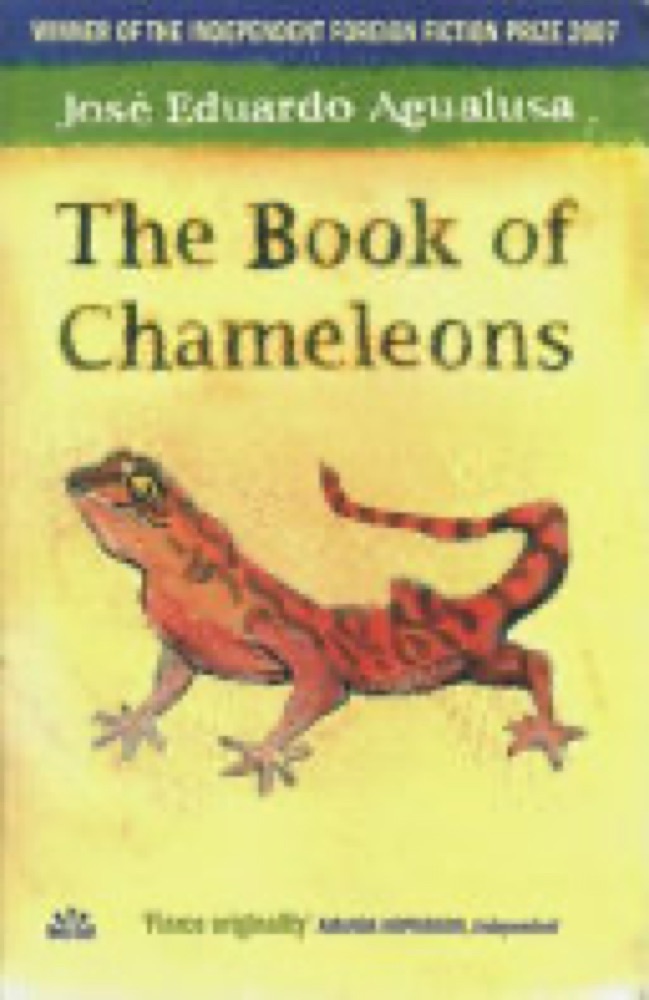
 The Book of Chameleons
Quotes from the Book
When people look at clouds they do not see their real shape, which is no shape at all, or every shape, because they are constantly changing. They see whatever it is that their heart yearns for.
18
God weighs a soul on a pair of scales. In one of the dishes is the soul, and in the other, the tears of those who weep for it. If nobody cries, the soul goes down to Hell. If there are enough tears, and they are sufficiently heartfelt, it rises up to Heaven...People who are missed by other people, they are the ones who go to Paradise. Paradise is the space we occupy in other people's hearts.
10
The night, like a well, was swallowing stars.
8
I have understood over these last years that in order to believe in God, it is essential to have trust in humanity. There is no God without humanity. I continue not to believe, neither in God, nor in humanity.
6
Nothing happened today. I slept. While asleep I dreamed that I was sleeping.
6
God weighs souls on a pair of scales. In one of the dishes is the soul, and in the other, the tears of those who weep for it. If nobody cries, the soul goes straight down to hell. If there are enough tears and they are sufficiently heartfelt, it rises up to heaven.
5
If, when we are asleep, we can dream of sleeping, can we then, when awake, awaken within a more lucid reality?
5
God invented music so poor people could be happy.
4
He reminds me of a guy I met many years ago. He died. A shame, as I'd have really liked to kill him again.
4
The days slide by as if they were liquid.
3
Só me interessam as revoluções que começan por sentar o povo a mesa.
2
Dreams Are Where It All Begins
2
Monsters, show me the monsters: these people out on the street. My people.
2
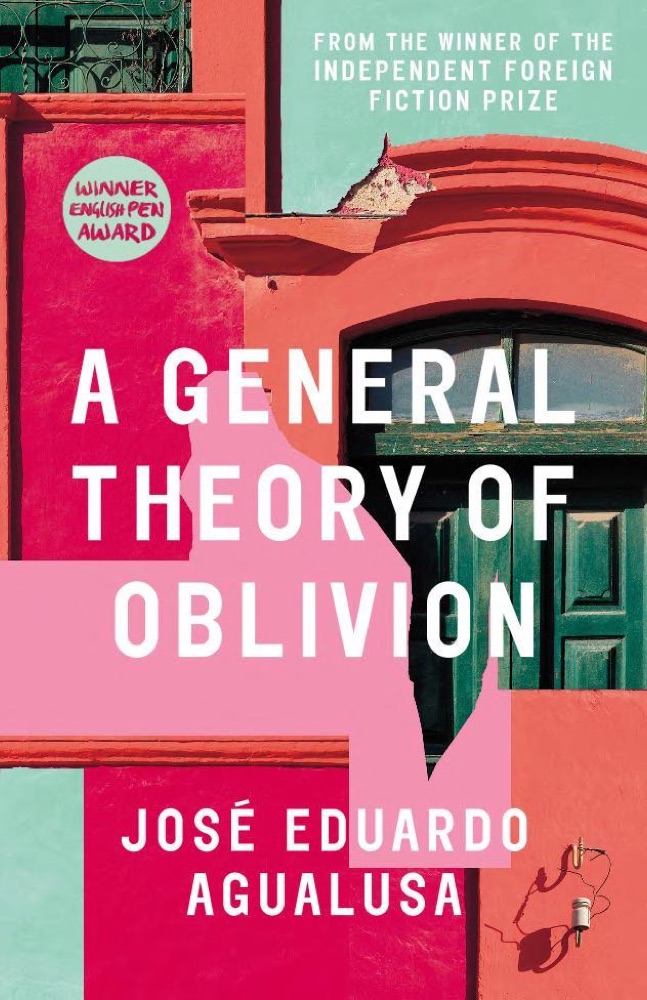
If I still had the space, charcoal, and available walls, I could compose a great work about forgetting: a general theory of oblivion.
2
Deus pesa as almas numa balança. Num dos pratos fica a alma, no outro as lágrimas dos que a choraram. Se ninguém a chorou, a alma desce para o Inferno. Se as lágrimas forem suficientes, e suficientemente sentidas, ascende para o céu. Ludo acreditava nisto. Ou gostaria de acreditar. Foi o que disse a Sabalu: Vão para o Paraíso as pessoas de quem os outros sentem a falta. O Paraíso é o espaço que ocupamos no coração dos outros.
1
The day was unfurling itself, a warm yawn of a day.
1
My father was a priest. He was a good priest and an excellent father. To this day I don't trust priests without children. How can you be a priest if you aren't a father?
1
I continue not to believe, neither in God, nor in humanity. Since Phantom died I have worshipped His spirit. I talk to Him. I believe He hears me. I believe this not through an effort of the imagination, still less intelligence, but by engaging another faculty entirely, which we might call unreason.
1
Speeches don't feed people. What the people need are fresh vegetables and a good fish broth, at least once a week. I'm only interested in the kinds of revolution that start off by getting people to the table.
1
Quanto a Horácio Capitão, o Eu-Não-Vos-Disse, passa as tardes num bar decrépito, na Ilha, bebendo cerveja, e discutindo política, na companhia do poeta Vitorino Gavião, de Artur Quevedo e de mais duas ou três velhas carcaças dos tempos do caprandanda. Ainda hoje não reconhece a Independência de Angola. Acha que assim como o comunismo acabou, um dia a Independência também acabará. Continua a criar pombos.
1
I am closer to my dog than to those people out there
1
Sí, Mi madre se me murió cuando yo era niño. Me quedé abandonado. Converso con ella, pero me faltan las manos con las que me protegía.
1
Comprendí a lo largo de los últimos años que para creer en Dios es forzoso confiar en la humanidad. No existe Dios sin humanidad,
1
Las personas no ven en las nubes el dibujo que tienen, que no es ninguno,o que son todos, pues se altera a cada momento. Ven aquello que su corazón ansía.
1
Hoy no ocurrió nada. Dormí. Durmiendo, soñé que dormía. [...] Si, durmiendo, soñamos dormir, ¿podemos, despiertos, despertar dentro de una realidad más lúcida?
1
About José Eduardo Agualusa
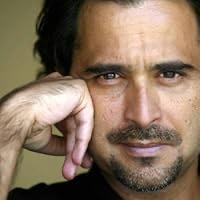
José Eduardo Agualusa was born in Huambo, Angola, in 1960, and studied forestry and agronomy in Lisbon, Portugal. An Angolan writer working in Portuguese, his books have been translated into some twenty-five languages, and he has also written plays, two of them with Mia Couto.
More about the author →More by José Eduardo Agualusa
The Book of Chameleons
About the book
On the eve of Angolan independence in 1975, an agoraphobic Portuguese woman named Ludovica Fernandes Mano — Ludo — bricks herself into her eleventh-floor Luanda apartment and stays walled in for nearly three decades. Brought to Angola unwillingly by her sister and brother-in-law, an engineer for a diamond company, she is left alone when the couple vanish, and after killing a burglar who comes for a cache of diamonds she throws up a wall and shuts out the world. She survives by growing vegetables on her terrace, luring pigeons into traps with diamonds, and burning furniture and books to stay alive, all the while writing her story on the apartment's walls. Based on a true story and translated from the Portuguese by Daniel Hahn, the novel interleaves her diary fragments with an economical third-person narrative.
As the country lurches from colony to socialist republic to civil war to peace and capitalism, Angola's turbulent history seeps into Ludo's sealed life through snippets on the radio, voices next door, and glimpses of the street below. Reviewers describe the book as a wild patchwork built on a love of storytelling and fable, shot through with magic realism, in which the fates of people Ludo half-observes from her window gradually braid together. The novel reaches beyond its political setting to explore memory, trauma, isolation, and the accidents of chance that bind strangers, using one woman's self-imposed exile as a lens onto a nation's formative and often bloody years.
Critics have compared Agualusa to literary tricksters like Fernando Pessoa and Jorge Luis Borges, while noting that his work is rooted in the more complicated everyday world of colonial and post-colonial Africa. The Guardian praised its beautifully sprawling, poetic construction, and Kirkus found it redeemed by a bright shimmer of magic realism even as its mysteries multiply. Reviewers also valued it as a sneaky bit of a history lesson for readers unfamiliar with Portugal's long colonial reach in Angola. The novel won the 2017 International Dublin Literary Award, cementing its reputation as one of Agualusa's most acclaimed works in English translation.
Book details
- First published
- 2012
- Author
- José Eduardo Agualusa
- Genre
- Fiction
- Goodreads rating
- 3.89 (9k ratings)
Keep reading
 Soul Mountain
The Book of Chameleons
Soul Mountain
The Book of Chameleons
 The Broken Kingdoms
 The Stone Gods
 The House of the Spirits
 The Time in Between
 Night Train to Lisbon
 Memories, Dreams, Reflections
 Henderson the Rain King
 The Star Diaries
 The Stream of Life
 Doctor Glas
 Foe
Foe
 Beautiful Losers
 Emma in the Night
 Think of a Number
 The Ground Beneath Her Feet
 South of No North
 Greek Lessons
 The Notebooks of Malte Laurids Brigge
 The Star Rover
 The Appointment
 Sexus
Sexus
 Plainwater: Essays and Poetry
 Selected Poems
 The Sound of Things Falling
 From Sand and Ash
 The Aleph and Other Stories
 A Luminous Republic
 The Hour of the Star
 Pedro Páramo
 The Shape of Water
 The Complete Stories
 Paris Spleen
 The Collected Poems of Alberto Caeiro
 Atemschaukel
 Travels With My Aunt
 The Sandman: Endless Nights
 Brave New World / Brave New World Revisited
 Ficciones
 The Dwarf
 What Is the What
 Independent People
 Tropic of Cancer
 Primeval and Other Times
 The Passion According to G.H.
 Man in the Dark
 Like Water for Chocolate
 The Drowning Girl
 We Do Not Part
 FUTU.RE
 Maggot Moon
 Kingdom of the Golden Dragon
 Brodeck
 Lizard
 The Island of the Day Before
 Before Night Falls
 The Complete Short Stories
 All That I Am
 Papillon