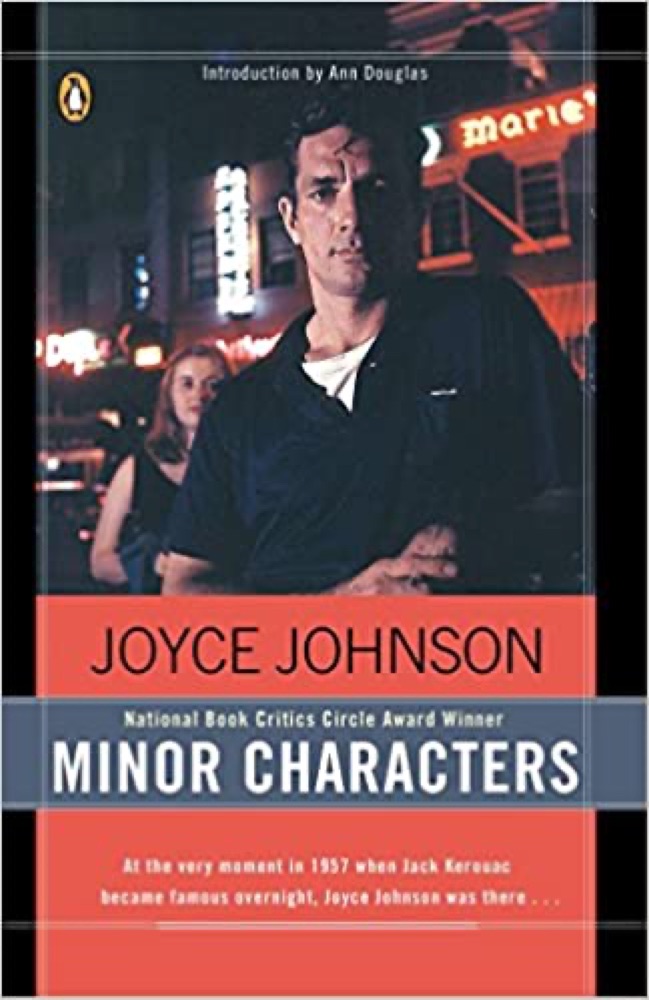
 The White Album
Quotes from the Book
I'd learned myself by the age of sixteen that just as girls guarded their virginity, boys guarded something less tangible which they called Themselves.
28
And isn't it amazing that suicide is illegal when society is so indifferent to human life?
5
There's a school of wisdom about love that says the surest way to lose someone is to hold on to them too tightly -- as demonstrated over and over again by the split-ups of lovers, but also by parents and children. Although there it's more complicated by far. Lovers, initially strangers, become strangers again; the tie between parent and child pulls and twists for a lifetime, taking on the strangest forms.
3
…I told Jack I had nothing to say about his vision of God. I couldn’t believe in God myself. In his next letter, he lectured me a little. "When I said 'God' in my vision in the sea, I didn’t mean a bearded man in heaven. I meant 'that which passes through all.' …" But I didn't believe in this Buddhist god either. My mind came up against a wall in these matters. The here and now was all I saw. I wanted to be happy in the here and now; to someday pull Jack into it with me, if I could.
1
black sweater — but, unlike Masha, she’s not in mourning for her life. How could she have been, with her seat at the table in the exact center of the universe, that midnight place where so much is converging, the only place in America that’s alive? As a female, she’s not quite part of this convergence. A fact she ignores, sitting by in her excitement as the voices of the men, always the men, passionately rise and fall and their beer glasses collect and the smoke of their cigarettes rises toward the ceiling and
The sixties were never quite my time. They seemed anticlimactic, for all their fireworks. Some culmination had been short-circuited. I saw hippies replace beatniks, sociologists replace poets, the empty canvas replace the Kline. Unenthusiastically, I observed the emergence of “lifestyle.” The old intensities were blanding out into “Do your own thing” — the commandment of a freedom excised of struggle. Ecstasy had become chemical, forgetfulness could be had by prescription. Revolution was in the wind, but it never came — and if it had, there would have been no room in its orthodoxies for a Kerouac —
real thing, too, she learned soon enough; the real thing was black. And for Hettie, black came to seem the color of a great deal more that was realer than what she’d known, some purer definition of experience, some essential knowledge that the white suburbs denied their children. Nineteen fifty-seven found her living on Morton Street in the Village and working as a secretary for a struggling jazz magazine called The Record Changer, which would shortly go out of business. LeRoi Jones — late of “the narrow, grey working-
Club. The well-kept home Hettie grew up in was as devoid of books and music as it was of dust. She was left to make up her own interior world. There was the public library, and the Laurelton Jewish Center. At thirteen, Hettie embarrassed her parents
the next one came along. “Beat Generation” sold books, sold black turtleneck sweaters and bongos, berets and dark glasses, sold a way of life that seemed like dangerous fun — thus to be either condemned
oddball status in St. Louis. He had talked his mother into sending him to the green hills of North Carolina to meet America’s avant-garde — not only Kline but Buckminster Fuller,
Paul Goodman, Willem de Kooning, John Cage, Merce Cunning-ham, Edward Dahlberg, Robert Creeley, and Charles Olson. It was an extraordinary collection of visionary, eccentric, overpowering individuals. Life in that experimental and incestuous community was so highly pitched that Fee, like other Black Mountain alumni I met, never quite got over it. Even Black
watches. What a strange night it was. The summer restlessness, the mobs watching the fire, the smell of ashes everywhere. On East Tenth Street a half-dozen galleries were opening that night for the first time, according to fliers pasted up around the Village. Owned and run by artists, they seemed to have come into being all at once in deserted storefronts. Gradually, the shabby block between Fourth Avenue and the Bowery had become a little country of painters. Franz Kline and Willem de Kooning,
his own manifesto, which many of the New York painters soon would read: “Time being of the essence in the purity of speech, sketching language is undisturbed flow from the mind of personal secret idea-words blowing (as per jazz musician) on subject of image.” Substitute painting, color, stroke, and it was close in spirit to the way the painters defined themselves in their heated discussions at “The Club,” a loft on Eighth Street where they met regularly, or over beers at the Cedar Bar, continuing on into dawn over coffee at Riker’s. Blearily
sized white surfaces — house paint, if there was no money for oils — colors running in rivulets, merging, splashing, coagulating richly in glistening thickness, bearing witness to the gesture of the painter’s arm in a split second of time, like the record of a mad, solitary dance. Or like music, some said, like bop, like a riff by Charlie Parker, incorrigible junky and genius, annihilated by excess in 1955, posthumous hero of the coming moment. Or like Jack’s “spontaneous prose,” another dance in the flow of time. For the final issue of Black Mountain Review, he’d jotted
always listening for the knock of the housing inspector. An older group of painters had survived here since the late 1940s. In lofts deserted by the garment industry, where sewing-machine needles could still be found in the crevices of floorboards, they’d dispensed with the confinements of the easel. Possessing space if little else, they’d tacked their canvases across larger and larger stretches of crumbling plaster, or nailed them to the floor. They threw away palettes and used the metal tops of discarded kitchen tables. Paint would rain down
they converged upon the easternmost edges of the Village, peeling off into the nondescript district of warehouses and factory lofts, and Fourth Avenue with its used bookstores, and the broken-wine-bottle streets of the Bowery. An area with an industrial rawness about it, proletarian, unpretty — quite illegal to live in, but landlords were prepared to look the other way. An outlaw zone that silently absorbed people who’d sneak their incriminating domestic garbage out in the dead of night or hide a bed behind a rack of paintings,
JUST WHEN I WAS SO eager to abandon New York, it seemed to turn before my eyes into a kind of Paris. The new cultural wave that had crested in San Francisco was rolling full force into Manhattan, bringing with it all kinds of newcomers — poets, painters, photographers, jazz musicians, dancers — genuine artists and hordes of would-be’s, some submerging almost instantly, others quickly bobbing to the surface and remaining visible. Young and broke,
held by Viking Press for three years, while debate went on among the editors as to whether or not it was the right time to bring out such a daring book. Suddenly it was Jack’s moment. The “bottled eagerness” of the fifties was about to be uncorked. The “looking for something” Jack had seen in me was the psychic hunger of my generation. Thousands were waiting for a prophet to liberate them from the cautious middle-class lives they had been reared to inherit. On the Road would bring them the voice of a supreme outlaw validated by his art, visions of a life lived at
I’ve had a lifelong reluctance to reenter places I’ve left, a resistance to anniversaries, family holidays, visits to graves or to offices I used to work in. My adult life has been one of discontinuities. To pass a house where I once lived is to feel a magnet pull upon my innards — I feel I could open the door, climb up the steps, take the key out of my pocket, walk into rooms just as they looked before moving day. Thus I avoid certain streets. If I visit my mother
IN A “DREAM LETTER” from John Clellon Holmes recorded by Allen Ginsberg in 1954 are the words: “The social organization which is most true of itself to the artist is the boy gang.” To which Allen, awakening, writing into his journal, added sternly, “Not society’s perfum’d marriage.
I was among the millions who didn’t read The Town and the City. Around the time it was published, I was reading the novels of Thomas Wolfe. I read all of them, undaunted by their length. In Eugene Gant’s adolescent yearnings to break free of the constricting ties of family I saw
assimilation with WASP gentility. Podhoretz makes the declaration that “One of the longest journeys in the world is the journey from Brooklyn to Manhattan.” But Jack Kerouac
Invisibility had become my unsatisfying resolution of the outside/inside problem. Moving back and forth between antithetical worlds separated by subway rides, I never fully was what I seemed or tried to be. I had the feeling I was playing hooky all the time, not from school, but from the person represented by my bland outward appearance — the only child of Mr. and Mrs. Glassman, under whose second-rate identity
having. In trying to trace the derivations of this notion of experience, I come into blind alleys. It was simply there all of a sudden, full-fledged, like a fever I’d come down with. The air carries ideas like germs, infecting some, not others. Real Life was not to be found in the streets around my house, or anywhere on the Upper West Side, for that matter, or in my school of girls grubbing joylessly for marks, hysterical about geometry exams and Latin homework, flirting ridiculously with the seventy-year-old elevator operator,
life as a child — something I told myself was Real Life. This was not the life my parents lived but one that was dramatic, unpredictable, possibly dangerous.
from nowhere, though they had been writing their poetry and fiction underground since the beginning of the Fifties. It was just that no one had dared to publish them. They gave voice to the restlessness and spiritual discontent so many felt but had been unable to articulate. Powerful desires for a freer life were suddenly set loose by words with compelling, irresistible rhythms. The Beat writers found an audience grown so ripe that the impact was immediate.
us was the energy and courage of youth. It was a time when books were still taken seriously, when writers could actually change things. In 1957, Allen Ginsberg and Jack Kerouac seemed to come
The memoir, whose claims to authority are both modest and pressing, is the genre of afterthoughts, of revision, the counternarrative of lived experience that places an actual fingerprint on the historical monument.
Psychedelic drugs, injunctions like “Do your own thing,” the maxim of postmodernity, had little to do with her experience of exhilarating risks or nonmarketable rewards.
cast into feminine terms, set the standard for ambitious actors. Charlie Parker, the genius of bebop, was a heroin addict; his exploits with women were as legendary as his mastery of the sax, an instrument whose major players were all male. Jackson Pollock’s explosive drip paintings and tough-guy rebel stance attracted wide media attention, a first in American painting. Drunk, he might piss in a host’s fireplace or upend the dinner table. Such artists were invaluable for cold war propaganda purposes. Whatever the impression left by the witch-hunts of Senator Joseph McCarthy, American rebels were living proof that, in contrast to the heavily regimented Soviet Union,
Watch on YouTube
About Joyce Johnson
We have collected 30 quotes from 1 book by Joyce Johnson on BookQuoters.
More about the author →About the book
Jack Kerouac. Allen Ginsberg. William S. Burroughs. LeRoi Jones. Theirs are the names primarily associated with the Beat Generation. But what about Joyce Johnson (nee Glassman), Edie Parker, Elise Cowen, Diane Di Prima, and dozens of others? These female friends and lovers of the famous iconoclasts are now beginning to be recognized for their own roles in forging the Beat movement and for their daring attempts to live as freely as did the men in their circle a decade before Women's Liberation.Twenty-one-year-old Joyce Johnson, an aspiring novelist and a secretary at a New York literary agency, fell in love with Jack Kerouac on a blind date arranged by Allen Ginsberg nine months before the publication of On the Road made Kerouac an instant celebrity. While Kerouac traveled to Tangiers, San Francisco, and Mexico City, Johnson roamed the streets of the East Village, where she found herself
Book details
- First published
- 1983
- Author
- Joyce Johnson
- Genre
- Biography
- Goodreads rating
- 4.08 (3k ratings)
Keep reading
The White Album
 Mislaid
 Eve's Hollywood
 In the Heart of the Heart of the Country and Other Stories
 NW
NW
 Let Me Tell You What I Mean
 Singin' and Swingin' and Gettin' Merry Like Christmas
 The Muse
 What We All Long For
 The Tunnel
 Warlight
 Girl with Curious Hair
 Orient
 White Tears
 Table for Two
 Mao II
 Speedboat
 Johnny Panic and the Bible of Dreams: Short Stories, Prose and Diary Excerpts
 The Book of Salt
 TransAtlantic
 Utopia Avenue
 The Discomfort Zone: A Personal History
 Pain, Parties, Work: Sylvia Plath in New York, Summer 1953
 Sixty Stories
 Running in the Family
 The Children's Book
 Creation Lake
 Book of Lives: A Memoir of Sorts
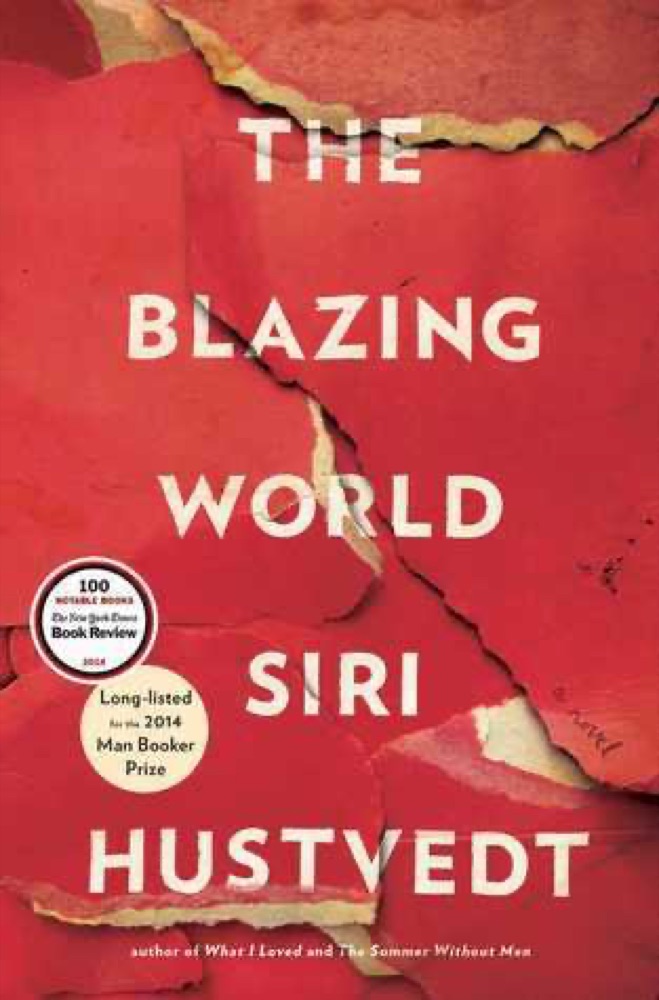 The Blazing World
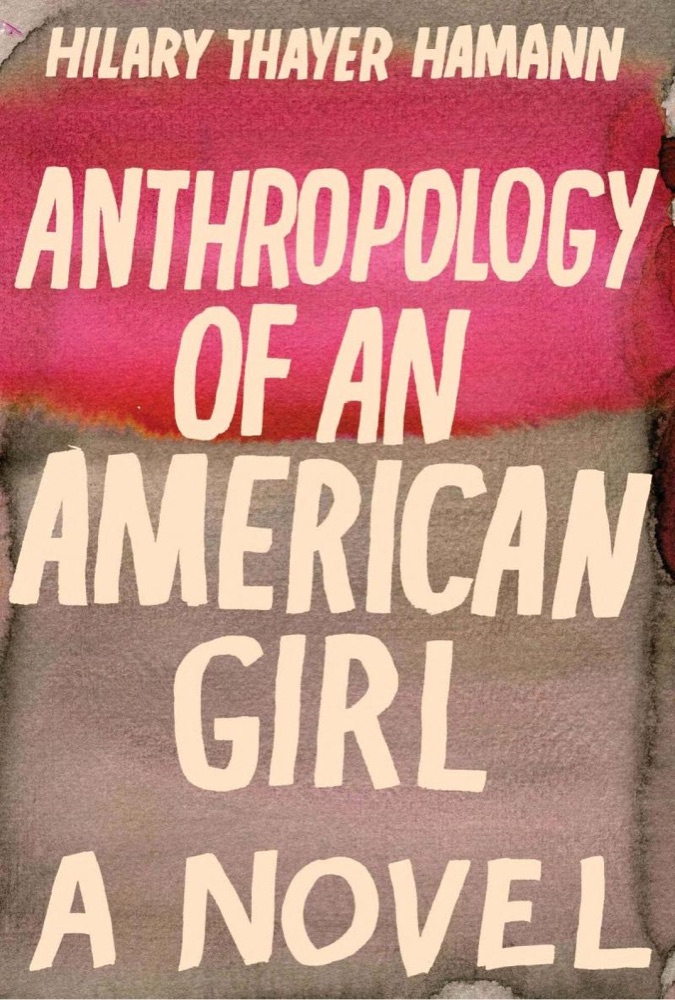 Anthropology of an American Girl
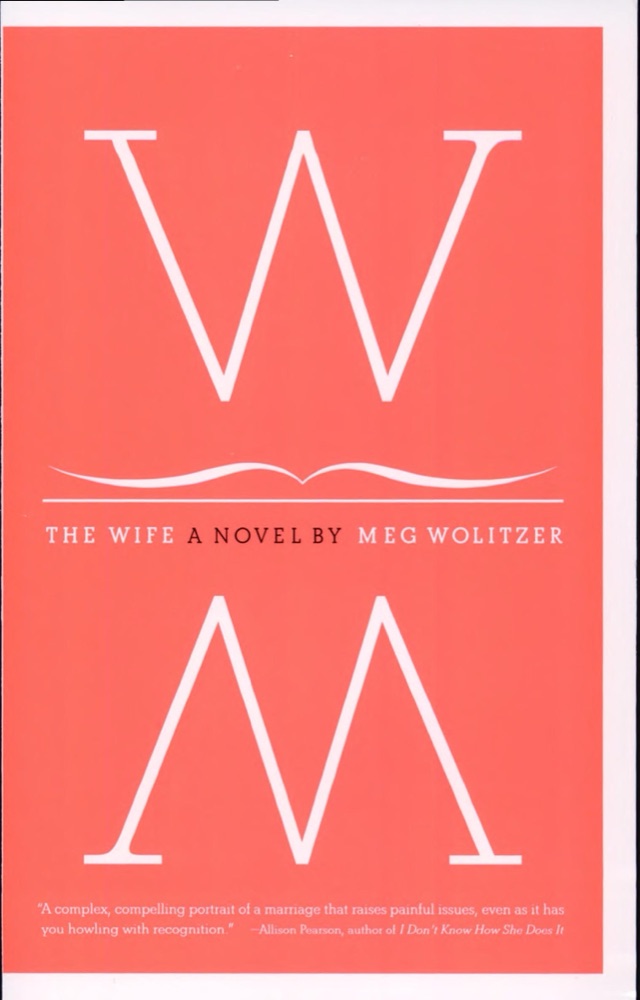 The Wife
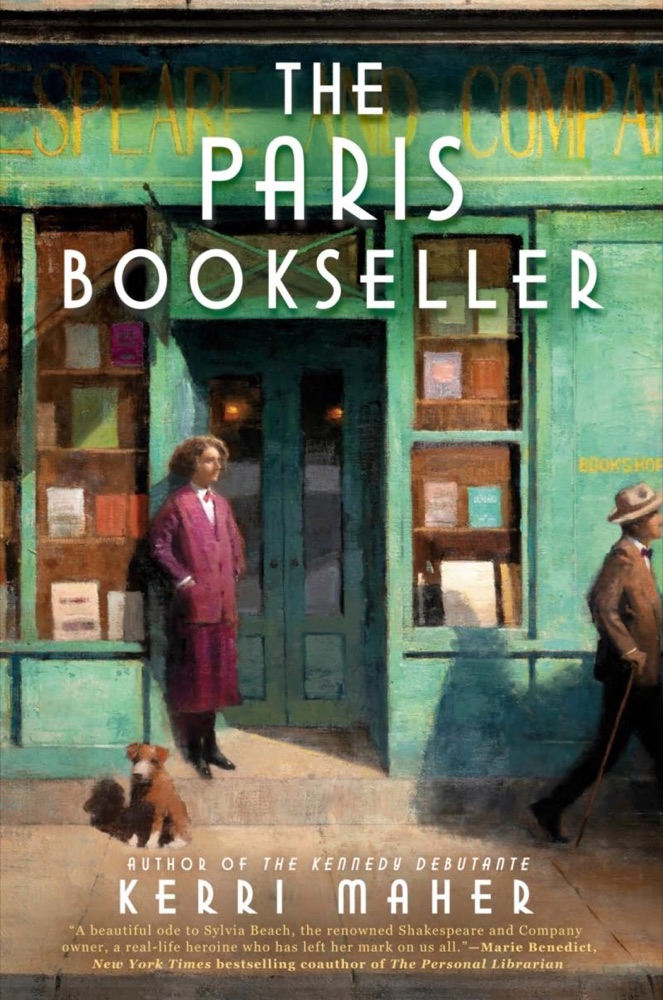 The Paris Bookseller
 Just Above My Head
 Reckoning: A Memoir
 Checkout 19
 Born to Run
 In Search of Our Mothers' Gardens: Womanist Prose
 The Postcard
 Negotiating with the Dead: A Writer on Writing
 Truth & Beauty
 The Uncool
 Essays of E.B. White
 Skinny Legs and All
 Things I Don't Want to Know
 The Brooklyn Follies
 Sag Harbor
 The Candy House
 Moments of Being: A Collection of Autobiographical Writing
 Take the Cannoli
 Flights
 Severance
 Hourglass: Time, Memory, Marriage
 The Book of My Lives
 The Proud Highway: Saga of a Desperate Southern Gentleman, 1955-1967
 The Golden House
 Purity
 Sigh, Gone: A Misfit's Memoir of Great Books, Punk Rock, and the Fight to Fit In
 Erasure
 Too Much Happiness: Stories
 Ohio
Ohio