
 Belzhar
Quotes from the Book
Everyone needs a wife; even wives need wives. Wives tend, they hover. Their ears are twin sensitive instruments, satellites picking up the slightest scrape of dissatisfaction. Wives bring broth, we bring paper clips, we bring ourselves and our pliant, warm bodies. We know just what to say to the men who for some reason have a great deal of trouble taking consistent care of themselves or anyone else. “Listen,” we say. “Everything will be okay.” And then, as if our lives depend on it, we make sure it is.
28
Everyone knows how women soldier on, how women dream up blueprints, recipes, ideas for a better world, and then sometimes lose them on the way to the crib in the middle of the night, on the way to the Stop & Shop, or the bath. They lose them on the way to greasing the path on which their husband and children will ride serenely through life.
21
I’ve always had a fear of being small and ordinary. “How can I just have this one life?
19
Maybe that was what it was like to be a writer: Even with the eyes closed, you could see.
15
Joe once told me he felt a little sorry for women, who only got husbands. Husbands tried to help by giving answers, being logical, stubbornly applying force as though it were a glue gun. Or else they didn’t try to help at all, for they were somewhere else entirely, out walking in the world by themselves. But wives, oh wives, when they weren’t being bitter or melancholy or counting the beads on their abacus of disappointment, they could take care of you with delicate and effortless ease.
11
Maybe she had "no more books left inside her," as people often sorrowfully say about writers, envisioning the imagination as a big pantry, either well stocked with goods or else wartime-empty.
10
In life, no one gives you credit for effort.
7
For women in 1956 were always confronting boundaries, negotiations: where they could walk at night, how far they could let a man go when the two of them were alone. Men hardly seemed troubled by these things; they walked everywhere in cold, dark cities and pin-drop empty streets, and they let their hands go walking, too, and they opened their belts and then their trousers, and they never thought to themselves: I must stop this right now. I must not go any further.
6
Writers need light. They always tell you this, as though they're parched, as though they're plants, as though the page they're working on would look completely different with a southern exposure.
6
If you're so miserable,' my daughter said delicately, 'why don't you leave him?' Oh my darling girl, I might have said, what a good question. In her worldview, bad marriages were simply terminated, like unwanted pregnancies. She knew nothing about this subculture of women who stayed, women who couldn't logically explain their allegiances, who held tight because it was the thing they felt most comfortable doing, the thing they actually liked. she didn't understand the luxury of the familiar, the known: the same hump of back poking up under the cover in bed, the hair tufting in the ear. The husband. A figure you never strove toward, never work yourself up over, but simply lived beside season upon season, which started building up like bricks spread thick with sloppy mortar. A marriage wall would rise up between the two of you, a marriage bed, and you would lie in it gratefully.
4
Because as you get older, life sort of eats away at you like battery acid, and all the things you once loved are suddenly harder to find. And when you do find them, you don’t have time to enjoy them anymore, you know?
3
Like everyone we knew, we did what we could to protest the war. We signed, and we worked, and we brought our children with us to storefront offices to make calls and type letters. We used mimeographs, the purple ink getting all over us, the place smelling like a schoolroom, and we headed down to D.C. in a long, fossilized traffic jam of cars. The children cried in the backseat, and we pushed them on the Mall in strollers while they begged for juice, their faces blazing with heat, and Joe was among the writers who stood up and screamed into screechy, inadequate mikes.
3
Bone didn’t know yet that the men who own the world don’t get to do that by being magnanimous and overly interested in other people. They get to do it by taking care of themselves along the way. They stoke the fire of their own reputations, and sometimes other people come by, asking: What’s that you’re doing there? Oh, stoking the fire of my reputation. Can I help? Certainly. Go get some wood.
2
Was this the epiphany of adult life, that it actually wasn’t exciting and vast in possibilities, but was in fact as enclosed and proscribed as childhood?
2
Every marriage is just two people striking a bargain,” he went on in a softer tone. “I traded, you traded. So maybe it wasn’t even.
2
Language only felt infinite; instead, everyone swam through surprisingly narrow channels when they spoke or wrote.
2
I’ve always had a fear of being small and ordinary.
2
Bancroft Road was dark, with no streetlamps, and I could see into front windows where faculty members and their wives and children shuffled around living rooms. Was this the epiphany of adult life, that it actually wasn't exciting and vast in possibilities, but was in fact as enclosed and proscribed as childhood? What a disappointment, for I'd been looking forward to the open field, the imagined release. Or maybe, I thought as I watched a young mother stride across her living room, then suddenly swoop down to pick something up (A shoe? A squeak toy?), only men ever felt that release. For women in 1956 were always confronting boundaries, negotiations: where they could walk at night, how far they could let a man go when the two of them were alone. Men hardly seemed troubled by these things; they walked everywhere in cold, dark cities and pin-drop empty streets, and they let their hands go walking, too, and they opened their belts and then their trousers, and they never thought to themselves: I must stop this right now. I must not go any further.
1
Descartes walks into a bar. The bartender says, ‘Do you want a drink, sir?’ And Descartes says, ‘I think not.’ And then he disappears.
1
What if talent wasn’t simply meaningless, but was actually a liability? Did he like her more because she was a bad writer? Did it make him feel safe sliding along the body of a woman who would never be a great challenge to him? Yes, it did.
1
Was that true? Could a woman writer simply appear in the world, unconcerned about her stature, or whether she’d be laughed at or ignored?
1
as we sat in a dining room drinking martinis from big frozen glasses whose shape reminded me of the inverted, shellacked straw hats of the cyclo drivers.
1
It was as though there were a box I kept under a bed and pulled out only once in a while, and in this box were crammed Mary McCarthy and Lillian Hellman and Carson McCullers and now Lee the journalist. If I opened the lid, their heads would pop out like jack-in-the-box clowns on springs, mocking me, reminding me that they existed, that women could occasionally become important writers with formidable careers, and that maybe I could have done it if I’d tried.
1
The men’s prose spread out on the page, sprawled leisurely like someone having a bath and a shave and then they talked day and night, as though inside them an endless scroll of paper were unraveling out through the mouth.
1
here I was: shouting compliments about Joe through the mayonnaise-colored living room of my childhood and hoping I would start to believe them.
1
they talked day and night, as though inside them an endless scroll of paper were unraveling out through the mouth.
1
Susannah was lonely; I knew that about her, could see it among all the other small trophies of unhappiness that she lined up on triumphant display for me, the way children often do, providing an entire museum of disappointments and inviting the parents in, as if to say: You see? You see how you fucked me up and what it led to? It led to this!
1
Watch on YouTube
About Meg Wolitzer
We have collected 54 quotes from 3 books by Meg Wolitzer on BookQuoters.
More about the author →More by Meg Wolitzer
Belzhar
 The Ten-Year Nap
About the book
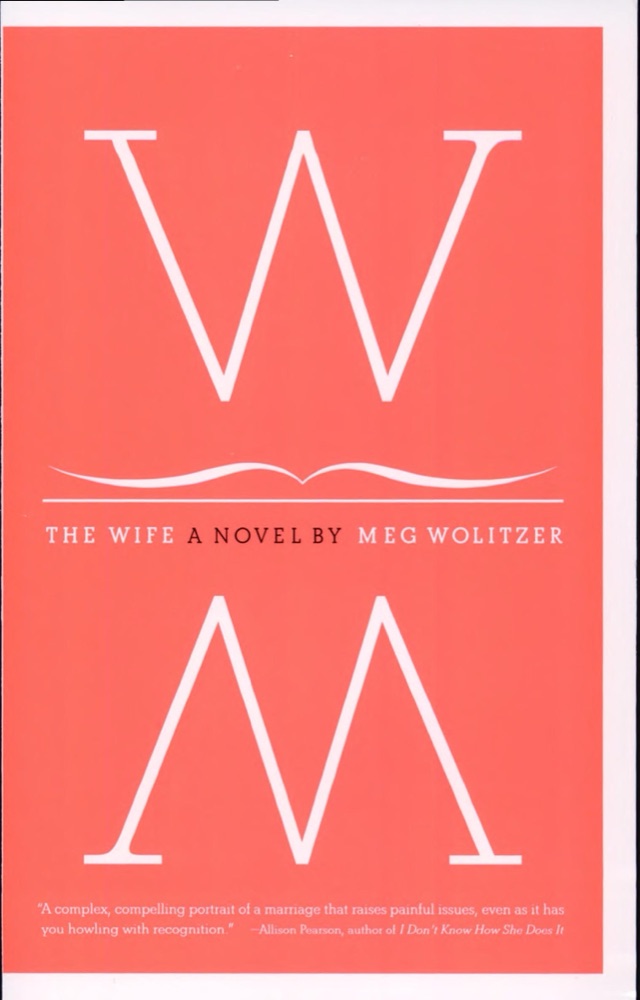
"The moment I decided to leave him, the moment I thought, enough, we were thirty-five thousand feet above the ocean, hurtling forward but giving the illusion of stillness and tranquility. Just like our marriage." So opens Meg Wolitzer's compelling and provocative novel The Wife, as Joan Castleman sits beside her husband on their flight to Helsinki. Joan's husband, Joseph Castleman, is "one of those men who own the world...who has no idea how to take care of himself or anyone else, and who derives much of his style from the Dylan Thomas Handbook of Personal Hygiene and Etiquette." He is also one of America's preeminent novelists, about to receive a prestigious international award to honor his accomplishments, and Joan, who has spent forty years subjugating her own literary talents to fan the flames of his career, has finally decided to stop. From this gripping opening, Wolitzer flashes ba
Book details
- First published
- 2003
- Author
- Meg Wolitzer
- Genre
- Fiction
- Goodreads rating
- 3.69 (31k ratings) →
The buzz
- The New York TimesReview in The New York Timesprofessional review (via Book Marks)
- Kirkus ReviewsReview in Kirkus Reviewsprofessional review (via Book Marks)
- Publishers WeeklyReview in Publishers Weeklyprofessional review (via Book Marks)
- BooklistReview in Booklistprofessional review (via Book Marks)
- BookreporterReview in Bookreporterprofessional review (via Book Marks)
Keep reading
 Too Much Happiness: Stories
 Outline
 The Brooklyn Follies
 Mislaid
 I Hold a Wolf by the Ears: Stories
 The Story of a New Name
 The Sleepwalker's Guide to Dancing
 The Muse
 In the Heart of the Heart of the Country and Other Stories
 Old Babes in the Wood: Stories
 Johnny Panic and the Bible of Dreams: Short Stories, Prose and Diary Excerpts
 Dream Count
 A Slow Fire Burning
 Nine Perfect Strangers
 Birds of America
 The Children's Book
 Sweet Tooth
 The Stories of John Cheever
 The Stone Diaries
 Those Who Leave and Those Who Stay
 The Marriage Plot
 A Widow for One Year
 Anagrams
 Dept. of Speculation
 NW
NW
 Let Me Tell You What I Mean
 The Husband's Secret
 All Fours
 The Cost of Living: A Working Autobiography
 Bluebeard's Egg
 The Voyage Out
 The Madwoman Upstairs
 Her Body and Other Parties
 The Summer Without Men
 The Tunnel
 Slow Days, Fast Company: The World, the Flesh, and L.A.
 The Color Master: Stories
 The Story of the Lost Child
 Things I Don't Want to Know
 The Rules Do Not Apply
 The Folded Clock: A Diary
 The Heart's Invisible Furies
 The Likeness
 Monday or Tuesday
 Diary of a Void
 Little Monsters
 The Mandarins
 Private Citizens
 Girl with Curious Hair
 Brief Interviews with Hideous Men
 The Corrections
 The Post-Birthday World
 Great House
 Bad Blood
 Min kamp 2
 Singin' and Swingin' and Gettin' Merry Like Christmas
 Tar Baby
 Wonder Boys
 The Book of Love