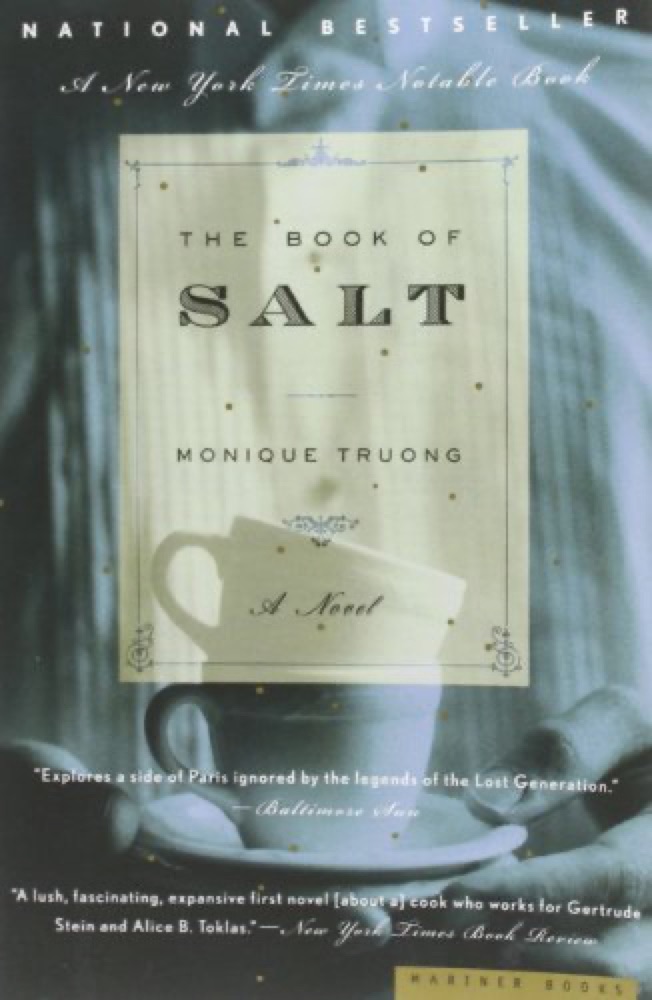

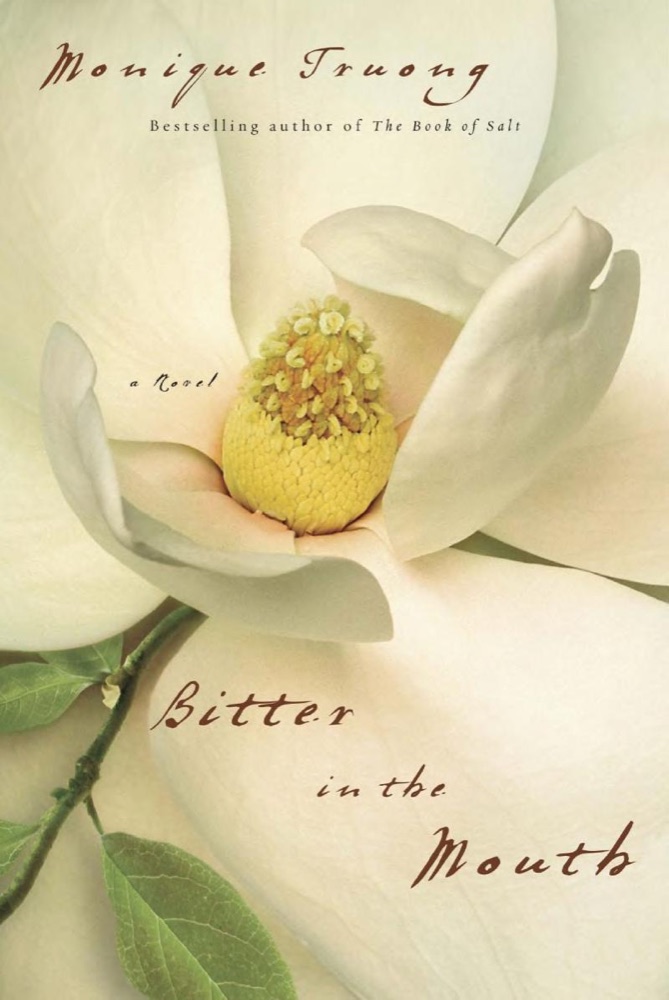
 Bitter in the Mouth
Quotes from the Book
I was certain t find the familiar sting of salt, but what I needed to know was what kind: kitchen, sweat, tears or the sea.
13
The irony of acquiring a foreign tongue is that I have amassed just enough cheap, serviceable words to fuel my desires and never, never enough lavish, impudent ones to feed them.
13
I am forced to admit that I am, to them, nothing but a series of destinations with no meaningful expanses in between.
9
Alcohol, I had learned, was an eloquent if somewhat inaccurate interpreter. I had placed my trust that December night in glass after glass of it, eager not for drink but for a bit of talk.
8
Although we strap time to our wrists, stuff it into our pockets, hang it on our walls, a perpetually moving picture for every room of the house, it can still run away, elude and evade, and show itself again only when there are minutes remaining and there is nothing left to do except wait till there are none.
7
WE all need a story of where we came from and how we got here.
6
All my favorite establishments were either overly crowded or pathetically empty. People either sipped fine vintages in celebration or gulped intoxicants of who cares what kind, drowning themselves in a lack of moderation, raising a glass to lower inhibitions, imbibing spirits to raise their own.
6
As a father, he was generous. More or less. The "less" was because he never gave me what I wanted. He gave me only what he wanted me to have. I found this was often true with philanthropy and with love. The giver's desire and fulfillment played an important role.
4
After a week's worth of failed fairy tales—stories that made my eyelids flutter open and not shut—my father tried telling me stories that belonged only to him. Thomas told me of an island off the coast of a different world. On this island, there stood a city whose buildings were made of glass. He told me that at the heart of this city was a forest with trees, ponds and a lake, swans and horses, and even a small castle. He told me that the streets of the city were filled with bright yellow cars that you hopped in and out of at will and that would take you wherever you wanted to go. In this city, there were sidewalks overflowing with people from the whole world over who wanted so much to be there. He told me of its neighborhoods, with names like Greenwich Village and Harlem and Chinatown. At the nucleus of these stories was my father, and spinning around him was the city of New York. Long before I would see them in photographs or in real life, my father had given me the white crown lights of the Chrysler Building and the shining needle of the Empire State.
3
Language is a house with a host of doors, and I am too often uninvited and without the keys.
2
Time that refuses to be translated into a tangible thing, time without a number or an ordinal assigned to it, is often said to be "lost." In a city that always looks better in a memory, time lost can make the night seem eternal and full of stars.
2
Time for me had always been measured in terms of the rising sun, its setting sister, and the dependable cycle of the moon. but at sea, I learned that time can also be measured in terms of water, in terms of the distance traveled while drifting on it. When measured in this way, nearer and farther are the path of time's movement, not continuously forward along a fast straight line. When measured in this way, time loops and curlicues, and at any given moment it can spiral me away and then bring me rushing home again.
2
Lovers who have lived a lifetime together have the luxury of never having to say anything new.
1
Every day when I walk the streets of this city, I am just that. I am an Indochinese laborer, generalized and indiscriminate, easily spotted and readily identifiable all the same. It is this curious mixture of careless disregard and notoriety that makes me long to take my body into a busy Saigon marketplace and lose it in the crush. There, I tell myself, I was just a man, anonymous, and, at a passing glance, a student, a gardener, a poet, a chef, a prince, a porter, a doctor, a scholar. But in Vietnam, I tell myself, I was above all just a man.
1
When they are like this, I remember what the man on the bridge had told me: "The French are all right in France." What he meant, he explained, was that when the French are in the colonies they lose their natural inclination toward fraternity, equality, and liberty. They leave those ideals behind in Mother France, leaving them free to treat us like bastards in the land of our birth.
1
My self-righteous rage burns until I am forced to concede that I, in fact, have told them nothing. This language that I dip into like a dry inkwell has failed me.
1
And so, like a courtesan, forced to perform the dance of the seven veils, I grudgingly reveal the names, one by one, of the cities that have carved their names into me, leaving behind the scar tissue that forms the bulk of who I am.
1
Though contrary to what the Old Man would have me believe, the vocabulary of servitude is not built upon my knowledge of foreign words but rather on my ability to swallow them.
1
He wrote that it would have been better for me to hear it all in person. What he meant was that paper was not strong enough to bear the weight of what he had to say but that he would have to test its strength anyway.
1
I had forgotten how different my language looks on paper, that its letters have so little resemblance to how they actually sound. Words, most I had not spoken for years, generously gave themselves to me. Fluency, after all, is relative. On that sheet of paper, on another side of the globe, I am fluent.
1
Such a "match," even if identified, would only allow me the illusion of communication and you the illusion of understanding. I could claim, for example, that my first memory was the taste of an unripe banana, and many in the world would nod their heads, familiar with this unpleasantness. But we all haven't tasted the same unripe fruit. In order to feed not so alone in the world, we blur the lines of our subjective memories, and we say to one another, "I know exactly what you mean!
1
Sorrow, even when tempered by sweat and toil into a whisper weight of gold, is still sorrow. Worthless to us both in the end, Má.
1
We loved our opposites so that we could free ourselves from our selves.
1
The truth about my family was that we disappointed one another. When I heard the word 'disappoint,' I tasted toast, slightly burned. But when I saw the word written, I thought of it first and foremost as the combining or the collapsing together of the words 'disappear' and 'point,' as in how something in us ceased to exist the moment someone let us down. Small children understood this better than adults, this irreparable diminution of the self that occurred at each instance, large and small, of someone forgetting a promise, arriving late, losing interest, leaving too soon, and otherwise making us feel like a fool. That was why children, in the face of disappointments, large and small, were so quick to cry and scream, often throwing their bodies to the ground as if their tiny limbs were on fire. That was a good instinct. We, the adults or the survivors of our youth, traded in instinct for a societal norm. We stayed calm. We swallowed the hurt. We forgave the infraction. We ignored that our skin was on fire. We became our own fools. Sometimes, when we were very successful, we forgot entirely the memory of the disappointment. The loss that resulted, of course, could not be undone. What was gone was gone. We just could no longer remember how we ended up with so much less of our selves. Why we expected nothing, why we deserved so little, and why we brought strangers into our lives to fill the void.
1
Seconds before, we were a boy and a girl standing next to each other. The distance between our bodies was out of habit and not out of lack of curiosity. His movement was swift and unexpected. I remembered the smell of his clothes--his mom, like mine, must have used Tide--as the first of the atmospheric changes. The second was the instant warming of the air temperature as his breath came near. The third was that it became suddenly dark. As Wade pulled away, he said my name aloud for no one but himself.
1
A pinch of salt, according to my Madame, should not be a primitive reflex, a nervous twitch on the part of any cook, especially one working at 27 rue de Fleurus. Salt is an ingredient to be considered and carefully weighted like all others. The true taste of salt - the whole of the sea on the tip of the tongue, sorrow's sting, labor's smack - has been lost, according to my Madame, to centuries of culinary imprudence.
Sweet Sunday Man, there is a fire at 27 rue de Fleurus. When you and the other guests show up for Saturday tea and see the flames, do you rush in to save my Mesdames, the contents of their cupboard, or their cook? The correct answer is Basket and Pépé. My Madame and Madame, as everyone knows, can take care of themselves. The cupboard also needs no assistance because Miss Toklas would run back into the burning apartment until every sheet of paper touched by GertrudeStein was safe in her arms. As for the cook, the assembled guests would scratch their heads and ask, "The Steins have a cook?
Watch on YouTube
About Monique Truong
We have collected 49 quotes from 2 books by Monique Truong on BookQuoters.
More about the author →More by Monique Truong
Bitter in the Mouth
About the book
Binh, a Vietnamese cook, flees Saigon in 1929, disgracing his family to serve as a galley hand at sea. The taunts of his now-deceased father ringing in his ears, Binh answers an ad for a live-in cook at a Parisian household, and soon finds himself employed by Gertrude Stein and Alice B. Toklas.
Toklas and Stein hold court in their literary salon, for which the devoted yet acerbic Binh serves as chef, and as a keen observer of his "Mesdames" and their distinguished guests. But when the enigmatic literary ladies decide to journey back to America, Binh is faced with a monumental choice: will he, the self-imposed "exile," accompany them to yet another new country, return to his native Vietnam, or make Paris his home?
Book details
- First published
- 2003
- Author
- Monique Truong
- Genre
- Fiction
- Goodreads rating
- 3.52 (7k ratings)
The buzz
- The New York TimesReview in The New York Timesprofessional review (via Book Marks)
- Los Angeles TimesReview in Los Angeles Timesprofessional review (via Book Marks)
- Kirkus ReviewsReview in Kirkus Reviewsprofessional review (via Book Marks)
- Publishers WeeklyReview in Publishers Weeklyprofessional review (via Book Marks)
- BookPageReview in BookPageprofessional review (via Book Marks)
- ChicagotribuneReview in Chicagotribuneprofessional review (via Book Marks)
Keep reading
 The Story of a New Name
 Plainwater: Essays and Poetry
 The Cat's Table
 Dream Count
 Sexing the Cherry
 Sweetbitter
 Out of Oz
 Brideshead Revisited: The Sacred and Profane Memories of Captain Charles Ryder
 Speedboat
 The Tender Bar
 The Names
 The Mysterious Flame of Queen Loana
 The Untouchable
 Middlesex
 Embassytown
 Atemschaukel
 A Fraction of the Whole
 The Tunnel
 Lost in Translation: A Life in a New Language
 The Folded Clock: A Diary
 Sixty Stories
 Embers
 The Swan Thieves
 The Diving Bell and the Butterfly
 What I Loved
 All This Could Be Different
 The Story of the Lost Child
 Divisadero
 My Broken Language
 My Friends
 Slouching Towards Bethlehem
 The Clockmaker's Daughter
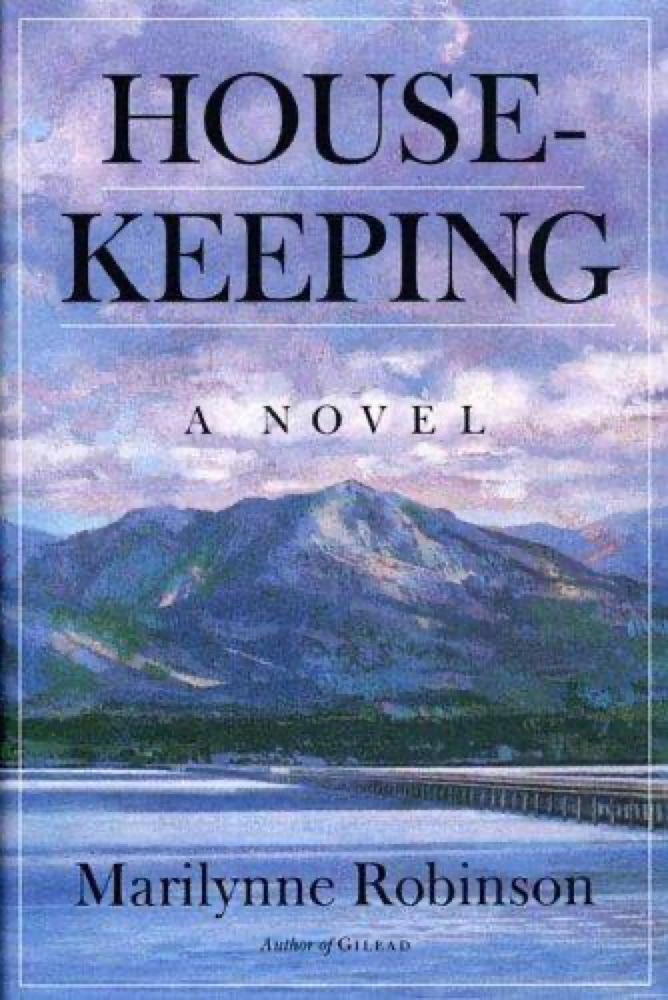 Housekeeping
 The Collected Stories
 The Provence Cure for the Brokenhearted
 Too Much Happiness: Stories
 The Reader
 The Chronology of Water
 The Likeness
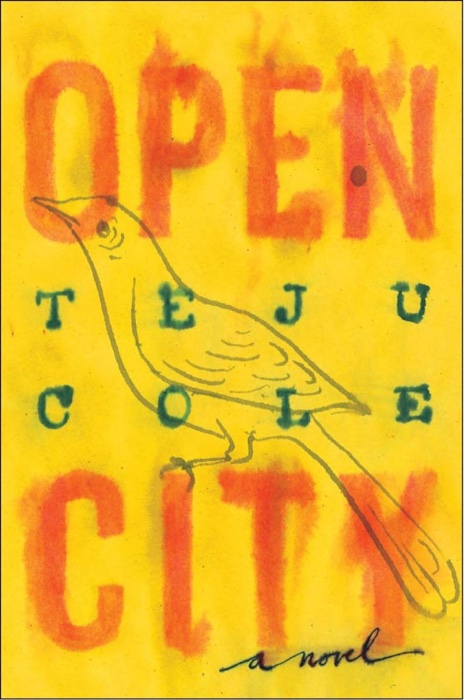 Open City
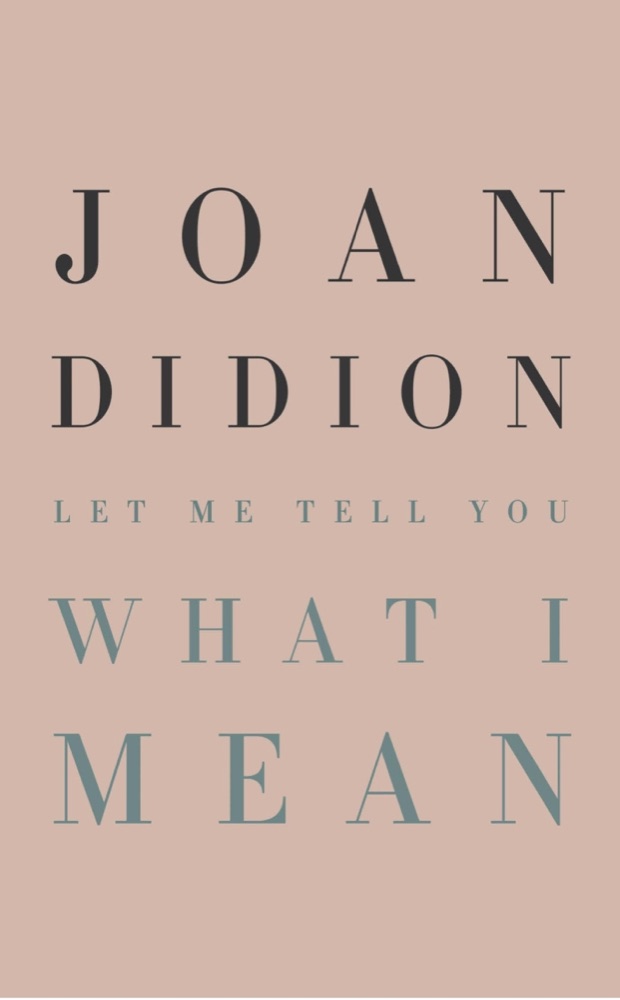 Let Me Tell You What I Mean
 Min kamp 2
 The Dream of Perpetual Motion
 Three-Martini Lunch
 Senlin Ascends
 An Unnecessary Woman
 Outline
 Moth Smoke
 Just Above My Head
 Running in the Family
 Singin' and Swingin' and Gettin' Merry Like Christmas
 Flights
 The Secret History
 Belong to Me
 The Memoirs of Cleopatra
 Hot Milk
 The Art of Inheriting Secrets
 Those Who Leave and Those Who Stay
 The Wind-Up Bird Chronicle
 I Remember Nothing: and Other Reflections